
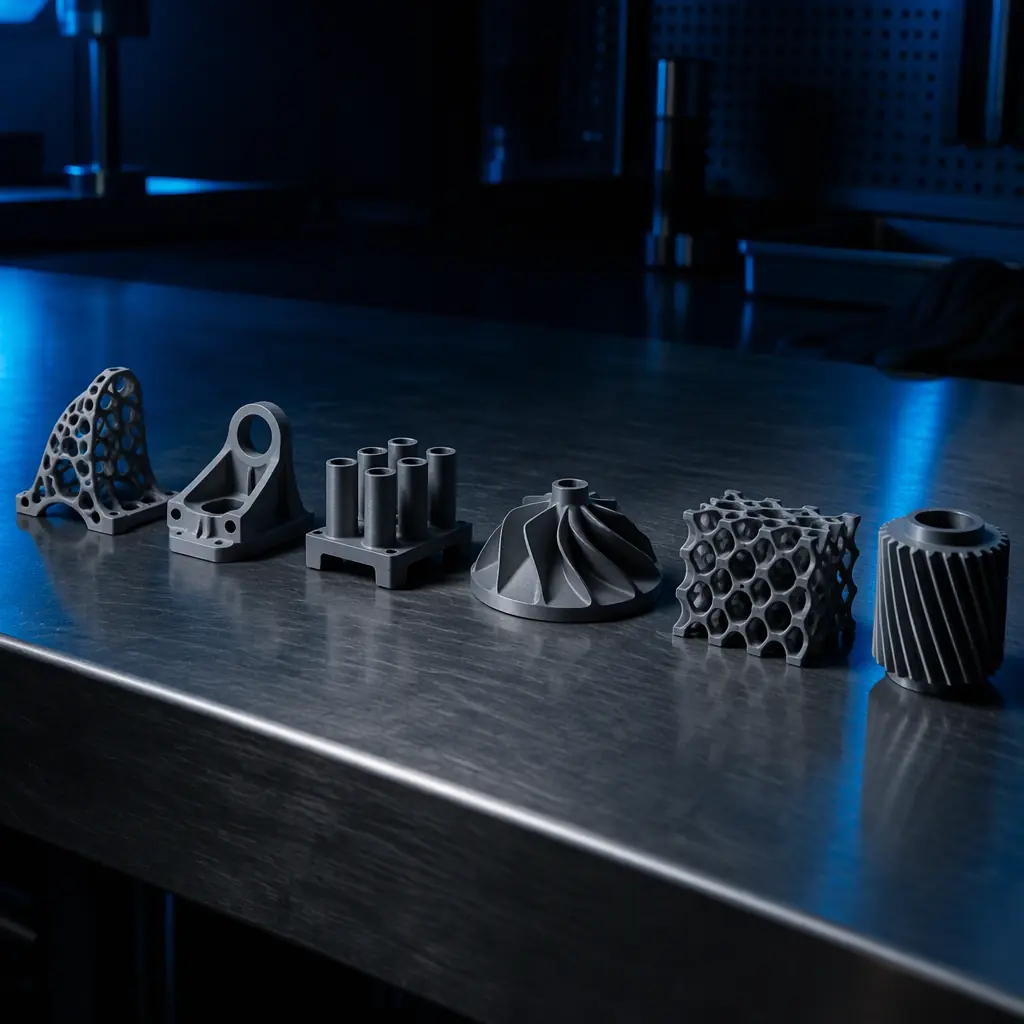
A distributor who sends a customer a free sample and waits for a verdict is running a lottery, not an evaluation. The part comes back, nobody measured it against a written criterion, the customer compares it to a sample from a competitor who also sent one for free, and eight weeks later the deal is decided on price. The sample was not the problem. The absence of a programme around the sample was.
A trial part programme is a defined procedure that turns a customer's own geometry into evidence the customer can defend internally: a part printed on the machine you are quoting, measured against tolerances you agreed in advance, returned with a data sheet that names the parameters used. It has a budget cap, a scoring gate, and an expiry. This article covers how to build one that costs less than the deals it fails to win, and how to make the evidence it produces hold the quotation in place. Our B2B sales demo playbook covers the demonstration that surrounds it.
What a Trial Part Programme Is, and What It Is Not
The distinction that matters commercially is between a gift and a test. A gift has no measurement, no deadline, and no obligation on either side. A test has all three, and it is the obligation that makes it useful, because it gives the customer a reason to reply.
The free sample is not worthless. It is the right instrument when a customer genuinely does not know what additive manufacturing is, which happens in education and in first-time industrial buyers. For any customer who already owns a printer, the free sample signals that you have nothing to prove, and they will treat the output accordingly.
There is also a cost that never appears on the sample invoice. A free sample carries no freight charge and lands on the customer's goods-in desk with no paperwork. It usually goes into a drawer. A trial part arrives with a measurement sheet, a cover note naming the parameters, and a request for a 30-minute review call. The paperwork is what makes the difference, and it costs about eleven minutes of a sales engineer's time.
The Five Data Points Every Trial Part Must Return
A trial part that comes back with a photograph and the words "looks good" has produced nothing you can quote against. The data sheet has to answer five questions, because each one anchors a different part of the commercial conversation afterward.
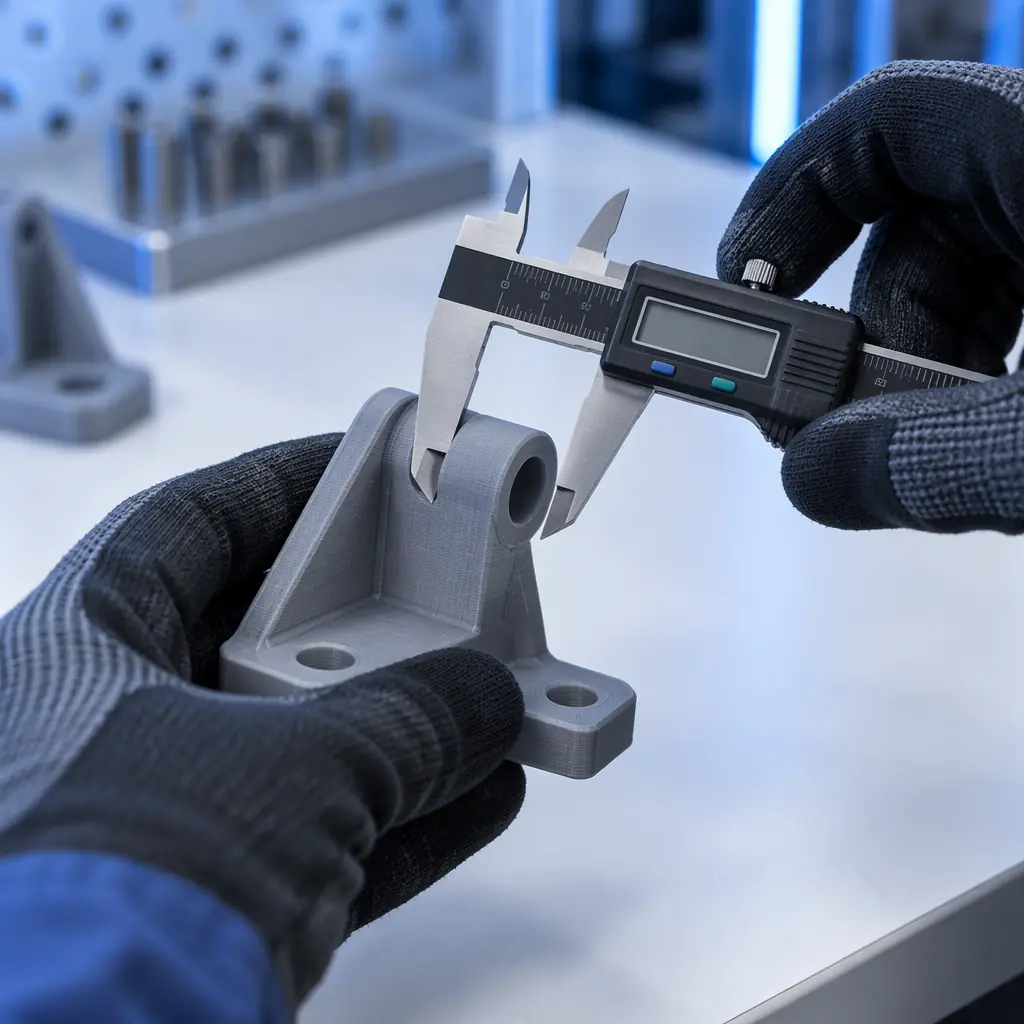
The first two points belong to the customer. They measure the part against what the customer already needs, and they are the only two that the customer will quote back to you. If you do not supply them, the customer measures with whatever is in the quality lab and you inherit a tolerance claim you never agreed to. Mark three features on the drawing before printing: one in XY at mid-plate, one in Z, and one hole diameter, because holes print undersize predictably and that is the feature that scares a precision buyer most.
The third point is where the material conversation lives. A part printed in PLA and pulled apart by hand produces an opinion. A part measured on a universal testing machine produces a number, and a number lets you say the sentence that moves the deal: this geometry in PA-CF reaches 78% of bulk tensile, and here is what that means for the load case you described. Our materials bench runs temperature towers, retraction tuning and bed adhesion checks per filament, which is what makes a per-material statement possible rather than a marketing claim.
The fourth and fifth points are the ones distributors skip, and they are the ones that protect margin. Cycle time measured on the real part is the input to cost per part, and mass consumed is the input to the consumables revenue you will earn over the machine's life. A distributor who reports only that the part looked good has given away the two numbers that justify the machine price and the filament programme.
Designing the Trial Part Set: Three Parts, Three Questions
Printing one part answers one question. Printing three parts, chosen to interrogate different failure modes, answers the three questions a buyer actually has: will it fit, will it last, and will it cost what you said.
Slot A is the commercial question. The part exists, it has a current cost and a current lead time, and the customer knows both. Replacing it is a comparison, not an abstraction, and the trial print immediately yields a percentage saving or a lead-time reduction in days. Ask for a part under 120 grams; anything heavier turns a trial into a production run.
Slot B is the technical question and the most dangerous one to accept. Before printing, agree in writing what the tolerance is and whether the as-printed surface will be machined afterward. A 0.2 mm nozzle on a well-tuned machine holds roughly ±0.1 mm on small features; a 0.4 mm nozzle on a production machine holds closer to ±0.25 mm. If the customer's tolerance is tighter than the process, the correct answer is to quote the hybrid route, print near-net and finish on a CNC, and say so before the part is printed rather than after. Our dimensional inspection guide sets out what to measure and how to report it.
Slot C is the durability question. A load-bearing bracket exposes layer adhesion, creep and anisotropy in a way that a decorative part never will. Print it in the orientation the customer intends to use, not the orientation that prints fastest, because the difference is the whole point of the test.
The set should fit inside one build plate for the target machine class where possible. Three parts on one plate take 6 to 14 hours depending on size and material, which is a single overnight run rather than a week of scheduling.
Cost Control: Capping Trial Spend at Half a Percent of Deal Value
Trial parts are the easiest line item in a distributor's business to let run away, because every individual run looks cheap and the monthly total does not. The control that works is an explicit cap tied to the deal it serves.
The cap covers machine time, material, post-processing and freight. At a $0.02 to $0.06 per-gram effective material cost and a $30 to $70 per-hour loaded machine rate, a three-part set in a commodity filament lands at $18 to $45 in most territories. The cap binds when the customer asks for an engineering resin, when post-processing is involved, or when the parts are large, and those are exactly the cases that deserve a manager's signature.
Two additions to the cap make it fair in practice. First, one trial set per opportunity, not per contact. The second set is the failure mode that erodes the programme: a new engineer joins the customer team, asks for another sample, and the first one is forgotten. Second, a written expiry of 30 days on the offer to print. An open-ended offer is a standing cost with no decision attached.
Scoring and the Go/No-Go Gate
The trial produces numbers; the gate turns them into a decision. Score each of the five data points from 0 to 3 against the criteria agreed before printing, and add the two commercial signals. Seven dimensions, maximum 21 points.
Score 16 or more and the opportunity goes to the quotation as a qualified deal, with the trial numbers attached. Score 10 to 15 and the correct action is a technical review call before any further printing, because something in the part design or the material choice is wrong and another sample will not reveal it. Score below 10 and the honest move is to close the opportunity rather than print a second set.
Run the gate at the 30-minute review call, not by email. The customer's answers to the two commercial dimensions are the half of the score that no measurement produces, and they only appear in conversation. Our TCO and ROI calculator guide supplies the model that the cycle-time figure feeds into during that call.
Turning Trial Evidence into the Quotation Anchor
The commercial value of a trial part is not that it proves the machine works. It is that it establishes a reference point that makes the quotation a continuation rather than a negotiation.
Four items from the trial go into the quotation document, and each one removes an objection before it is raised. The measured cycle time becomes the basis for the cost-per-part figure in the proposal, so the price is derived rather than asserted. The measured tolerance becomes the stated capability in the specification table, with the part that proved it named. The material used and its measured tensile result justifies the material recommendation and its price uplift. The number of trial iterations becomes the assumed ramp-up in the implementation plan, which sets expectations and prices the training correctly.
There is one danger to manage. A customer who receives a good part and full data has everything needed to send the same part to a competing distributor and ask for a lower quote. This is why the data sheet reports the parameters but not the slicer profile, and why the quotation frames the commercial terms as tied to the trial scope, with a stated validity period of 30 days. Our RFQ and proposal playbook covers how the pricing schedule is built around that scope, and the distribution agreement terms guide covers what the territory agreement can say about reuse of technical documents.
What the Trial Programme Does Not Replace
Three things sit outside the trial part and still have to be done, and confusing them with the trial is how distributors over-invest in printing and under-invest in selling.
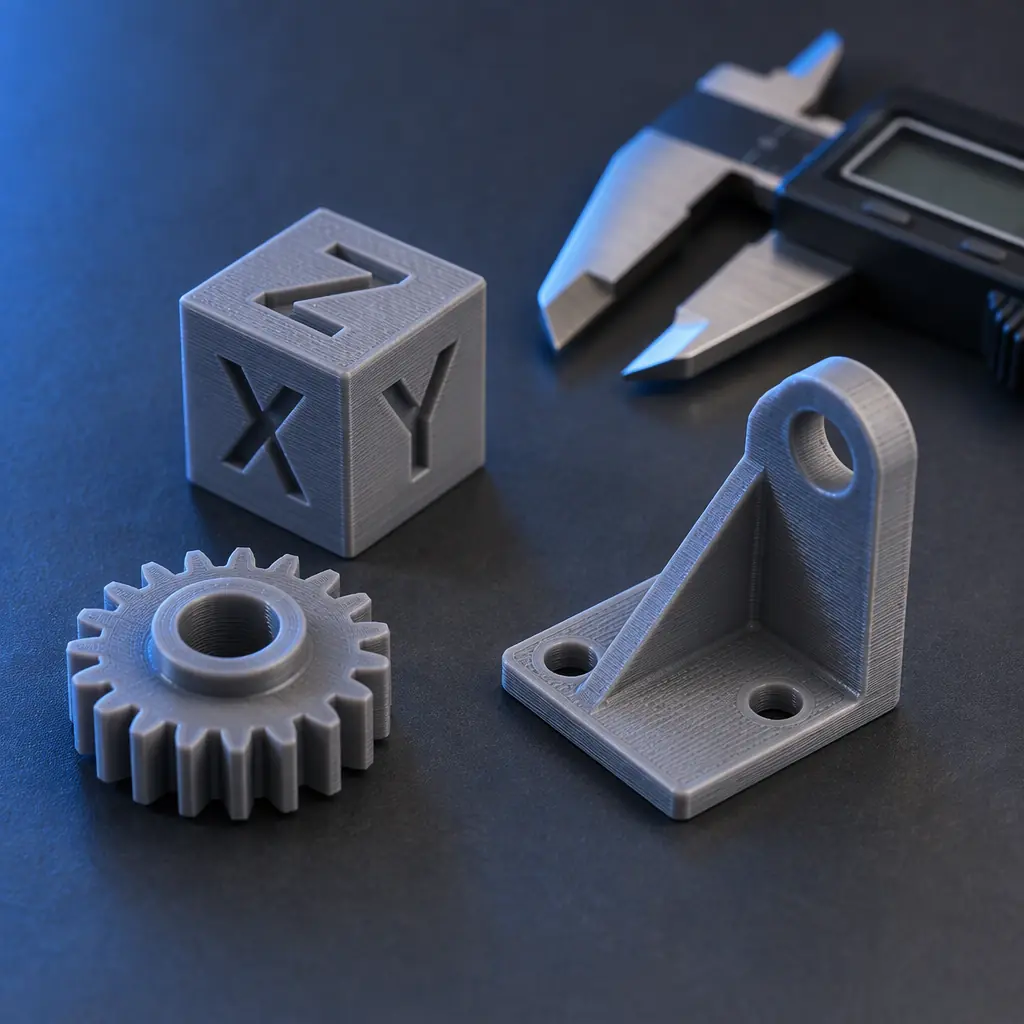
The demonstration shows the machine running, the interface responding and the finish on a known reference part. It is a different instrument, aimed at the buyer who has not yet accepted that the technology applies. Setting up a demo lab is the prerequisite for running trials at any volume.
The post-processing decision is made after the trial measured the surface roughness, not before. Support removal, mass finishing and annealing each change the tolerance outcome, and a trial that reports as-printed roughness without naming the finishing route leaves the customer to assume it is final. Where dimensional stability after annealing is the concern, the annealing and heat treatment guide covers the shift to expect.
The service commitment is the fourth conversation and it starts once the deal is qualified. Trial parts win the order; the after-sales support model wins the renewal. A distributor who runs excellent trials and mediocre service has built an expensive customer acquisition machine.
Bottom Line
Define the five data points before printing, cap the spend at half a percent of deal value, and gate the next step on a score rather than on how the customer sounds on the phone. A trial part programme run this way costs $18 to $45 per opportunity in consumables and turns your sample budget from an expense with no output into the evidence base for the next three quotes. The distributors who lose deals at the sample stage are almost never beaten on part quality. They are beaten because the sample arrived without a number attached to it.
Reviewed by the Precise3D engineering & OEM team. Compliance files that accompany the catalog are auditable at the certification register.
Start Your Partnership
Ready to Put Trial Parts at the Centre of Your Sales Process?
Precise3D supplies trial part support, material test data and print profile packages to distribution partners from the first container, so every evaluation returns a number instead of an opinion.