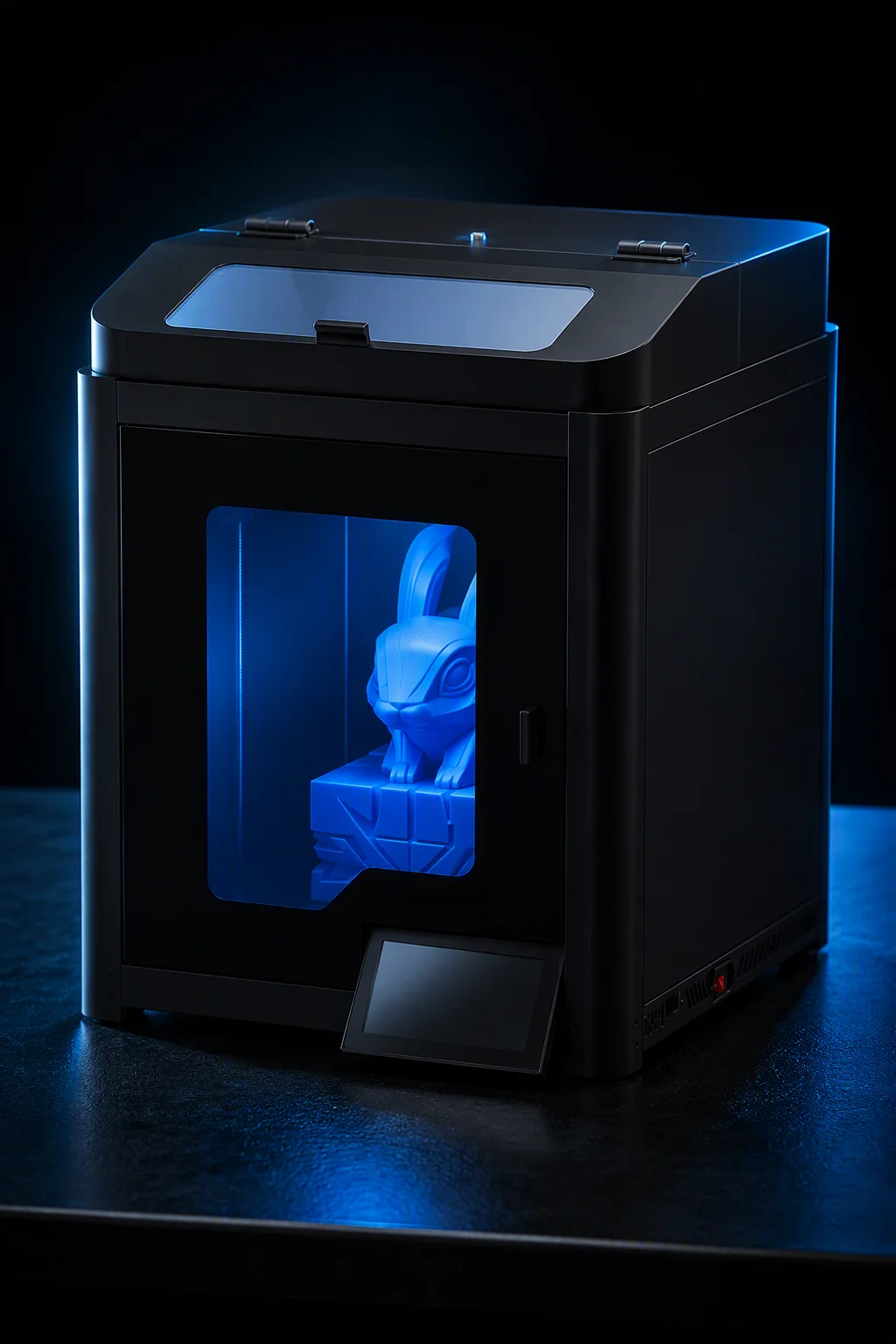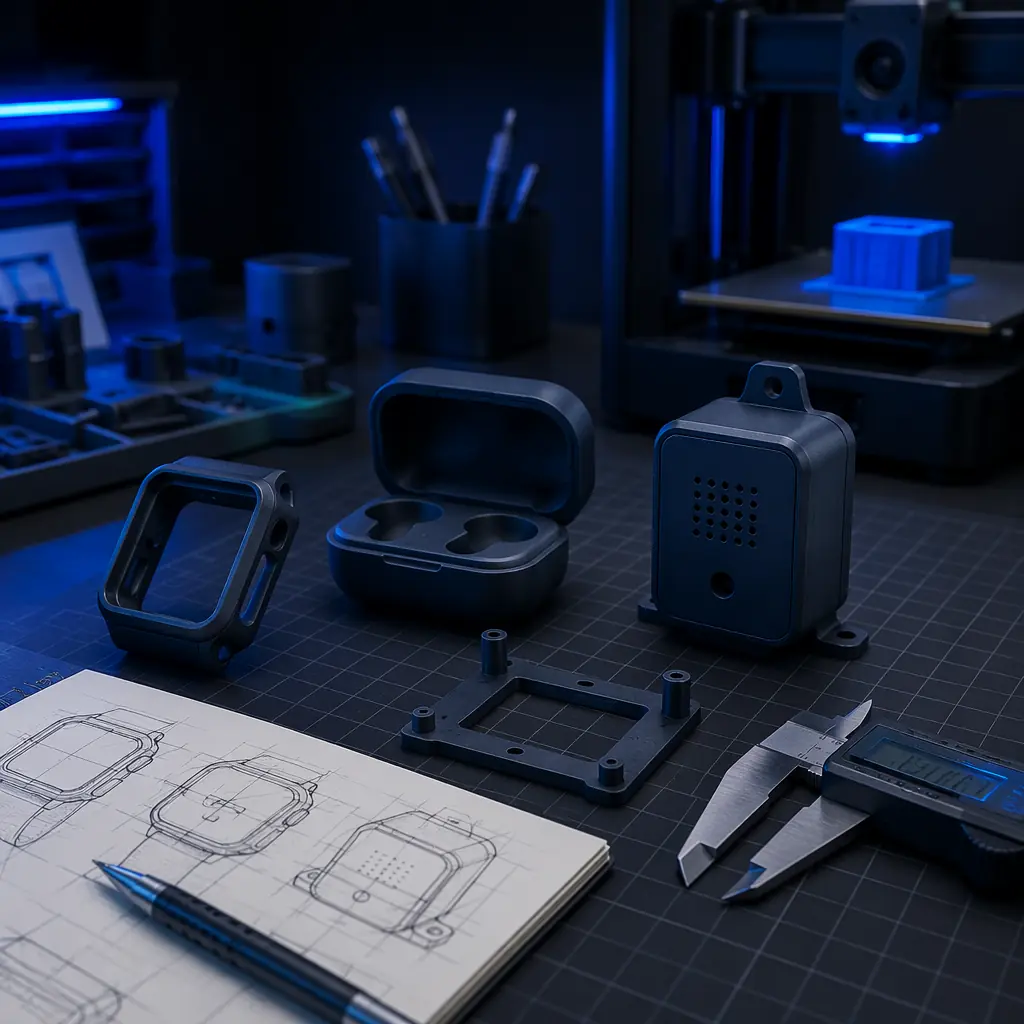
Walk through any consumer electronics hardware startup in Shenzhen, Seoul, or San Francisco and you'll see the same scene: a cluster of desktop 3D printers running 24/7, churning out enclosure prototypes, PCB mounting brackets, button test fixtures, and packaging mockups. These companies aren't buying one printer — they're buying three to five, and they're consuming 15-30kg of filament per month per design team. The consumer electronics vertical is the most reliable demand driver in desktop 3D printing because it's tied to the product development cycle, not consumer sentiment. Electronics need enclosures. Enclosures need prototypes. Prototypes need printers.
The global consumer electronics market is $1.1 trillion. Desktop 3D printing's addressable slice — prototyping, functional testing, and low-volume production of enclosures and fixtures — is estimated at $1.8 billion in printer and consumables spend by 2027, growing at 16% CAGR as more electronics brands bring prototyping in-house. For distributors, this vertical offers three advantages over general consumer sales: higher deal sizes (3-5 printers per order vs. 1), predictable reorder patterns tied to design cycles, and customers who understand the value of material consistency and are willing to pay for it.
The Consumer Electronics 3D Printing Stack: Three Tiers of Customer Need
Not all electronics companies use 3D printing the same way. Understanding which tier a prospect falls into determines which printers you pitch, which materials you stock, and how you structure the consumables attachment. Here's the segmentation:
Tier 1 startups are the easiest to win and the hardest to retain.
A hardware startup doing a Kickstarter campaign needs a 3D printer immediately — they're iterating on enclosure design daily and can't wait 5 days for a prototype shop turnaround. They buy fast, usually within 48 hours of first contact. But they're price-sensitive and will switch suppliers if they find filament $3/kg cheaper. The key to retaining Tier 1 customers: sell them a material starter kit — 4 spools (PLA, PETG, TPU, and a specialty) bundled with the printer at 10% off. Once they've validated PETG for their functional prototypes on your filament, the switching cost goes up because changing materials means re-tuning profiles.
Tier 2 growth-stage brands are the sweet spot.
These companies have 5-20 engineers, a dedicated industrial design team, and a product pipeline that guarantees 12-18 months of continuous prototyping demand. The sale is a fleet deal: 4-6 printers, typically a mix of enclosed FDM for functional prototypes and one resin printer for high-detail cosmetic models. The consumables attachment is natural — these teams use 8-15kg/month of engineering materials. A Tier 2 customer properly onboarded generates $18,000-35,000/year in recurring revenue across printers, parts, and filament. The challenge is the sales cycle: 4-8 weeks, typically involving a procurement team and a technical evaluation. For guidance on navigating B2B sales cycles, see our B2B RFQ playbook.
What Consumer Electronics Companies Actually Print: The Part Catalog
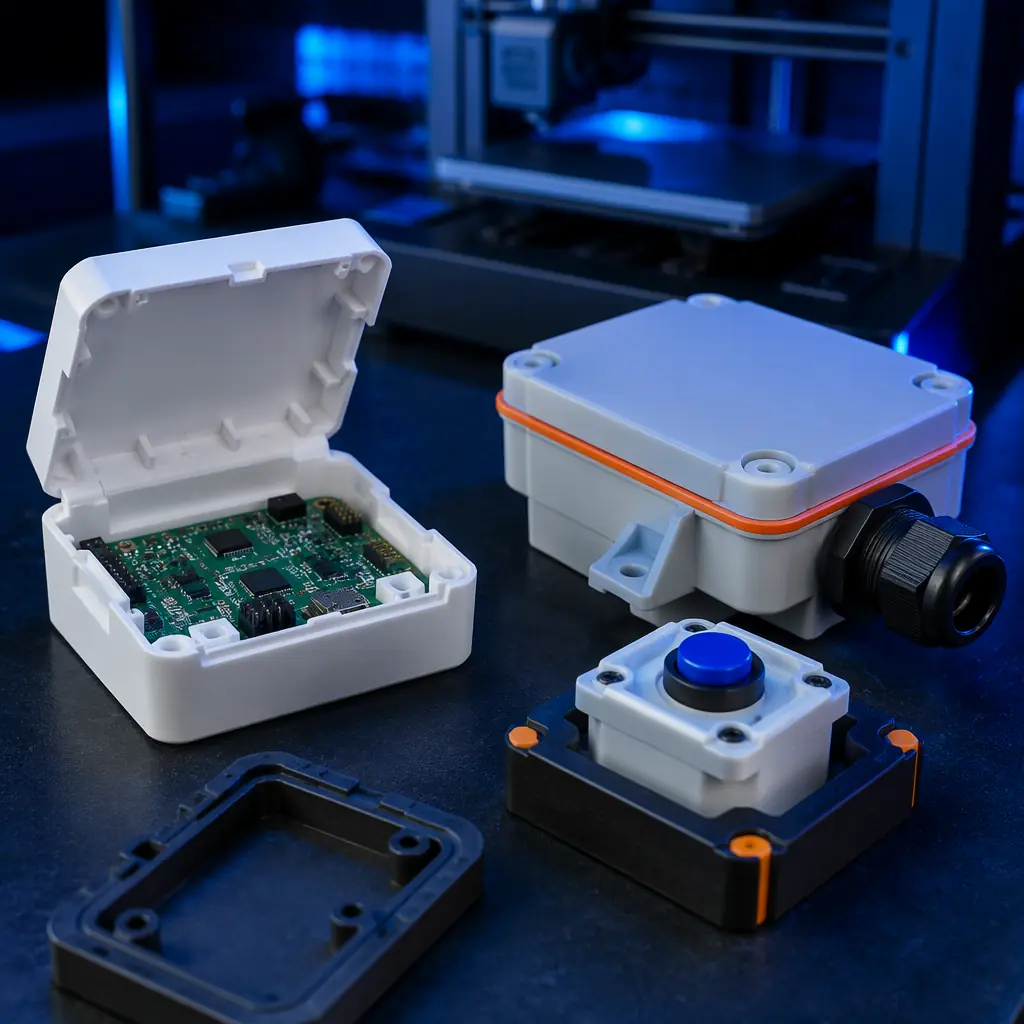
To sell to electronics companies, you need to understand what they print — not in abstract terms, but as a specific list of part types that dictate which printers and materials you recommend. Here's what a typical Tier 2 IoT company produces on their 3D printer fleet in a month:
The takeaway for distributors: a consumer electronics customer almost never needs just one printer. The enclosure prototype needs an enclosed printer for ABS. The button fixtures need a direct-drive printer for TPU. The cosmetic models need a resin printer for surface finish. The packaging inserts need a large-format machine. The PCB jigs need a reliable workhorse that holds dimensional accuracy across 100+ prints. Pitch the fleet, not the unit — the single-printer sale to an electronics company almost always leads to a second and third printer purchase within 90 days when the team realizes one machine can't keep up with their iteration cadence.
Materials Strategy: What Filaments Consumer Electronics Teams Actually Consume
Consumer electronics prototyping has a distinct material consumption pattern that differs from general hobbyist use. The volume is concentrated in PETG and TPU — not PLA — because electronics prototypes need functional properties that PLA can't deliver:
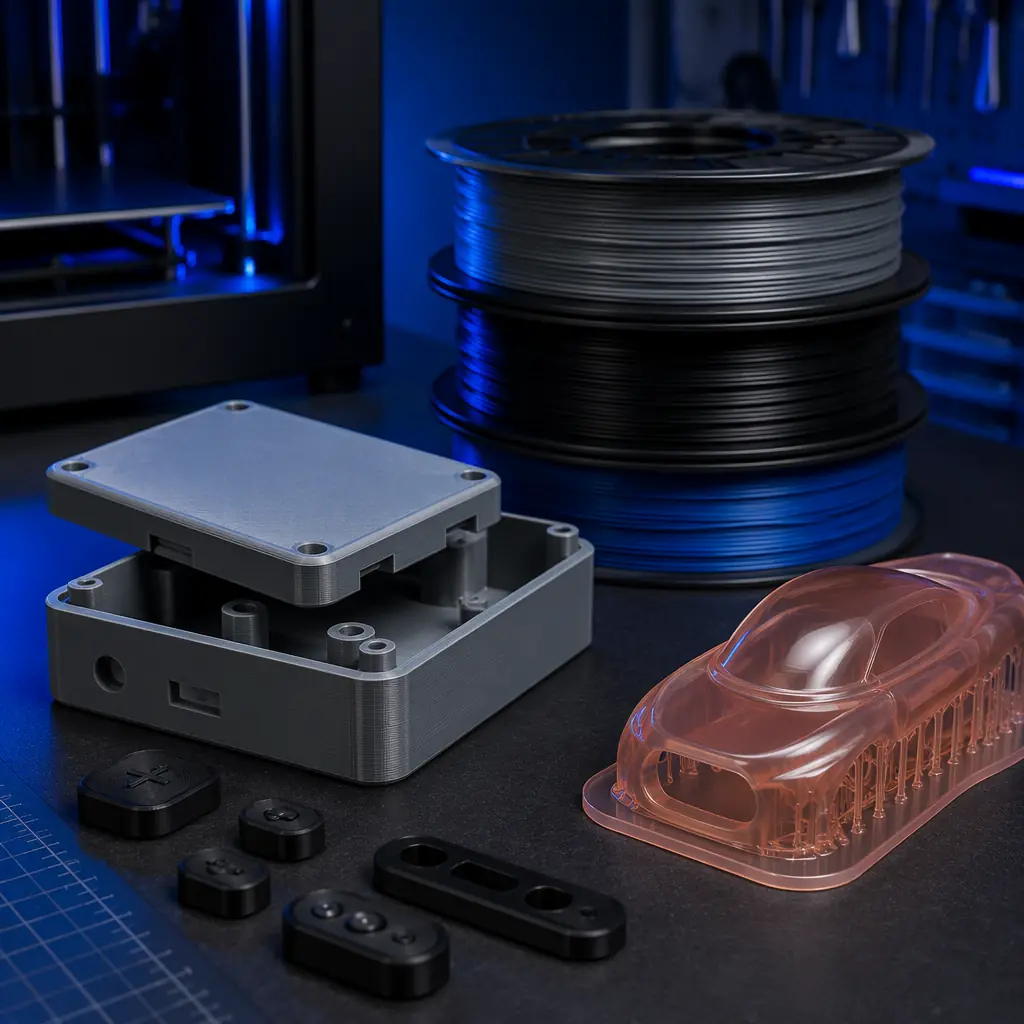
PETG dominance in electronics is a distributor opportunity that most competitors miss.
The typical filament retailer stocks PLA in 30 colors and PETG in 3 — black, white, and transparent. But an electronics team goes through 4-6 spools of PETG for every spool of PLA. They need PETG in neutral industrial colors (gray, dark gray, matte black) with consistent diameter tolerance because enclosure prototypes with ±0.1mm dimensional variation won't fit PCBs correctly. Stock a deep PETG selection and you automatically differentiate from every Amazon seller with a wall of rainbow PLA. For the complete filament portfolio strategy, see our filament stocking guide.
TPU for electronics is the highest-margin consumable that nobody stocks properly.
Every consumer electronics product has flexible elements — button covers, port seals, vibration dampeners, grip surfaces. A company making waterproof IoT sensors needs TPU gaskets. A company making smartwatch bands needs TPU in specific Shore hardnesses. A company making wireless earbuds needs TPU ear tips. These buyers will pay $35-45/kg for TPU with documented Shore hardness because an inconsistent batch means 200 failed prototypes and a missed design review deadline. Our flexible filaments guide covers the full TPU opportunity in detail.
The Demo Strategy for Electronics Companies: How to Close Fleet Deals
Selling to consumer electronics companies requires a different demo approach than selling to hobbyists or educators. These buyers evaluate printers as production tools in a development pipeline, not as standalone devices. Here's how to structure the pitch:
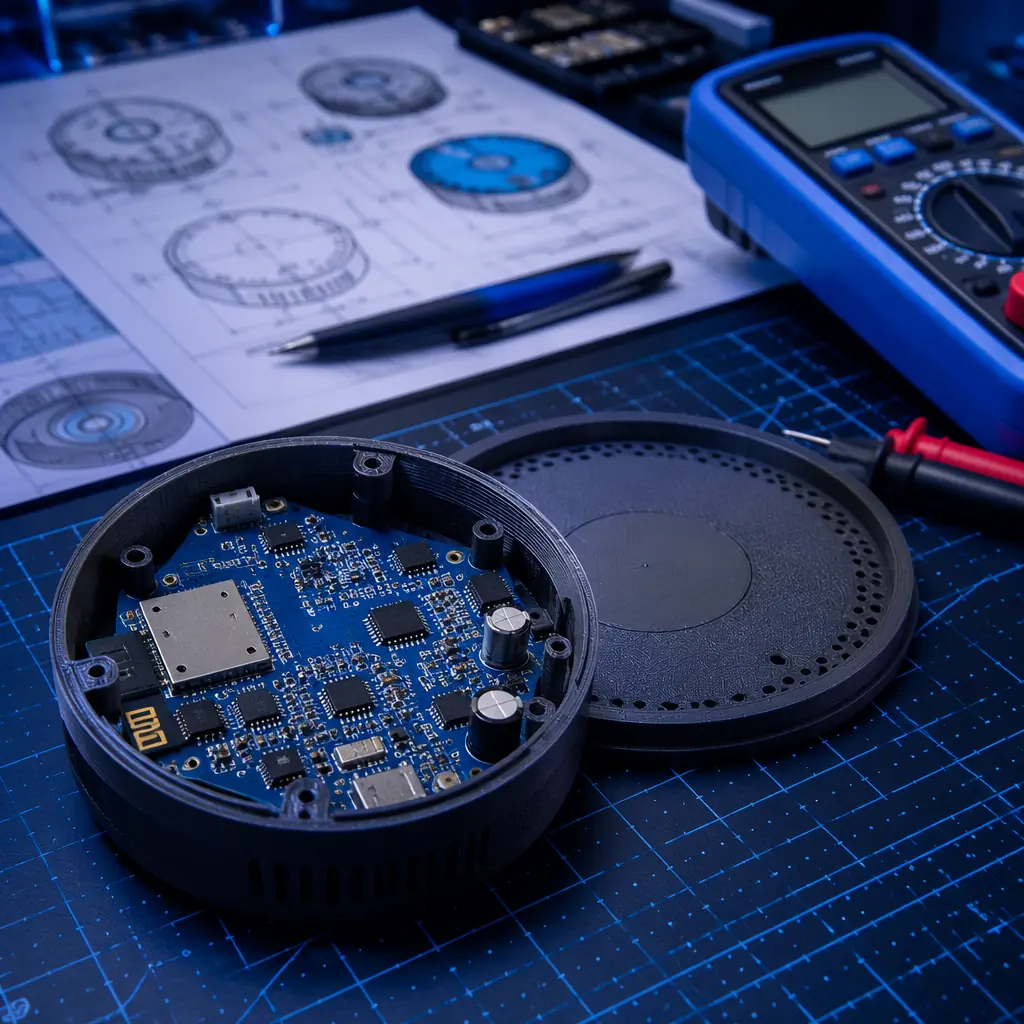
1. Lead with the part, not the printer. Ask the engineering manager: "What's the most frustrating part to prototype right now?" They'll tell you — usually an enclosure that needs 5 iterations to fit the PCB correctly, or a flexible button cover that never comes out right on their current printer. Now you know exactly which printer and material to demo. Don't show them a sample dragon; show them the enclosure prototype you printed in PETG that morning, and ask them to try fitting a PCB in it.
2. Demonstrate the full workflow, not just the print. Electronics engineers don't just print parts — they print parts, install heat-set inserts, snap-fit components together, and test the assembly. Your demo should include the post-processing: "Here's the enclosure fresh off the printer. Watch this — I'll install a heat-set insert with a soldering iron. Now the PCB mounts with M3 screws. This is exactly how your team would use it." Showing the complete workflow — print through post-processing — eliminates the "but can it actually do what I need?" doubt that kills fleet deals.
3. Quantify the iteration speed advantage. Electronics teams operate on brutal schedules. A design review is Tuesday; they need revised prototypes by Monday. Ask: "How long does your current prototype shop take?" Typical answer: 3-5 business days, $150-300 per part. Your response: "This printer produces that same enclosure in 4 hours for $2.40 in material. You can iterate twice a day instead of twice a week." The math converts engineers faster than any spec sheet — because they live and die by iteration speed. For more on communicating ROI to technical buyers, see our TCO and ROI calculator guide.
How to Find Consumer Electronics Customers: Channels That Work
Consumer electronics companies don't search for "3D printer distributor near me." They discover printers through their engineering networks, trade publications, and the prototyping tools they already use. Here's where to find them:
Hardware accelerator and incubator programs are the highest-density concentration of Tier 1 and Tier 2 electronics startups. Programs like HAX (Shenzhen), Highway1 (San Francisco), and Brinc (Hong Kong) house 10-30 hardware startups at a time — each one a potential 3-5 printer customer within their first 6 months. Offer to do a free 3D printing workshop for the cohort. Bring an enclosed printer running PETG enclosure prototypes and a resin printer showing cosmetic models. By the end of the 90-minute workshop, you'll have 3-5 hot leads — startups whose founders just watched you print something useful and immediately recognized what it would do for their development cycle.
PCB design tools and communities are where electronics engineers spend their time. Sponsor a post on r/hardware or the EEVblog forum. Partner with a local PCB assembly house — every board they assemble goes into an enclosure, and the enclosure was probably prototyped. Ask the assembly house to include your one-page flyer with every prototype order: "Got enclosures? We print them in 4 hours." The PCB-to-enclosure pipeline is the most natural referral path in electronics — and almost no 3D printer distributor is tapping it.
Trade shows — but not 3D printing trade shows.
Consumer electronics distributors should exhibit at CES, Embedded World, HardwareCon, and local maker faires — not Formnext or Rapid+TCT. At a 3D printing show, you're competing with 100 other printer vendors. At an electronics show, you're the only printer company in the room and every booth visitor is a potential customer. Bring two running printers producing enclosure prototypes out of PETG. The visual of a printer actively making an electronics enclosure — at an electronics show — generates more qualified leads in two days than a month of online advertising. Our trade show ROI guide covers booth strategy in detail.
Reviewed by the Precise3D engineering & OEM team. Compliance files that accompany the catalog are auditable at the certification register.
Target Electronics Customers
Get a Consumer Electronics Printer Fleet Package With Enclosure Prototype Sample Kit
Tell us which electronics verticals you're targeting — IoT, wearables, smart home, audio, or accessories. We'll recommend a printer fleet configuration, provide sample enclosure prototype STL files, and include a PETG/TPU/ABS material starter kit so you can demo the full electronics prototyping workflow to your first prospect within a week.