Why Metalize a Plastic Print at All
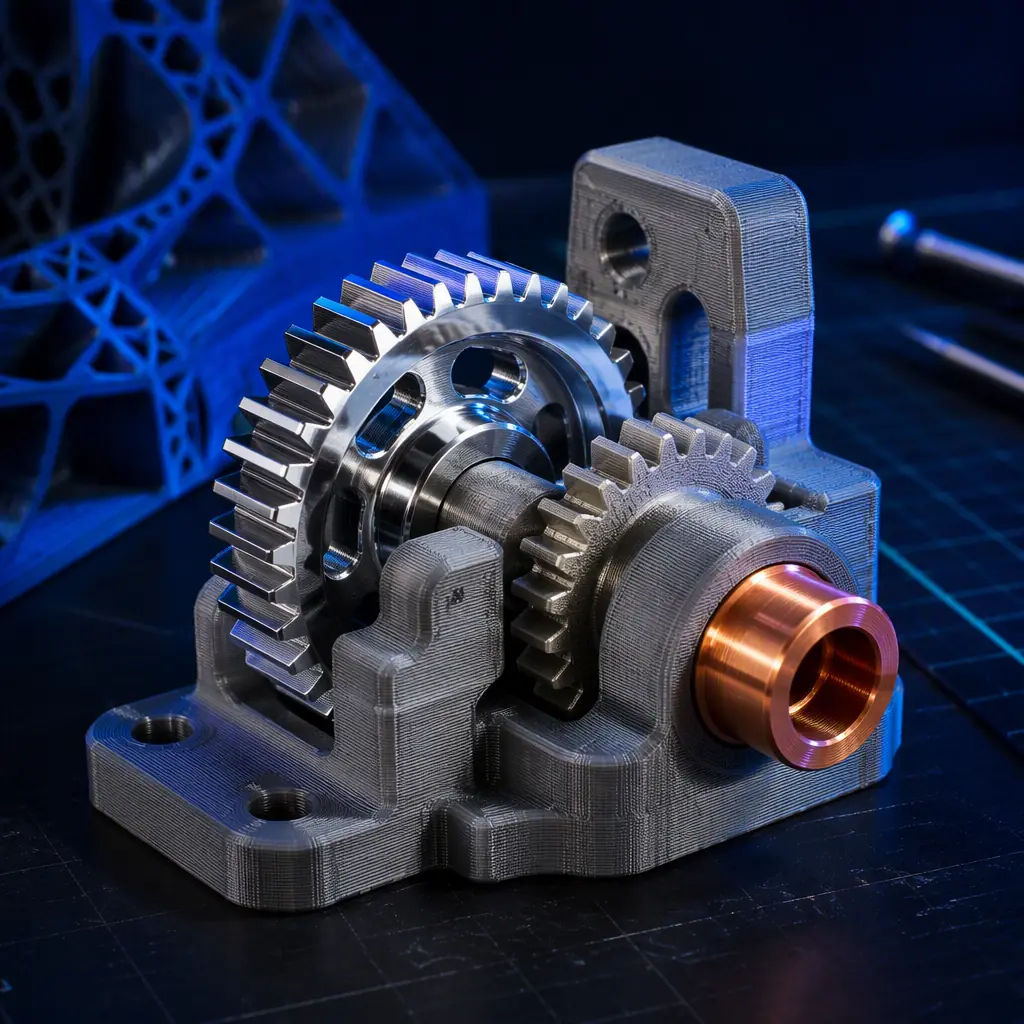
Unfinished FDM and resin parts fail the same three spec lines again and again. They are not electrically conductive, so they cannot ground, shield or carry current. They are mechanically soft, so a gear or bushing wears out. And their glass-transition temperature is low, so they soften well below where a metal part is comfortable. Metalizing addresses all three without giving up the geometry freedom and short lead time of printing.
The commercial math is the real driver. A machined aluminium or steel part in low volume runs $60-150 before finishing. A metalized printed part delivers comparable surface hardness, conductivity and metal appearance in the $8-30 range — roughly 20-30% of the cost for 40-60% of the performance. That ratio is why distributors market metalized prints as a premium line rather than a discount. For the full range of value-added surface work a distributor can sell, our post-processing & finishing guide is the anchor reference.
The Three Main Routes: Electrolytic, Electroless, and Metal-Filled
There is no single "plating a print" method. The right pick depends on whether the part needs to be electrically conductive, how thick a coating you want, and how hot the process can run. The three routes differ most in the seed layer and the current.
Electrolytic plating needs a conductive seed layer on the part, then grows a bright, thick deposit under a direct current. Electroless plating is autocatalytic — it deposits metal chemically without any electrical contact, which is what makes it produce an even coating on the complex, nested faces of a printed part where an electrolytic bath would throw unevenly. For the alternatives a forward-thinking distributor stacks alongside printed parts, see our metal 3D printing (DMLS/SLM) guide.
Electroless Nickel & Nickel-Phosphorus In Depth
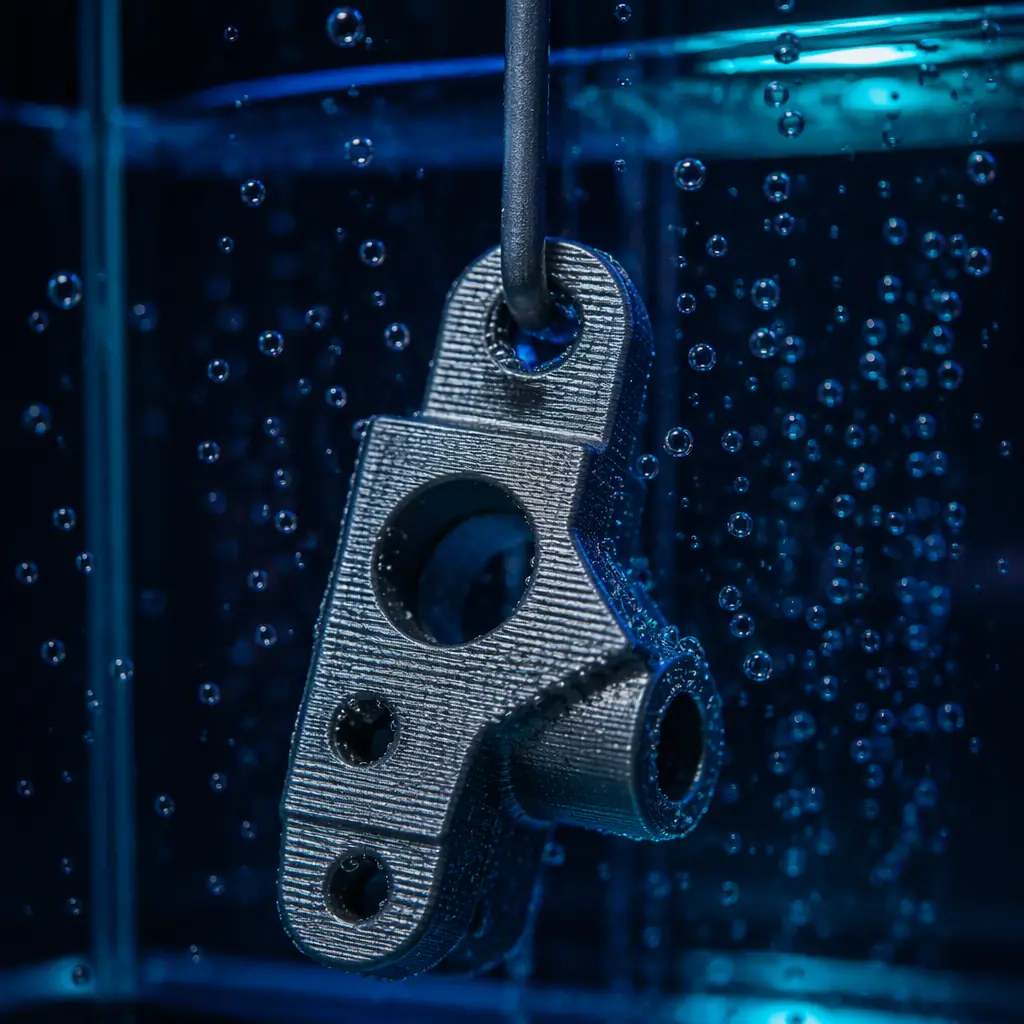
Electroless nickel is the workhorse of printed-part metalizing because it plates uniformly and is forgiving of geometry. A nickel-phosphorus (NiP) deposit with 6-12% phosphorus lands at roughly 500 HV as-plated, hardening toward 900 HV after a heat-treat cycle, and a 25-50 µm layer gives solid corrosion and wear resistance. Crucially, it coats the inside of channels, the underside of overhangs and the cavity of a thread without the edge build-up that kills an electrolytic finish.
What you're looking for: Under-electroplating, print-intricate parts build up a patchy deposit on bosses and edges and leave recesses bare. If you see thickness variation or bare spots in recessed features, you are in an electrolytic deposit on a part that should be plated electroless — switch routes and re-quote the thickness for the worst-case face.
Because electroless nickel is corrosion- and wear-resistant and provides a solderable surface, it is the default for fixtures, tooling and functional hardware that will see repeated contact. Fixing the fit tolerance around a plated thread is a frequent follow-on question; our tolerances & dimensional accuracy guide covers how a coating changes a mating dimension.
Copper and Chrome for Conductivity and EMI Shielding
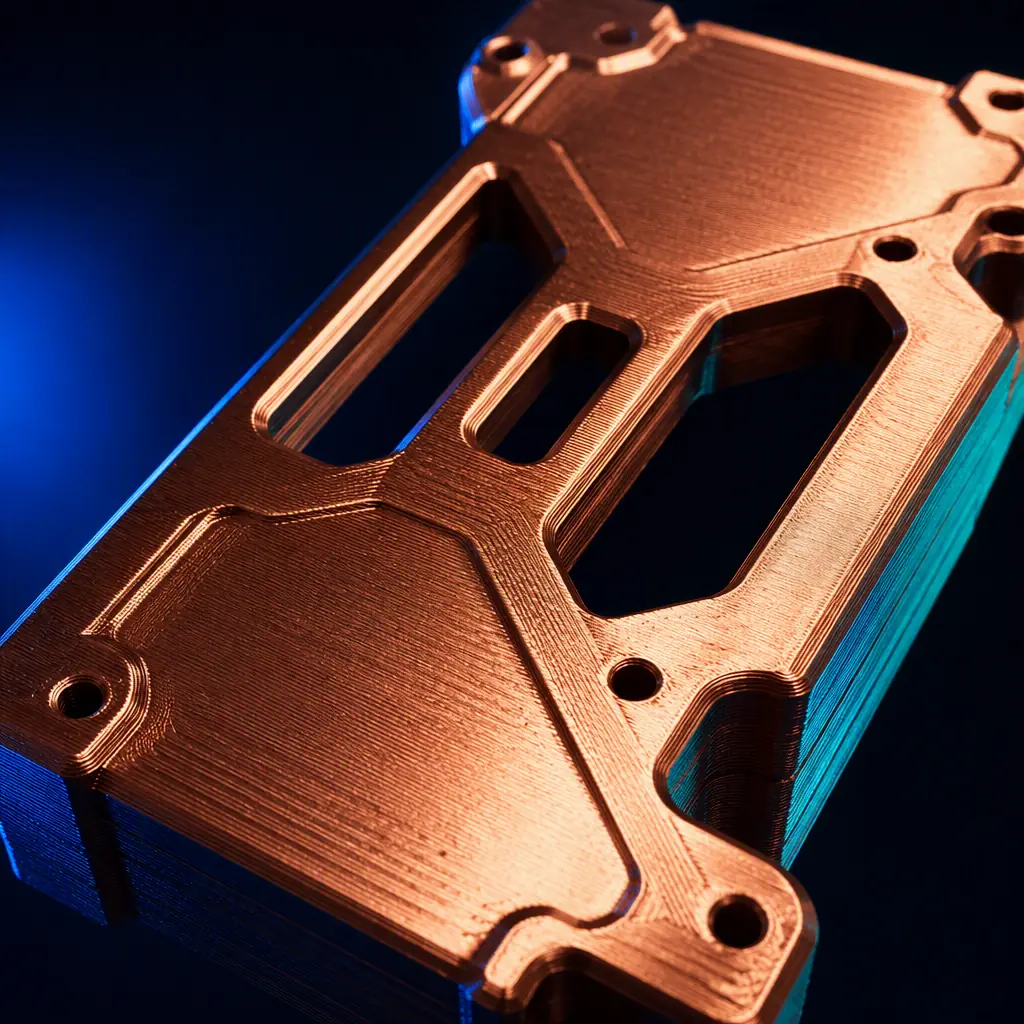
For a part that must electrically shield, a copper layer is the practical choice. A 12-50 µm electroless copper deposit gets sheet resistance below roughly 0.5 Ω/sq, which is enough for substantial electromagnetic isolation in an RF cabinet or an electronic enclosure. Where the goal is a bright metal appearance on a cosmetic or consumer part, a thin chrome topcoat delivers the mirror finish buyers equate with quality. Layering a conductive base and a decorative topcoat is common — copper for function, then a chromium flash for looks.
Metalized enclosures are exactly what a printed EMI shield needs to become real hardware rather than a theory. For the electromagnetic performance and the enclosure design angle, our EMI/RFI shielding & conductive enclosures guide is the reference.
Surface Prep Is Where Metalizing Succeeds or Fails
The layer lines of an FDM print are the enemy of a smooth metal finish. Each groove in the surface can trap plating chemistry and leave a rough, pitted deposit; a resin part with a glossy as-printed surface is easier but still needs degreasing. Prep starts with an isopropyl degrease, continues with an etch or desmear to key the surface, and for the smoothest result includes a solvent-vapour smoothing pass — acetone vapour for ABS or a chloroform/methylene blend for other thermoplastics — to close the layer channels before activation.
The temperature row is non-negotiable. Standard electroless nickel baths run $85-95°C, which will anneal or warp a PLA part instantly. Low-temperature electroless variants exist but plate more slowly and to a different phosphorus band. Matching the substrate to a bath the plastic can survive is the difference between a finished part and a melted one. For the bonding and coating family that pairs with plating, our adhesives, sealants & coatings guide is worth reading alongside.

Dimensional Accuracy and the Plating Thickness Budget
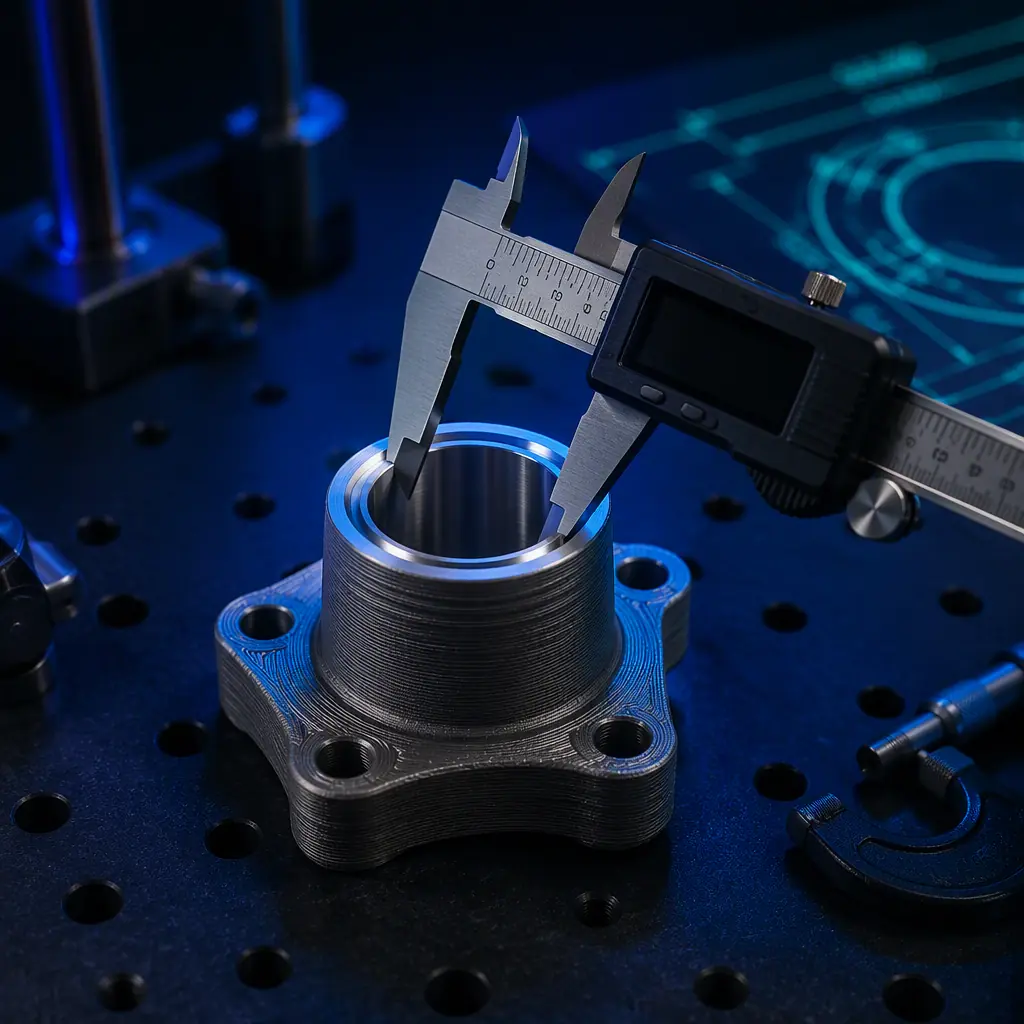
Plating adds material, and that addition is not a rounding error in a tight fit. A 25-50 µm electroless nickel deposit grows on every exposed face simultaneously — a mating hole closes in by that amount on every side, so a 10 mm bore becomes a 9.90 mm bore. The print must be designed oversized by the coating thickness on every surface, or the part simply will not assemble. This is the single most common mistake in metalized printed hardware.
The answer is a defined plating budget. Decide the coating thickness up front, offset the model geometry by that amount on the faces that mate, and validate the finish dimension on a test piece before committing a batch. A printed part has its own inherent variance, and the coating rides on top of it; our dimensional accuracy guide explains how to budget printing tolerance plus finishing thickness.
The Commercial Play for a Distributor
Metalizing turns a commodity print into a finished component, and that is where the margin lives. A distributor offering an in-house or partnered metalizing service can attach a finishing charge that buyers will pay because they would otherwise source a machined or injection-moulded part. Bundled with fast iteration, it becomes a design-partner story rather than a price per part.
There is a boundary, though. Below a certain quantity, metalizing beats both CNC and injection moulding on cost and lead time; above it, the economics flip. The rule of thumb on the part-on-demand side: metalized printing wins in the low-to-mid volume and high-complexity zone, while injection moulding takes over at scale. For how a distributor draws that line in a real quote, our injection moulding vs 3D printing guide compares the two economics head to head.
How Precise3D Helps Partners Sell Finished Components
At Precise3D we build precision 3D printers in our Shenzhen network and test every machine before packing, and we work with distributors who sell printed hardware across the full finishing spectrum — from raw functional parts to metalized components ready for a customer's assembly line. Our capabilities and engineering pages outline the material and process depth behind that, and our distribution program explains how a partner buys, brands and ships.
If you are evaluating us as a supplier, the honest route is a 1-5 unit sample order at wholesale pricing, tested in your own market. Custom branding begins at 100 units. Pair it with our post-processing guide to plan the finishing dollars you want to attach.
Reviewed by the Precise3D engineering & surface-finishing team. Coating thickness, hardness, conductivity and temperature figures follow standard plating practice and material manufacturer guidance and should be validated against the specific bath, substrate and grade. Auditable quality and compliance backing is held in the certification register.
Finish More, Sell More
Ready to Add Metalized Components to Your Catalog?
Join our network of global distributors. Precision printers, print-tested machines and a partner program built around finished, value-added parts — metalized or as-printed, ready for your customer's assembly line.