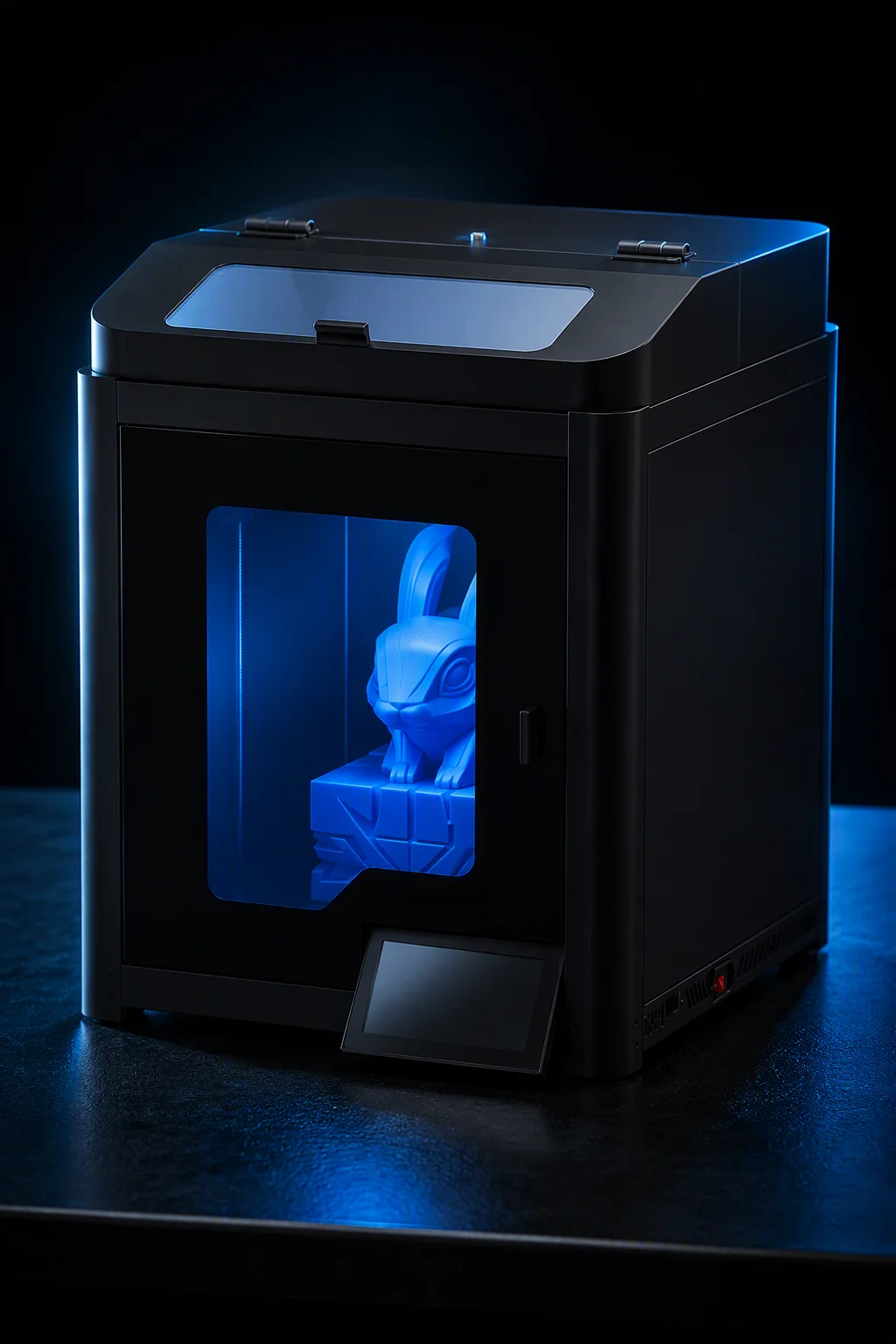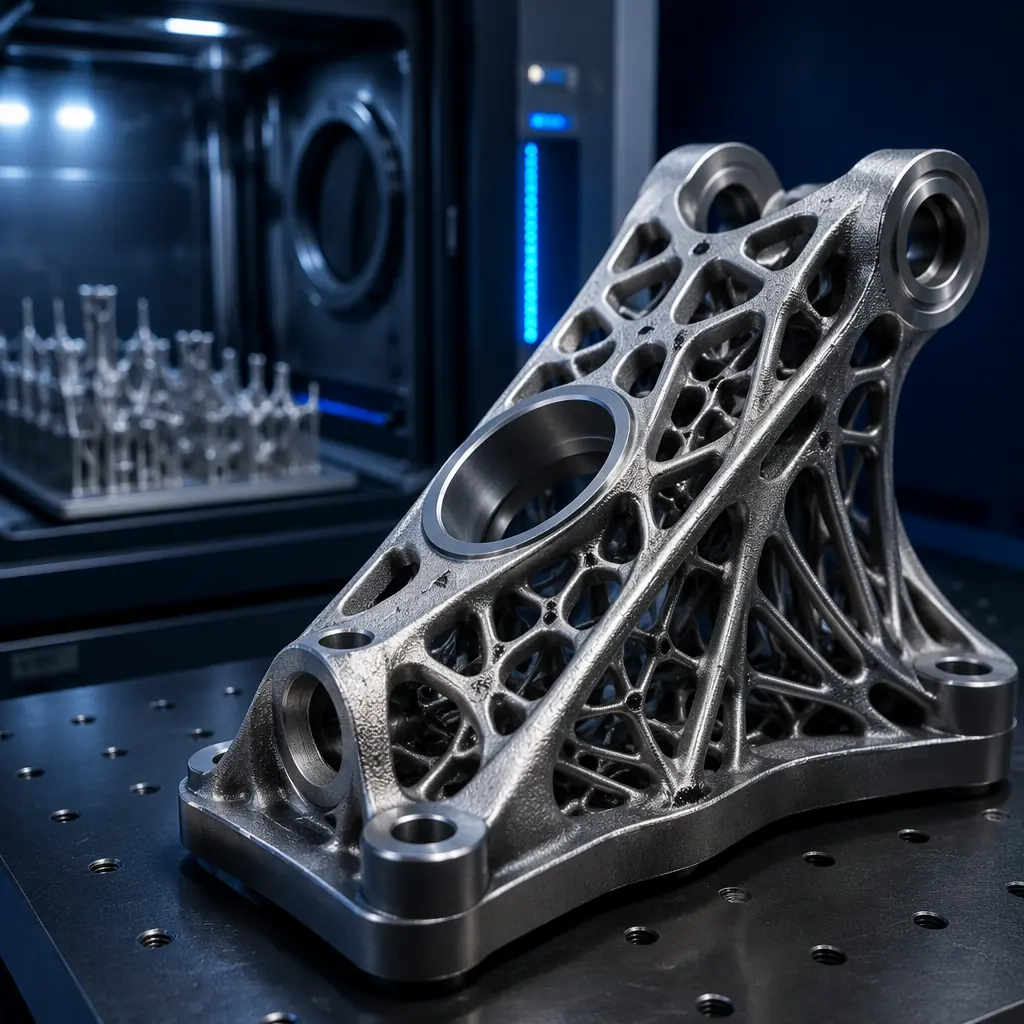
Walk through any Formnext or RAPID+TCT trade show floor and the pattern is unmistakable: the metal AM hall is packed. Aerospace engineers crowd around GE Additive's latest Concept Laser machine. Medical device manufacturers queue at EOS booths. Tooling directors from automotive Tier 1 suppliers fill the SLM Solutions demonstration area. Meanwhile, the polymer hall — FDM, resin, SLS — hums at a lower intensity. The money in additive manufacturing is flowing toward metal, and distributor portfolios that ignore this shift are leaving the highest-margin segment of the industry on the table. This guide is written for polymer distributors — those who sell FDM and resin printers today — to understand exactly what metal AM is, who is buying it, what it costs, and how to enter the market without the $500,000–1,500,000 capital outlay that a metal printer demands.
The Metal AM Technology Landscape: What Distributors Need to Know
Metal additive manufacturing is not one technology — it is a family of processes, each suited to different applications, part geometries, and production volumes. For a distributor, the relevant question is not "which technology is best" but "which technology matches my customers' needs and my business model."
Laser Powder Bed Fusion (DMLS/SLM) accounts for approximately 62% of all metal AM system sales by revenue. It uses a high-power laser to selectively melt metal powder, layer by layer, inside an inert gas chamber. The key distinction: DMLS (Direct Metal Laser Sintering) was EOS's trademark for a process that partially melts powder with a binding agent; SLM (Selective Laser Melting) fully melts the powder. In practice, all modern systems fully melt the powder, and the terms are used interchangeably in procurement documents. Binder jetting is the fastest-growing segment (31% CAGR) because it prints at 10–100x the speed of laser PBF by depositing a liquid binder onto metal powder beds, then sintering the green part in a furnace — the same post-processing workflow as metal injection molding (MIM), which means the supply chain already exists. Metal FDM — using polymer-bound metal filament that is debound and sintered — is the lowest-cost entry point, with systems from Markforged, Desktop Metal, and BASF starting at $50,000–150,000, making it the most accessible metal AM technology for distributors who already sell FDM printers.
Who Is Buying Metal AM — and What Are They Paying?
Metal AM buyers fall into three tiers: OEMs who own machines, service bureaus who print for others, and end-users who outsource entirely. For a distributor, the service bureau and end-user segments are the accessible markets — OEMs buy directly from machine manufacturers.
Aerospace is the largest and most demanding vertical. GE's LEAP engine fuel nozzle — consolidated from 20 brazed parts into a single DMLS-printed Inconel 718 component — is the canonical case study: 25% lighter, 5x more durable, and produced at scale (over 100,000 nozzles shipped by 2025). Medical implants represent the highest-margin application: a DMLS-printed Ti-6Al-4V spinal cage costs $80–150 to manufacture and sells to hospitals for $1,200–2,500. The regulatory barrier — ISO 13485, FDA 510(k) clearance — is high, but the margins make it the most attractive segment for a distributor who can supply certified material and post-processing services.
Action: Partner with 2–3 metal AM service bureaus and offer their capacity under your brand. Your polymer customers need metal parts occasionally — capture that demand without a $500K machine.
Metal Powder Economics: The Recurring Revenue Model
Metal powder is to metal AM what filament is to FDM — the recurring revenue stream that compounds with every machine sold. But the numbers are an order of magnitude larger. A single DMLS machine running two shifts consumes 300–500 kg of metal powder per year at $50–150/kg — that is $15,000–75,000 in annual powder revenue per machine. A service bureau with 5 machines generates $75,000–375,000 in powder purchases annually. For a distributor, powder supply is a higher-margin, lower-barrier entry point than machine sales. Key materials and their pricing:
Powder distribution requires ISO 9001 certification at minimum; aerospace buyers typically require AS9100D, and medical buyers require ISO 13485. The barrier is not capital but documentation — a well-documented powder supply chain with certificates of conformance and traceability from gas-atomized powder producers (AP&C, Carpenter Technology, Sandvik Osprey) is a defensible competitive advantage. Our certification compliance guide covers the documentation framework for regulated industries.
Three Entry Paths for Polymer Distributors
Distributors do not need to buy a metal printer to enter the metal AM market. Three capital-light entry paths exist, ranked by investment required:
Path 1: Metal Powder Distribution (Investment: $10,000–30,000).
Partner with a gas-atomized powder producer (AP&C, Sandvik, Carpenter) to distribute certified metal powders to service bureaus and OEMs in your region. This is the lowest-risk entry: you sell consumables to existing metal AM users, similar to how you sell filament to FDM users today. Minimum order quantities from powder producers are typically 50–100 kg, representing $2,500–18,000 in initial inventory. Margin per kg is $10–45, and a single mid-sized service bureau client consumes $15,000–50,000 in powder annually. For more on building consumables revenue, see our consumables bundling strategy guide.
Path 2: Service Bureau Partnership (Investment: $5,000–15,000).
White-label metal AM capacity from 2–3 established service bureaus and resell it to your polymer customers under your brand. Your customer sends you a CAD file; you forward it to the service bureau; they print, post-process, and ship to you; you deliver to the customer with your branding and a 20–40% markup. This model requires no inventory, no machine, and no technical expertise beyond understanding which technology fits which application. The key contract term: exclusivity by region, so your customers cannot bypass you and go directly to the bureau. Our portfolio strategy guide covers how to position complementary services alongside hardware.
Path 3: Metal FDM/ Bound Metal Deposition (Investment: $50,000–150,000).
Purchase a metal FDM system (Markforged Metal X, Desktop Metal Studio System, BASF Ultrafuse) for your demo center. This is the only path that lets you demonstrate metal printing in-house. The workflow — print bound filament part → debind in solvent → sinter in furnace — is operationally similar to resin printing (print, wash, cure), which makes it the most accessible metal AM technology for polymer-experienced distributors. Part cost is $35–65/kg after sintering, and the primary application is tooling, jigs, and fixtures — the same customers who buy your engineering filaments. For guidance on how to structure customer demos, see our B2B sales demo playbook.
Post-Processing: The Hidden Revenue Stream
Metal AM parts are not finished when they come off the printer. Every metal printed part requires: support removal (wire EDM or bandsaw), stress relief heat treatment (2–4 hours at 600–900°C depending on material), hot isostatic pressing (HIP) for aerospace parts to eliminate internal porosity, surface finishing (machining, grinding, or vibratory finishing), and inspection (CT scanning or dye penetrant). Post-processing accounts for 30–50% of the total part cost — meaning a $200 printed part becomes a $300–400 finished part after post-processing. A distributor who offers post-processing services — or partners with a local machine shop that does — captures that additional 30–50% margin without owning a printer. The same surface finishing equipment and skills that apply to polymer post-processing (see our post-processing guide) extend to metal with some additions: a basic heat treatment oven ($5,000–15,000), a vibratory finishing tumbler ($2,000–8,000), and a relationship with a local CNC shop for critical surfaces.
Is Your Market Ready for Metal?
Metal AM is not for every distributor. The decision to enter depends on three factors in your region: (1) the presence of aerospace, medical device, or precision tooling manufacturers — these are the industries that buy metal AM and have the budget to pay for it; (2) the existence of at least one metal AM service bureau within shipping distance, because you will either compete with or partner with them; and (3) your ability to provide documentation — certificates of conformance, material traceability reports, and post-process inspection data — because metal AM buyers care more about paperwork than price. If your region has aerospace manufacturers or medical device producers, the metal AM opportunity likely exceeds your polymer revenue within three years. If your region is predominantly consumer and education, metal AM may be a longer-term play — but the powder and service bureau partnership paths let you build relationships and expertise without significant capital risk.
Reviewed by the Precise3D engineering & OEM team. Compliance files that accompany the catalog are auditable at the certification register.
Enter the Metal AM Market
Expand Your Portfolio into Metal 3D Printing
Whether through powder distribution, service bureau partnerships, or in-house metal FDM, we provide the supply chain connections, documentation framework, and technical support to help polymer distributors capture metal AM revenue. Let's build your metal strategy together.