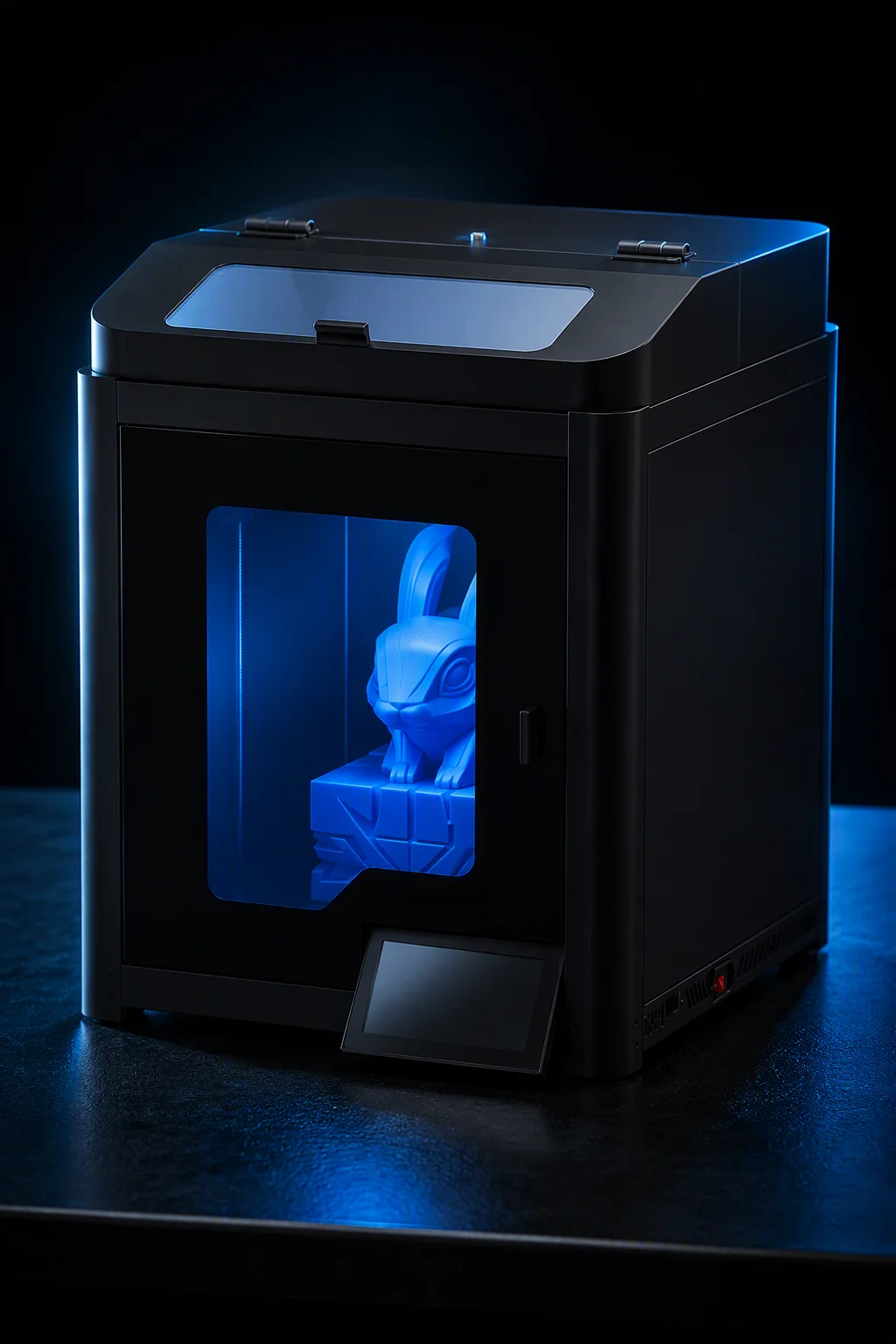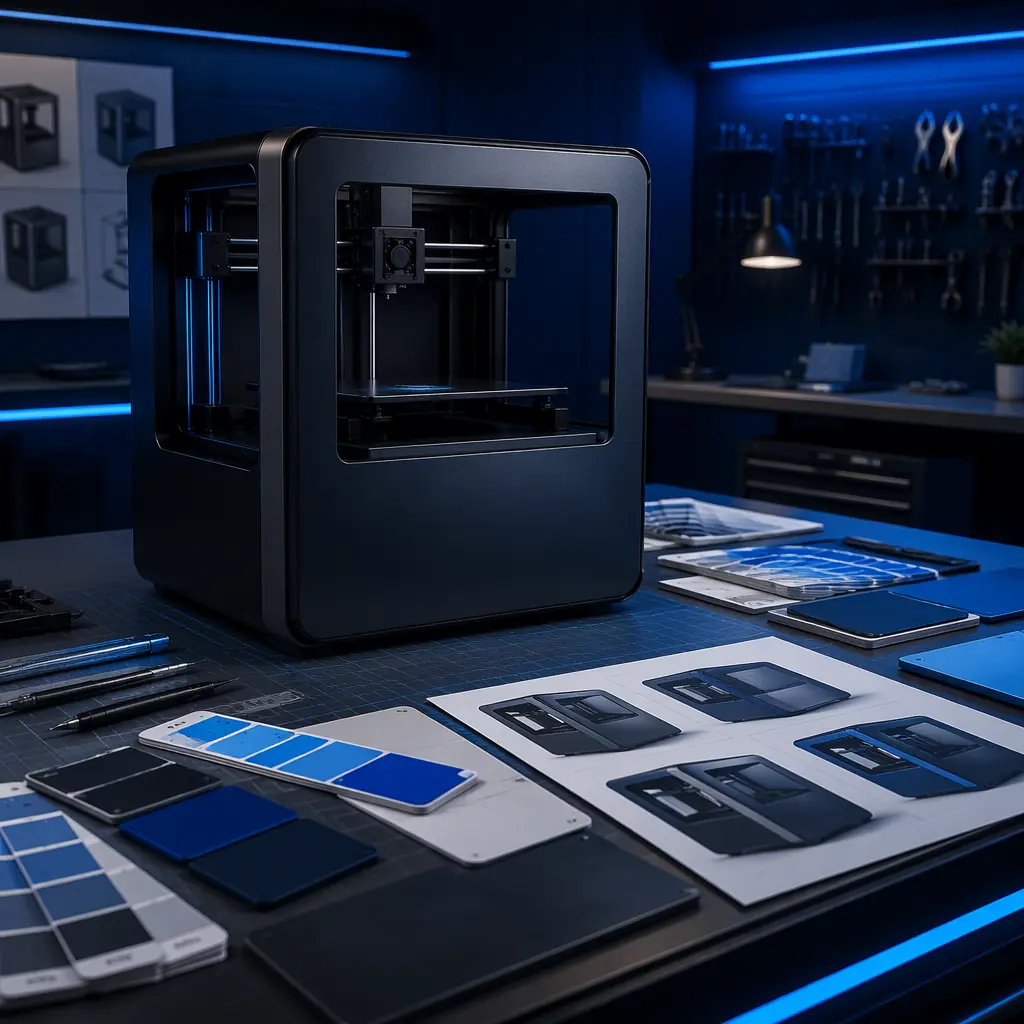
Every major 3D printer brand you recognize today — Creality, Elegoo, Anycubic — started as an OEM manufacturer selling unbranded machines to other companies. Somewhere along the way, they invested in a logo, a color scheme, a packaging design, and a marketing budget, and became "brands." The machines inside the boxes did not change; the perception of the machines changed. For a distributor, this history contains a powerful lesson: the gap between "OEM printer" and "brand" is smaller than it looks, and the financial reward for crossing that gap — an additional 15–25 margin points on every unit sold — is the most profitable move in the 3D printer distribution business.
This guide is based on interviews with 15+ distributors who have launched private-label 3D printer lines in the past 24 months, combined with Precise3D's own experience manufacturing OEM/white-label printers for 30+ distribution partners across 18 countries. Every number, timeline, and checklist item comes from real launches — not theory.
Why Private Label: The Margin Math
Before diving into the how, understand the why. The financial difference between reselling a brand-name printer and selling your own brand is decisive.
The $279 margin on a private-label sale is 33% higher in absolute dollars and 57% higher in percentage terms than the Bambu Lab $209. But the bigger difference is the last column: customer ownership. When you sell a Bambu Lab printer, the customer buys Bambu Lab filament, watches Bambu Lab tutorials, joins Bambu Lab Facebook groups, and contacts Bambu Lab for support. Your margin ends at the sale. When you sell your own brand, the customer buys your filament, watches your tutorials, joins your community, and contacts you for support. The lifetime value of a private-label customer is 3–5x that of a brand-resale customer. Our pricing and margin guide has the full lifetime value calculation.
Step 1: Finding the Right OEM Partner
Not every 3D printer factory can produce a private-label product. The capabilities you need go beyond assembly: the OEM must have in-house PCB design (for custom motherboard branding), firmware engineering (Klipper or Marlin customization), enclosure fabrication (sheet metal bending and powder coating), and packaging design support. A factory that only assembles from third-party components cannot deliver a differentiated product — you will end up selling the same machine as every other private label, competing solely on price.
Key evaluation criteria for an OEM partner:
- In-house R&D team: At least 3–5 full-time engineers who can customize firmware, modify frame geometry, and test component substitutions. Without this, your "brand" is a sticker.
- Certification portfolio: The factory should already hold CE (EMC + LVD), FCC Part 15B, RoHS, and ideally IEC 62368-1 safety certification for their existing models. Getting new certifications from scratch adds 6–12 weeks and $8,000–25,000 in testing fees.
- Minimum order quantity (MOQ): Most factories quote MOQs of 100–500 units for private-label orders. The realistic sweet spot for a first order is 50–100 units with a 20–30% price premium over the 500-unit rate. Accept the premium on your first order — you are buying market validation, not just inventory.
- Packaging capability: The factory should have an in-house or partnered packaging design team that can produce retail-ready boxes with custom printing, foam inserts, and multi-language manuals. A plain brown box with a sticker is not a brand.
Our factory audit and QC checklist covers the full 50-point inspection framework for evaluating Chinese 3D printer manufacturers, including sample product testing protocols and documentation requirements.
Step 2: Specifying Your Product
Your private-label printer needs to be differentiated on at least one dimension that matters to the buyer. "Same as a Bambu Lab P1S but cheaper" is not a brand position — it is a price war you will lose. "Same price as a P1S but with a larger build volume and open-source Klipper" is a position. The product specification stage is where you decide what makes your brand worth choosing over a recognized name.
The single most impactful specification decision is build volume. Bambu Lab standardized the market at 256 × 256 × 256 mm. A printer offering 300 × 300 × 300 mm or larger at the same price creates an instant, communicable reason to choose your brand over the default. "It prints bigger" is the simplest value proposition in 3D printing. The $30–60 cost adder per unit translates to a $100–150 retail price premium that buyers accept without hesitation. For more on product positioning, see our build volume selection guide and heated chamber guide.
Step 3: Certification — The Gatekeeper
Certification is where most first-time private-label projects stall. The requirements are not optional — without CE marking, you cannot legally sell in the EU. Without FCC compliance, the US market is closed. Without RoHS, customs in many countries will reject the shipment. The timeline and cost depend on whether your OEM already holds certifications for a similar model.
If your OEM already holds CE and FCC for an existing model that shares the same power supply, motherboard, and enclosure design as your private-label version, the certification process shrinks to 1–2 weeks of re-labeling and documentation updates. This is why choosing an OEM with an existing certification portfolio is the single most important shortcut in the entire process. Our certification and compliance guide has the full regulatory framework for each target market.
Why: A first production run of 50–100 units generating $15,000–30,000 in gross profit cannot absorb $10,000–25,000 in certification costs. The math only works if certification is effectively free (re-label under existing certificates).
Step 4: Branding, Packaging, and the Unboxing Experience
Your brand lives or dies in the first 60 seconds of the unboxing experience. A customer who opens a plain brown box with a photocopied manual and loose accessories has already decided your printer is "cheap Chinese." A customer who opens a retail-quality box with custom foam inserts, a color-printed quick-start guide, a neatly coiled USB cable, and a thank-you card has already decided your printer is a premium product — before they ever turn it on. The unboxing experience is the cheapest form of marketing you will ever invest in: an additional $3–5 per unit in packaging spend translates to a 20–30% reduction in return rates, better reviews, and stronger word-of-mouth.
Key branding deliverables:
- Logo and color palette: Hire a professional designer ($500–2,000). Your logo will appear on the printer chassis, packaging, manual, website, and social media. Amortized over 1,000+ units, the per-unit cost is negligible, but a bad logo amortizes forever.
- Chassis branding: At minimum, a silk-screened or laser-etched logo on the front panel and build plate. Premium option: custom-colored aluminum extrusion (anodized in your brand color) — adds $5–10/unit but makes your printer instantly recognizable in photos.
- Packaging design: Retail-ready box with full-color printing, foam inserts cut to your printer's exact dimensions, accessory box with compartments. Generic packaging is the fastest way to destroy the premium perception you are trying to build.
- Manual and documentation: Professionally written, multi-language (English + Spanish + local language), with high-quality photographs — not screenshots of CAD models. This is the most undervalued branding asset. A 40-page color manual costs $1.50/unit to print and reduces post-purchase support tickets by an estimated 25–30%.
Step 5: Go-to-Market Launch
Your first production run of 50–100 units should sell within 90 days. If it takes longer, you have either overestimated demand or underinvested in launch marketing. The launch strategy for a private-label 3D printer has three components:
Pre-launch (4 weeks before arrival):
Build a waitlist. Create a landing page with product photos, specs, and a "notify me" email signup. Run $200–500 in Facebook/Instagram ads targeting 3D printing interest groups in your target country. Post teaser content in local 3D printing Facebook groups and forums. The goal is 200–500 email signups before the first unit arrives. Our digital marketing guide covers the full ad targeting strategy.
Launch week:
Send review units to 3–5 YouTube reviewers in your target market (budget: $0–500 — most small-to-mid reviewers will review for a free printer). A single 15-minute YouTube review from a channel with 10,000–50,000 subscribers will generate more qualified leads than $5,000 in Facebook ads. Time the review publication to coincide with your product going live for sale.
Post-launch (90 days):
Build a Facebook group or Discord server for your brand community. Post weekly print showcases, troubleshooting tips, and mod guides. The community is your moat — once a buyer is invested in your brand's community, they are 3–5x less likely to switch to a competitor for their next printer or consumables purchase.
For international logistics and fulfillment, see our guides on shipping from China and after-sales support strategy.
The ROI Timeline: What 15 Launches Taught Us
Based on data from 15 distributor-led private-label launches between Q3 2024 and Q1 2026, the typical financial trajectory looks like this:
The numbers assume an average wholesale cost of $320/unit and an average selling price of $600 (online + retail mix). The key inflection point is the second production run: by month 6, the cumulative investment has been recovered and the business transitions to positive cash flow. Distributors who commit to three production runs (approximately 300 total units over 9 months) report annualized net profits of $80,000–150,000 from their private-label line alone — and that is before consumables revenue, which typically adds 30–50% on top. For the consumables strategy, see our consumables bundling guide.
Building a private-label 3D printer brand is not easy, but the margin arithmetic makes it the most profitable move a distributor can make. The brand-name printers you resell today will always cap your margin at 25–30%. Your own brand has no cap.
Reviewed by the Precise3D engineering & OEM team. Compliance files that accompany the catalog are auditable at the certification register.
Launch Your Brand
Precise3D OEM & White-Label Program — Your Printer, Your Brand
We manufacture Klipper-based CoreXY printers engineered for private labeling. CE, FCC, RoHS certified. Custom chassis colors, branded firmware boot screen, retail packaging design support. MOQ from 50 units. Contact us for a private-label specification sheet and sample pricing.