The Material-Handling Wear-Part Problem
A conveyor is a machine that rubs against itself. The belt rubs the wear strip, the product rubs the roller, the chain rubs the guide rail, and the drive sprocket meshes with a chain a million times a shift. These wear surfaces are consumables with a predictable life: usually a few months on a busy line, and the plant has to plan for them. When an OEM part is sized wrong, a legacy line is out of production, or a special product profile needs a custom roller, the plant waits on a machined or moulded part. That wait is the gap that printing closes.
For the wider automation and material-handling opportunity, our warehouse automation & material handling guide and our print-farm automation guide frame the broader picture.
The High-Value Printed Conveyor Parts
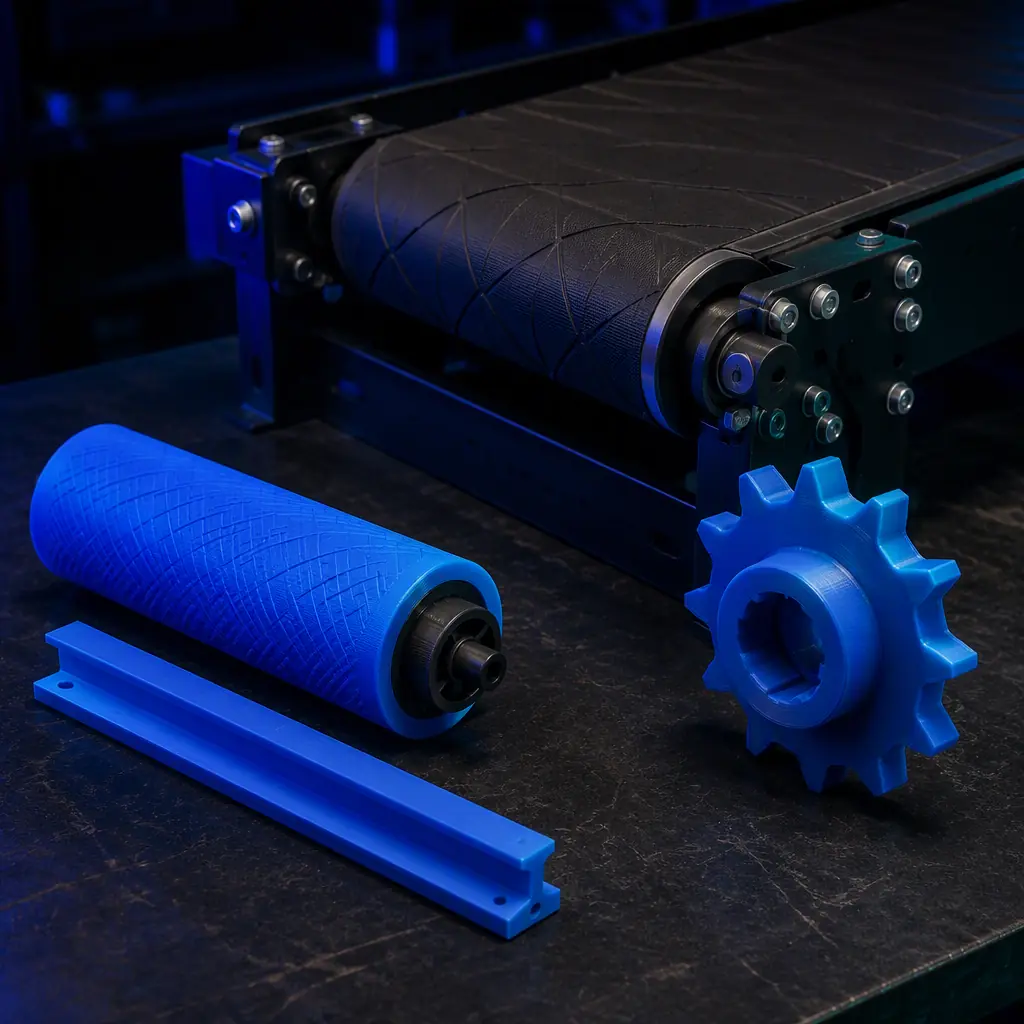
The parts that move material and take the wear are the ones that pay off printed. A crowned conveyor roller self-centres the belt and is a clean, quiet, dimensionally-stable replacement; a belt wear strip is a flat, low-friction, abrasion-resistant strip that sits under the belt; a drive sprocket meshes a chain and wears on the tooth flank; a guide-rail bracket and end cap locate and terminate a rail. Because these parts are simple prismatic shapes with a wear function, they print fast, at low cost, and can be iterated to fit an oddball profile.
For the mechanical power-transmission side of the drive train, our printed gears & power transmission guide is the companion read.
Materials That Survive Friction
Wear surfaces want a material with low friction, high abrasion resistance and dimensional stability under load. PA-CF (nylon with carbon fibre) is the default. Low coefficient of friction, outstanding abrasion resistance, stiff and low-warp, so a crown or a tooth profile stays true. PA-GF is a lower-cost stiff alternative; PC works where impact and temperature outweigh friction; PETG is a cheap option for a non-wear, low-load part or a mock-up. For a drive element under real torque, consider a metal or metal-filled route. For the material range, our engineering filaments guide and our carbon-fibre filled filament guide are the reads.
Fit, Crown and Wear Life
Getting a printed conveyor part right is about three things: the crown (a slight barrel on a roller self-centres the belt and keeps it tracking), the fit (a press-fit or held bore that does not wobble), and the material choice for the wear surface. A crowned roller printed in PA-CF runs quieter and tracks better than a straight steel roller, because the belt rides to the high point rather than crawling off the edge. For the load-bearing accuracy that keeps a roller concentric, our dimensional accuracy guide and our design-for-AM rules guide cover the tolerances.
What you're looking for: A crowned roller, wear strip or guide surface → PA-CF for low friction and long life, with an accurate bore and a true crown; a drive sprocket or meshing element under real torque → PA-CF or a metal-filled/metal-AM route, sized for the actual load; a decorative or structural guard → PETG or PC at low cost. Always confirm the printed part does not deform at the running temperature and load of the line.
Distributor Economics: The Wear-Part Account
Conveyor components are a scheduled, repeat purchase. A plant that runs a line through food, packaging, dairy, timber or automotive knows it will burn through a set of wear parts on a regular cadence. An account starts with a $500–1,200 printer sale (or a set of printed roller, strip and sprocket replacements) and grows into $3,000–8,000/year in material and consumables as the line matures. The fit-out message, a crowned roller or custom wear strip that a stock part cannot match, is the wedge that wins the account. For the surrounding consumables and accessory model, our consumables & accessories bundling and our portfolio & market-segment strategy are the reads.
The entry plan:
(1) Run a chamber-heated printer with a hardened nozzle and keep PA-CF plus a low-friction material set in stock. (2) Print a demo kit of the fastest-moving, highest-wear conveyor parts, a crowned roller, a belt wear strip, a drive sprocket, a guide-rail bracket. (3) Approach plant and maintenance engineers in food & beverage, packaging, timber, grain and heavy industry. (4) Lead with wear life and fit: a custom crowned roller or a wear strip that outlasts the stock part. For the wider machine-shop and tooling route, our machine shop & CNC guide and our manufacturing tooling guide round out the spread.
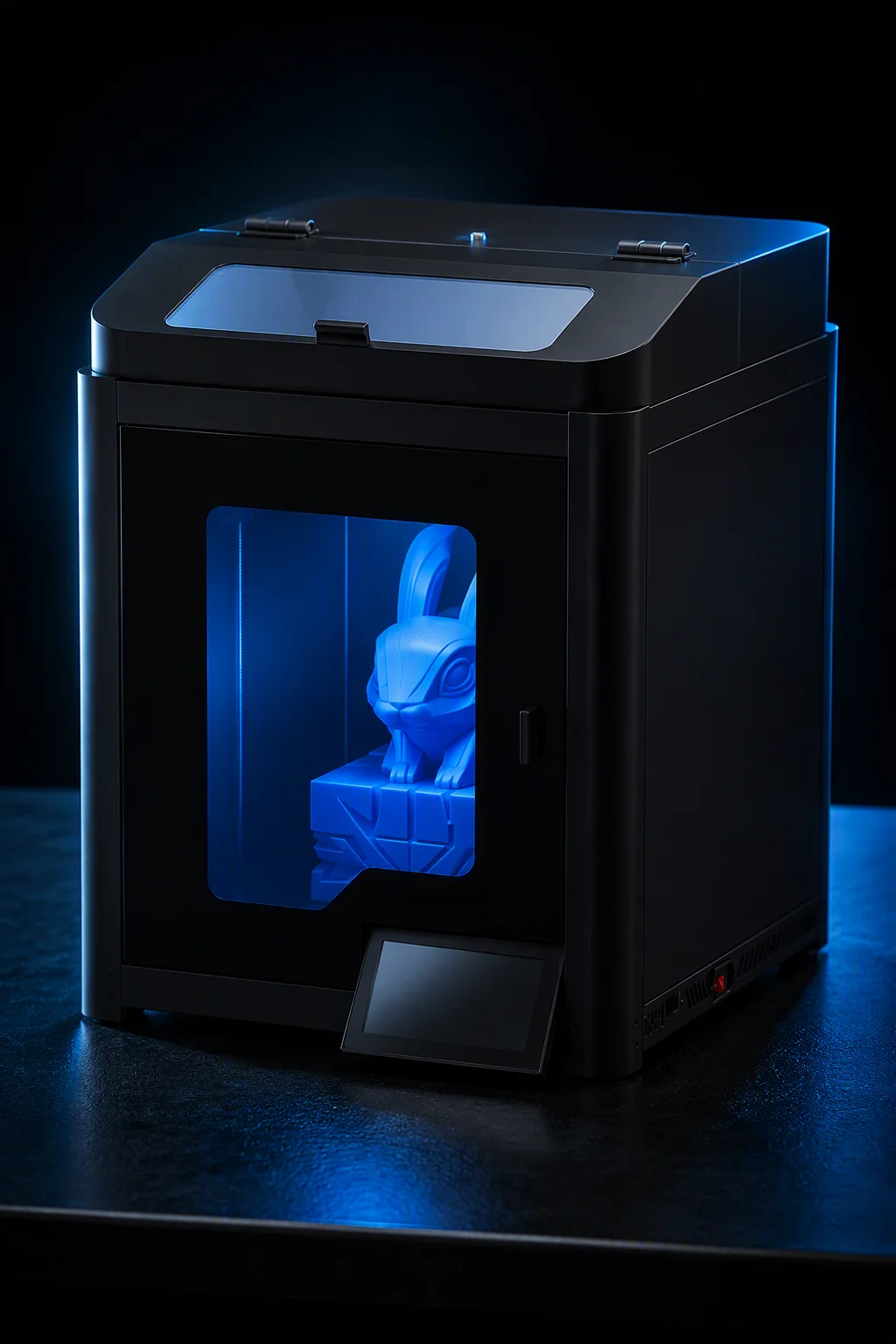
Wear parts are a guaranteed, scheduled, high-margin account, and the parts that rub and roll are exactly what a wear-resistant polymer makes best. At Precise3D, our chamber-heated, hardened-nozzle FDM platform with low-friction PA-CF delivers crowned rollers, wear strips, drive sprockets and guide-rail hardware, custom, accurate, abrasion-resistant material transport components delivered fast.
Reviewed by the Precise3D engineering & OEM team. Compliance files that accompany the catalog are auditable at the certification register.
Enter This Vertical
Ready to Supply Printed Conveyor Components to This Market?
Join our network of global distributor network. Chamber-heated, hardened-nozzle printers with low-friction PA-CF and wear-resistant polymers, plus a demo kit of the fastest-moving, highest-wear conveyor parts, everything you need to open the wear-part account.