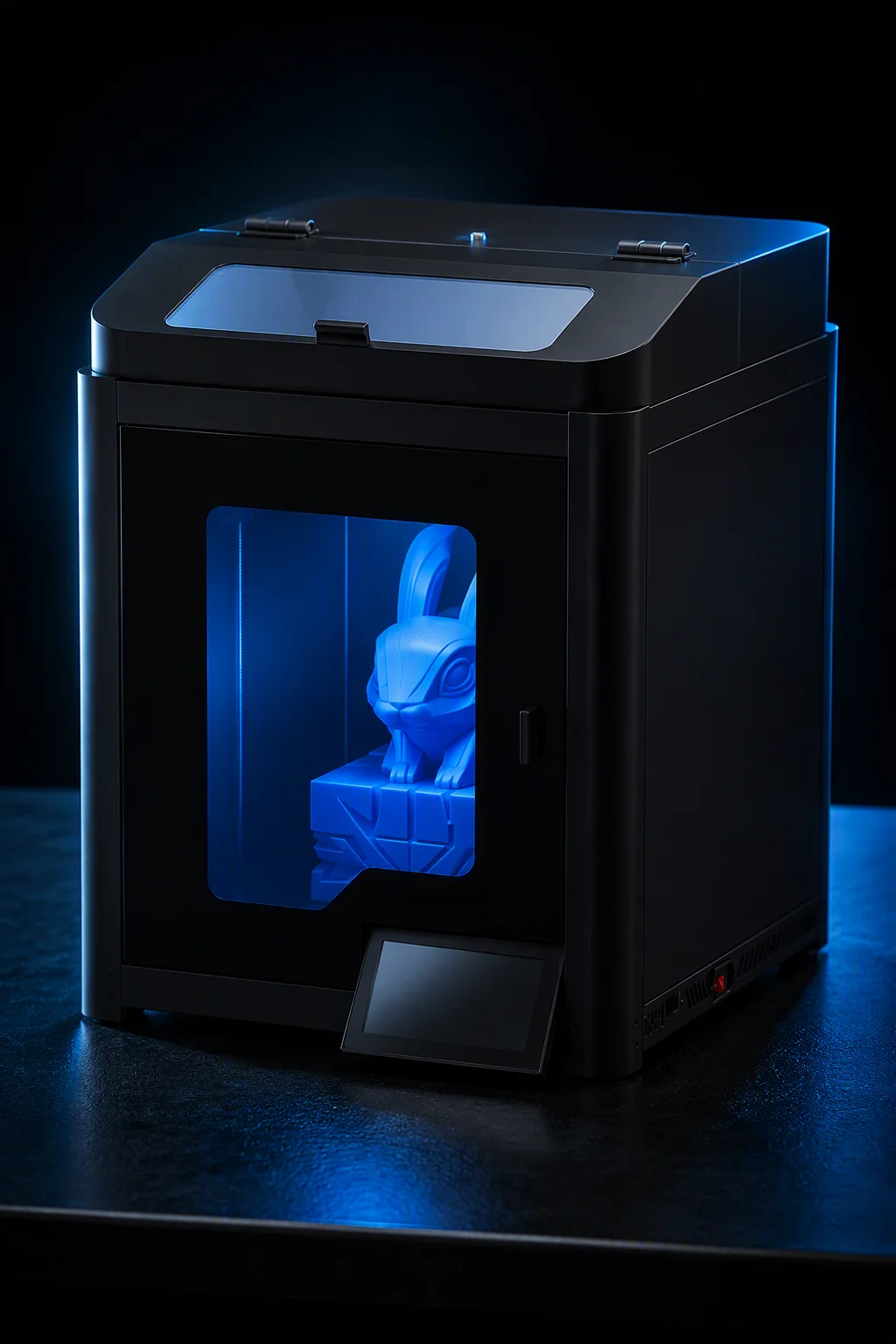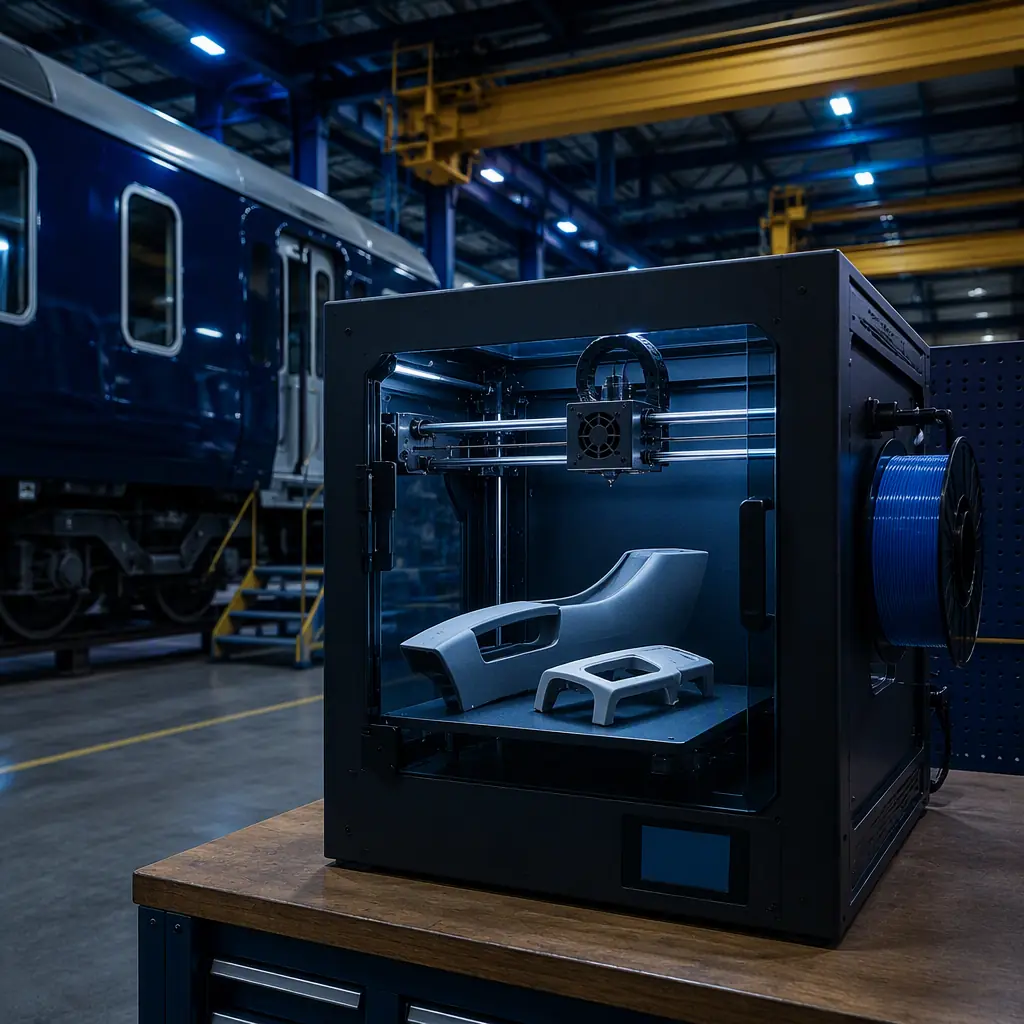
Consider the obsolescence math of a single fleet. A regional transit operator with 200 railcars carries approximately 3,000-5,000 unique small plastic part numbers per vehicle class. Every year, 5-10% of those part numbers are discontinued or become backordered by their original suppliers. For each obsolete part, the operator either pays a remanufacturer $500-5,000 for a minimum run, or keeps the vehicle in service with a compromised part that fails the next interior audit. A depot 3D printing program changes the economics: jigs and fixtures for assembly and inspection are printed with no compliance burden, non-structural interior spares (seat trim, cable covers, spacers, grommets) are printed in flame-retardant PC/ABS with the fire rating documented, and the part file becomes a permanent digital asset that costs nothing to reprint. For the framework on which verticals to prioritize, see our portfolio strategy guide.
The Railway Customer Segments That Buy 3D Printers
Mass transit is four distinct customer segments. Rolling stock OEMs buy printers for production tooling; maintenance depots buy them for obsolescence management; transit authorities drive the budgets and the compliance requirements; and interior refurbishment contractors buy them to accelerate vehicle overhaul programs. Each segment has a different entry point, and the smart distributor enters through the least compliance-heavy door first.
Maintenance depots are the highest-value entry segment because they have the pain, the budget, and the lowest compliance barrier for non-structural parts. A depot servicing 500 railcars replaces thousands of small interior parts per year, many of them obsolete, at an average cost of $80-400 each including expediting. A depot with 3 printers and a documented flame-retardant material program converts that spend into $5-40 filament parts with same-day availability — and every depot becomes a $1,500-5,000 monthly consumable account. For the consumables bundling strategy that maximizes per-account revenue, see our consumables bundling guide.
What you're listening for: If the answer is more than 50 parts with lead times over 3 weeks, the depot is ready for a printing program. The compliance gate is the real question: ask whether the parts are interior (fire-rated) or workshop tooling. Depots with active interior audit findings on non-compliant substitute parts are the fastest closers — a documented flame-retardant filament with a UL94 V-0 datasheet directly solves their audit exposure.
Fire Safety Compliance: The First Gate Every Distributor Must Understand
Railway is the only vertical where material selection is dictated by regulation before engineering. Interior rail components in Europe must meet EN 45545-2, which classifies materials by hazard level (HL1-HL3) based on vehicle type and proximity to evacuation routes, testing flame spread, heat release, smoke density, and toxicity. In North America, the reference is NFPA 130 and the ASTM E162/E662 tests; globally, UL94 flammability ratings are the common denominator that procurement teams check first. The practical rule for desktop 3D printing: structural and fire-critical parts are out of scope for now — but non-structural interior parts (trim, covers, spacers, grommets, brackets) printed in flame-retardant PC/ABS blends with documented V-0 ratings and smoke data are increasingly accepted by depot engineering teams, especially when the part file, material datasheet, and print parameters are documented in the same package as a conventionally supplied part.
Flame-retardant PC/ABS is the workhorse of rail interior printing — it delivers V-0 ratings, good impact strength, and prints on any enclosed printer with a 260°C hotend, at $45-70/kg wholesale (a premium SKU with premium margins). PEI-type materials meet the strictest EN 45545-2 HL3 requirements but demand a high-temperature printer with a 350°C+ hotend and heated chamber — a separate, higher-ticket sale for compliance-critical parts. For the distributor, the compliance knowledge itself is the differentiator: being able to hand a depot engineer a UL94 V-0 datasheet with a printed sample kit closes deals that no commodity filament seller can touch. For the full material selection and margin breakdown, see our engineering filaments guide and the PEEK/PEI/PPSU industrial materials guide.
Printer Requirements for Depot Environments
A railway maintenance depot is a demanding environment: high bays, welding and grinding dust, temperature swings, and strict housekeeping standards. The printers sold into this market need an enclosed frame, an all-metal hotend capable of 280-290°C minimum (FR PC/ABS prints at 250-270°C, PC at 260-280°C), a heated chamber for warpage control on large parts, and — because printing PC and nylon produces fumes — a carbon filter or external ventilation kit for enclosed depot workspaces. Printers in depots run unattended overnight to deliver parts by morning shift, so thermal runaway protection, filament runout detection, and power-loss recovery are non-negotiable. For the complete printer selection criteria, see our build volume guide, enclosed vs open frame comparison, and safety features guide.
Build volume requirements for rail parts split into two tiers. Most interior trim, covers, and brackets fit a 256 mm cube; door panels and large duct covers need 300×300×350 mm or larger. The depot sweet spot is a 300 mm class printer that batches 8-15 small interior parts per build — a night shift producing a week's worth of obsolete-part replacements. Jigs and fixtures for assembly and inspection typically need 220-300 mm and are printed in PETG or nylon with no compliance burden, which makes them the perfect pilot application to get printers into a depot before the fire-rated interior part program starts. For the industrial and large-format considerations, see our large-format printer guide.
The Distributor Go-to-Market Playbook for Railway
Railway procurement is formal: approved vendor lists, technical reviews, and documentation requirements. The playbook that works: (1) enter through jigs and fixtures — depots and OEMs can adopt printed tooling with zero compliance review, so pilot the printer as a tooling solution first; (2) build relationships with depot engineering managers and rolling stock OEM tooling teams — they are the internal champions who can push a printed interior part program through their own compliance process; (3) show up at rail industry events (InnoTrans in Berlin, Railway Interchange, regional transit association conferences) with a sample kit of printed rail parts plus the material datasheets for each; (4) position the conversation as obsolescence management: "we convert your discontinued part numbers into digital files that cost $5-40 to reprint, with the fire rating documented." The sales cycle is 6-12 months — longer than any other vertical — but the accounts are contract-based and the competition is nearly zero. For the complete distributor sales methodology, see our B2B sales demo playbook.
Recurring Revenue: Rail Accounts Are Contract-Sized
Railway accounts generate the largest recurring revenue of any vertical because they are procurement-contract based and compliance-locked. A depot printing interior spares and tooling consumes 20-40 kg of filament per month, weighted toward premium flame-retardant PC/ABS at $45-70/kg — a $900-2,800 monthly consumable account from a single depot. Add hardened steel nozzles (filled FR blends wear brass within 4-6 kg), PEI build sheets, carbon filter replacements, and maintenance kits, and a transit authority with 3 depots becomes a $4,000-9,000 monthly account at 40-55% gross margins. Switching costs are structural: once a depot's engineering team has qualified a filament brand with datasheets and audit records, replacing it means re-qualification — so retention is the highest of any vertical. For the maintenance plans and extended warranty models that lock in recurring revenue, see our maintenance plans guide.
Competitive Landscape: Why Rail Is the Last Undefended Vertical
Railway is the vertical that 3D printer distributors systematically avoid — the compliance requirements look like a barrier, so almost nobody builds the expertise to sell through them. The industrial AM vendors who do serve rail focus on certified structural parts, qualification programs that take 2-4 years, and six-figure systems for OEMs. The depot-level need — obsolete interior trim, cable covers, brackets, and workshop tooling — is served by nobody. The distributors who learn EN 45545-2 and UL94, stock flame-retardant PC/ABS and PEI-type materials, and document every printed part the way a supplier would, face an addressable market with essentially zero direct competition: rail operators in the United States and Europe alone spend hundreds of millions annually on obsolete part replacement. The addressable market for rail-sector 3D printing hardware and consumables in North America and Europe combined is estimated at $200-400 million annually. For the market trend analysis supporting vertical expansion timing, see our 2026 market trends report.
Bottom Line
Railway is the highest-barrier, highest-reward vertical in desktop 3D printing. The compliance gate that scares competitors away is the moat that protects the distributors who master it. The entry path is deliberate: jigs and fixtures first (no compliance burden), flame-retardant interior spares second (documented V-0 materials), and the long sales cycle is offset by contract-based accounts with the highest retention and largest consumable volumes of any vertical. A distributor with 6 rail accounts averaging 4 printers each generates $45,000-80,000 in annual recurring consumable revenue at 40-55% margins — with an asset base (qualified part files, documented materials, depot relationships) that compounds over years. The distributor who walks into InnoTrans with printed rail parts and datasheets in hand will own the depot segment of this vertical before the industry realizes desktop 3D printing passed the rail compliance test.
Reviewed by the Precise3D engineering & OEM team. Compliance files that accompany the catalog are auditable at the certification register.
Start Your Partnership
Ready to Bring railway transit to Your Market?
Distributors selling railway transit build margins with OEM & white-label hardware - request the program sheet and volume pricing.