Why Wineries & Distilleries Are a Hidden 3D Printing Market
Unlike consumer 3D printing, where the buyer is a hobbyist chasing a shiny new toy, the beverage production business buys 3D printing to solve a concrete, expensive problem: lines stop when a small part breaks. A bottle rinser nozzle, a label-arm cam, a level sensor bracket, a cork-spindle guide. These parts are each worth $30–300 in OEM spares, but when a filler runs at 12,000 bottles/hour, a 3-day wait for a part shuts down one shift of production worth tens of thousands of dollars in lost output and labour. That is the value equation a distributor sells: not the part, the uptime.
Three structural drivers make this market ready now. First, shrinkflation in the OEM parts catalog: equipment makers are trimming spare-parts lines and pushing minimum order quantities of 50–100 units for parts customers need one or two of. Second, the labour shortage: wineries and craft distillers are chronically short on staff, so anything that speeds changeover or reduces manual rework gets approved fast. Third, short-run SKU proliferation: craft brands rotate bottle formats, closures, and labels constantly, which means change parts are everywhere. For the wider context on why beverage and food equipment is a strong vertical for 3D printed replacement and changeover components, see our food & beverage processing equipment guide.
Bottling-Line Change Parts: The Fastest Win
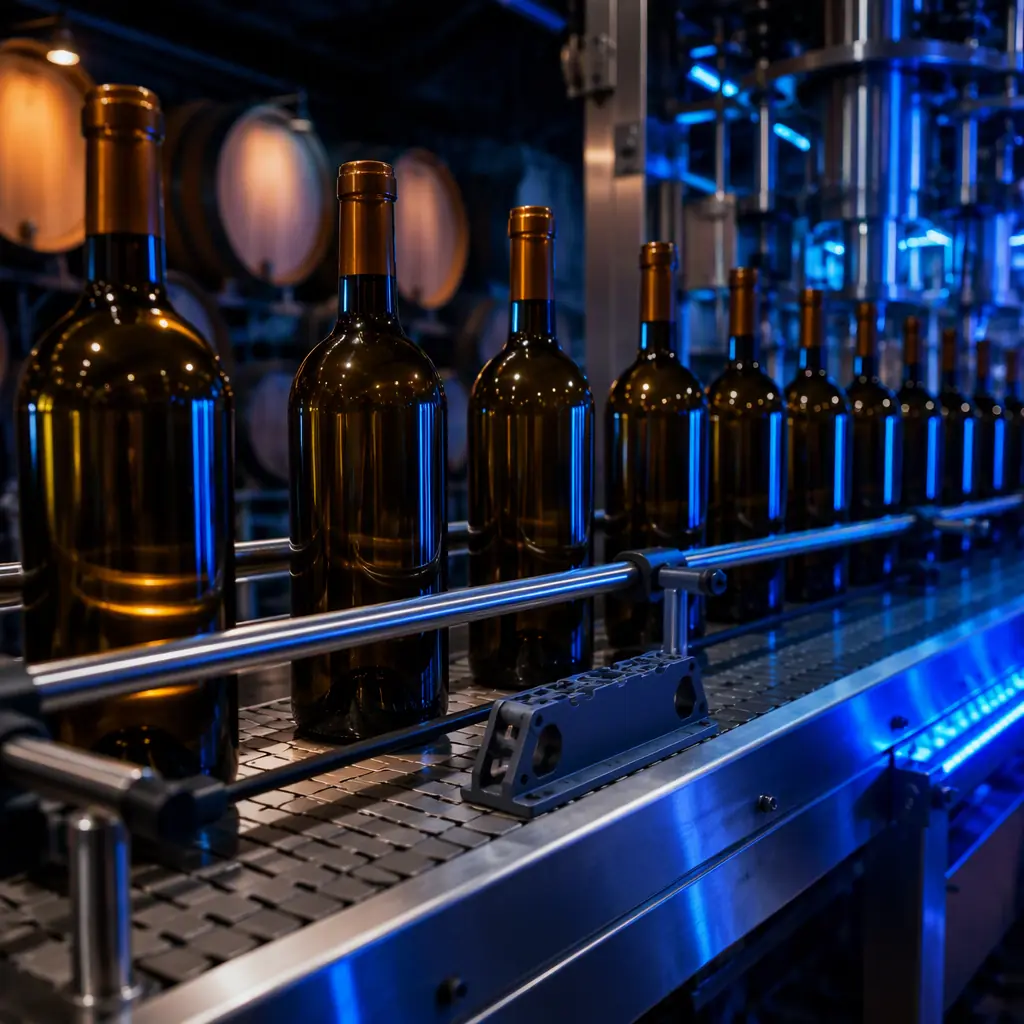
The single best entry point into a winery or distillery is the bottling line. A modern bottling line has three sub-systems that all consume custom or discontinued parts: the rinse/sterilise section (bottle rinsers, grippers, nozzles), the filler/corker (cork spindles, tappets, star wheels, cap chucks), and the labeller (cam followers, pressure plates, glue-neck guides). These parts share three properties that make them ideal for 3D printing: they are small, they are produced in low quantities, and they are periodically redesigned.
The changeover playbook:
your highest-frequency sell is bottle-size and closure changeover. A 750 ml bottle into a 375 ml half-bottle, a cork into a screw cap, a Bordeaux shape into a Burgundy shape: each change requires a different star wheel, bottle guide, capper chuck, or label pressure plate. OEMs sell these at $80–400 per piece with 3–6 week lead times. A 3D printed PETG or PP version prints in 2–4 hours. This is a same-week, same-day close. The distributor captures hardware on the first sale and recurring part orders for years, because every new bottle format the winery adopts is another part order.
Racking & Barrel Handling: Custom Tooling at Scale
Beyond the bottling line, the cellar is full of tooling opportunity. Racking (moving wine off the lees) and barrel handling involve wet, repetitive, hard-on-the-back manual labour, which is exactly where custom fixtures and safety aids sell. Consider a barrel racking cradle, a bung-tightening spanner, a barrel-sampler bracket, or a tank-cleanout scraper. These are not parts you can buy off a shelf; they are shop-specific solutions that a 3D printer produces in an afternoon.
There is also a strong retrofit market: older pump-over machines, crush pads, and destemmers are full of out-of-production spares. A distributor who can scan or reverse-engineer a broken plastic linkage and print a stronger replacement is offering the winery the difference between scrapping a $20,000 machine and keeping it running. For the durability side of high-wear agricultural and processing fixtures, our agricultural equipment guide covers the same tough-part engineering approach.
Materials: Food-Safe PETG, PP & Nylon for Beverage Contact
Beverage-production parts that contact the product, the rinse media, or cleaning chemicals need to be handled carefully. The key distinction is contact vs. non-contact. Parts that touch wine, spirits or rinse water (rinser nozzles, dip tubes, cork contact surfaces) require food-safe materials and, in many markets, compliance documentation. Parts that never contact the product, a label-arm cam, a conveyor guide, a crate divider, have no food-safety requirement and can use standard engineering filaments.
For contact parts, food-grade PETG (or PET) is the workhorse: it is chemically resistant to the dilute peracetic acid and caustic used in clean-in-place rinsing, prints cleanly, and is widely available in food-grade (FDA-compliant) formulations. Polypropylene (PP) is the top choice for chemical-contact and low-friction wear components; it resists the alcohol and organic acids in wine and spirits. A 3D printed PP part is often functionally superior to the injection-moulded original. For non-contact structural parts that need stiffness and toughness, food-grade-capable nylon (PA12/PA-CF) or a carbon-fibre-filled nylon handles loads well. See our PP filament guide and our nylon filament guide for the specific material data.
What you're looking for: If yes, spec a food-grade PETG or PP and provide a food-contact compliance note. If no, standard engineering filament is fine and you can sell the cheaper, stronger material.
For the regulatory positioning, how to talk about food-contact compliance without over-promising, read our food-safe 3D printing regulatory guide. And for the surface finishing that makes printed food-contact parts easy to clean and less likely to harbor biofilm, see our post-processing & finishing guide.
Distillery & Lab Custom Tooling
Craft distilleries and winery quality labs are small, budget-constrained, and full of one-off needs: racking arms, still-head supports, sample-tray grids, hydrometer holders, beaker stands, and even custom insulative jigs. These are low-value individually but high-frequency, and they make the distillery a reliable account once you are in the door. The lab and test-equipment segment is a close cousin, see our laboratory & scientific instruments guide for the recurring-consumables angle.
Inside the cellar, safety-critical parts deserve special care: a broken handle on a barrel filler or a cracked guard on a press should be flagged for replacement, not just re-printed with a hobbyist profile. Pair any safety-adjacent part with the correct print orientation (load-bearing along the layer lines), proper wall thickness, and a sensible safety factor. This is where a distributor differentiates on engineering, not just print-and-ship.
The Distributor Playbook: Entry Points & Margins
Here is the honest unit economics. A mid-size winery runs one or two bottling lines and will place a parts order of $1,200–3,500/year once you are their go-to person. A bottling-line service company or an equipment-parts reseller is a far bigger account: they service dozens of lines, and a single change-part partnership can drive $8,000–20,000/year in parts plus the printer hardware. Across a well-run territory, 10 winery/distillery accounts plus 2 parts-reseller partners is a $30,000–60,000/year recurring business at distributor margins of 50–65% on printed parts (you control material cost, not an OEM catalog).
The entry plan:
(1) Qualify one enclosed, high-tolerance printer with a heated chamber for PP/engineering nylon and a hardened nozzle for filled materials. (2) Print a demo kit of the 5 fastest-moving bottling-line parts in PETG and PP. (3) Walk into 5–10 local wineries and 2–3 bottling-line service companies with that kit and a 48-hour-turnaround promise. The close rate is high because the ROI is measurable: a $200 part that keeps a $50,000 line running is a no-brainer. For the broader strategy on selling printers and consumables into production businesses, see our consumables & accessories bundling guide.
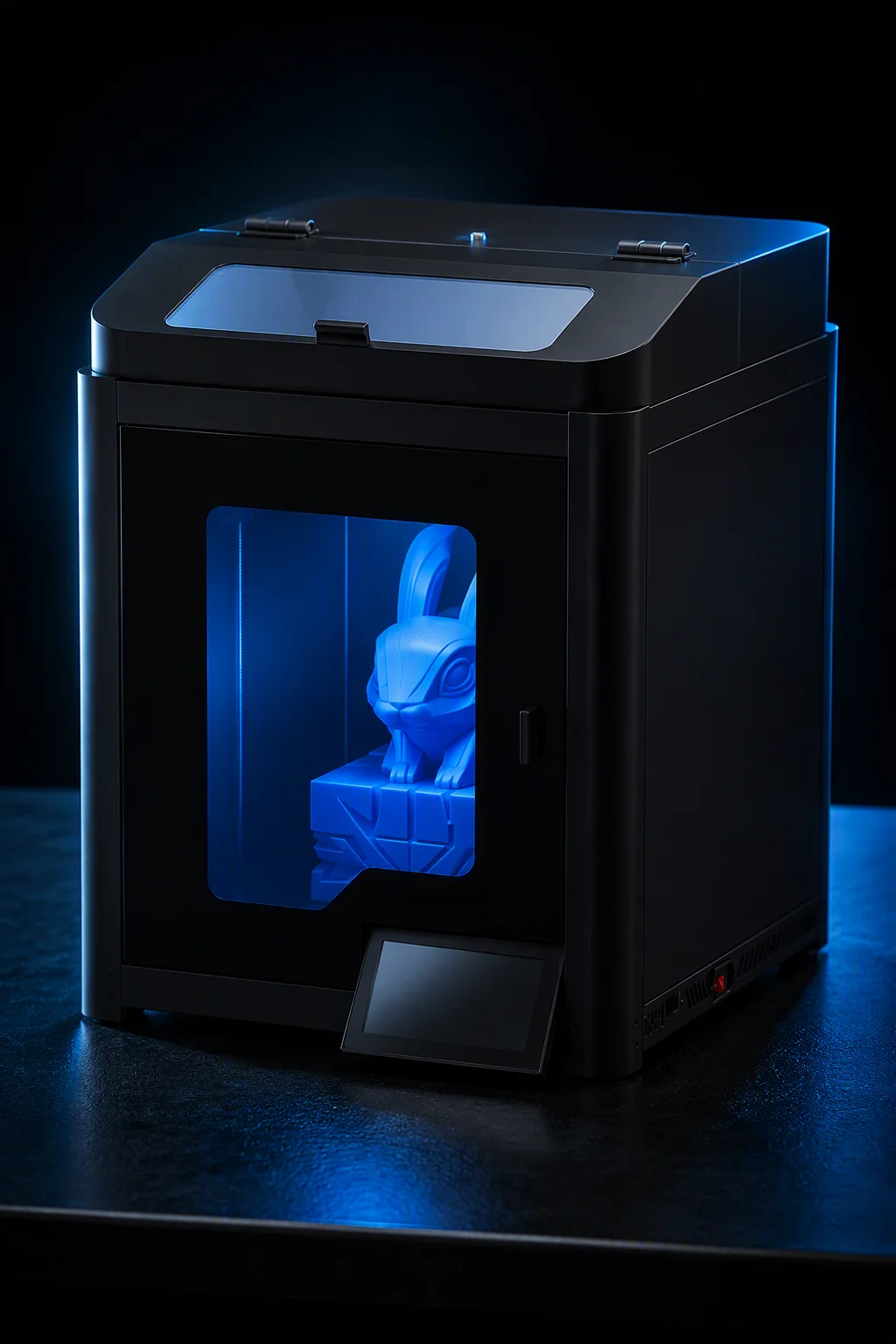
Wineries and distilleries are a quiet, sticky, high-margin vertical that almost nobody is serving. There is no price war because there is no competition. The alternative is an OEM spare with a 3–6 week lead time and a minimum order quantity. Position yourself as the uptime fix, sell the part, and the recurring order stream keeps the account profitable for years. At Precise3D, our enclosed, chamber-heated FDM platform with hardened nozzle and open material system is exactly the machine for food-safe PETG, PP, and reinforced nylon production parts, built to print the changeover and tooling parts that keep the lines running.
Reviewed by the Precise3D engineering & OEM team. Compliance files that accompany the catalog are auditable at the certification register.
Enter the Beverage Vertical
Ready to Bring On-Demand Change Parts to Wineries & Distilleries in Your Region?
Join our network of global distributor network. Enclosed chamber-heated printers with food-safe material capability, a validated PETG/PP part kit, and a 48-hour-turnaround go-to-market playbook, everything you need to open the beverage-production aftermarket.