Every distributor knows the commodity filament stack: PLA for ease, PETG for toughness, ABS for temperature, TPU for flexibility, nylon for wear. Polypropylene is the gap in that lineup. Its fatigue life — a properly printed PP living hinge survives over one million flex cycles — beats PETG and ABS by an order of magnitude. Its chemical resistance to acids, bases, and solvents matches or exceeds nylon without nylon's moisture sensitivity. Its density is so low that printed PP parts float, which matters for marine, chemical, and fluid-handling applications. And because almost nobody stocks it, the margin structure is a distributor's dream: $12-18/kg landed cost, $30-60/kg retail, 40-60% gross margin. For the rest of the engineering filament lineup and how PP fits the portfolio, see our engineering filaments guide.
Why PP Is Hard to Print: The Low Surface Energy Problem
The single reason PP filament never became mainstream is bed adhesion. Polypropylene has a surface energy of about 30 mN/m — far below the threshold where most adhesives and print surfaces can grab it. PLA and PETG stick to glass and PEI because their higher surface energy forms a mechanical and chemical bond on cooling; PP simply does not wet the surface, so prints warp loose within the first few layers, especially on large flat parts. The solution is not stronger glue — it is matching the material: PP sticks to PP. A PP build surface, PP tape applied to the bed, or a dedicated PP sheet gives the first layer a surface it can actually bond to. Textured PEI with a hot bed and a generous brim works for small parts, but the reliable answer for production work is a PP-specific surface. For the full comparison of build surface options, see our print surfaces guide and the bed adhesion consumables guide.
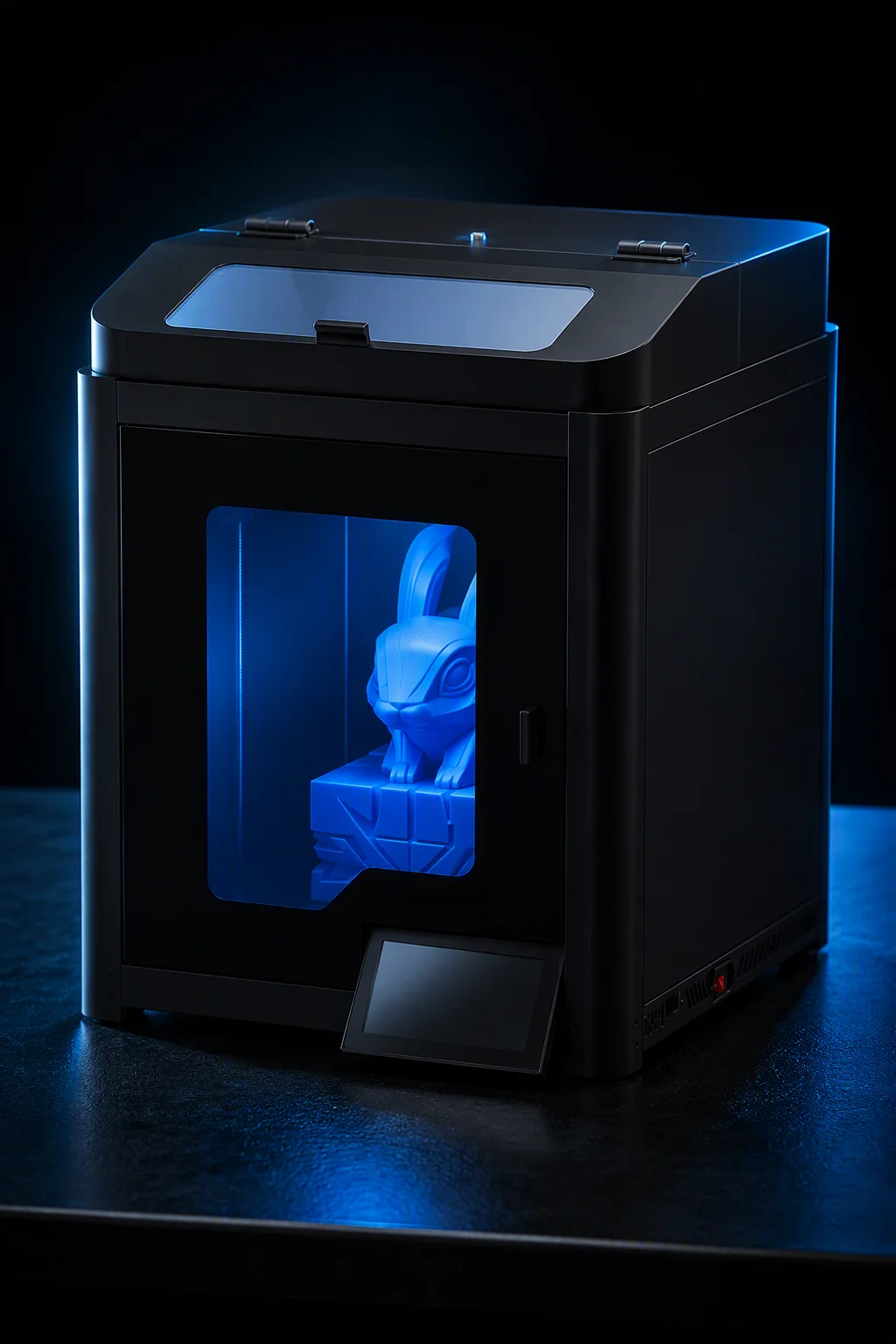
The table tells the distributor story: PP matches or beats the engineering filaments on the properties that matter for functional parts — fatigue, chemical resistance, moisture stability — at a density that makes every spool go further. A 1 kg spool of PP yields roughly 40% more printed volume than a 1 kg spool of PETG because of the density difference, which is a selling point customers rarely hear. The print difficulty is real but contained: an enclosure is recommended for warpage control on large parts, though small parts print fine open. For the temperature and warpage side of the equation, see our heated chamber guide and the polycarbonate filament guide for the high-temperature family PP sits alongside.
Real Applications: Where PP Wins the Part
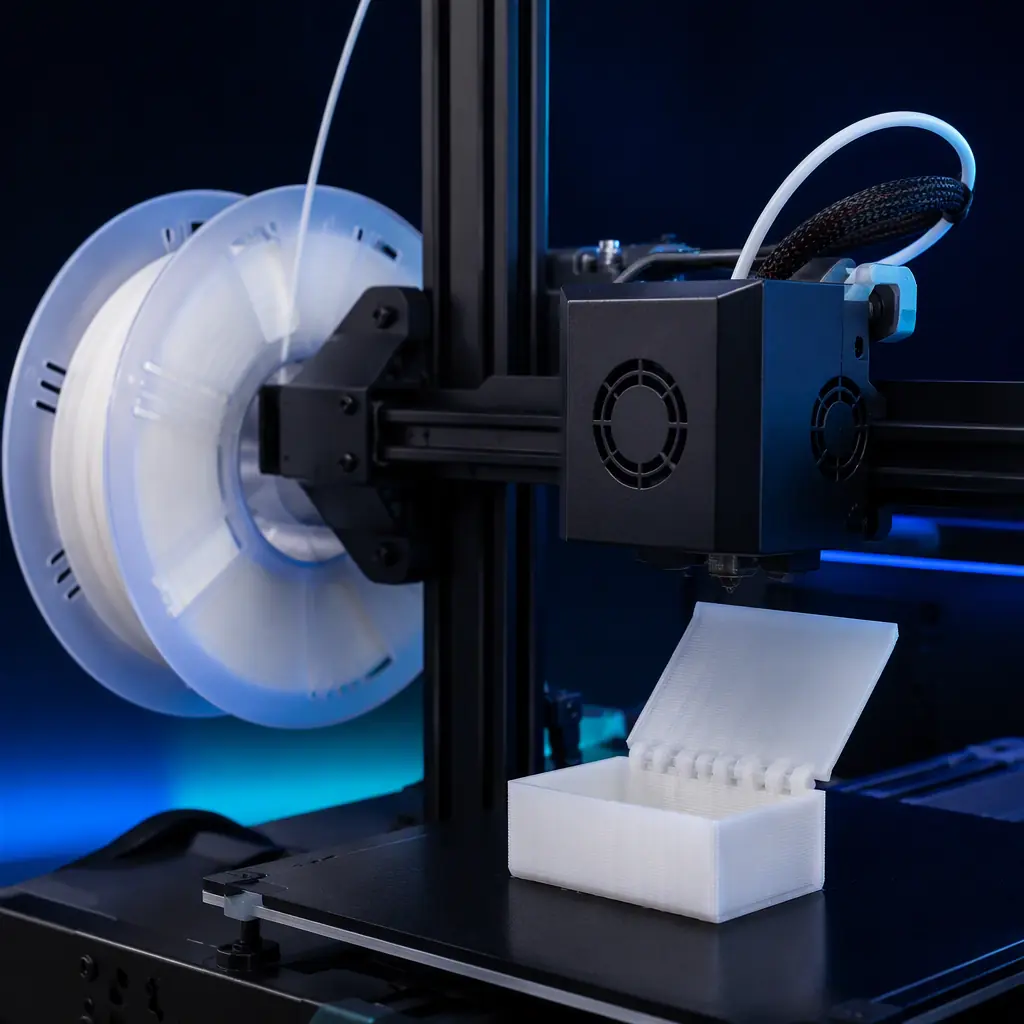
PP earns its place in the catalog with parts that fail in other materials. Living hinges are the headline application — tool box latches, clip closures, cable management flaps, dust covers — because a million-cycle hinge cannot be printed in PETG or ABS, and injection molding a single hinge part costs thousands in tooling. Chemical exposure is the second pillar: battery housing internals, lab racks, and fluid handling components that sit against solvents, salts, and acids where ABS degrades and PLA dissolves. The third pillar is food contact: PP is the standard food-grade plastic, and printed PP parts are a defensible starting point for food-safe applications when paired with the right hygiene practices — a nuance we cover in depth in our food-safe 3D printing guide. Automotive and marine customers value PP for fuel resistance and buoyancy, respectively. For the broader application picture across functional parts, see our end-use functional parts guide.
The Distributor Playbook: Selling PP as a Capability Add-On
PP does not sell itself on the shelf next to PLA — it sells as a capability. The playbook has three moves. First, position PP against the customer's failed parts: ask what functional parts they print today that crack, fatigue, or dissolve, and let the material answer the question. Second, bundle the solution: every PP spool sold with a PP build surface or tape roll, a brim-heavy profile, and a one-page settings sheet — the bundle raises the average order value and prevents the adhesion failure that would otherwise create a support call and a returned spool. Third, charge the margin: customers who need a million-cycle hinge or chemical resistance have already priced the injection mold alternative at thousands of dollars, so $45/kg is not the objection — availability and reliability are. For the flexible and specialty filament economics that PP competes with, see our flexible filaments guide and the specialty filaments guide.
What you're listening for: A customer who names a hinge that snaps, a clip that breaks, or a container that dissolves has a PP sale waiting. The classic tell is a part that would be injection molded if the quantity justified the tooling. Customers running 50-5,000 units of a simple functional part are the sweet spot: too few for tooling, too many for hand-fabrication, and exactly the volume where a reliable PP profile turns a prototype printer into a production tool.
Drying and Storage: PP Is the Low-Maintenance Engineering Filament
One of PP's quiet advantages is that it does not need the drying discipline that nylon and PC demand. Nylon absorbs up to 8% moisture by weight and becomes unprintable if left out; PP absorbs under 0.1%, so an open spool stays printable for weeks. That makes PP the ideal first engineering filament for customers moving up from PLA — it delivers engineering properties without the humidity management ritual. Distributors can still sell a dryer into the workflow for consistency, but the honest advice is that PP is forgiving. For the drying and storage practices that apply to the rest of the catalog, see our filament drying and storage guide.
Margin Math: The Premium Niche Nobody Serves
The distributor economics of PP are the argument for carrying it at all. A 1 kg spool costs $12-18 landed from a Chinese or Taiwanese resin compounder and retails at $30-60 — a 40-60% gross margin that commodity PLA cannot support at $15-22 retail. The bundle is where the margin compounds: a PP starter kit containing two spools, a PP build surface or tape roll, a spare 0.6 mm nozzle (PP prints cleanly with a larger nozzle and lower retraction), and a printed settings card sells at $79-119 with a 55-65% blended margin. Inventory risk is low because PP spools are stable for years in storage — unlike nylon, which degrades — and the customer base, while smaller, is stickier: engineers who discover PP hinges for their product rarely go back to PETG. For the full pricing and margin strategy across the filament catalog, see our pricing strategy guide.
Bottom Line
Polypropylene is the under-served material in the desktop 3D printing catalog — an engineering-grade filament with million-cycle hinges, real chemical resistance, food-contact pedigree, and a margin structure that commodity PLA cannot touch. The adhesion hurdle that keeps competitors away is a solved problem with a $20 build surface or tape roll, which doubles as a bundled accessory sale. Distributors who stock PP, print it reliably, and sell it as a capability rather than a spool on a shelf own a niche with almost no price competition: the customer who needs a part that survives a million flexes is not comparing prices on PLA. The material is the product, and the know-how is the moat.
Reviewed by the Precise3D engineering & OEM team. Compliance files that accompany the catalog are auditable at the certification register.
Start Your Partnership
Ready to Bring polypropylene pp filament to Your Market?
Our OEM program supports polypropylene pp filament programs end to end - the product line, firmware and compliance files that travel with each shipment.