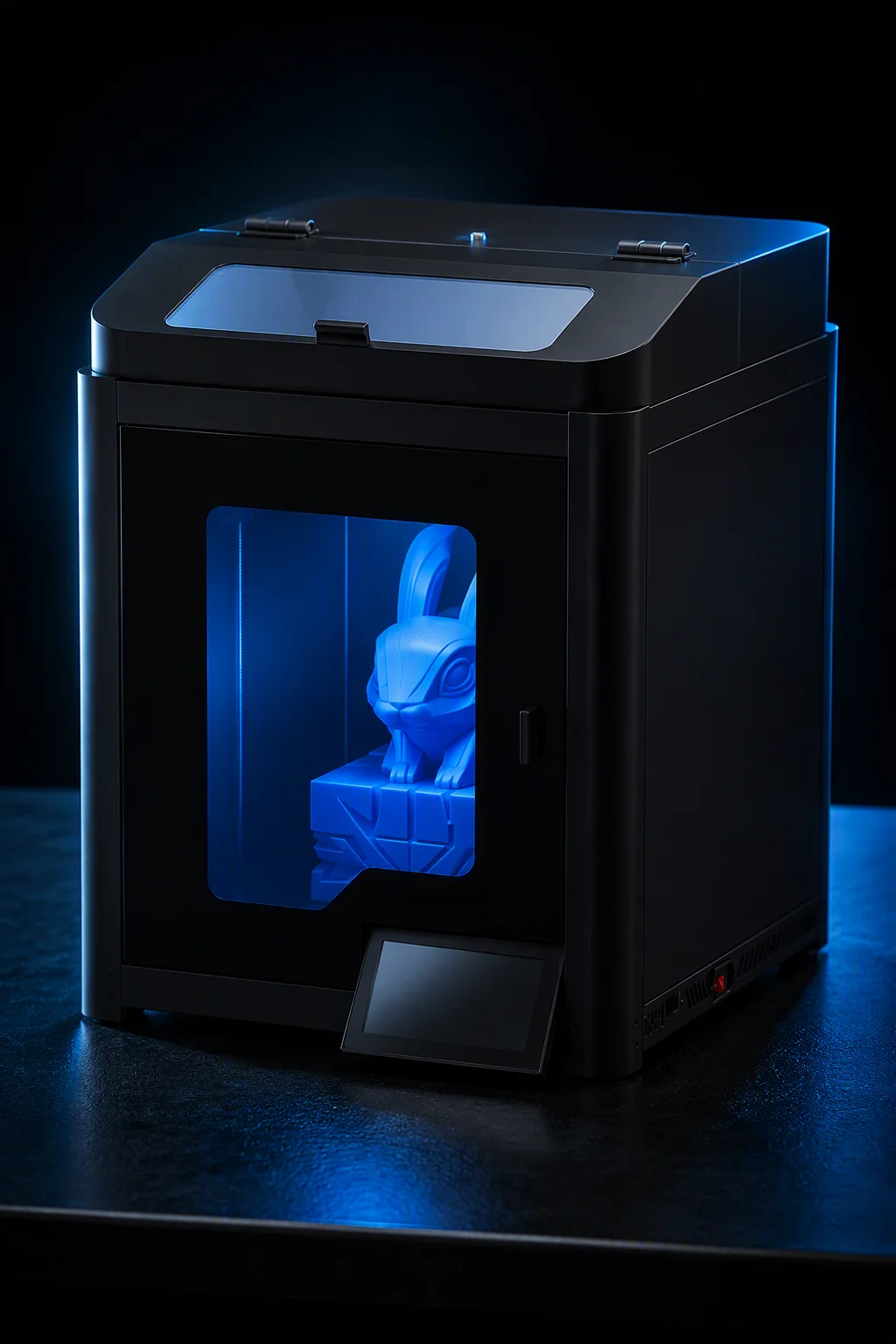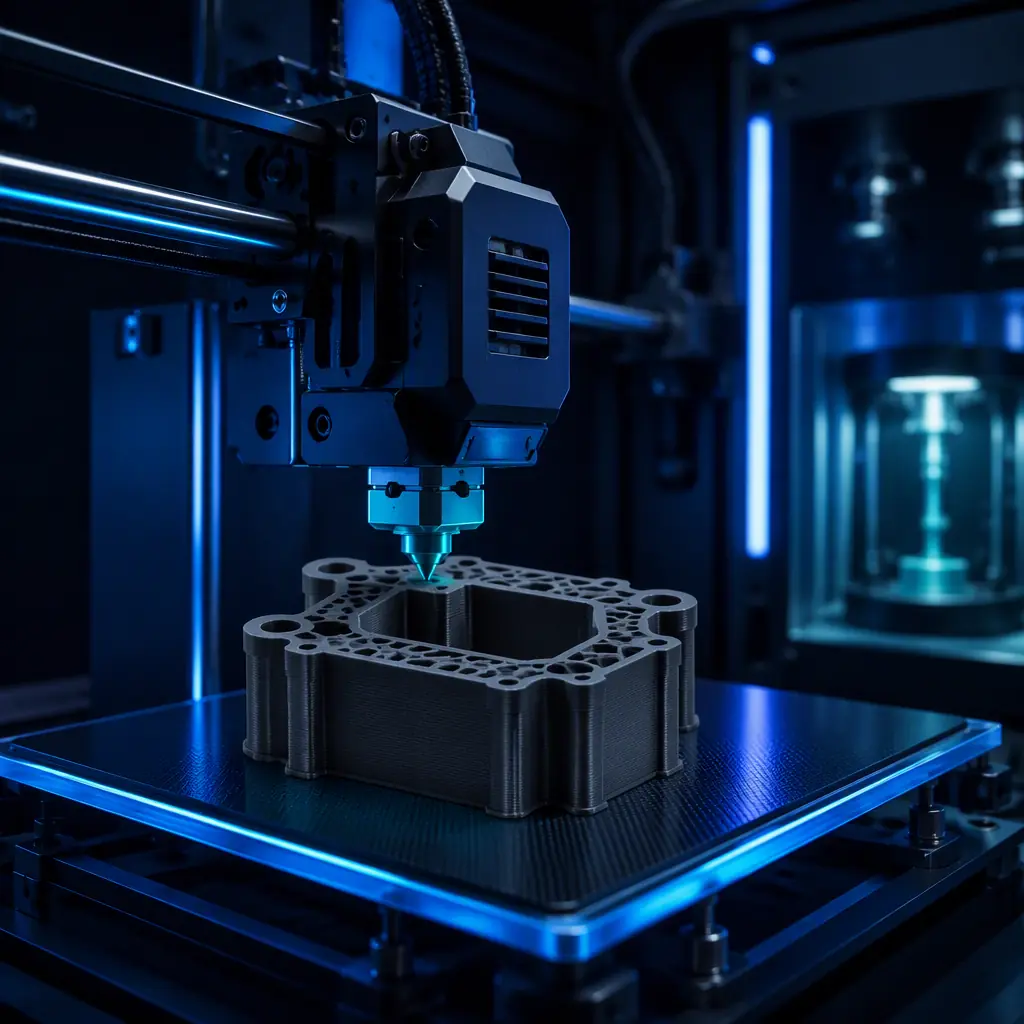
Why Flame-Retardant Matters in 3D Printing
Additive manufacturing parts are increasingly used where a flame standard applies: rail interior brackets, aerospace cabin fixtures, electrical enclosure housings and consumer-electronics structures. In these markets the plastic is not decorative — it is a safety component. A single enclosure part that ignites and propagates flame in a transit incident is a liability event, not a warranty claim. That is why the buyer is not asking about price; the buyer is asking whether the material carries a reproducible, third-party-verified rating.
The trap for a distributor is that the word "fire-rated" is not a specification. It has to be translated into an actual UL 94 classification on a defined material thickness, produced by a defined process, with a test report a buyer can download. For the printer-side safety and thermal-runaway features that sit behind a fire-safe installation, see our thermal runaway & safety features guide.
What UL 94 Actually Measures
UL 94 is the standard the industry leans on, and it grades a material on how it behaves when a small flame is applied to a horizontal or vertical bar. The classifications move from slow-burning to self-extinguishing to ignition-resistant. Crucially, the classification is tied to a specific bar thickness, so the same compound can carry a different rating at 0.8 mm than at 3.2 mm.
For most printed parts that go into an enclosure or a rail interior, V-0 is the threshold a buyer quotes by default, and 5VA is what a thin-walled panel that must resist a flame without burning through is judged against. The difference between V-1 and V-0 is often dripping: a material that self-extinguishes but melts and drips burning plastic still carries fire below it, so V-0 is preferred where the part sits above wiring.
PC/ABS FR Blends: The Workhorse of Fire-Rated Parts
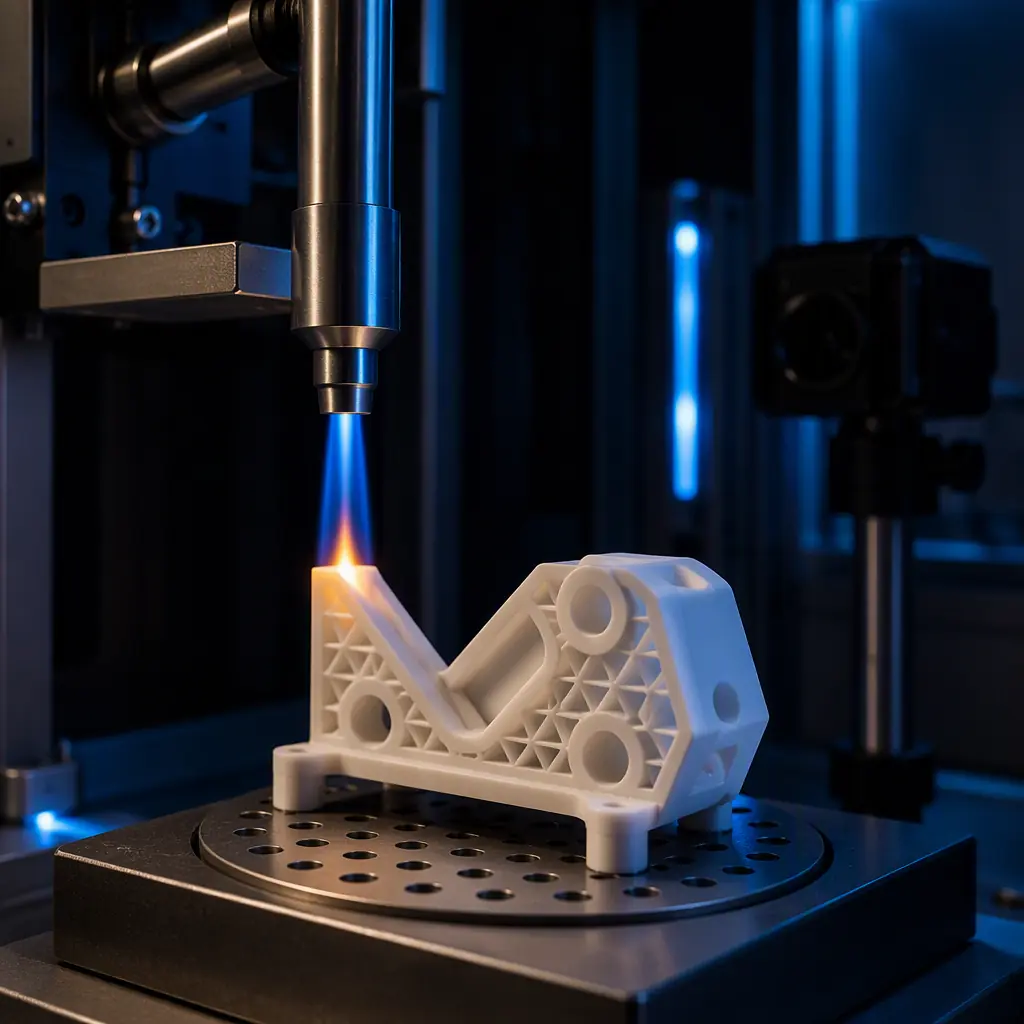
For most flame-retardant printed parts, the practical answer is a PC/ABS blend with a balanced flame-retardant package. Polycarbonate brings stiffness and impact resistance; ABS brings printability and a lower melt window; the FR additive package brings the V-0 result. A well-optimized PC/ABS FR filament prints reliably on a heated chamber machine and holds its rating across a useful thickness range.
Thickness is the variable that quietly invalidates a datasheet. The value your vendor quotes is almost always measured on the thinnest bar that achieves it, and a distributor quoting a V-0 spec on a datasheet without confirming the wall thickness the part is actually printed at is over-promising. For the broader engineering-filament selection picture, our engineering filaments guide and our polycarbonate filament guide are the references.
Fire-Rated Engineering Polymers Without Fillers: PEEK and PEI
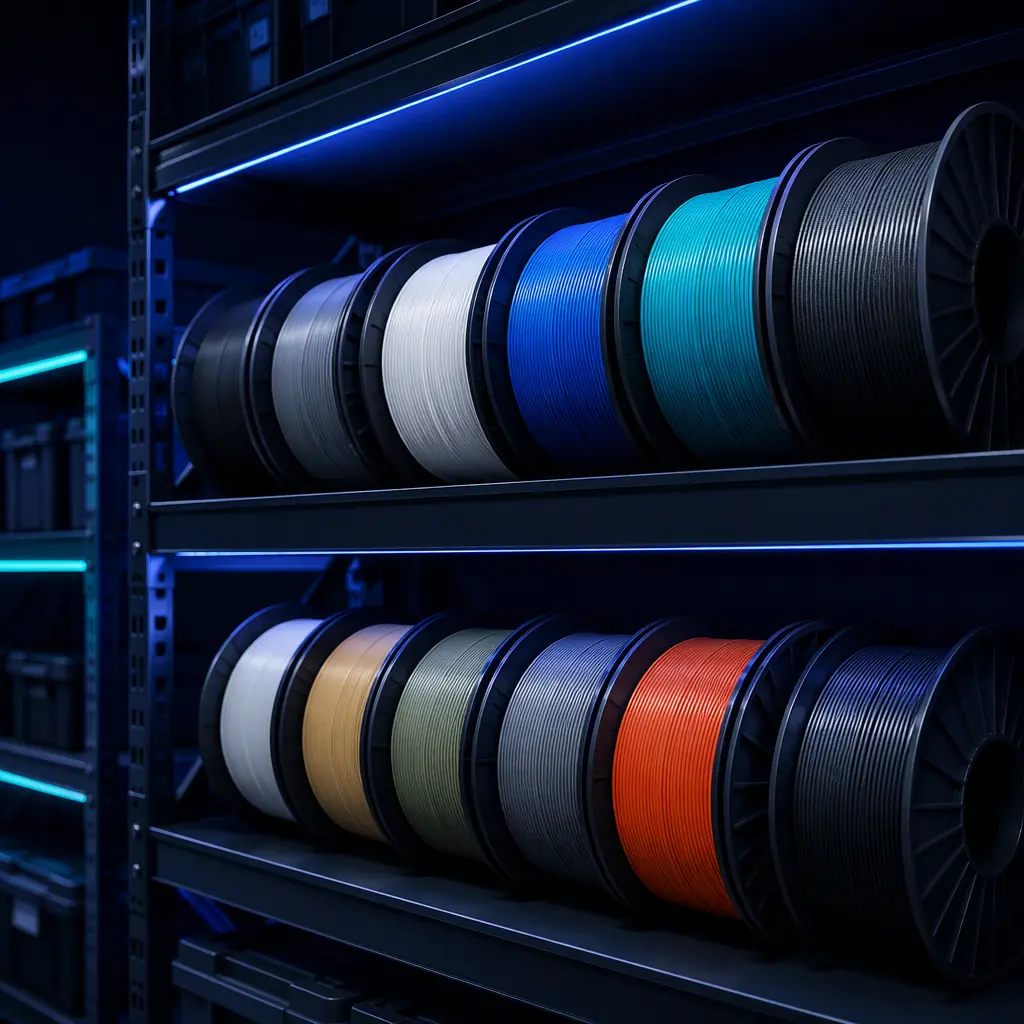
Where a part sees continuous elevated temperature, or where the flame-retardant package must not limit the polymer's intrinsic performance, PEEK and PEI (polyetherimide) come into play. These are inherently flame-resistant high-temperature thermoplastics — PEI carries a UL 94 V-0 rating and a UL 746B relative thermal index that supports continuous use well above what a filled PC/ABS tolerates. They cost more and they demand a hotend and chamber capable of a 350 °C-plus nozzle and 150-180 °C chamber, but they are what a rail or aerospace spec sheet will name when the thermal requirement is real.
The commercial insight is that these are not "better PC/ABS" — they are a different tier that solves a different problem. A distributor selling PEI into a market that just needs a V-0 enclosure is undersell and oversell at the same time. For the full material comparison, our PEEK, PEI & PPSU industrial materials guide is the deep reference.
Printing FR Materials: Suppression, Nozzle and Chamber Rules
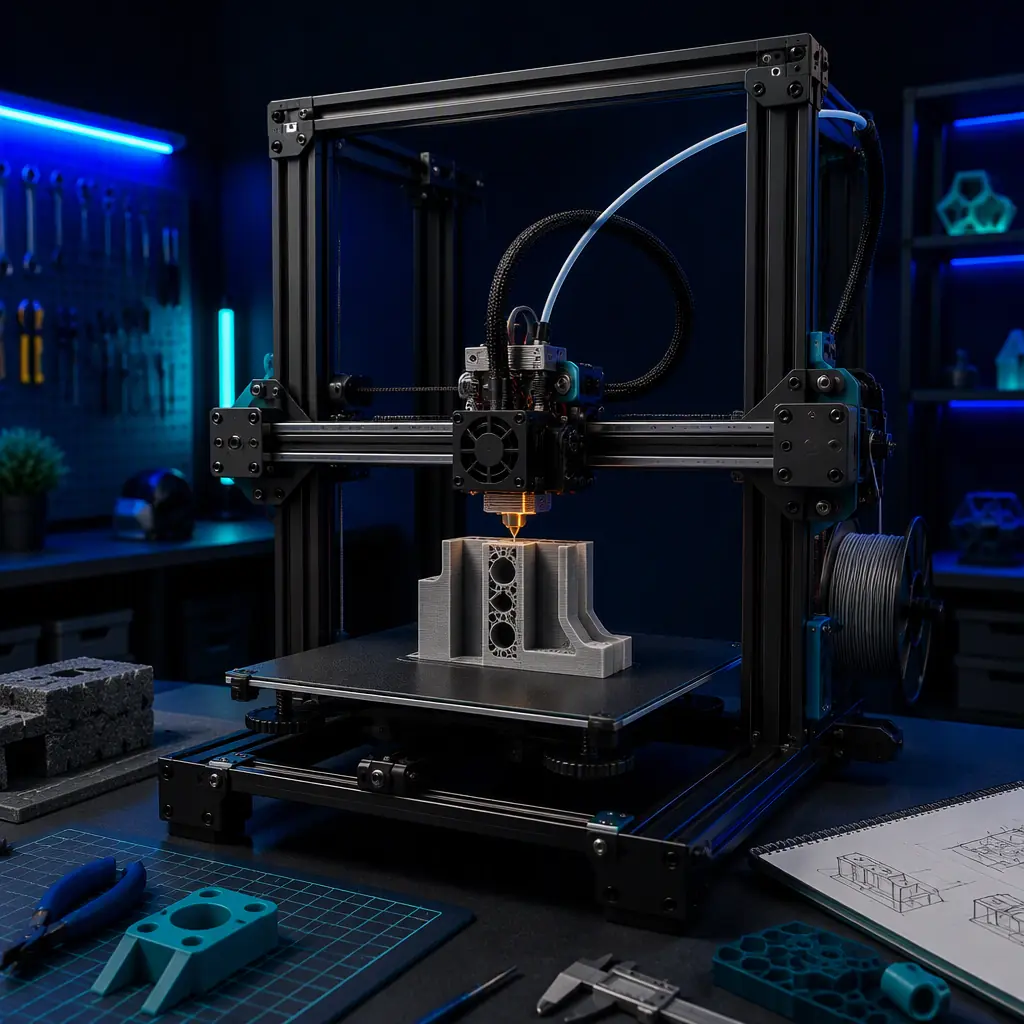
Flame-retardant compounds print differently from their unmodified cousins. The FR package raises the melt viscosity and can narrow the processing window; a nozzle that is fine for plain ABS may not deliver a clean bead on a PC/ABS FR. The heated chamber is not optional — a chamber too cold produces delamination and warping that reintroduce cold-flow layers with poor interlayer strength. And both PC and the FR additives are hygroscopic, so dried material and a sealed storage system are prerequisites, not recommendations.
- Dry the material — PC/ABS FR absorbs moisture and will string and bubble if not dried to below 0.1%.
- Run a heated chamber — 60-90 °C for PC/ABS FR; 150-180 °C for PEI and PEEK.
- Use a hardened nozzle — the FR package and any glass or carbon filler wear brass quickly.
- Slow the print — FR compounds benefit from reduced speed and higher retraction to avoid webbing.
For the printer-side capability to run these materials reliably, our hotend comparison guide and our heated chamber guide cover the hardware constraints.
Fume Toxicity: What Burns and What It Emits
Fire-retardant is not the same as non-toxic. Some brominated flame-retardant packages — while effective at achieving V-0 — release more smoke and more halogenated gases when they do burn than a well-designed phosphorus or nitrogen-based alternative. In a confined rail or aircraft cabin, smoke density and gas toxicity can matter as much as flame spread. Halogen-free FR grades are increasingly specified for transport interiors precisely for this reason.
This is a real differentiator for a distributor to discuss, not just the V-0 stamp. On the operational safety side of printing these materials, our fume extraction & filtration guide is a must-read, and for the market context around fire-constrained parts, our fire safety equipment industry guide and railway transit guide are the vertical references.
Certification and Documentation a Buyer Will Ask For
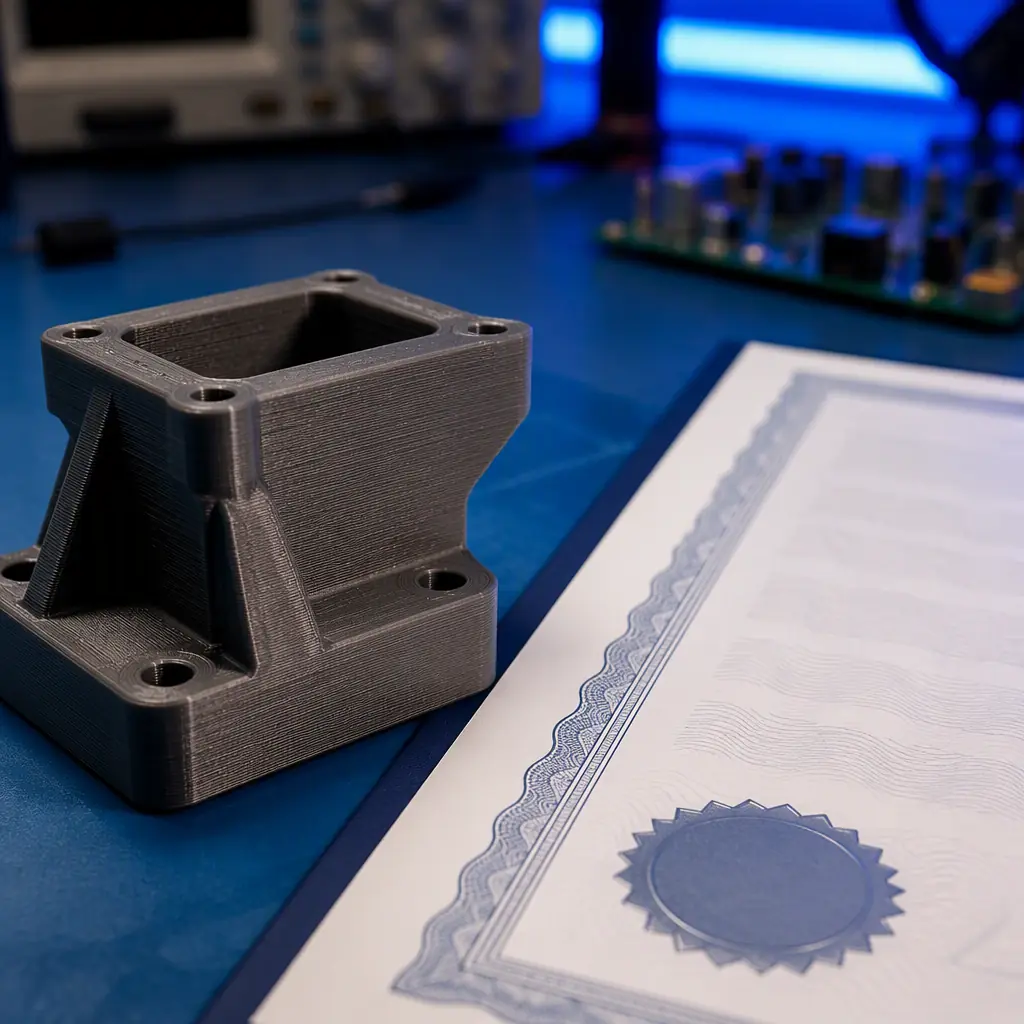
You cannot close a flame-retardant part order on a datasheet image. A buyer in rail or aerospace will ask for the UL Yellow Card or an equivalent third-party test report naming the material, the thickness, the rating and the test date. If your supplier cannot produce one, or can only produce internet screenshots, the order is not real yet. For the broader printer certification and compliance picture — CE, FCC, RoHS and UL on the machine itself — our certification & compliance guide is the reference.
What you're looking for: If the only evidence is a marketing picture or a rating quoted at a thickness the part does not use, the spec is unproven → get the Yellow Card or test report naming the exact material, thickness and rating before you quote the order.
A Decision Framework: Which Fire-Rated Route Should You Sell?
Choosing the right fire-rated material for a sold part is a short loop, and it comes down to three questions the buyer answers.
- What rating and thickness does the spec name? → V-0 at the part's actual wall, or 5VA for a thin panel, or a transport interior that also needs low smoke.
- Does the part see continuous heat? → If above ~120 °C continuous, move from PC/ABS FR to PEI or PEEK.
- Does the application limit halogen? → If yes, spec a halogen-free FR package, not a brominated one.
A distributor who can walk through these three questions is selling a compliant solution, not a spool of plastic. That is the difference between winning a rail or aerospace account and getting filtered out for a datasheet with no verifiable number.
How Precise3D Handles Fire-Rated and High-Temperature Materials
At Precise3D we build 3D printers in a 3,500 sqm Shenzhen network with a dedicated burn-in line and test every machine before packing. Our machines ship with CE LVD (EN 62368-1:2014+A11:2017) and RoHS (EU 2015/863) reports, and we work with distributors selling into rail, aerospace and electrical markets where material traceability is a compliance requirement. Our compliance register and material guidance are available so a distributor can quote a fire-rated part with a verifiable backing rather than a guess.
If you are evaluating us as an OEM or white-label partner, the honest path is a 1-5 unit sample order at wholesale pricing, tested in your market. Custom branding begins at 100 units. Our certification register holds the verifiable documents, and our safety & thermal runaway guide and fume extraction guide round out the operational picture.
Reviewed by the Precise3D materials & engineering team. UL 94 ratings and material properties are expressed as published by suppliers and should be validated against the manufacturer's test report for the exact grade and thickness you specify. Auditable quality and compliance backing is held in the certification register.
Specify With Confidence
Need a Printer That Runs Fire-Rated and High-Temp Materials?
Join our network of global distributors. Printers with a heated chamber, hardened nozzle and verifiable CE & RoHS reports — everything you need to quote a flame-rated part with real backing.