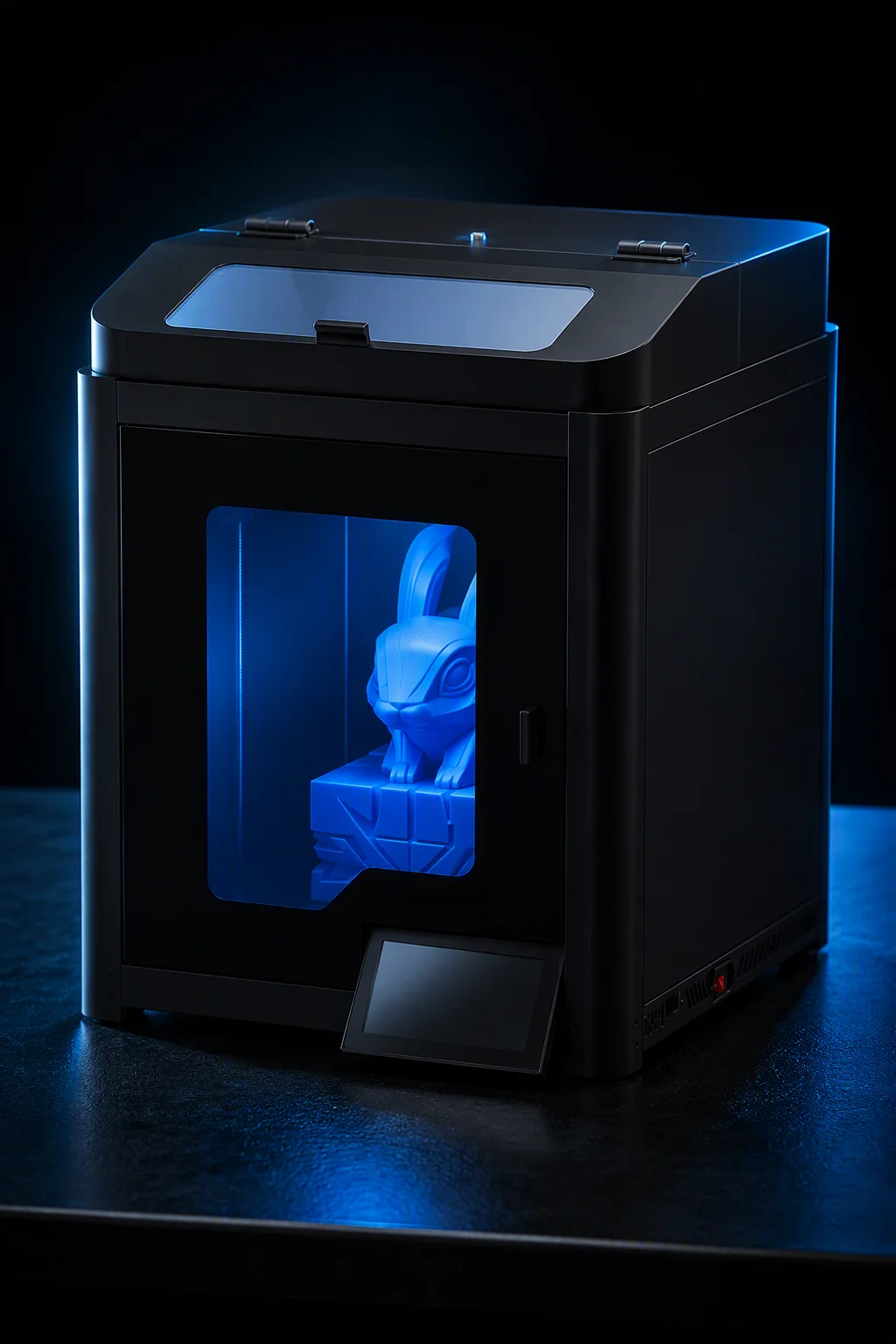
Why Payment Method Is a Margin Decision, Not an Afterthought
Every cross-border order has two prices: the unit price and the real cost of getting paid. Freight and duties are line items you can see; payment routing fees, currency slippage and financing charges are the hidden ones. A distributor fighting for a 3% points margin cannot afford to hand 1% of it back to a bank spread. The first task is to know the full cost of each route before you sign the proforma invoice.
There is also a structural question: who funds the order between deposit and shipment? If a supplier wants 50% up front on a 200-unit consignment of printers, the weighted-average cost of that working capital is a real number on your annual statement. For the framework around negotiating that deposit and the overall commercial terms, our MOQ & payment terms guide and our RFQ & proposal playbook are the companion reads.
The Four Payment Routes a Distributor Actually Uses
You will not use every instrument you read about. In practice a small-or-mid distributor rotates between four routes, and the choice between them is driven by order value, relationship age and the counterparty's location. The table below is the quick comparison over the routes to compare on.
Notice the asymmetry: the cheapest route (telegraphic transfer) carries the highest counterparty risk, and the most secure route (letter of credit) demands the strictest document compliance. There is no free lunch — there is only a trade-off you are consciously making. For the customs and HS-code context that sits alongside the payment decision, see our HS codes, tariffs & customs guide.
Telegraphic Transfer: Cheap, Fast, and the Risk Is All Yours
A telegraphic transfer (wire, SWIFT) is the default. It settles in 1-3 business days, it costs roughly 0.1-0.4% in transfer and intermediary fees, and it leaves the buyer with no leverage once it leaves the account. For a first order from an unknown factory, sending a large advance is the single most common way a distributor loses money.
The mitigation is not—as many buyers believe—a factory visit alone. It is a combination of a modest deposit, a documented production and QC gate, and staged payments tied to tangible milestones. If a supplier insists on 50% before any work, ask what the payment protects and get a written refund trigger in the proforma. On the packing and physical assurance side, our factory audit & QC checklist shows how to verify a supplier before you commit capital.
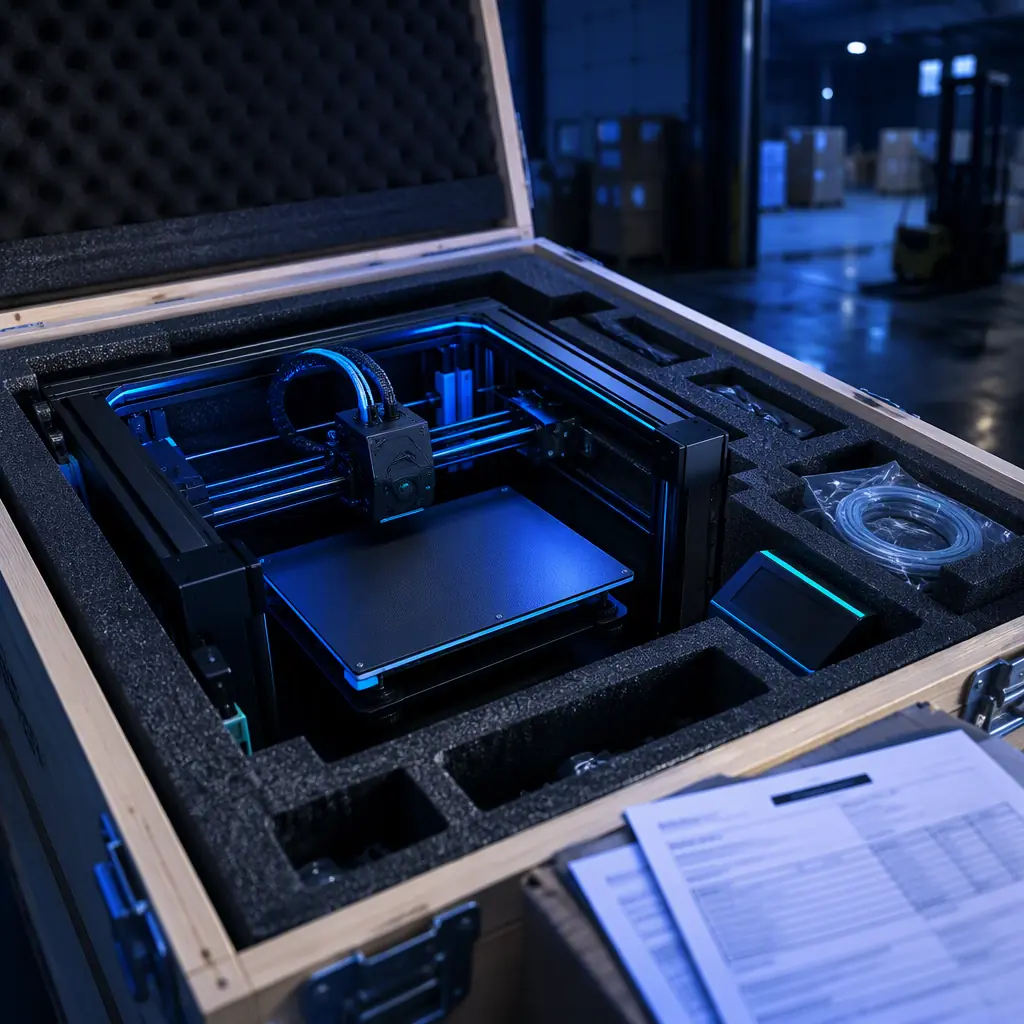
Letter of Credit: The Bank-Backed Option With a Compliance Price
A letter of credit turns payment into a document exercise. The issuing bank pays the supplier only when the shipping documents match the terms of the credit to the letter — bill of lading, commercial invoice, packing list, certificate of origin, and for regulated goods an export-control statement. Done well, an LC protects both sides: the supplier knows the bank will pay if documents are compliant, and the buyer knows the goods are documented before payment is released.
The catch is compliance. A single discrepancy — a typo in the consignee name, a document of a slightly different date — can stall payment for weeks while the goods sit at the port, and the bank charges a discrepancy fee on top. For the export-control and regulatory paperwork that a 3D printer shipment can require, our ITAR & EAR export compliance guide and our export documentation guide are the references.

Escrow and Platform Trade Assurance: The B2B Middle Ground
Somewhere between the security of an LC and the simplicity of a wire sits escrow. On a trading platform, Trade Assurance-style holding releases payment in stages as milestones are confirmed — deposit, production inspection, shipment, delivery. It is cheaper and simpler than an LC, but it caps the order value and the protection is only as good as the platform's dispute process.
Escrow is a sensible default for a first order in the US$5,000-$50,000 range where you want some leverage without the documentary overhead of a letter of credit. For the supply and lead-time planning that goes with it, our supply chain resilience guide is worth reading.
The Deposit Structure That Protects Both Sides
The most defensible deposit structure for a 3D printer OEM order is a split that gives the seller enough to start production and the buyer enough leverage to enforce quality. A common shape is 30% to confirm the order, 40% against a completed and photographed pre-shipment inspection, and 30% on shipment against the bill of lading. For custom-branded work, the split shifts toward the seller because tooling and silkscreen are committed early.
Each gate is a lever. Holding the final 30% until the bill of lading is in your name means you are not financing a shipment you do not yet legally control. That single discipline removes most of the risk that a seller simply disappears with your deposit.

Currency Risk: The Hidden Slippage in Every Order
Between quotation and payment, exchange rates move. A 3D printer order quoted in dollars but paid from a euro or pound account has a real foreign-exchange spread, and the interim volatility on a 60-day production window can be 1-4%. On a large consignment that is a measurable sum, and it is entirely separate from the price you negotiated. Most distributors never model it, which is why it surprises them atmonth end.
Two habits remove most of the risk. First, invoice in the currency you are actually paying, or fix the rate at order acceptance so the margin you quoted is the margin you keep. Second, if your cash-flow stretches across a long window, use a forward hedge or at minimum net multiple orders through one bank account rather than paying spread after spread. For the cash-flow mechanics of running a distributor's balance sheet, our cash flow management guide and our financial KPI benchmarking guide are the key references.

Red Flags That Should Kill a Deal
Certain terms should make a distributor stop and re-quote rather than pay. A supplier that refuses any inspection gate, demands more than 50% up front on a first order, asks for payment to a private account rather than a corporate one, or is unwilling to name an export-control statement in the proforma is signaling risk you should not carry. None of these is automatically fraudulent, but all of them shift the risk curve against you.
If several appear at once, the correct move is to walk or to compress the order to a small sample. A one-to-five-unit sample order at wholesale pricing, inspected on-site or via third-party report, is the cheapest due diligence available. For the insurance and liability protection around a shipment, our insurance & liability guide and our Incoterms trade terms guide complete the risk picture.
A Decision Framework: Which Payment Route Should You Use?
There is no single best payment method; there is a best method for a given order size and supplier relationship. The framework below lets a distributor choose in under a minute.
- First order under $10k with an unknown factory → escrow or Trade Assurance with a small deposit and an inspection gate.
- Mid order from a supplier you have visited → wire with a 30/40/30 milestone split.
- Large consignment where you want bank backing → letter of credit, and invest in clean document compliance.
- Established supplier, repeat volume → open account (net 30-90), which is the cheapest route of all.
- Any order with currency exposure → invoice and lock the rate at acceptance, not at payment.
A distributor who can hold this conversation is protecting margin, not gambling on it. For the larger field of how to price and position an order, our OEM pricing negotiation guide is the adjacent reference.
What you're looking for: If there is no refund or inspection trigger in writing and the payment is not denominated in the currency you are actually paying, you have accepted both counterparty and currency risk without a price for either → restructure the deposit and lock the rate before you wire.
How Precise3D Handles Payment and Risk
At Precise3D, we build in a 3,500 sqm Shenzhen production network with four assembly cell groups and a dedicated burn-in line, and every machine is print-tested before packing. We quote against the Incoterms a distributor can defend and provide the CE LVD (EN 62368-1:2014+A11:2017) and RoHS (EU 2015/863) documentation that gives an importer confidence on the compliance side. We work on milestone-based payment, third-party inspection and clear trade terms precisely because we know a margin survives on clean commercial terms.
If you are evaluating us as an OEM or white-label partner, the fastest honest path is a 1-5 unit sample order at wholesale pricing, tested in your own market before you commit. Custom branding begins at 100 units. Our shipping page spells out the exact trade terms and documents we provide, and our export compliance guide and shipping logistics guide cover the paperwork behind an international order.
Reviewed by the Precise3D OEM & distribution team. Payment cost and risk figures reflect standard cross-border B2B practice and should be confirmed against your bank's schedule and the specific trade route. Auditable quality and compliance backing is held in the certification register.
Source With Confidence
Ready to Start on Terms You Can Defend?
Join our network of global distributors. Milestone-based payment, third-party inspection, transparent Incoterms and full export documentation — everything you need to buy printers without gambling on a deposit.