Why POM Belongs Next to Nylon in Your Line
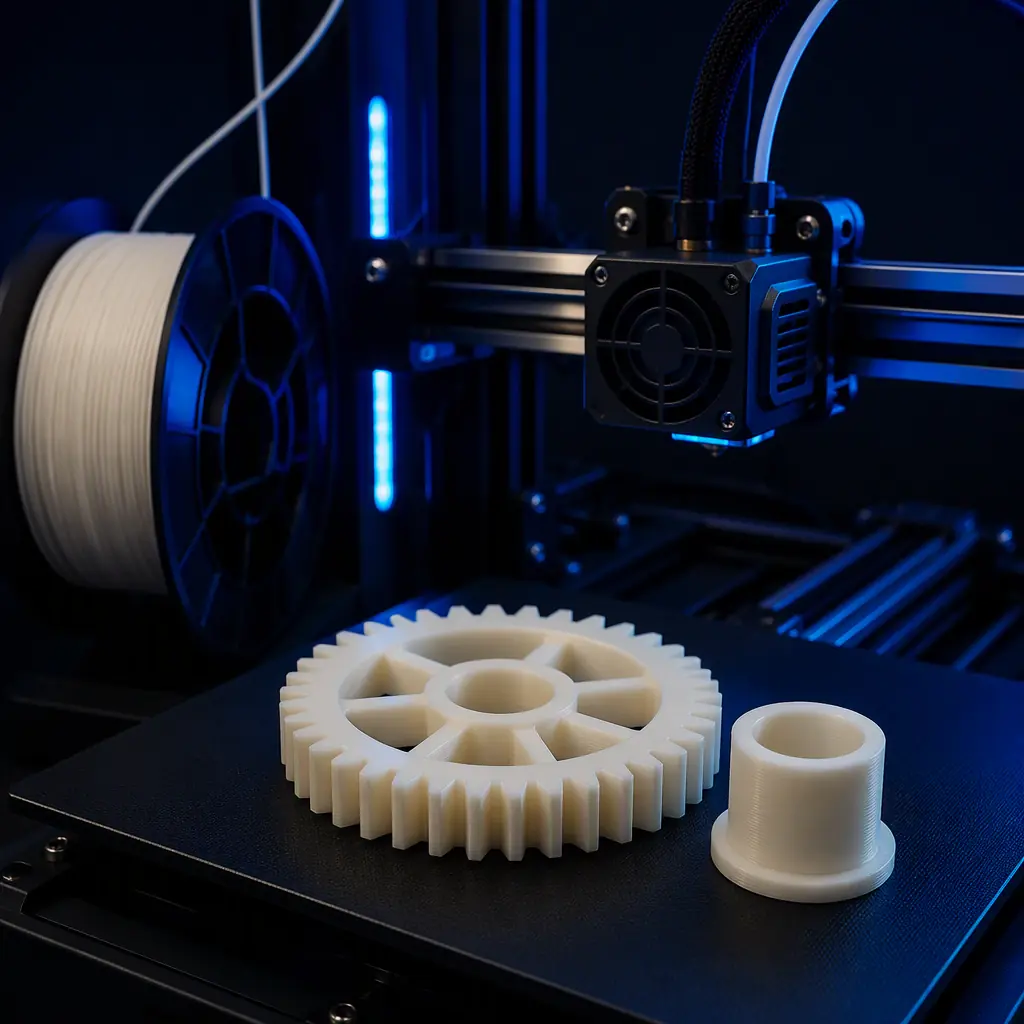
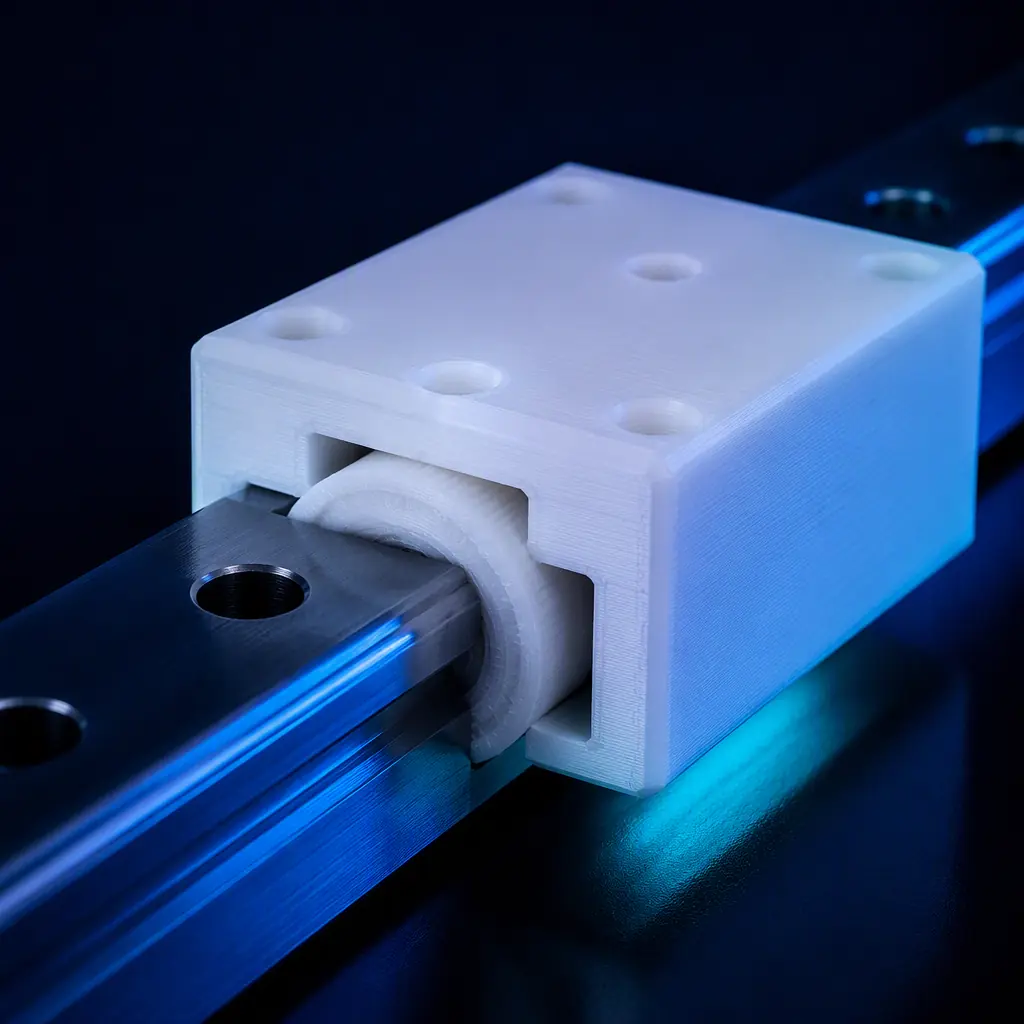
Most distributors stock nylon (PA) as their first engineering material, and rightly so. But PA has two weaknesses that POM directly answers: it is hygroscopic and absorbs a lot of water, and it has a relatively high friction and wear profile for mating parts. POM keeps a lower and more stable friction coefficient, and it takes on far less moisture, so dimensions stay truer in service. For anything that slides or meshes — gears, pulleys, small bushings, guide blocks and press-fit inserts — the case for POM is strong.
The commercial angle for a distributor is that POM is a true tribopolymer: a material sold on its wear and friction properties, not on its general strength. That lets you sell it into a specific application rather than a generic “strong plastic” pitch, and that specificity is what earns a premium and a repeat customer. For the wear-part and power-transmission applications that this material feeds, our gears, bearings & power-transmission guide is the companion read.
POM-H vs POM-C: The Grade Question Buyers Actually Ask
Like many polymers, POM comes in two principal grades, and the difference is real enough to change a recommendation. POM-H (homopolymer, the classic Delrin) is stiffer and has a lower friction coefficient, which makes it the better choice for load-bearing wear parts and precision motion. POM-C (copolymer) is slightly less rigid but offers better chemical and heat stability, and is often easier to work with in some processes. For a distributor serving a parts shop the short version is: if it slides and carries load, reach for POM-H; if the job involves aggressive contact or a thermal/humidity-heavy environment, POM-C earns its place.
This grade distinction is exactly the kind of detail that turns a one-off buyer into a consultative win. For the wider engineering-material family a distributor might stock, our engineering filaments guide and our nylon & PA filament guide frame how these materials fit together.
Printing POM: Hot, Dry and Ventilated
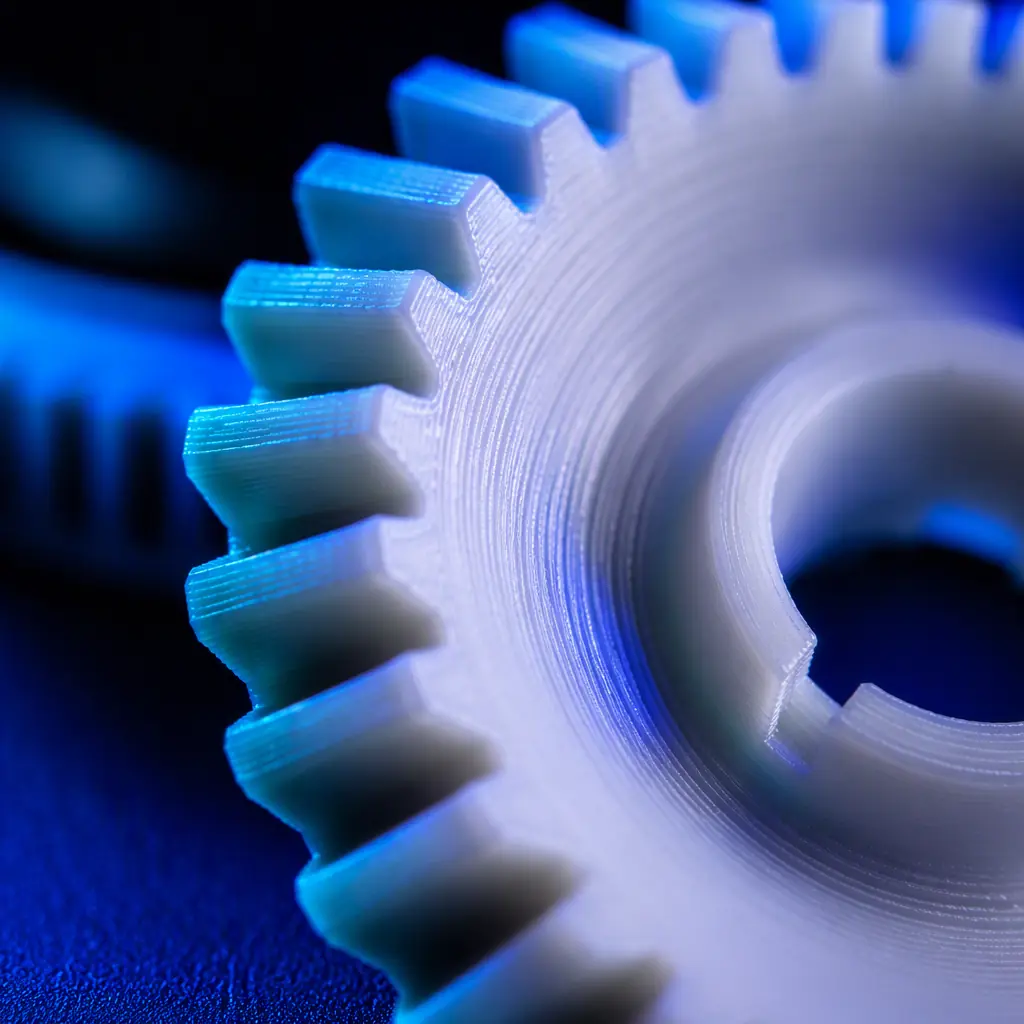
POM rewards experience and punishes inexperience. It prints at a higher nozzle temperature than PLA or PETG, it is moisture-sensitive and needs drying before a clean run, and it is one of the polymers that emits an irritant gas — formaldehyde — if it is overheated or degraded. None of this makes POM impractical; it just means a distributor sells it with a set of clear operating notes rather than treating it like another spool of generic PLA.
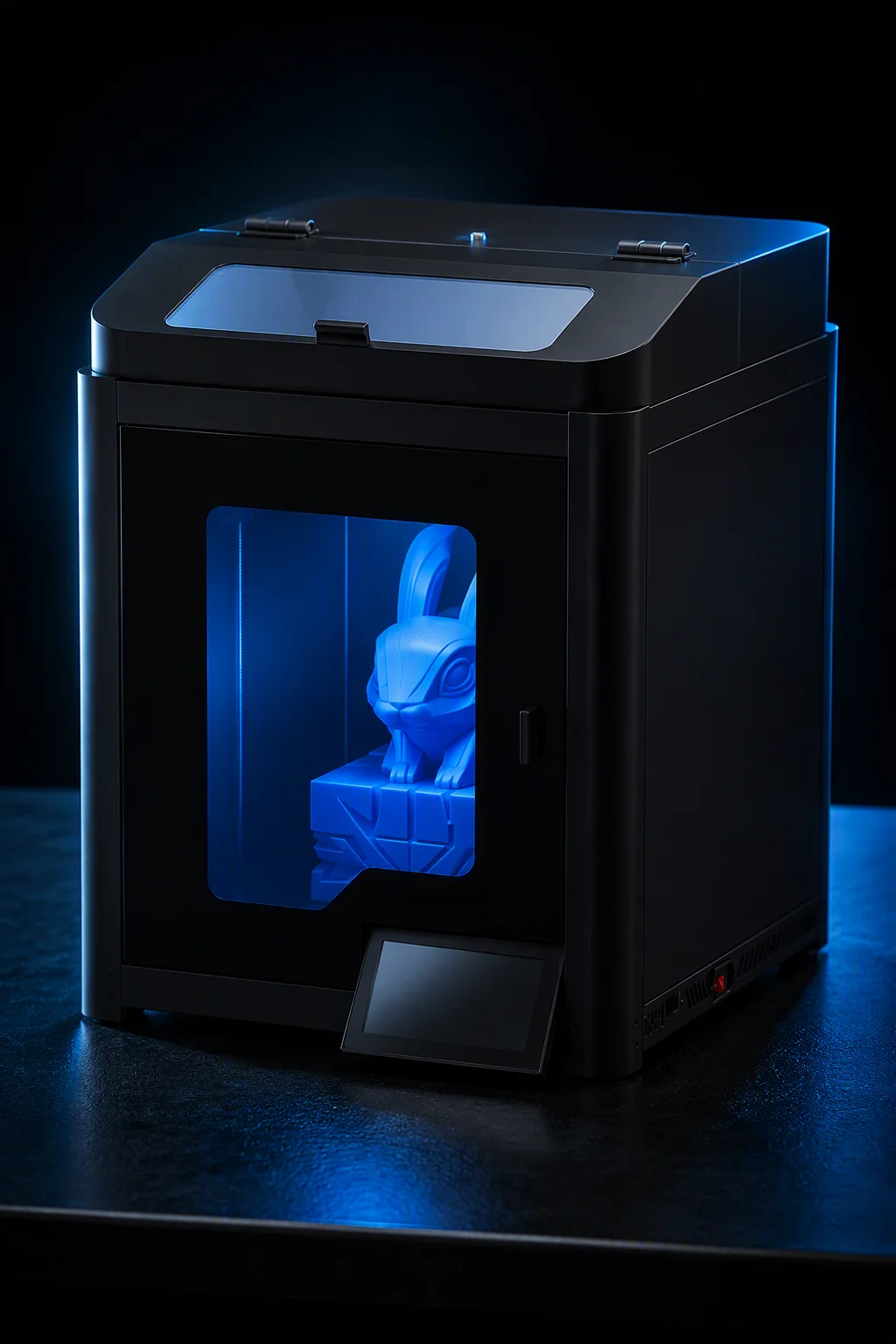
For the equipment and safety side, an enclosure with adequate fume extraction is worth recommending, and a reliable hotend that holds a stable melt temperature matters. The drying requirement is the one most often skipped, and it is the one that produces the stringy, brittle or inconsistent parts that give a material a bad name. For the ventilation and air-handling guidance, our fume extraction & filtration guide is the reference, and our hotend technology guide covers the thermal side.
Where POM Beats Nylon — and Where It Doesn't
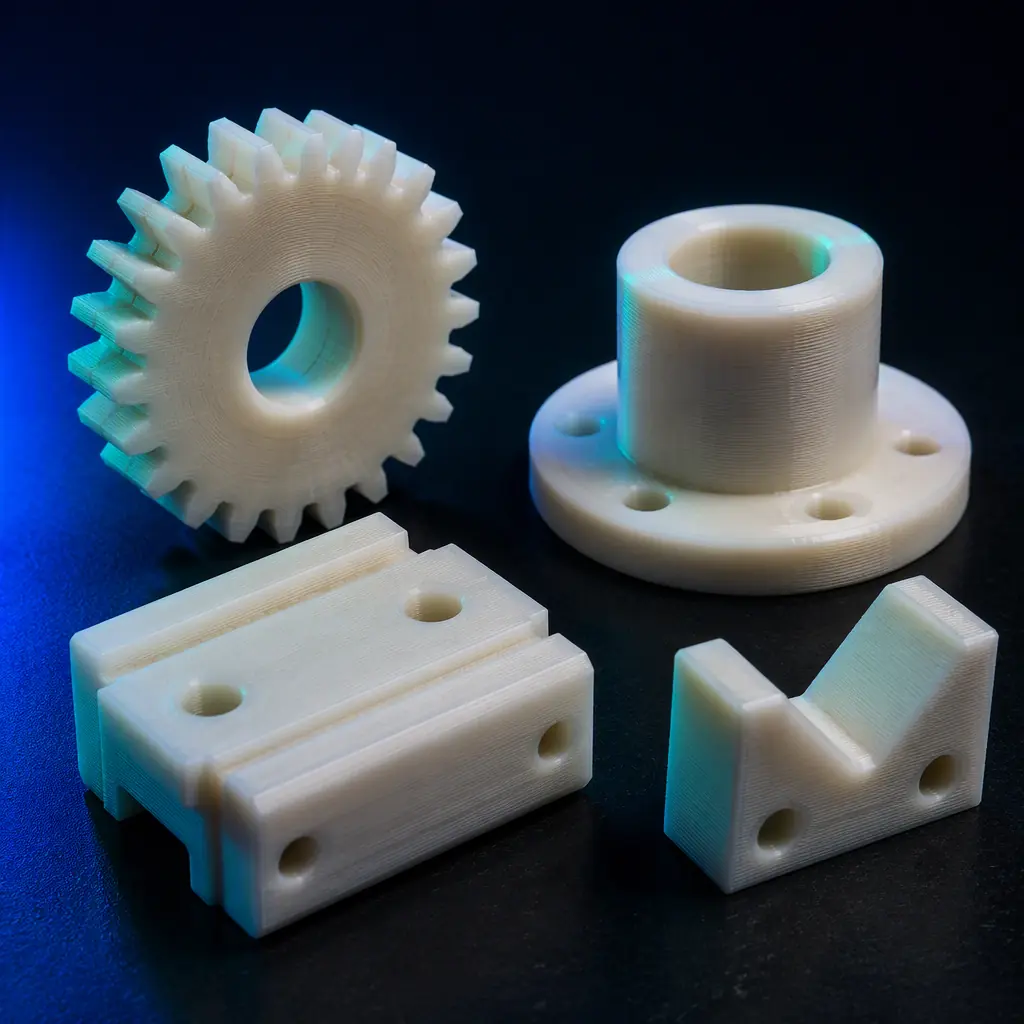
The disciplined distributor does not push POM everywhere. It wins clearly on sliding and meshing applications where low friction and low moisture uptake keep a part running true. It loses where you need a material that is tough against abrupt impact and forgiving of being knocked around, which is where nylon and impact-modified grades often remain the better call.
The framing that sells: nylon for toughness, POM for wear. A customer building a gearbox housing with a sliding carriage needs POM for the carriage inserts and nylon (or a filled-grade) for the housing shell that takes the knocks. Presenting them as a complementary pair rather than rivals is a far higher-value pitch than “strength=” charts. For the full DFM picture on how to design tight-tolerance printed parts, our FDM design rules (DFM) guide and our post-processing & finishing guide are the two references to hand to an engineering customer.
What you're looking for: A sliding, meshing or wear component in a damp or humid setting → POM is the better recommendation; a part that gets dropped or abused or is held in a cramped, poorly-ventilated printer → be cautious, lean toward nylon and address ventilation and drying before you sell POM.
Recommended Settings & the Drying Routine That Prevents Failures
The difference between a POM part that looks machined and one that looks like a failed experiment is rarely the material — it is the drying and the setup. POM takes on enough moisture to degrade print quality if it is not dried, and it wants a stable, high-temperature build. Giving a customer a printed settings card alongside the spool is what turns a one-off buyer into a repeat engineering account.
A distributor who can talk through these settings credibly — and who stocks the accessories that make them work, like a drybox and an extraction solution — is no longer selling a spool of filament, they are selling a workflow. For the accessory and air-handling pieces that support an advanced-material line, our fume extraction & filtration guide and our enclosure temperature control guide are the references to pair with it.
The Distributor's Stocking Decision
So how much POM should a distributor carry, and at what margin? The short answer is that POM is a specialty that earns a premium relative to commodity filaments, and it sells into engineering accounts rather than hobby buyers. Stock it as a precision line, at a modest SKU count, with clear application guidance on the label and a note about drying and ventilation. Because it is premium and application-specific, it pairs naturally with a consultative point-of-sale rather than a price-first pitch.
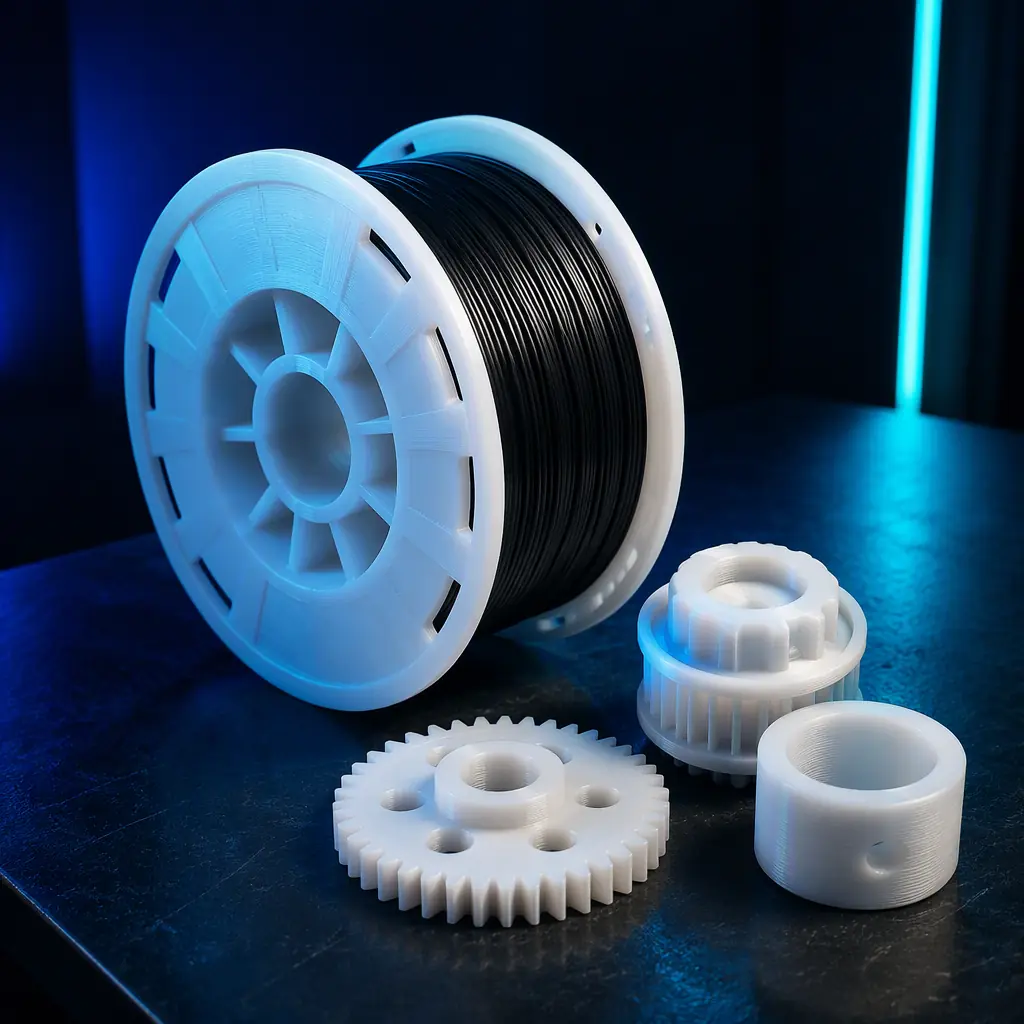
The tie-in to the rest of the product line matters too. POM parts are frequently printed as inserts, wear pads and replacements for moving hardware, which means a distributor who also sells the accessories — nozzles, hotends, build plates and engineering filaments — can bundle the whole motion-and-wear solution. For the accessory and consumables bundling logic, our consumables & accessories bundling guide and our nozzles & hotends guide cover the attachment-rate upside.
Reviewed by the Precise3D engineering & OEM team. Material property data reflect typical published ranges for the two POM grades and PA, for classification and selection guidance; auditable quality backing is held in the certification register.
Build the Wear-Parts Line
Ready to Stock a Precision Engineering Filament Line?
Join our network of global distributors. High-accuracy printers that hold tolerance on advanced materials, plus an engineering workcell that backs the consultative wear-parts pitch — everything you need to sell POM, nylon and the rest of the engineering range with confidence.