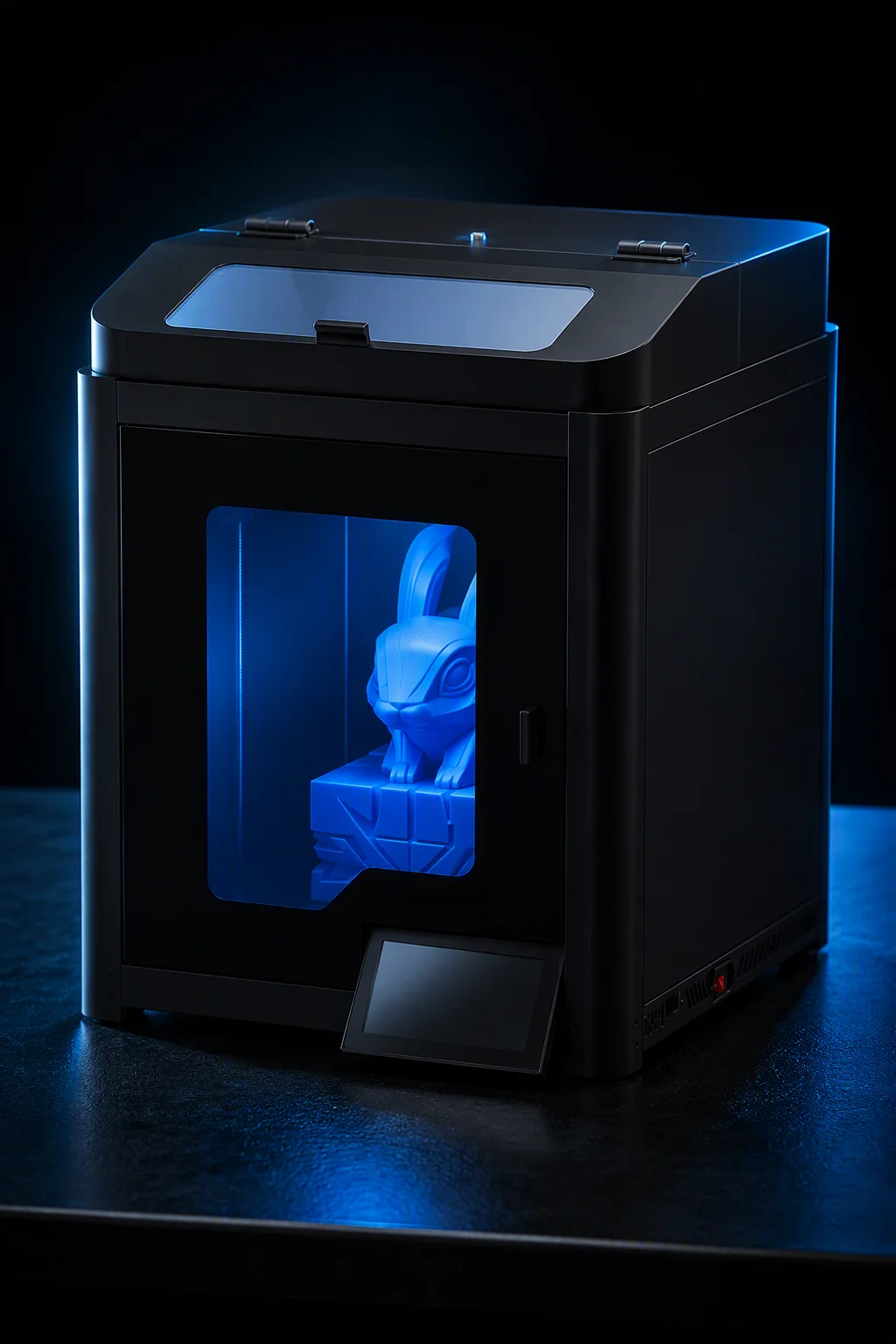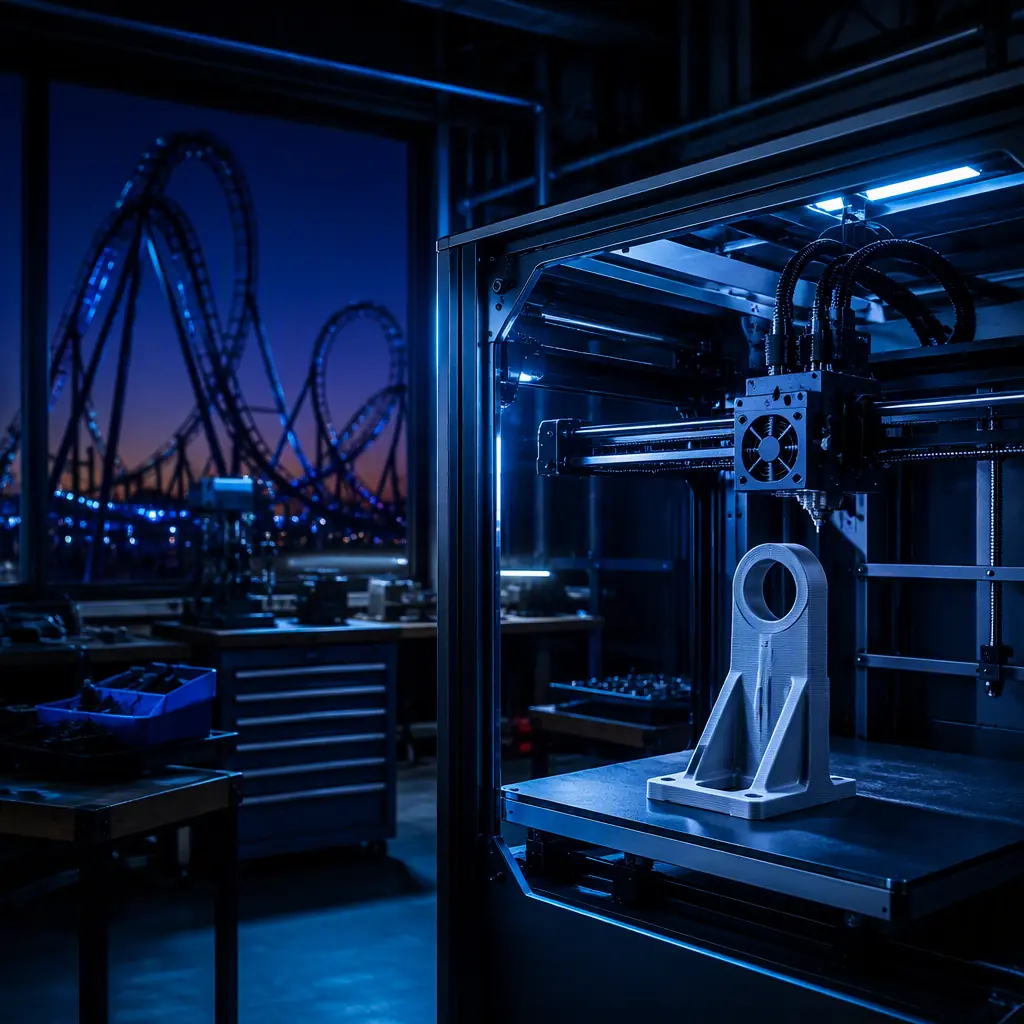
A mid-size amusement park in Texas was keeping a 2004 dark ride running with parts sourced from an eBay reseller at 3-5x original cost, with 2-6 week lead times and zero documentation. Its maintenance shop bought a large-format printer and a flame-rated filament line: common ride components like sensor brackets, limit-switch cams, and panel clips are now printed in 2-3 days at 10-20% of reseller cost, and the park's maintenance log tracks every printed part with material, print date, and inspection records. Amusement parks, water parks, and family entertainment centers are one of the most operationally demanding verticals in 3D printing, attractions run 12-16 hours a day, ride components fail on schedule, and OEM spares for aging rides become scarce or extinct. For distributors, it is a maintenance-driven market where the park's own safety culture becomes the sales engine.
Why Parks & Attractions Are Structural 3D Printing Buyers
Three facts make park operations exceptional customers. First, aging ride infrastructure: a typical park operates rides 15-40 years old, and OEM spare-parts agreements for those rides are long expired. Printed replacements are often the only documented path to keep them running. Second, uninterrupted operations: a ride outage costs $2,000-15,000 per day in lost revenue and guest compensation, so parks pay premium prices for any part that restores uptime in days instead of weeks. Third, safety documentation: parks are audited by insurers and ride-safety inspectors, so they buy documented, traceable parts, a distributor that provides material data sheets, print records, and inspection checklists wins the account. The compliance and documentation expectations are covered in our certification & compliance guide.
The Applications That Actually Buy
Five clusters generate repeat orders. The buyers are maintenance managers, ride engineers, themed-fabrication shops, and park operations directors.
1. Ride spare parts and obsolete components. The flagship application. Sensor brackets, limit-switch cams, proximity-mount adapters, panel clips, gear housings, and small linkage parts for rides 10-40 years old. Parks keep "parts libraries" of scanned or reverse-engineered components; a distributor that offers a scan-to-print replacement service (park sends a failed part, distributor returns a documented replacement in 48 hours) is indispensable. The scan-to-print pipeline is documented in our 3D scanner selection guide.
2. Animatronic and show components. Gears, cam followers, eyelid mechanisms, jaw linkages, and costume hardware for animatronics and shows. Animatronics run every show cycle and consume wear parts continuously; nylon and glass-filled materials dominate. The toughness requirements are covered in our nylon filament guide.
3. Themed fabrication and props. Custom theming elements, facade details, queue-line props, and interactive exhibit pieces for rides and walkthrough attractions. Parks refresh theming seasonally and fabricators need fast, low-cost iteration. A natural fit for large-format FDM. The dimensional control for themed parts is covered in our tolerances & dimensional accuracy guide.
4. Safety-critical jigs and test fixtures. Ride-inspection gauges, restraint-test fixtures, lock-off alignment tools, and maintenance jigs. Parks must verify safety systems on a documented schedule, and custom inspection tooling is one-off by nature, exactly what additive manufacturing does best. The tooling discipline is detailed in our manufacturing tooling guide.
5. Guest-facing signage and accessibility hardware. Braille signage, height-check gauges, queue-line markers, and custom accessibility adapters. Low margin per piece but a steady, high-visibility revenue line that keeps the account warm between ride seasons.
Materials and Compliance for Park Operations
Park parts must satisfy both mechanical demands and safety inspection. The map distributors should stock:
Two traps: (1) fire codes are non-negotiable. Indoor show and electrical-adjacent parts must use flame-rated material with a UL 94 V-0 data sheet, not standard PLA, or the park's insurer will reject the part; (2) documentation is the product, including every printed part should ship with material data sheet, print settings, and an inspection checklist, because ride-safety inspectors audit replacement parts. The finishing and documentation side of producing inspection-ready parts is covered in our post-processing & finishing guide.
Economics: OEM/Reseller Spares vs Printed Replacements
The comparison that closes park accounts:
The distributor math is attractive because the purchase is systemic: once a park validates a documented printed-replacement workflow, every future ride failure flows through the same printer, filament, and service supply. A park with 25 rides can consume $8,000-25,000/year in replacement parts, filament, and inspection services, before counting the printer itself. For building this ROI case, use our TCO/ROI calculator guide.
The Distributor Playbook: Entering Parks & Attractions
The winning playbook has five moves:
1. Anchor on uptime, not cost. The pitch is "restore the ride in days, not weeks". Cost savings are the confirmation, uptime is the decision. Lead with the outage-cost math in every presentation.
2. Offer scan-to-print with documentation. Parks do not want to reverse-engineer parts in-house. A distributor offering replacement-part service (park ships a failed part, distributor returns a documented replacement with material data and inspection checklist in 48 hours) turns a printer sale into a recurring service line. The service economics are developed in our after-sales support strategy.
3. Speak safety-audit language. Every printed part must satisfy the park's insurer and ride-safety inspector. Provide material data sheets, print-log templates, and inspection checklists, the park's own safety culture becomes your sales collateral.
4. Stock flame-rated and engineering filaments. UL 94 V-0 flame-rated line, nylon, glass-filled nylon, and ASA are the true margin engine. A park replacing 15-30 parts per month consumes 10-20 kg of engineering filament monthly; a filament subscription locks the account.
5. Build the parts-library flywheel. Every scanned part becomes an asset: build a catalog of reverse-engineered park components (with the park's permission) and offer print-on-demand for the entire park group. One validated park recruits the next, park maintenance managers talk constantly at IAAPA and regional maintenance conferences.
Common Pitfalls in Park Accounts
Five mistakes account for most failed park initiatives: (1) selling PLA into a fire-code environment, indoor show parts without UL 94 rating are rejected by insurers and inspectors; (2) skipping documentation, an undocumented replacement part is worse than no part in an audited park, so print logs and material data sheets must be standard; (3) ignoring the reverse-engineering bottleneck, parks are not CAD shops, so a distributor must offer scan-to-print service, not just a printer; (4) underselling the consumable model, the printer is the foot in the door, but filament contracts and inspection-tooling retainers are where margin compounds; and (5) neglecting seasonality, parks buy heavily before opening season and during off-season maintenance windows, so inventory planning must follow the park calendar. The discipline of documenting measurable outcomes mirrors what we teach for end-use parts in our end-use functional parts guide.
Getting Started: The First 90 Days
A 90-day entry plan: Month 1 . Stock UL 94 V-0 flame-rated filament, nylon, glass-filled nylon, and ASA with full data sheets, and identify 10-15 target accounts (independent parks, family entertainment centers, water parks, themed-fabrication shops) within a 3-hour drive. Month 2 . Run two pilot replacement-part projects at cost-plus-10% with a scan partner to build documentation evidence and a photo library; document part lifetime and inspection acceptance. Month 3 . Convert pilots to full accounts with filament subscriptions and inspection-tooling retainers, publish your first co-branded case study with measured numbers ("sensor bracket: $180 reseller → $18 printed, 48-hour turnaround"), and exhibit at a regional park or entertainment industry event. If you already serve hospitality or retail accounts, our hospitality & retail fixtures guide shows how the same fabrication and replacement-part logic transfers directly to park theming and guest-facing hardware.
Reviewed by the Precise3D engineering & OEM team. Compliance files that accompany the catalog are auditable at the certification register.
Enter the Attractions Market
Ready to Supply Parks & Attractions?
Get wholesale pricing on large-format FDM printers, UL 94 V-0 flame-rated and engineering filament lines, and the scan-to-print replacement service playbook that wins park maintenance accounts.