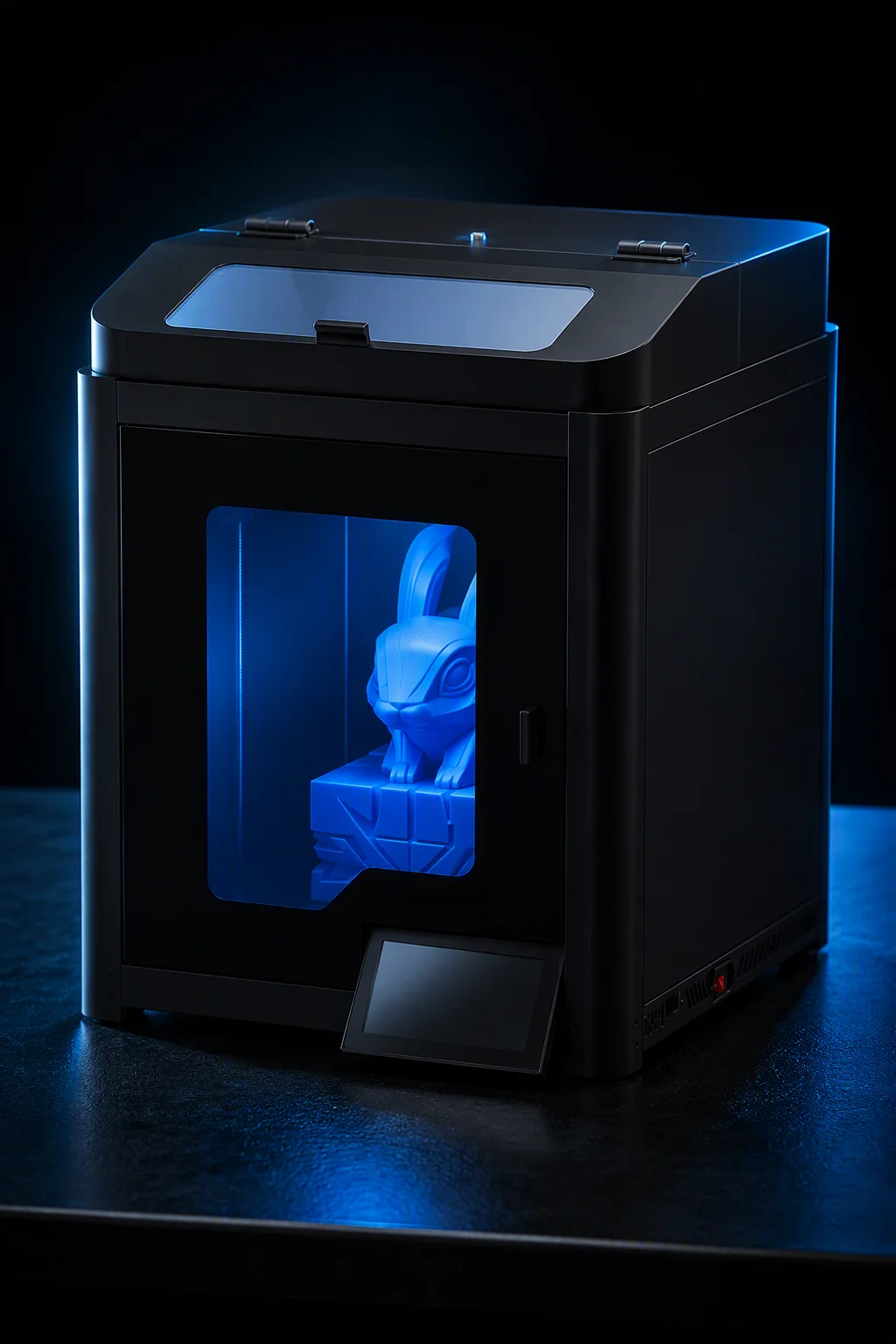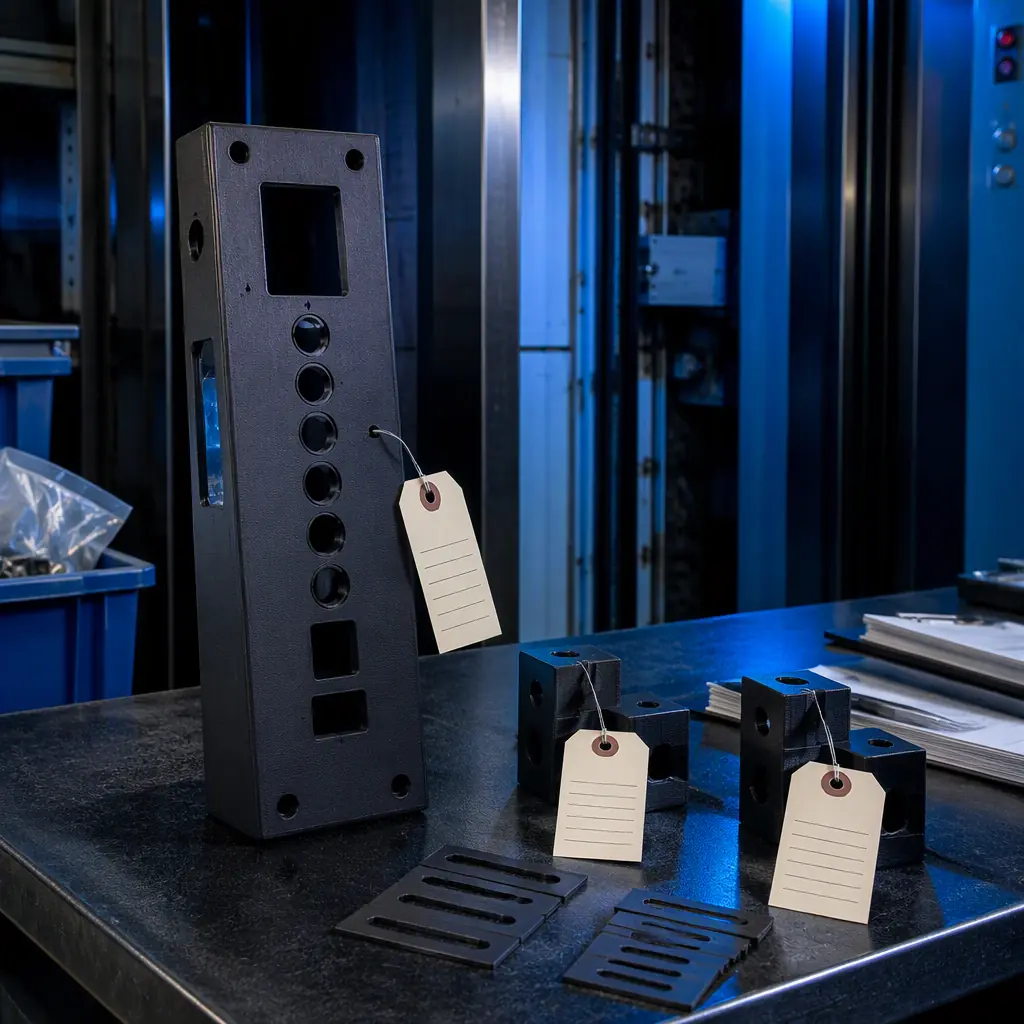
An independent elevator service company in Chicago maintains 1,100 units across 400 buildings, and roughly a third of them are 25-50 years old. Before it adopted 3D printing, a single obsolete car-station button assembly cost $140-380 from parts brokers with 3-8 week lead times, when it was available at all. Today the company prints button housings, guide-shoe shims, roller brackets, and cab light diffusers in-house: common components are produced in 1-2 days at 10-25% of broker cost, and every printed part is logged with material, print date, and a load-test reference. Elevators and escalators are one of the most compliance-heavy verticals in 3D printing, units run 20+ hours a day, inspectors audit replacement parts against code, and OEM parts for aging installations become scarce or extinct. For distributors, it is a service-contract-driven market where the maintenance company's own inspection culture becomes the sales engine.
Why Elevators & Escalators Are Structural 3D Printing Buyers
Three facts make vertical-transportation customers exceptional. First, aging installed base: there are roughly 12-15 million elevators and 1 million escalators operating worldwide, and the average unit is 20-30 years old, well past OEM spare-parts agreements. Second, regulatory inspection: elevators are inspected on a documented schedule (typically annual or semi-annual), and inspectors flag missing or non-compliant parts, so service companies buy documented, traceable replacements. Third, non-OEM service economics: independent service companies compete against OEMs on price and response time, and printed parts are the single fastest way to restore a unit without an OEM order. The documentation and traceability expectations mirror what we cover in our certification & compliance guide.
The Applications That Actually Buy
Five clusters generate repeat orders. The buyers are elevator service managers, modernization contractors, building property managers, and parts distributors.
1. Legacy spare parts and obsolete components. The flagship application. Button housings, car-station panels, indicator bezels, guide-shoe shims, roller brackets, and cab light diffusers for units 20-50 years old. Service companies keep "parts libraries" of scanned or reverse-engineered components; a distributor that offers scan-to-print replacement service (service company ships a failed part, distributor returns a documented replacement in 48 hours) is indispensable. The scan-to-print pipeline is documented in our 3D scanner selection guide.
2. Guide shoes, rollers, and running gear. Guide-shoe liners, roller brackets, gib inserts, and compensating sheave components for elevators; step rollers, comb plates, and handrail drive components for escalators. These are wear parts with documented replacement intervals, which means calendar-driven repeat orders. The wear resistance and toughness requirements are covered in our nylon filament guide.
3. Fixtures, gauges, and inspection tooling. Door-zone alignment gauges, brake-test fixtures, leveling-check tools, and maintenance jigs. Service companies must verify safety systems on a documented schedule, and custom inspection tooling is one-off by nature, exactly what additive manufacturing does best. The tooling discipline is detailed in our manufacturing tooling guide.
4. Cab and lobby hardware. Cab panel trim, door-operator covers, vent grilles, handrail end caps, and lobby indicator housings. Low margin per piece but a steady, high-visibility revenue line that keeps the account warm between modernization projects.
5. Modernization prototyping. When a service company modernizes a 30-year-old unit, it must prototype new button layouts, signage, and accessibility hardware before committing to production, printed prototypes cut the design cycle from weeks to days.
Materials and Compliance for Vertical Transportation
Elevator parts must satisfy both mechanical demands and code inspection. The map distributors should stock:
Two traps: (1) fire codes are non-negotiable. Cab and hoistway parts must use flame-rated material with a UL 94 V-0 data sheet, not standard PLA, or the inspector will flag the unit; (2) documentation is the product, including every printed part should ship with material data sheet, print settings, and a load-test or inspection reference, because elevator inspectors audit replacement parts against code. The finishing and documentation side of producing inspection-ready parts is covered in our post-processing & finishing guide.
Economics: Broker/OEM Spares vs Printed Replacements
The comparison that closes elevator accounts:
The distributor math is attractive because the purchase is systemic: once a service company validates a documented printed-replacement workflow, every future unit failure flows through the same printer, filament, and service supply. A service company with 1,000 units can consume $10,000-30,000/year in replacement parts, filament, and inspection tooling, before counting the printer itself. For building this ROI case, use our TCO/ROI calculator guide.
The Distributor Playbook: Entering Elevators & Escalators
The winning playbook has five moves:
1. Anchor on inspection readiness, not cost. The pitch is "pass the inspection with documented parts". Cost savings are the confirmation, code compliance is the decision. Lead with the inspection-failure math in every presentation.
2. Offer scan-to-print with documentation. Service companies do not want to reverse-engineer components in-house. A distributor offering replacement-part service (service company ships a failed part, distributor returns a documented replacement with material data and load-test reference in 48 hours) turns a printer sale into a recurring service line. The service economics are developed in our after-sales support strategy.
3. Speak code language. Every printed part must satisfy the elevator inspector and applicable codes (ASME A17.1 in North America, EN 81 in Europe). Provide material data sheets, print-log templates, and inspection references, the service company's own compliance culture becomes your sales collateral.
4. Stock the compliance filament set. UL 94 V-0 flame-rated line, nylon, glass-filled nylon, and ABS are the true margin engine. A service company replacing 20-40 parts per month consumes 15-25 kg of engineering filament monthly; a filament subscription locks the account.
5. Build the parts-library flywheel. Every scanned part becomes an asset: build a catalog of reverse-engineered elevator and escalator components (with the customer's permission) and offer print-on-demand across the entire service portfolio. One validated service company recruits the next, elevator maintenance managers talk constantly at NAEC and regional elevator industry conferences.
Common Pitfalls in Elevator Accounts
Five mistakes account for most failed initiatives: (1) selling PLA into a fire-code environment, cab and hoistway parts without UL 94 rating are flagged by inspectors; (2) skipping documentation, an undocumented replacement part is worse than no part in an inspected unit, so print logs and material data sheets must be standard; (3) ignoring load requirements, elevator components carry real loads, so load-test references and engineering-grade materials must be part of the offering; (4) underselling the consumable model, the printer is the foot in the door, but filament contracts and inspection-tooling retainers are where margin compounds; and (5) neglecting the parts-library bottleneck, service companies are not CAD shops, so a distributor must offer scan-to-print service, not just a printer. The discipline of documenting measurable outcomes mirrors what we teach for end-use parts in our end-use functional parts guide.
Getting Started: The First 90 Days
A 90-day entry plan: Month 1 . Stock UL 94 V-0 flame-rated filament, nylon, glass-filled nylon, and ABS with full data sheets, and identify 10-15 target accounts (independent elevator service companies, modernization contractors, property managers with large portfolios) within a 3-hour drive. Month 2 . Run two pilot replacement-part projects at cost-plus-10% with a scan partner to build documentation evidence and a photo library; document part lifetime and inspection acceptance. Month 3 . Convert pilots to full accounts with filament subscriptions and inspection-tooling retainers, publish your first co-branded case study with measured numbers ("button assembly: $220 broker → $22 printed, 48-hour turnaround, inspection passed"), and exhibit at a regional elevator or building-maintenance event. If you already serve railway or transit accounts, our railway & transit guide shows how the same compliance-driven replacement-part logic transfers directly to elevator and escalator maintenance.
Reviewed by the Precise3D engineering & OEM team. Compliance files that accompany the catalog are auditable at the certification register.
Enter the Vertical-Transportation Market
Ready to Supply Elevators & Escalators?
Get wholesale pricing on large-format FDM printers, UL 94 V-0 flame-rated and engineering filament lines, and the scan-to-print replacement service playbook that wins elevator maintenance accounts.