
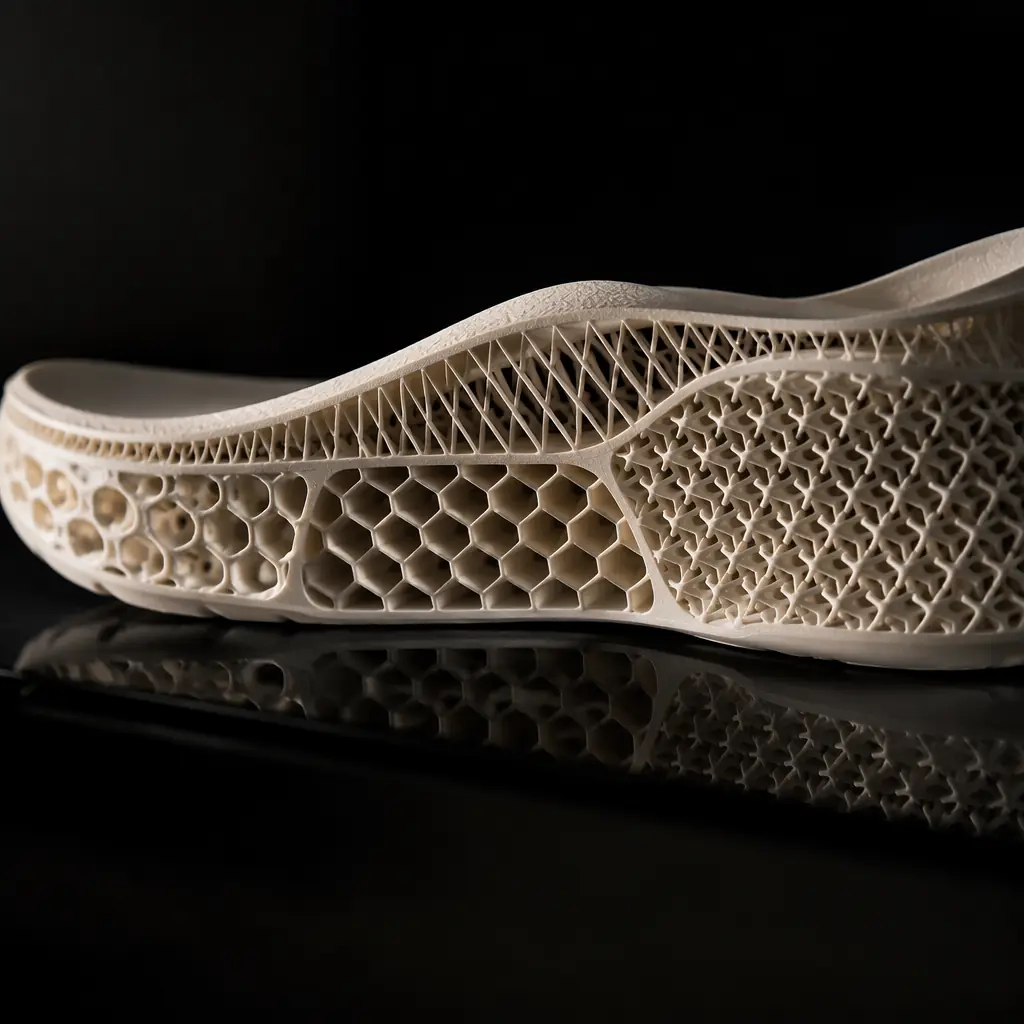
When distributors think "3D printing verticals," the list is predictable: dental, aerospace, automotive, education, manufacturing. Fashion and footwear rarely make the cut — and that's exactly why this vertical represents such a concentrated opportunity. The global 3D-printed footwear market alone was valued at $1.2 billion in 2025 and is projected to reach $3.7 billion by 2031 (CAGR 20.8%). Adidas, Nike, New Balance, and Under Armour have all shipped millions of pairs with 3D-printed components. Luxury brands from Dior to Balenciaga have integrated 3D printing into their design and production workflows. Yet the distributor channel serving these brands is essentially nonexistent — most fashion-tech companies buy printers direct from manufacturers or through generalist resellers who don't understand their material and workflow requirements. This guide maps the entire fashion and footwear 3D printing landscape: the technologies, the materials, the customer profiles, and the go-to-market strategy that lets you serve a vertical where your competition hasn't even arrived yet.
The Market: Why Fashion Is Suddenly a 3D Printing Vertical
Three forces are converging to make fashion and footwear a legitimate 3D printing vertical — not a curiosity, not a gimmick, but a market with unit economics that work at scale.
Force 1 — Performance footwear has moved beyond foam: Traditional EVA foam midsoles are injection-molded, which means every size requires a separate mold costing $3,000–$8,000. A full size run of a single shoe model requires 12–16 molds — that's $36,000–$128,000 in tooling before the first pair is produced. 3D-printed lattice midsoles (TPU or TPU-blend powder bed fusion or FDM) require zero molds. The lattice geometry — which can't be injection-molded at all — provides variable stiffness zones: firmer under the heel, softer under the forefoot, all in a single print. Adidas's 4DFWD midsole, printed with Carbon's DLS technology, contains 20,000 individual struts precisely tuned to compress and rebound differently across zones. This isn't a prototype gimmick — it's a production manufacturing method that eliminates $50,000+ in tooling per model and enables geometric complexity that traditional manufacturing cannot achieve.
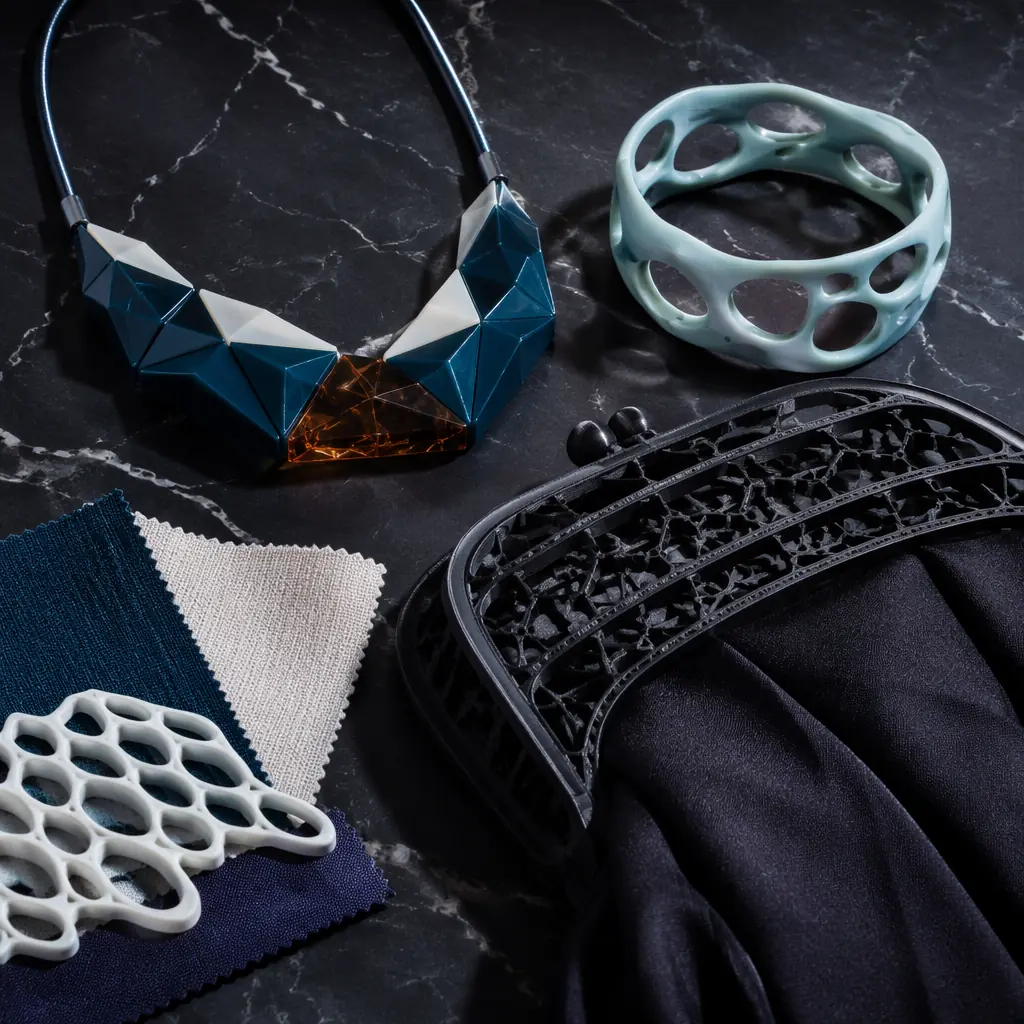
Force 2 — Luxury fashion has discovered the design freedom: A haute couture dress with 3D-printed structural elements, as seen at Iris van Herpen's runway shows, can't be sewn from fabric. The geometric lattice structures, interlocking chainmail patterns, and organic flowing forms are only achievable through additive manufacturing. Luxury brands are using SLS (nylon powder) for flexible structural garments, SLA/DLP for rigid accessories and jewelry, and FDM with flexible TPU for footwear prototypes and samples. These brands don't buy printers at volume — a single fashion house might own 2–5 machines — but they buy premium machines, they buy proprietary materials at premium prices, and they're almost entirely unserved by the existing distributor channel.
Force 3 — The supply chain economics have flipped: A fashion brand producing a limited-edition collection of 500 pairs of shoes with 3D-printed components needs zero injection molds, zero minimum order quantities from a factory, and zero warehousing of pre-produced inventory. The digital file is the inventory. Production is on-demand. For limited editions, collaborations, and rapid trend-response cycles — the core of the contemporary fashion business — 3D printing isn't an alternative manufacturing method. It's a structural competitive advantage. This is the same on-demand logic we explored for broader manufacturing in our end-use parts guide, but with fashion-specific unit economics that favor high-margin, low-volume production runs.
Technology Mapping: Which Printer for Which Fashion Application
Fashion and footwear use all three major 3D printing technologies — but for completely different applications. Here's the mapping:
The SLS/DLS premium tier: Selective Laser Sintering (SLS) and Carbon's Digital Light Synthesis (DLS) are the production technologies behind every major brand's 3D-printed footwear. They use TPU powder that's sintered layer by layer, producing parts with isotropic mechanical properties — equally strong in all directions, unlike FDM's weak layer-adhesion axis. SLS printers start at $10,000 for benchtop units and reach $100,000+ for production systems. The consumable — TPU powder — runs $80–150/kg, with approximately 50–70% of unused powder recyclable per build. For distributors, this is a consultative sale: you're not stocking SLS machines on a shelf, but you're positioned as the partner who can source them, provide application engineering support, and supply the consumables at 30–40% margin.
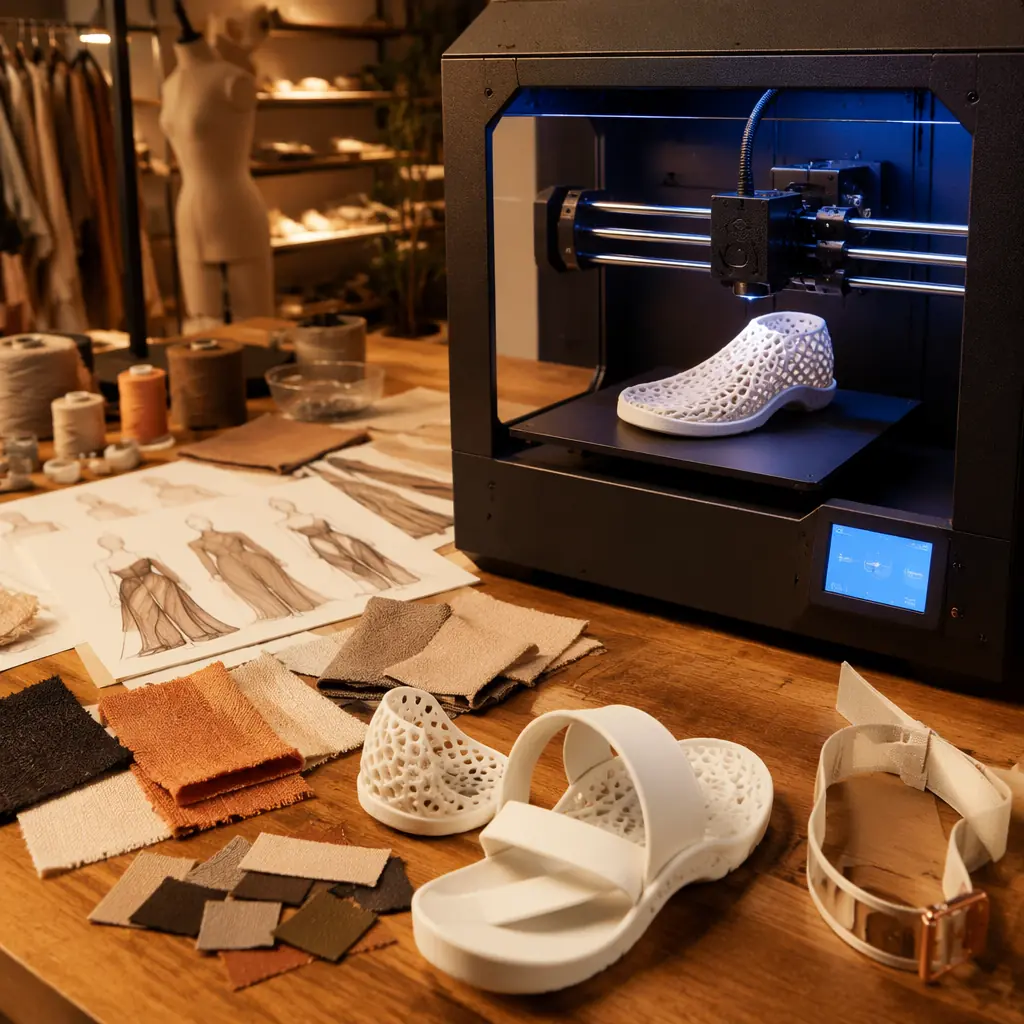
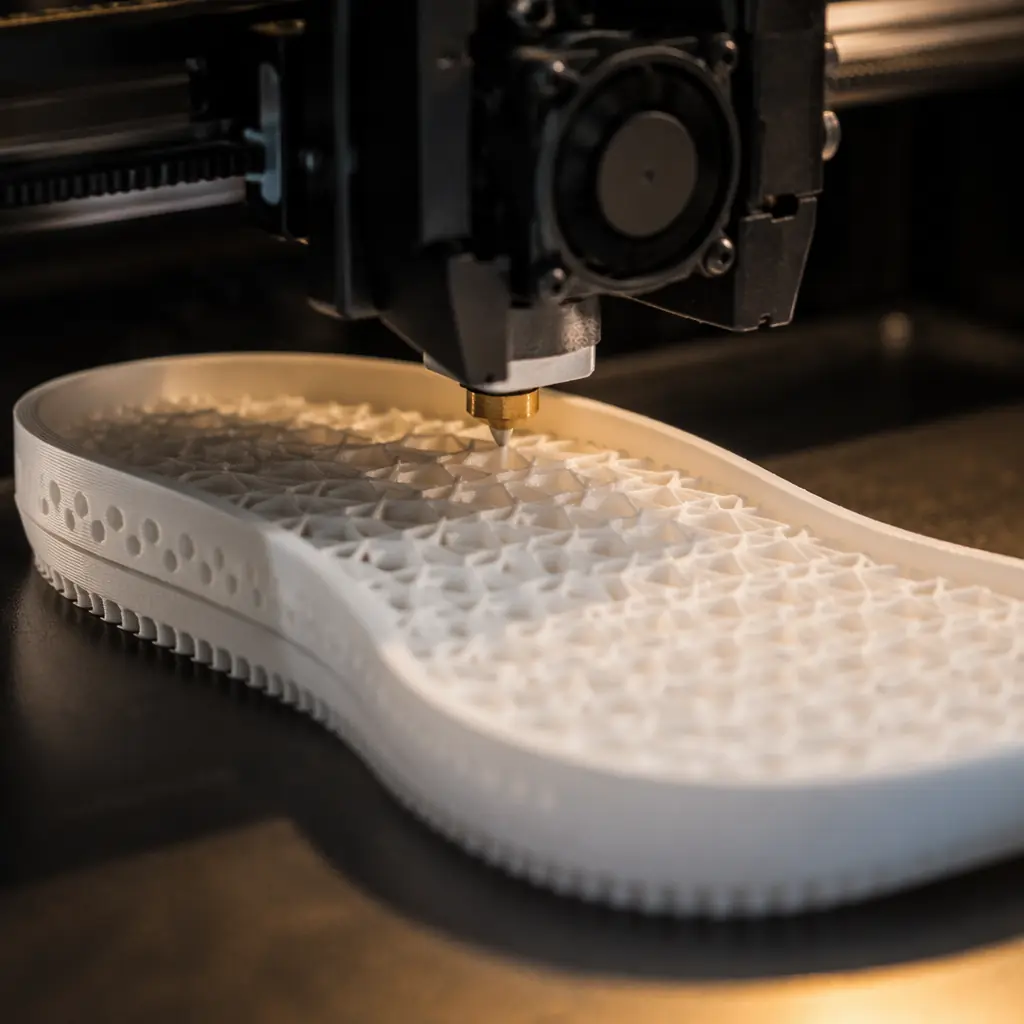
The FDM accessible tier: Flexible TPU filament (Shore 85A–95A) on a direct-drive FDM printer produces footwear prototypes that can be worn and tested. A $300–500 direct-drive printer with a flexible filament bundle — 2 spools of TPU in different shore hardnesses, a textured PEI build plate, and a filament dryer — gives a footwear design studio everything they need to iterate through midsole designs, check fit, and validate geometry before committing to an SLS production run. This is the volume opportunity for distributors: accessible, repeatable, and paired with consumable reorders every 2–4 weeks as design teams iterate. For choosing the right FDM extruder configuration, our direct drive vs Bowden guide covers why direct drive is mandatory for flexible filaments.
Materials: What Fashion Customers Actually Need
Fashion has material requirements that don't overlap with engineering or dental — flexibility, skin safety, dyeability, and surface finish aesthetics rank above tensile strength and heat deflection temperature. Here's the material portfolio that serves this vertical:
TPU is the cornerstone: For any distributor targeting fashion and footwear, TPU filament at multiple shore hardnesses is the must-stock consumable. Shore 85A TPU is soft enough for shoe uppers and flexible garments. Shore 95A TPU is firm enough for midsole prototypes and structural accessories. A footwear design studio starting from zero needs 1 spool of each — that's a $60–80 initial consumable sale, reordered monthly. Our flexible filaments guide covers the full TPU/TPE/TPC landscape in detail.
Skin-contact compliance: Any 3D-printed fashion item that touches skin — wristbands, rings, garment structures — must use materials certified for skin contact. This means ISO 10993-5 (cytotoxicity) and ISO 10993-10 (skin sensitization) certification for resins, and REACH compliance for filaments sold in the EU. Most generic 3D printing filaments and resins are not skin-safe — they're formulated for prototyping, not wearables. Stock at least one skin-safe TPU filament and one skin-safe resin, and promote that certification prominently. A fashion brand will pay a 30–50% premium for a material they can legally sell as a wearable product. This regulatory dimension parallels the requirements we detailed in our food-safe 3D printing guide — similar compliance framework, different application.
Customer Profiles: Who's Buying 3D Printers for Fashion
Fashion and footwear customers break into four distinct profiles, each with different purchasing behavior, budget, and support needs. Understanding these profiles determines which products you pitch and how you pitch them.
Footwear Brand R&D Lab ($20K–150K): These are your SLS/DLS customers. They're evaluating 3D-printed midsoles for production, and they need application engineering support — material property data sheets, design-for-additive-manufacturing guidance, and post-processing workflow recommendations. They buy 1–3 SLS machines, consume 50–100kg of TPU powder per month, and value technical expertise over price. The sales cycle is 3–6 months and involves multiple stakeholders (R&D director, materials engineer, manufacturing VP). Close this sale and you have a $6,000–$15,000/month consumable account with near-zero churn.
Independent Footwear Designer ($3K–15K): This is the fastest-growing segment — independent designers launching their own shoe brands through Kickstarter, Shopify, and Instagram. They need 1–2 FDM printers with direct-drive extruders, TPU filament in 2–3 shore hardnesses, and a post-processing kit. The initial sale is $3,000–$8,000 with 30–40% hardware margin plus 45–50% consumable margin. Monthly consumable reorders average $200–400. These customers also need design guidance — stock a footwear-specific design guide that covers lattice generation in nTopology or Rhino+Grasshopper, and you become their go-to resource. For the small-manufacturer sales approach, our selling to small manufacturers guide provides the framework that applies directly here.
Fashion Accessories Studio ($2K–8K): These are designers creating 3D-printed jewelry, handbag hardware, eyewear frames, and structural garment elements. They need a high-resolution resin printer (SLA or DLP), castable resin for jewelry pieces, and engineering resin for rigid accessories. The consumable mix is diverse — 3–5 different resin types per studio — which means higher SKU count but also higher attachment rate per customer. Bundle a UV wash-and-cure station with every resin printer sale; a studio producing 20 accessories per week needs it, and it adds $80–150 in margin to every initial transaction. For the jewelry-specific application details, our jewelry casting guide covers the full workflow including investment casting.
Fashion School / University Program ($5K–30K): Fashion design programs at institutions like Parsons, Central Saint Martins, and FIT are incorporating 3D printing into their curriculum. These are multi-printer institutional sales — typically 5–10 FDM machines plus 1–2 resin machines for a lab setup. The purchase process goes through procurement (formal RFQ, payment terms, warranty requirements), but the relationship value is in graduating designers who become your independent-designer customers 2–3 years later. For the education sales playbook, see our education market guide. Add fashion-specific curriculum materials to your education bundle — a lesson plan for 3D-printed footwear design is worth more to a fashion school than a generic 3D printing curriculum.
Go-to-Market: How to Reach Fashion Customers Before Your Competition Does
Fashion and footwear customers don't read the same trade publications as your engineering and manufacturing customers. They're not at Formnext or RAPID+TCT. They're at Première Vision (Paris), Lineapelle (Milan), and FN Platform (Las Vegas). The go-to-market strategy has to follow the customer, not the industry.
Trade show strategy: Booth at one major fashion-tech event — Première Vision's "Manufacturing" section or the Wearable Technology Show — with 3–5 running printers producing fashion items live. A TPU midsole printing on an FDM machine, a resin necklace curing under UV, and a nylon SLS garment structure all running simultaneously creates exactly the "how is that possible" reaction that drives booth traffic and qualified leads. The cost is $3,000–$8,000 for a small booth plus travel, and the lead quality is dramatically higher than a general 3D printing show because every attendee is pre-qualified as a fashion industry professional. Our trade show ROI guide covers the full booth strategy.
Instagram and TikTok over LinkedIn: Fashion designers discover tools and technologies on visual platforms, not business networks. A 15-second video of a 3D printer producing a flexible lattice midsole, set to music, with a caption that says "This is how your next shoe gets made" will reach 50,000–200,000 fashion-interested viewers for $200 in targeted ad spend — and a percentage of those viewers are independent designers who will become customers. This is fundamentally different from the LinkedIn-and-trade-journal marketing that works for aerospace and dental, and it's why most 3D printer distributors get zero fashion inbound: they're advertising in channels that fashion customers don't use.
Designer education as lead generation: Partner with a fashion design influencer or educator to create a free 30-minute masterclass: "How to Design Your First 3D-Printed Shoe." Host it on your site, promote it through fashion design communities, and collect emails. The content converts at 3–5% to equipment inquiries — comparable to a trade show lead at zero cost per lead after content production. The key is making it genuinely educational, not a product pitch. Show the design process in Rhino/Grasshopper, the lattice generation, the printer settings for flexible TPU, and the finished product. The product sells itself when the designer sees what's possible.
Building Your Fashion-Tech Product Bundle
Here's the one-page product portfolio that serves every fashion and footwear customer profile with minimal SKU count:
Entry Bundle ($2,490, 35% blended margin): One FDM printer with direct-drive extruder, 2 spools TPU (85A + 95A), 1 textured PEI sheet, 1 filament dryer, 1 post-processing starter kit. Target: independent footwear designers and fashion students.
Studio Bundle ($4,980, 38% blended margin): One high-res DLP resin printer, 1L castable resin, 1L flexible resin, 1L engineering resin, UV wash-and-cure station, 3 replacement FEP sheets. Target: fashion accessories studios and jewelry designers.
Lab Bundle ($14,900, 32% blended margin): Two FDM printers (direct drive), one SLS benchtop system or premium DLP, 10kg TPU powder (SLS) or 5L specialty resin mix, full post-processing station, extended warranty with priority support. Target: brand R&D labs and university fashion programs.
The fashion and footwear vertical is the least competitive segment in 3D printing distribution — not because the market is small, but because most distributors are looking in the wrong places. Build the product portfolio, show up at the right events, create content that fashion designers actually want to watch, and you own a vertical where the brands with money are actively looking for a partner who speaks their language.
Start Your Partnership
Ready to Bring Precision Printing to Your Market?
Join our network of 200+ global distributors. Competitive pricing, dedicated support, and fast fulfillment.