The Machine Shop & CNC Job Shop Aftermarket
Machine shops and CNC job shops range from a three-machine garage operation to a large contract manufacturer running a machining cell. Their common thread is a stream of small-batch, variable parts, each of which needs some kind of holding, locating or measuring aid. The parts made by the shop are machined; the aids the shop needs to make them are different, soft jaws, workholding fixtures, zero-point pallets, gauges, chamfer fixtures, tab-and-step blocks, base plates and stop blocks. Because these aids are one-off and job-specific, they are exactly the kind of tooling a shop would rather print than machine. When the shop asks "why is this so expensive / why is my spindle tied up making a jaw", the printed answer is fast and cheap.
The buyer is typically a shop owner, a lead machinist or a manufacturing engineer. For the wider tooling and fixture market that this opens up, see our manufacturing tooling distributor guide and our robotics & automation guide . Machine shops and automation integrators buy from the same set of printed fixtures.
Soft Jaws & Workholding
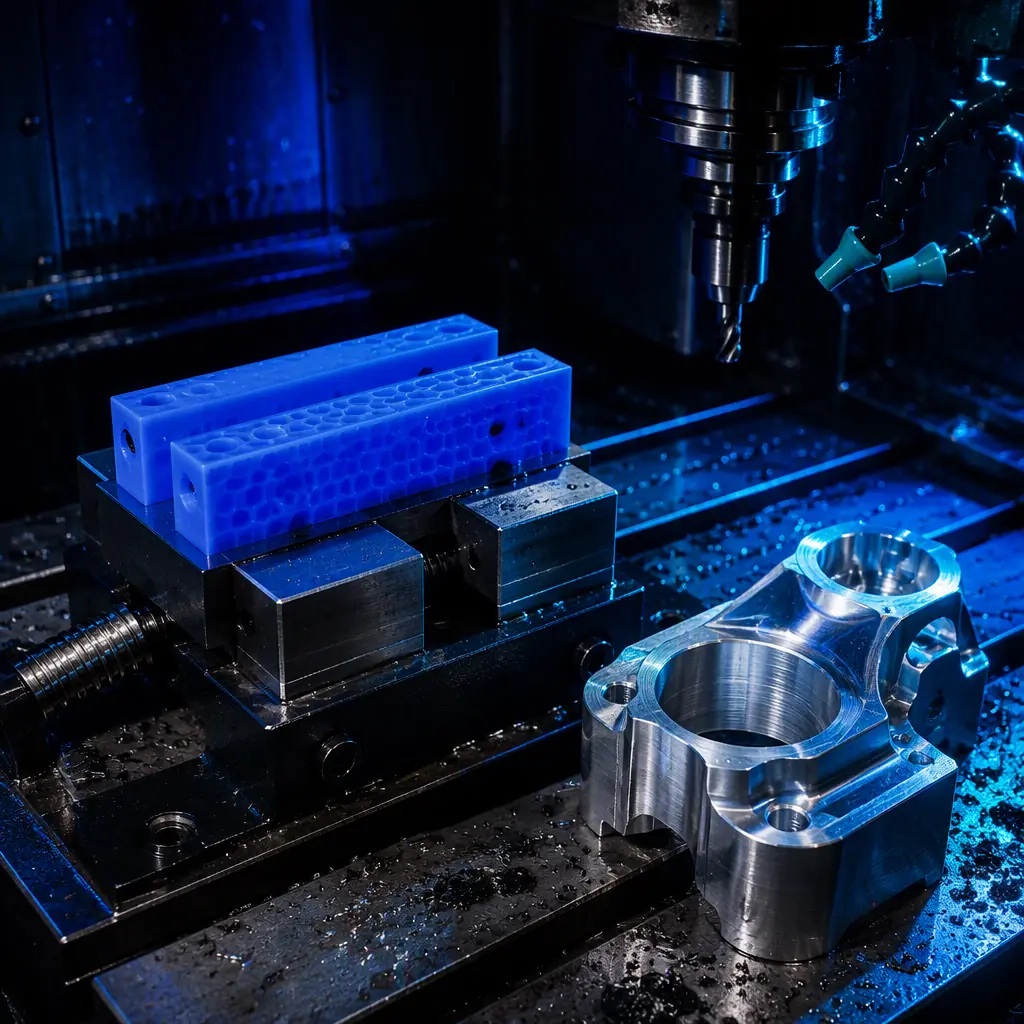
The highest-frequency parts are soft jaws (aluminium and steel replacements), monoblock or two-piece jaws, custom vise jaws, workholding blocks, zero-point pallets, base plates and fixture studs. A soft jaw that grips a specific part profile is normally machined from a block of aluminium or steel, one-off, with toolpath time and material waste. Printed in a stiff-filled material such as PA-CF, a soft jaw grips a part for a moderate run of 50-500 pieces without damaging the surface, then is re-printed wire-to-wire in a matter of hours for the next job. The value proposition is blunt: no spindle time, no metal block, no one-off toolpath, and the cost drops to a fraction. For the material selection and the dimensional tolerance you need here, see our dimensional accuracy & tolerances guide and our carbon-fibre filled filament guide.
Fixture & Setup Tooling
Beyond jaws, the recurring setup parts are fixture plates, gauge fixtures, chamfer and deburr fixtures, tapping guides, drill guides, inserts, abutment blocks and locating pins. These position the part, align the toolpath, and hold secondary operations like deburring or tapping. Because they are job-specific and typically used once or a handful of times, machining them is a pure overhead. A printed fixture plate or gauge locates the part accurately, survives the mechanical and coolant exposure of a shop environment, and is cheap enough to treat as consumable. For the wider fixtures and rapid-tooling opportunity, our rapid prototyping & R&D guide and our design-for-AM rules guide are the relevant reads.
Measurement & Inspection Aids
A shop also produces a stream of measurement aids: gauge fixtures, Go/No-Go masters, and inspection nests. These verify a part against its drawing, and while they might not carry the same load as a jaw, they are bought in the same job-driven rhythm and are equally well suited to printing. A printed gauge fixture or inspection nest locates a part reproducibly for CMM or manual inspection, is re-printed for each new revision, and eliminates the cost of a machined or purchased gauge. For the broader shop-floor and end-use part context, our end-use functional parts guide is a good companion read.
Materials for Shop-Aid Durability
Shop-floor tooling lives with dings, chatter, coolant and repeated clamping. The material must be stiff and dimensionally stable. The right choices: PA-CF for the default soft jaw, fixture or precision gauge, stiff, low-warp, abrasion-resistant; PC for a tough jaw or base plate that takes some impact; PA-GF as a lower-cost stiff alternative; PETG for a low-cost, non-load-bearing fixture or a visual nest. For a jaw that clamps hard, combine a stiff core with a TPU contact face so the printed jaw grips without marring the part. For the full stiffness and toughness picture, our carbon-fibre filled filament guide, our engineering filaments guide and our after-sales support strategy cover the choices.
What you're looking for: Cutting force / clamping → PA-CF or PC for stiffness, add a TPU contact face to avoid marring; locating and measuring → PA-CF or PA-GF for dimensional stability; visual / non-load-bearing → PETG at low cost; high impact → PC; always confirm the printed part does not degrade under the coolant and chip environment of the machine.
Distributor Economics: Spindle-Time Value
The machine-shop aftermarket is a high-frequency, repeat-purchase vertical because shop aids are job-driven and never stop. A job shop can generate $10,000–25,000/year in printed soft jaws, fixtures and gauges once you are trusted. Because each new job and each part revision needs fresh workholding, and the alternative is machining a fixture on a spindle that could otherwise be making money. The cadence is job-driven and weekly, and the margin is excellent: you set the part price, typically at 45–70% under the machined-and-purchased alternative, and your material cost is a small fraction of it. That puts distributor gross margins at roughly 55–75% on printed shop aids.
The entry plan:
(1) Run a chamber-heated printer with a hardened nozzle for filled materials and a stiff PA-CF plus a PC material set. (2) Print a demo kit of the fastest-moving shop aids. A custom soft jaw, a workholding block, a fixture plate, a gauge fixture. (3) Approach local machine shops, CNC job shops and contract manufacturers. (4) Lead with the spindle-time message: every hour not spent cutting a jaw is an hour cutting a paying part. For positioning the distributor business, our portfolio & market-segment strategy guide and our consumables & accessories bundling guide are the relevant reads.
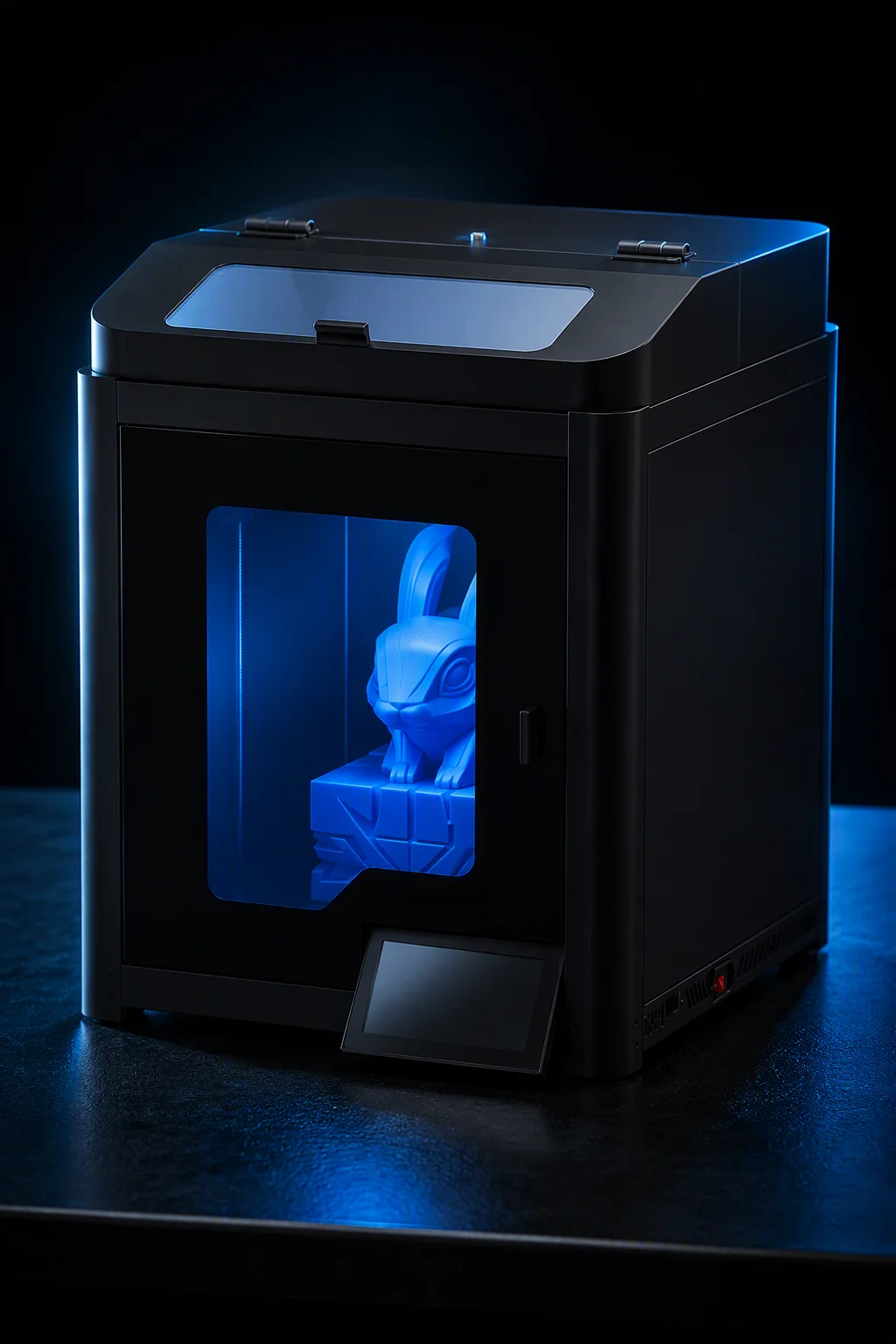
Machine shops are a fast, reliable buyer, once a machinist sees a soft jaw or a fixture plate printed overnight, gripping clean and costing a fraction, the printed shop aid becomes the default for every new job. At Precise3D, our chamber-heated, hardened-nozzle FDM platform with stiff PA-CF and tough PC capability is built for exactly this: dimensionally accurate, abrasion-resistant workholding and gauges that free the spindle, delivered fast.
Reviewed by the Precise3D engineering & OEM team. Compliance files that accompany the catalog are auditable at the certification register.
Enter This Vertical
Ready to Supply Spindle-Freeing Shop Aids to Machine Shops & CNC Job Shops?
Join our network of global distributor network. Chamber-heated, hardened-nozzle printers with stiff PA-CF and tough PC capability, plus a demo kit of the fastest-moving soft jaw, workholding block and fixture-plate tooling, everything you need to open the shop-floor aftermarket.