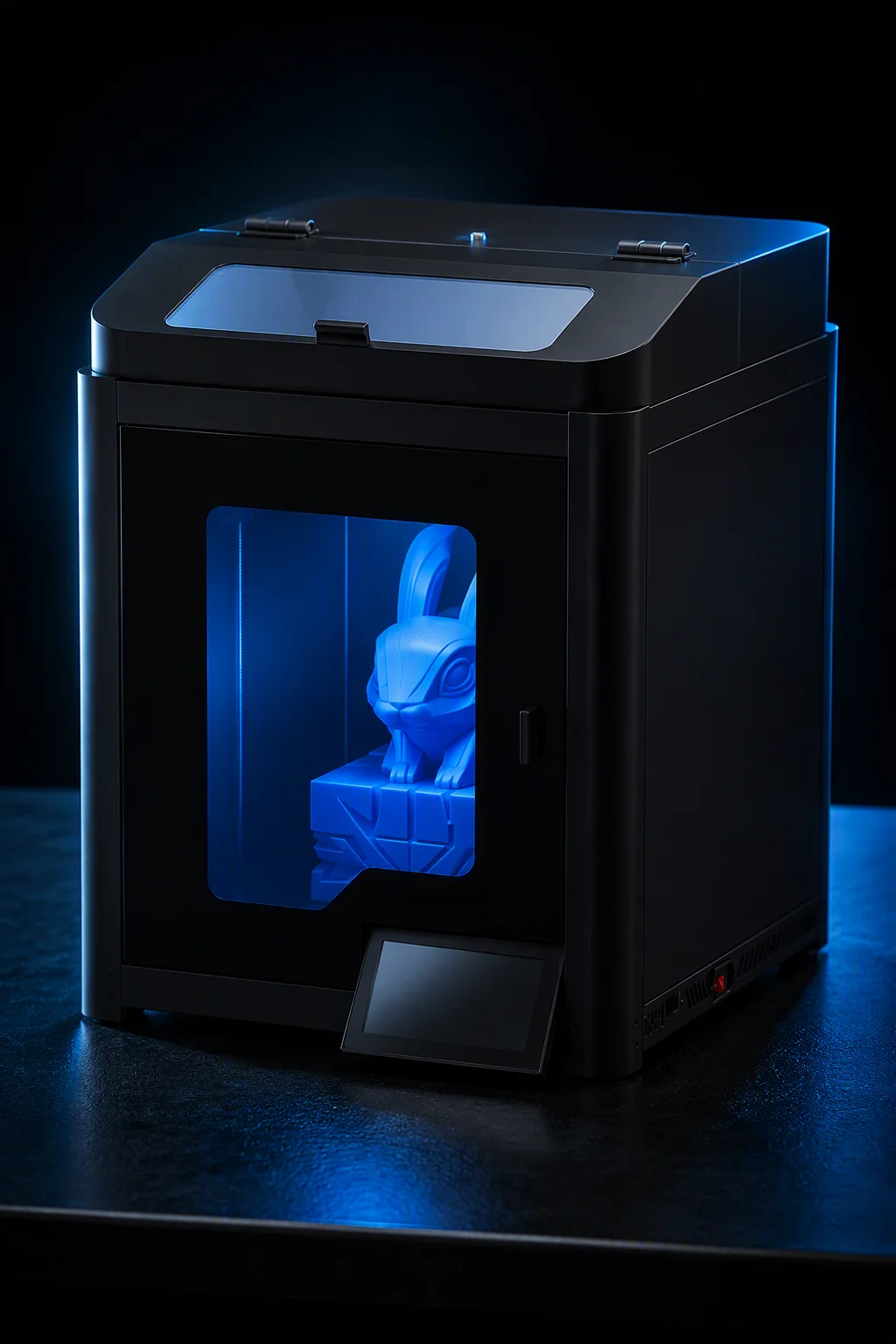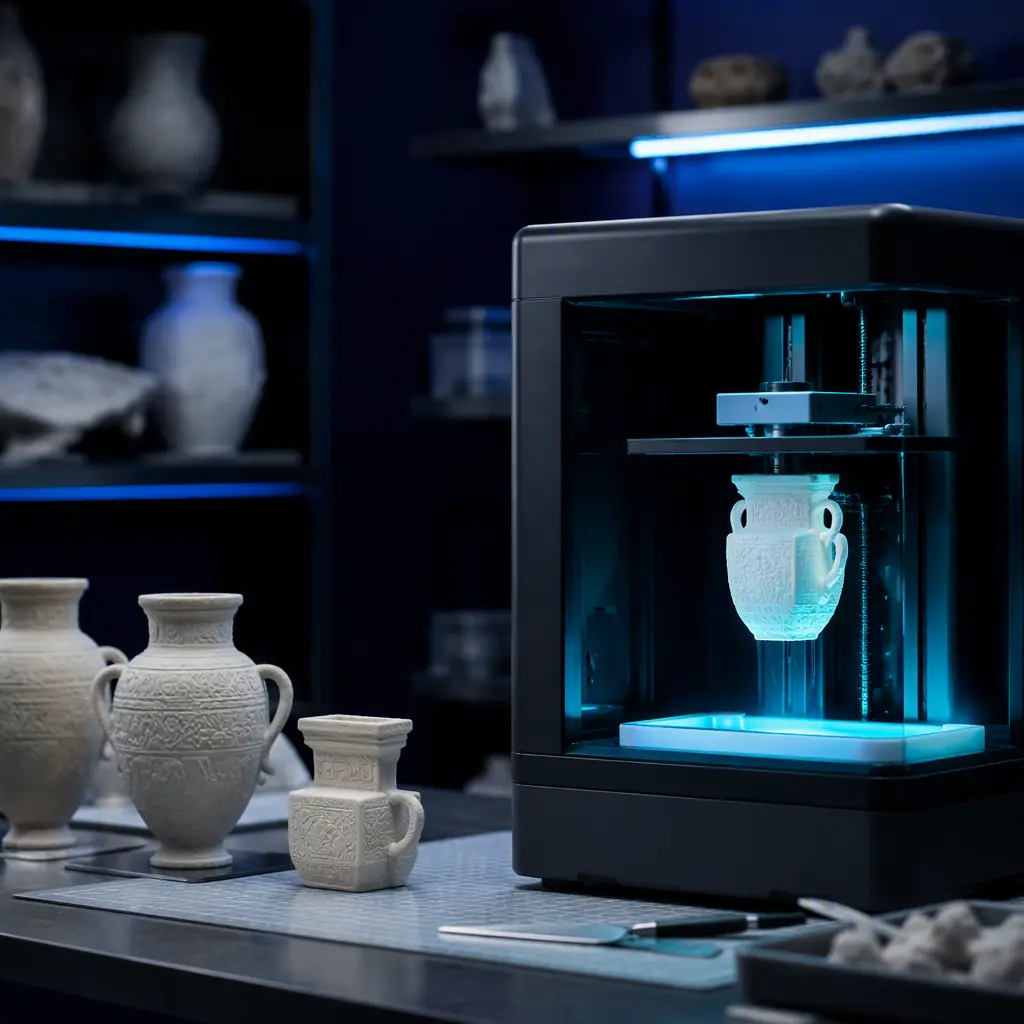
A regional history museum in Ohio was paying $4,800 per outsourced replica for a fragile 19th-century ceramic collection — and waiting 6-9 weeks for each one. It bought a resin printer and a handheld scanner: each touchable replica now costs $45-90 in archival-safe resin, ships from scan to finished piece in 3-4 days, and the education department finally has loanable objects for school programs. Museums, historic sites, and exhibit fabricators are quietly becoming one of the most defensible verticals in 3D printing, because every artifact is unique, every exhibit cycle generates new objects, and institutional budgets repeat annually. For distributors, it is a grant-funded market where one validated account recruits the next.
Why Museums Are Structural 3D Printing Buyers
Three facts make cultural institutions exceptional customers. First, collection risk: originals cannot be touched, loaned, or handled by visitors, so every museum needs surrogate objects — and digital fabrication is the only economical way to produce them at fidelity. Second, recurring exhibit cycles: museums rotate exhibits 2-4 times per year, each cycle demanding new mounts, interactive props, and interpretive models — a permanent pipeline of print work rather than one-off projects. Third, grant and accessibility mandates: ADA tactile requirements and accessibility funding now explicitly reward institutions that produce touchable models of collections, giving curators a budget line to defend the purchase. The trust and documentation mechanics of institutional buyers are covered in our certification & compliance guide.
The Applications That Actually Buy
Five clusters generate repeat orders. The buyers are curators, exhibit designers, conservators, and museum education departments.
1. Touchable artifact replicas. The flagship application. Scanned or modeled from originals, printed in resin or FDM, and finished to mimic the original material — ceramics, bone, stone, and metal all reproduce well. A mid-size museum rotating 3-4 replica lines per year consumes 30-60 replicas plus finishing consumables; replica resin is a permanent consumable stream. The scan-to-print pipeline that feeds this application is documented in our 3D scanner selection guide.
2. Exhibit fabrication and interactive props. Custom display furniture, interactive gears and cranks, scale models of buildings or machinery, and reproduction parts for period rooms. Exhibit fabricators and in-house exhibit shops are the heaviest buyers — they treat the printer as a workshop tool and consume engineering filament continuously. The dimensional control required for exhibit-grade parts is covered in our tolerances & dimensional accuracy guide.
3. Conservation mounts and storage supports. Custom cradles, padded supports, and handling trays that hold artifacts safely in storage and during transport. Every artifact is a different shape, so every mount is a one-off print — a low-cost, high-value application that wins the conservator's trust. The finishing discipline for handling-grade parts is detailed in our post-processing & finishing guide.
4. Tactile and accessibility models. Raised-relief versions of paintings, maps, and sculptures for visually impaired visitors — increasingly a compliance requirement and a grant magnet. Museums print these in durable ABS-like resin or nylon; the material selection logic is documented in our engineering filaments guide.
5. Wayfinding and interpretive signage. Custom braille plaques, orientation models of the site, and reproduction architectural details. Lower margin per piece, but a steady, low-complexity revenue line that keeps the account warm between exhibit cycles.
Materials for Archival-Grade Museum Parts
Museum parts sit between display and handling: they must survive public touch but face no food or medical regulation — instead, the constraint is archival stability and finish quality. The map distributors should stock:
Two traps: (1) UV stability matters more than museums admit — a replica displayed in a daylight gallery will yellow in standard resin within 18-24 months, so lightfastness testing should be part of the material pitch; (2) paint and finish compatibility — museum replicas are usually hand-painted or patinated, and the primer must bond to the printed substrate, which favors materials with known paint-adhesion profiles. The documentation expectations of institutional buyers are covered in our compliance guide.
Economics: Outsourced Replicas vs In-House Printing
The comparison that closes museum accounts:
The distributor math is attractive because the purchase is systemic: once a museum validates a scan-to-replica workflow, every future exhibit cycle flows through the same resin, printer, and service supply. A mid-size museum with 3-4 exhibit rotations per year can consume $6,000-18,000/year in resin, filament, finishing supplies, and replacement parts — before counting the printer itself. For building this ROI case, use our TCO/ROI calculator guide.
The Distributor Playbook: Entering Cultural Heritage
The winning playbook has five moves:
1. Anchor on replicas and tactile access, not decorative objects. Replicas and accessibility models have budget lines (education, outreach, compliance); decorative prints do not. Win the touchable-replica workflow first; exhibit fabrication becomes the natural expansion.
2. Bundle scanning with printing. Most museums do not own a scanner or the photogrammetry skill. A distributor offering scan-to-replica (museum sends access, distributor returns a finished replica in 5-7 days) turns a $700 printer sale into a $200-600 per-object service line. The service economics are developed in our after-sales support strategy.
3. Speak grant language. Accessibility funding, NEH/IMLS-style grants, and ADA compliance are the reasons institutions find money for printed objects. Provide a one-page "accessibility and outreach" proposal template the curator can attach to a grant application.
4. Sell the loanable-collection flywheel. Every printed replica frees the original for storage and enables loan programs — schools, community centers, traveling exhibits. Frame the printer as a collections-access tool, not a workshop toy.
5. Offer archival-grade consumables with documentation. Carry UV-stable resins and lightfastness data, and provide finishing guidance (paint adhesion, sealing) so the museum's conservator approves the material. Institutional buyers buy documentation, not spool marketing.
Common Pitfalls in Museum Accounts
Five mistakes account for most failed museum initiatives: (1) treating curators like hobbyists — institutional buyers expect documentation, lightfastness data, and archival reasoning, not spool marketing; (2) skipping the finish — an unpainted, layer-lined replica fails the "does this look like the original" test that closes the sale, so finishing training must be part of onboarding; (3) ignoring the scan bottleneck — selling printers without a scan or modeling path leaves the curator with a machine and no workflow; (4) underselling the service model — the printer is the foot in the door, but replica services, finishing, and consumable retainers are where margin compounds; and (5) neglecting grant alignment — a museum account without an accessibility or outreach narrative cannot defend the budget in the next fiscal cycle. The discipline of documenting measurable outcomes mirrors what we teach for end-use parts in our end-use functional parts guide.
Getting Started: The First 90 Days
A 90-day entry plan: Month 1 — stock fine-detail and ABS-like resin with lightfastness documentation, and identify 10-15 target accounts (regional history museums, science centers, historic sites, exhibit fabrication shops) within a 3-hour drive. Month 2 — run two pilot replica projects at cost-plus-10% with a scanning partner to build finish-quality evidence and a photo library; document scan-to-finished-object time. Month 3 — convert pilots to full accounts with consumable contracts, publish your first co-branded case study with measured numbers ("ceramic replica: $3,200 outsourced → $70 printed, 4-day turnaround"), and exhibit at a regional museum association conference. If you already serve education or architecture accounts, our architecture & construction models guide shows how the same model-production and finishing workflows transfer directly to museum exhibit work.
Reviewed by the Precise3D engineering & OEM team. Compliance files that accompany the catalog are auditable at the certification register.
Enter the Museum Market
Ready to Supply Museums & Heritage Institutions?
Get wholesale pricing on resin printers, UV-stable archival resin lines with lightfastness data, and the scan-to-replica service playbook that wins institutional accounts.