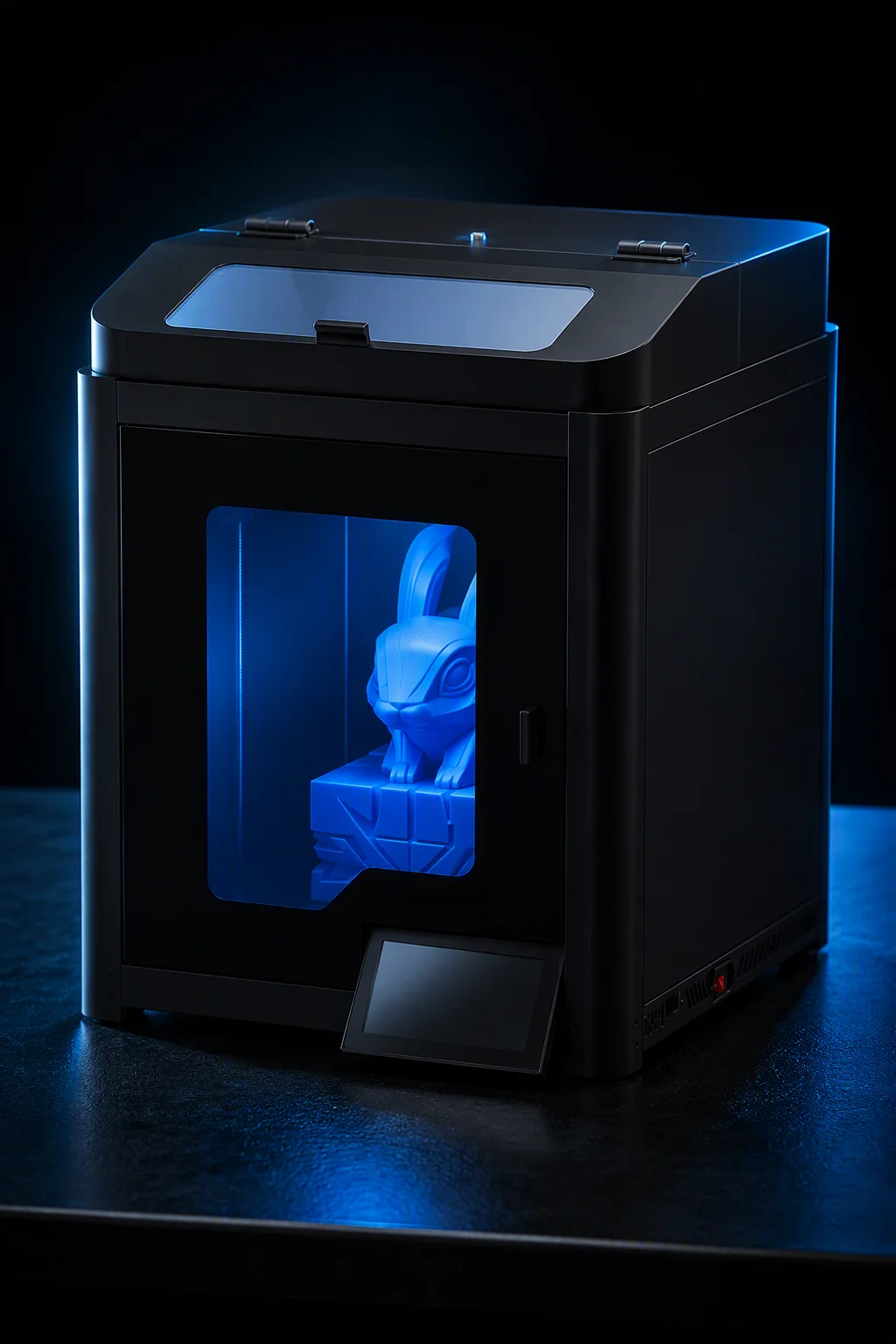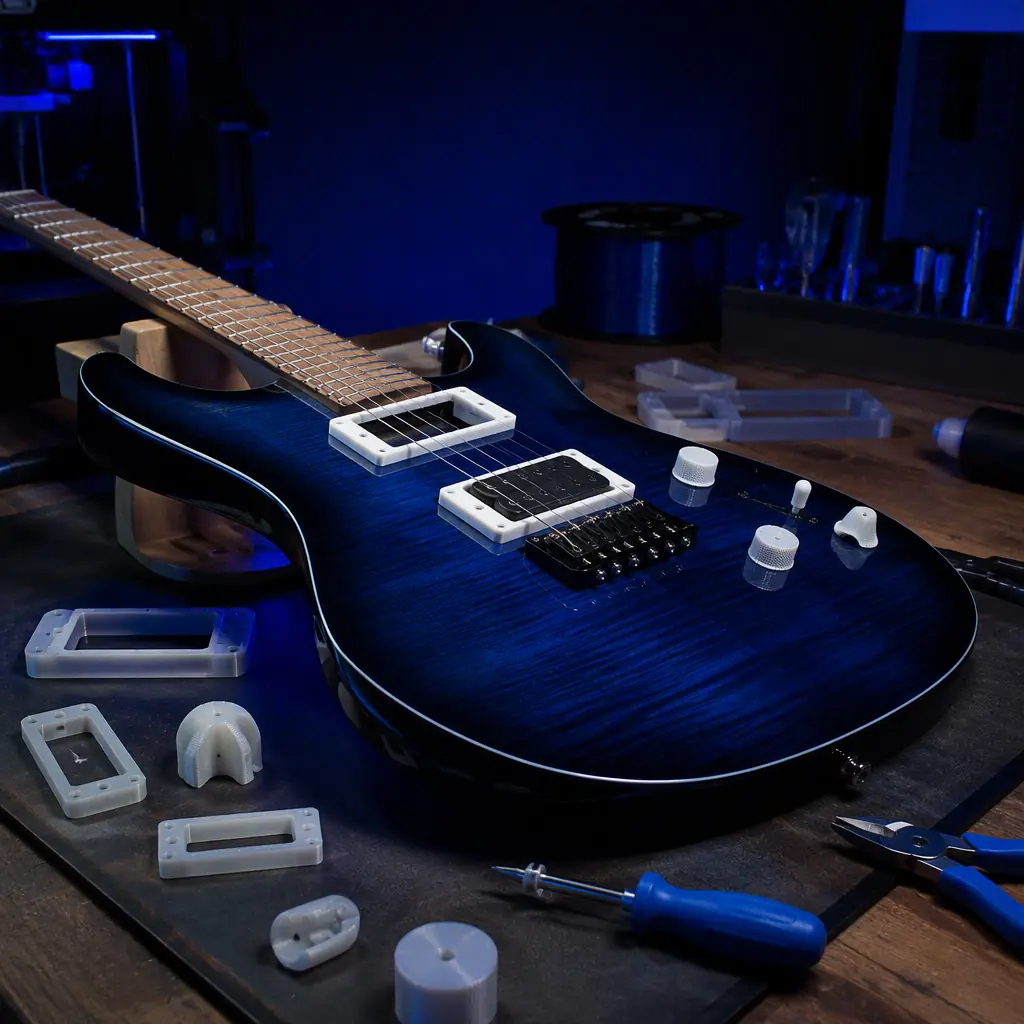
A boutique guitar brand in Austin needed 400 custom pickup rings for a limited-edition run. Injection molding would have cost $8,000 in tooling for a part that sells 400 units. They printed the rings in matte black PETG at $1.20 each in material, finished them in-house, and shipped the run at a 78% margin — and the design was revised twice during production with zero retooling cost. The music industry is a natural 3D printing vertical: it is full of low-volume, custom, and legacy products; the buyers (luthiers, repair techs, boutique brands, schools) already value craftsmanship; and the parts are small enough to print economically. For a distributor, music is a high-margin niche that compounds through referrals.
Where 3D Printing Fits in the Music Industry
Four demand buckets dominate the vertical:
1. Replacement and legacy parts. Knobs, switch tips, pickup covers, strap buttons, bridge saddles, tuner bushings, and caps for instruments that are out of production. A 1960s amp knob that sells for $15-40 as NOS can be printed for $0.50-2 and sold for $8-15 with a 70%+ margin.
2. Custom and boutique parts. Pickup rings, control plates, pickguards, and mounting hardware for custom builds. This is where the maker economy lives — every custom guitar builder needs parts that don't exist off the shelf.
3. Accessories and ergonomic aids. Thumb rests, chin rests, practice mutes, cable clips, mic clips, stand adapters, and instrument stands. Low complexity, high volume, and easy to differentiate with custom colors and logos.
4. Jigs, fixtures, and tooling. Luthiers and repair shops use printed jigs for fret work, bridge placement, and finishing. This overlaps the general tooling market covered in our manufacturing tooling guide, but music-specific jigs (fret radius blocks, neck clamping fixtures) have no off-the-shelf competition.
Materials for Music Parts
Music parts live in close contact with players, so material choice matters for feel, durability, and finish:
Two practical notes: (1) players judge parts by feel and finish — a rough FDM surface on a visible knob reads as "cheap"; resin printing or vapor smoothing is worth the extra step for visible parts; (2) parts that touch the mouth (wind instrument mouthpieces, picks, whistles) need food-safe materials and documented post-processing. For the finish techniques, see our post-processing guide; for the flexible and specialty materials, our flexible filaments guide.
The Three Account Types
Music industry customers split into three tiers with different buying patterns:
1. Luthiers and custom builders. The highest-margin accounts. They need custom parts for every build, value speed over price, and refer you to their network. A single luthier can generate 10-30 part orders per build and 3-5 builds per year. They are the music equivalent of the OEM accounts described in our OEM partner guide.
2. Repair shops and music stores. Volume buyers of replacement parts (knobs, caps, clips, stands). They stock printed parts as a profitable SKU line with 60-75% margins, and they are the easiest recurring-revenue account — every repair is a parts order. The retail stocking playbook in our accessories bundling guide applies directly.
3. Boutique brands and manufacturers. They use printing for small-batch production (200-2,000 units), prototypes, and custom runs — the pickup-ring economics above. They buy production printers and material programs, and they return for every new product line. For the production-side economics, see our print farm economics guide.
Margin Structure and Pricing
Music parts carry premium margins because the alternatives are expensive: NOS parts, custom machining, or minimum-order injection molding. Typical numbers:
For the full pricing and margin framework, see our pricing strategy guide. The key difference from other verticals: music buyers are comfortable paying for small, custom, high-finish parts, so per-part margins run 10-20 points higher than general consumer printing.
Education and School Music Programs
Schools and music programs are a fast-growing entry point: marching band accessories (tuba mouthpiece adapters, clarinet thumb rests), instrument repair training aids, and custom instrument parts for student bands. School purchasing is seasonal (budget cycles) but sticky — once a district standardizes on a repair parts supplier, the reorders are annual. The government and education procurement dynamics are covered in our public sector procurement guide and our education market guide.
Common Pitfalls in the Music Vertical
Five failures to avoid: (1) printing visible parts with visible layer lines — players reject rough parts; use resin or post-process FDM for anything that will be seen; (2) using non-food-safe materials for mouth-contact parts — a printed clarinet mouthpiece from standard resin is a health liability; (3) ignoring tone and vibration — parts under string tension (saddles, nuts) affect tone; PA-CF and nylon dampen differently than metal, so test and document the acoustic difference; (4) under-stocking the repair-shop SKUs — a repair tech without your knob in stock buys the competitor's; and (5) pricing against material cost instead of the NOS/machined alternative — you are selling a $40 part for $12, not a $1 part for $12. For the quality control that keeps musicians trusting printed parts, see our filament quality evaluation guide.
Getting Started: The First 90 Days
Month 1 — assemble the music kit (one FDM printer for functional parts, one resin printer for visible trim, a 3-material program: PETG, ASA, PA-CF), and open accounts with 2-3 local luthiers and repair shops. Month 2 — build a 30-part catalog (knobs, rings, caps, clips) with finish options; run the first small-batch job for a boutique brand; document before/after case studies with margin numbers. Month 3 — launch the online parts catalog, sign the first school music program, and add resin and PA-CF grades for the functional part line. Music pairs naturally with the wider consumer and maker markets — see our customer training guide for the workshop model that converts hobbyist musicians into recurring buyers.
Reviewed by the Precise3D engineering & OEM team. Compliance files that accompany the catalog are auditable at the certification register.
Enter the Music Vertical
Ready to Sell Printing to Luthiers and Music Brands?
Get wholesale pricing on printers, PETG/ASA/PA-CF material programs, and the small-batch production workflow that wins boutique brands and repair shops.