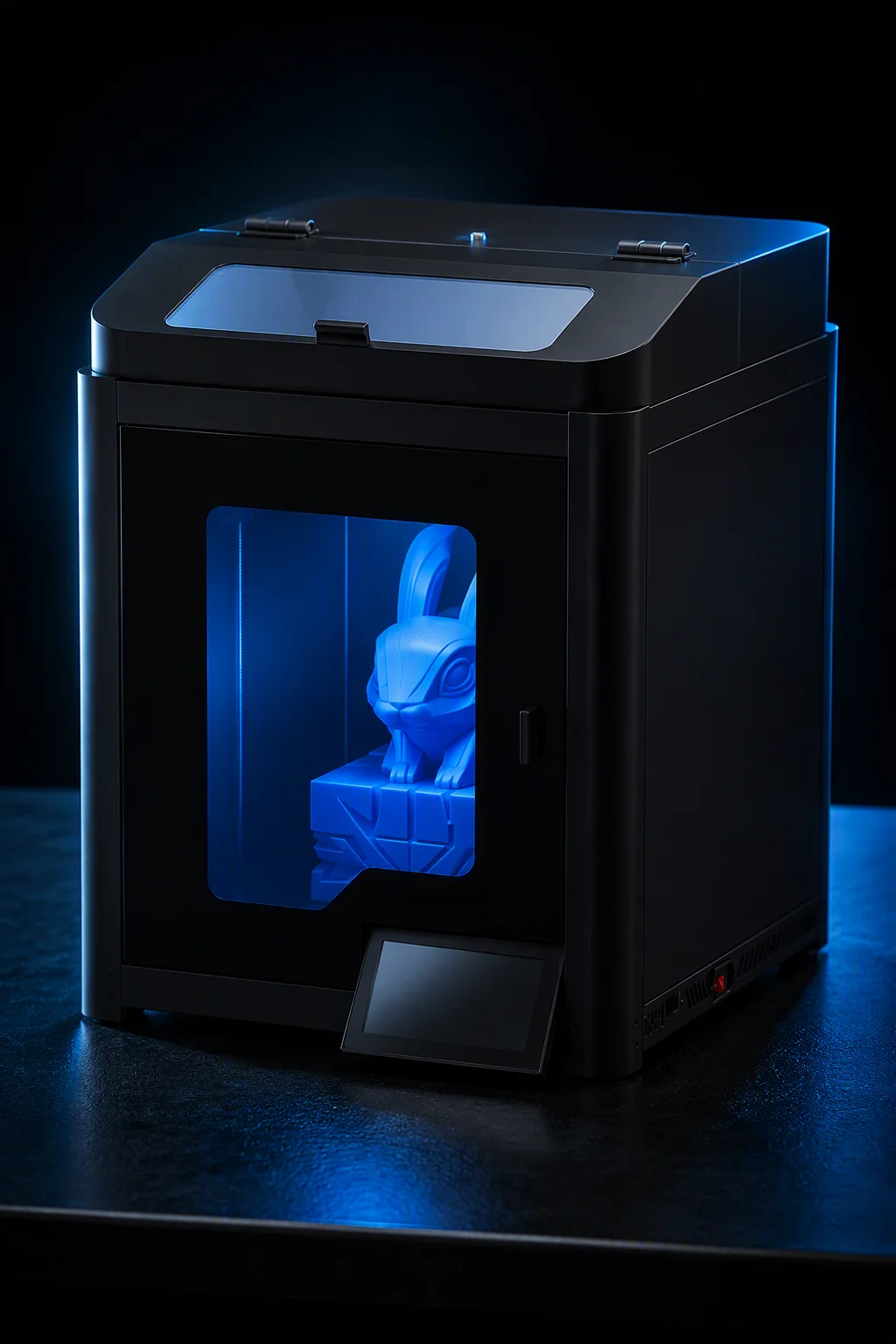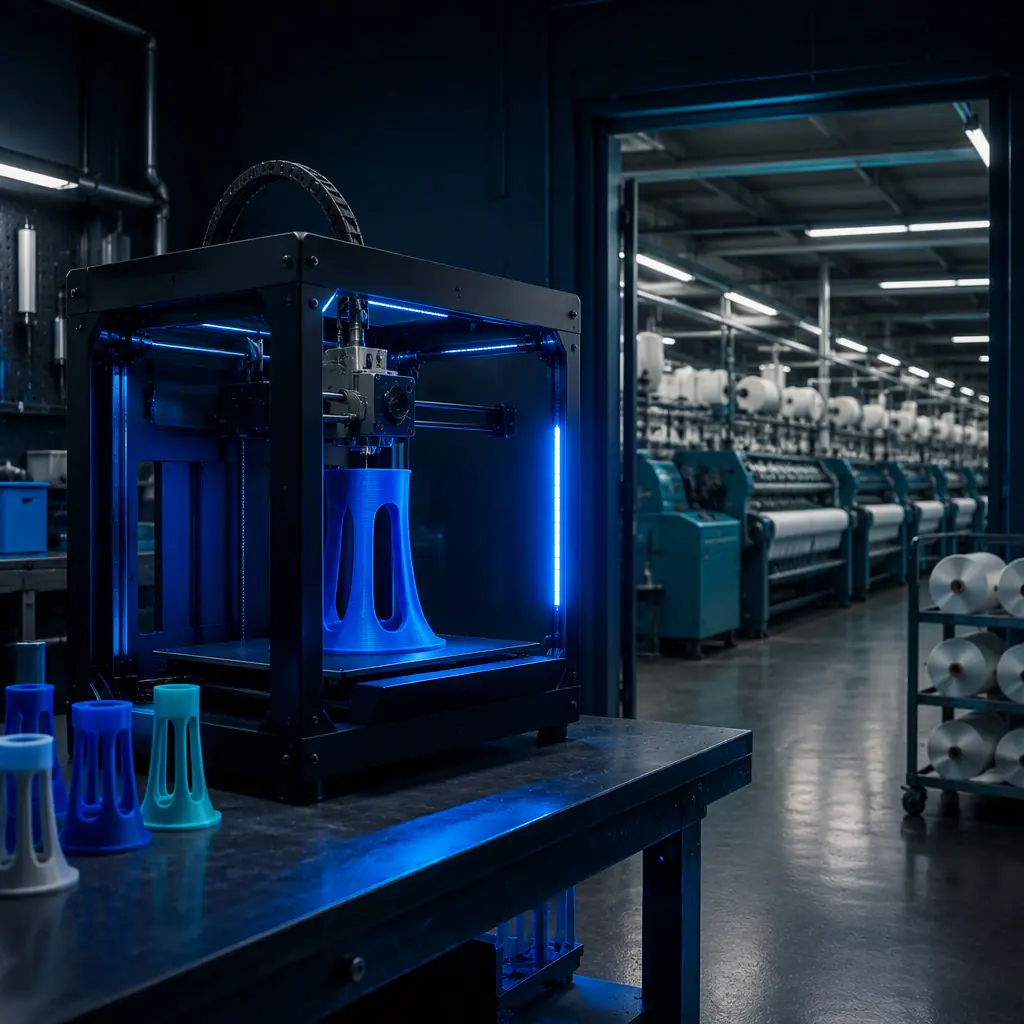
A denim mill in North Carolina runs 120 air-jet looms at 900 picks per minute. In 2025, one loom's weft feeder bobbin holder cracked — a $14 injection-molded part with an 8-week OEM lead time. The mill's maintenance supervisor, who had bought a desktop printer for the toolroom the year before, printed a PETG replacement overnight. It ran 60 days until the OEM part arrived, then kept running because it outlasted the original. The mill now prints bobbin holders, creel guides, and sensor mounts across all 120 looms, saving an estimated $41,000/year in downtime and expedited freight. Textile manufacturing is one of the oldest industries on Earth and one of the newest for 3D printing: the machinery is dense, the parts are small and frequently replaced, and the OEM aftermarket is slow and expensive.
Why Textile Mills Are a Natural Print Market
Four structural features make textile machinery one of the most accessible industrial verticals for FDM printing. First, part density: a single modern loom has thousands of small plastic and composite parts — bobbins, guides, sensors, actuators — many replaced monthly. Second, small geometry: most textile parts are palm-sized, print in 1-4 hours, and cost under $20 in material, which makes them ideal for a distributor's print service. Third, obsolescence: mills run machines for 20-40 years and OEMs discontinue parts for older generations; printed replacements are often the only source. Fourth, continuous operation: textile lines run 24/7 in many regions, so every hour of unplanned downtime carries a hard cost — and a printed part shipped in 2 days beats an OEM part in 8 weeks. For the wider opportunity in production-line tooling, see our manufacturing tooling guide.
The buyers sit in three tiers: textile mills (weaving, knitting, spinning, and finishing plants that buy maintenance parts in volume), machinery OEMs (who need aftermarket part programs for the machines they sell), and textile machinery service companies (who maintain installed bases across multiple mills). All three already buy from distributors.
The Five Highest-ROI Applications
Focus the pitch on five applications where printed parts consistently beat OEM supply:
1. Bobbin holders and creel guides. Weft feeder bobbins, creel tension guides, and yarn path components. These are small, wear-prone, and constantly replaced — the highest-volume printed category in weaving. Printed PETG or PA bobbin holders cost 20-40% of OEM parts and ship overnight.
2. Loom and knitting machine spare parts. Heald frame components, sinker cams, yarn carriers, and actuator mounts. Printed PA-CF parts handle the vibration and abrasion of high-speed looms — see our nylon PA filament guide for the wear-resistance map.
3. Machine guards and covers. Sensor guards, belt covers, and inspection windows. Safety guards are a compliance item — printed parts must meet the same impact and opacity standards as OEM parts, which is achievable with the right wall thickness and material.
4. Obsolete and legacy spares. Gears, levers, cam followers, and housings for older machines where OEM parts no longer exist. This is the highest-margin printed category — there is no alternative supplier to price against.
5. Maintenance tooling and line-side hardware. Sensor mounts, thread break detectors, tension gauges, and line-side organizers. Low drama, high volume, and a reliable recurring order base.
Materials for Textile Machinery
Textile mills are dusty, high-vibration, high-temperature environments (35-40°C ambient in weaving sheds), which drives material selection:
Three practical notes: (1) mill ambient heat and humidity mean PA parts must be dried before printing and stored properly — include a dryer in the bundle; (2) parts near yarn paths must be smooth-finished or printed with fine layers to avoid snagging filaments — quote the right layer height per application; and (3) safety guards need wall thickness and impact documentation — publish the test data with every guard order. For the wider engineering materials picture, see our engineering filaments guide.
The Economics: Printed vs OEM vs Machined
The numbers that close mill maintenance contracts:
Price is not the primary argument — availability is. A mill running 24/7 cannot wait 8 weeks for a $14 part; the printed part ships in 2 days and keeps the loom running. For the financial framework to put in front of a mill owner, see our TCO/ROI calculator guide.
How Distributors Enter the Textile Vertical
There are three distinct routes to textile revenue:
Route 1 — The mill-direct channel.
Plant maintenance teams buy urgent replacement parts directly. This is the fastest entry: a 24-48 hour part service with documented quality converts into printer sales once the mill sees 10-20 parts. The maintenance relationship that sustains mill accounts is covered in our maintenance guide.
Route 2 — The OEM aftermarket channel.
Textile machinery OEMs need aftermarket part programs for machines in the field. Position yourself as their rapid-spare-part partner for legacy machines they no longer stock. OEM accounts are the largest and stickiest, but require the longest sales cycle and the most application engineering support. For the qualification process OEMs apply to suppliers, see our OEM partner evaluation guide.
Route 3 — The service company channel.
Independent textile machinery service companies maintain installed bases across multiple mills and buy parts in volume. Win one service company and you reach every mill they serve.
The Distributor Playbook and Margin Structure
The proven model:
1. Carry a four-material mill kit. PETG, PA-CF, TPU, and ASA. Bundle with a dryer, a hardened nozzle set, and a printed materials card for each grade.
2. Offer print service first, hardware second. Most mills will not buy a printer until they have seen printed parts survive a season of production. A $40-400 part fee with a 24-48 hour SLA converts into printer + material contracts in 6-12 months.
3. Build a mill parts library. Catalog every printed part by loom model, machine type, and mill. When a bobbin holder cracks at 2 AM, the file is ready — the reprint is a 2-hour job and a $10 invoice. The library turns one-time emergencies into recurring revenue.
4. Bundle training for mill engineers. A half-day design workshop creates internal champions who generate part demand for years. For the training program model, see our customer training guide.
Textile mills pair naturally with the automation and robotics adoption sweeping the industry — see our robotics & automation guide for the parallel opportunity.
Common Pitfalls in the Textile Vertical
Watch for five recurring failures: (1) printing parts near yarn paths without smoothing — a rough layer edge snags filament and stops the loom; quote fine layers or vapor smoothing for yarn-contact parts; (2) undersizing guard wall thickness — safety guards need documented impact resistance, not cosmetic thickness; (3) ignoring mill heat and humidity — wet PA parts delaminate under loom vibration; the dryer is part of the bundle; (4) competing with OEM on commodity parts in huge volumes — printed parts win at low volume, obsolescence, and geometry complexity, not at 100,000-piece annual demand; and (5) treating every job as a one-off — the margin is in the parts library and the recurring agreement, not in individual emergencies. For the QC and inspection discipline that keeps mill engineers trusting printed parts, see our factory audit & QC checklist.
Getting Started: The First 90 Days
Month 1 — assemble the four-material mill kit, print sample bobbin holders and creel guides, and target 10 accounts: weaving and knitting mills, textile machinery OEMs, and service companies in your region. Month 2 — launch the 24-48 hour part service with two pilot mills; document each job with a quality sheet (material, print profile, service-life note). Month 3 — convert pilots to printer + material contracts, publish a case study with a quantified downtime number ("replaced an 8-week OEM bobbin holder overnight"), and begin the mill parts library. Textile machinery is a dense, durable, and surprisingly underserved vertical for printed parts — the mills are already printing, they just need a distributor to supply the program. For the fashion and footwear market that consumes what these mills produce, see our fashion & footwear guide.
Reviewed by the Precise3D engineering & OEM team. Compliance files that accompany the catalog are auditable at the certification register.
Enter the Textile Vertical
Ready to Sell 3D Printing to Textile Mills?
Get wholesale pricing on industrial printers, the PETG / PA-CF / TPU / ASA material program with profile sheets, and the parts-library workflow that wins mill maintenance contracts.