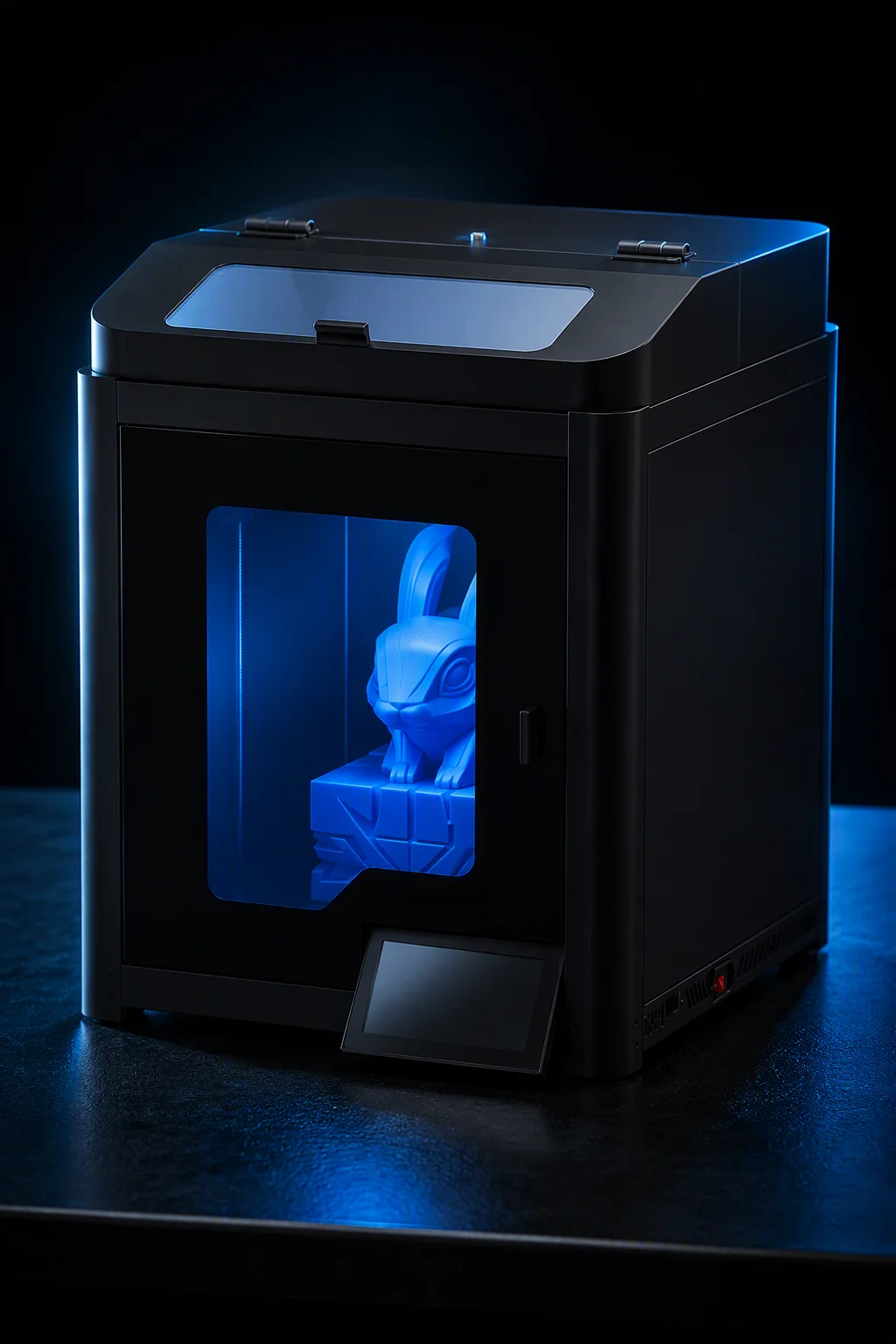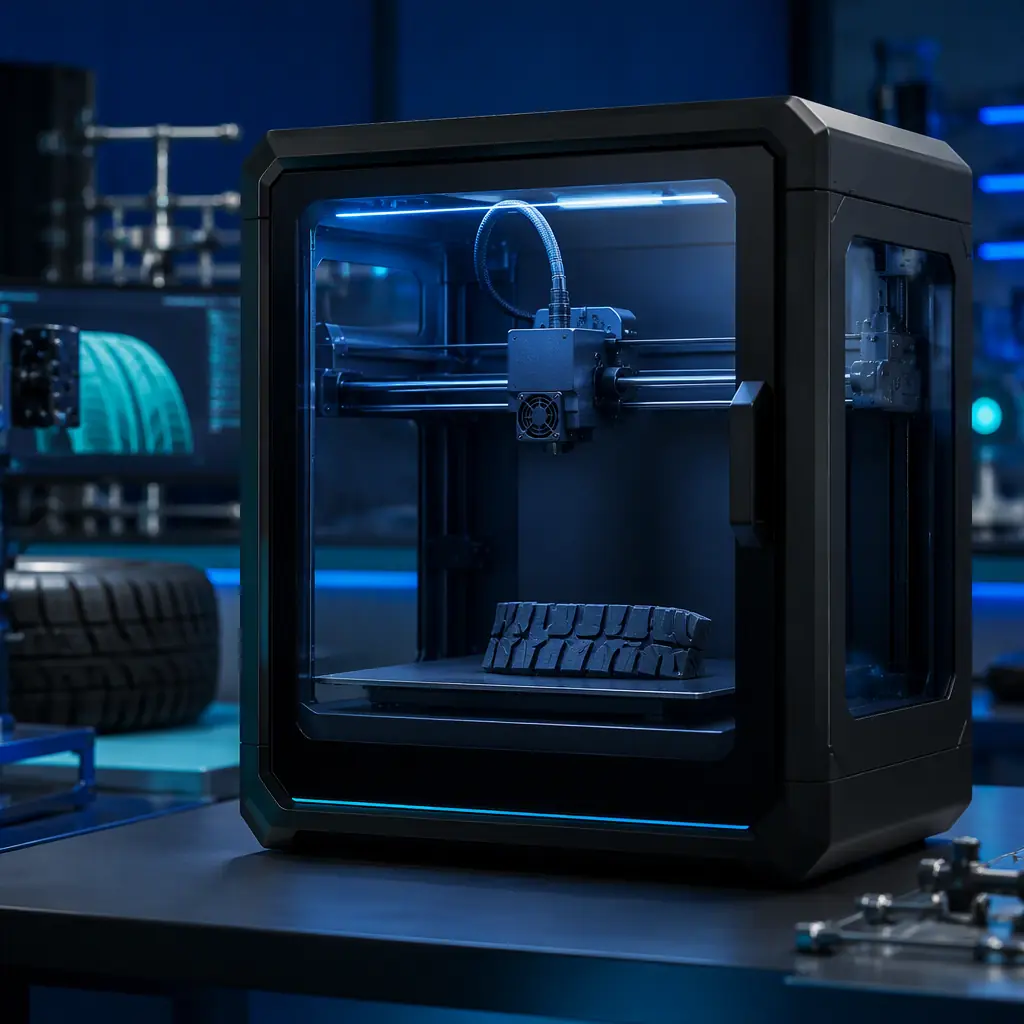
The tire manufacturing vertical spans tire plants (passenger, truck, OTR and specialty producers), tire mold makers who machine the segmented molds used to cure tread patterns, and tooling and maintenance shops that support both. One structural fact drives the entire opportunity: a single passenger tire mold costs $40,000-150,000 and takes 8-16 weeks to machine, so anything that lets a plant validate a design or produce a fixture before committing to steel is worth real money. The second fact is installed-base age. A typical tire line runs 25-40 years, and the OEMs that built its custom machines stopped making parts long ago. That is exactly the economics we map in our spare parts & aftermarket revenue guide.
Why Tire Manufacturing Is Buying 3D Printers
Four structural facts make tire plants durable buyers. First, mold cost risk: a tread pattern that fails in production wastes $40,000+ and 3 months of mold capacity, printed prototypes eliminate that risk for under $500 per variant. Second, pattern iteration pressure: winter, all-season, EV and off-road programs each spawn 10-30 pattern variants per platform, and every variant needs a visual and dimensional review before steel cutting; the design-to-prototype workflow is the same one we document in our manufacturing tooling guide. Third, curing consumables: vent plugs, bladder clamps and curing fixtures wear out on every production cycle and are traditionally machined or cast in small batches. Fourth, legacy machines: tire plants run custom conveyors, cutters and presses with orphaned parts, and a down line costs $10,000-50,000 per hour of lost production, same-day printed spares are worth a premium.
The Applications That Actually Buy
Six clusters generate the orders. The buyers are tire plants, tire mold makers, and the tooling and maintenance shops that serve them.
1. Tread pattern prototypes. The highest-value entry point: full-scale 3D printed tread segments for groove-depth, sipe-angle and void-ratio review before mold steel is committed. A printed prototype costs $100-500 versus $5,000-40,000 for a test mold; the dimensional framework for making the prototype match the CAD is in our tolerances & dimensional accuracy guide.
2. Mold vent inserts and bleed plugs. Curing molds vent air through small inserts that clog and wear. Printed high-temp inserts, and the plugs used to blank off unused vent positions during pattern trials, are consumables with predictable reorder demand. Material selection logic for the hot environment is in our PEEK/PEI/PPSU industrial materials guide.
3. Curing fixtures and bladder tooling. Bladder clamps, bead-ring protectors, and the handling fixtures that load and unload green tires. These are low-volume, high-wear parts traditionally machined at $300-2,000 each; printed nylon versions are produced overnight at a fraction of the cost.
4. Inspection gauges and wear-test fixtures. Tread-depth gauges, pattern-check templates, and fixture bases for lab wear testing. Quality teams need a new gauge for every pattern program, printed gauges ship in 24 hours instead of the 2-3 weeks a machine shop quotes. The QC workflow mirrors our incoming QC & receiving inspection guide.
5. Legacy spare parts for tire line machinery. Conveyor guides, sensor brackets, cable trays, and guards on custom tire-building machines. The aftermarket model, scan, print, validate, stock, is fully developed in our spare parts & aftermarket revenue guide.
6. Material-handling and gripper tooling. Custom grippers, suction cups adapters, and stacker pads for automated tire handling. Low-volume automation tooling is a natural print-farm product, the batch economics are in our print farm operations guide.
Materials for Tire Manufacturing Tooling
Tire tooling buyers work in three material worlds, hot, tough, and flexible:
Two realities dominate material conversations. First, temperature: anything that touches a curing mold at 150-180°C is a PEEK/PEI conversation, not a nylon one, the high-temp envelope is mapped in our industrial materials guide. Second, surface finish matters for review parts: tread prototypes are judged visually, so post-processing is not optional; the finishing workflow is fully covered in our post-processing & finishing guide.
From Design Review to Installed Fixture: The Workflow
The workflow that wins tire accounts has five stages. Capture the requirement . A tread pattern CAD, a worn vent insert, or a legacy bracket; most arrive as a sample or a STEP file. Print the review piece . Full-scale tread segments for pattern sign-off, or a dimensional check part; iterate overnight using the tolerance framework in our tolerances guide. Validate in the environment . Test fit in the mold or on the machine, checking heat, clearance and wear; the qualification workflow is in our incoming QC guide. Stock the proven part . Once validated, the part becomes a stock item for the plant's tooling crib, and the recurring-revenue model is developed in our consumables & accessories bundling guide. Scale across the site . One validated application opens the tooling crib, and each new department is a new account.
Budget Reality: Printed vs Machined
The comparison that closes tire-plant accounts:
The distributor math compounds because tire plants are 24/7 operations: a single plant can consume 100-300 printed parts per month across tooling and maintenance. The printer investment model that justifies the plant's own machines, and your demo fleet, is in our TCO & ROI calculator guide.
The Distributor Playbook: Entering Tire Manufacturing
Five moves win tire-plant accounts:
1. Target mold shops and R&D departments first. Tire mold makers and plant pattern-engineering teams are the highest-intent buyers, they feel mold cost and lead time every week. Build a target list of 15-25 accounts across the US, Germany, Japan, and India.
2. Lead with the pattern-prototype pitch. The pitch is "test three tread variants for $500 before you spend $40,000 on steel." Bring a printed tread segment to every meeting. Pattern engineers approve what they can hold and measure on the spot.
3. Bundle the tooling ecosystem. A large-format or enclosed FDM printer is the anchor, but the margin is in nylon, PC, and high-temp filaments, build plates, and a tooling-crib starter kit. The bundling mechanics are in our consumables bundling guide.
4. Offer a part-digitization service. Most legacy tire-line machines have no CAD. A distributor that scans, models, and validates parts for a fixed fee captures the maintenance account before hardware discussion starts, the service-revenue logic is in our repair service center guide.
5. Work the tooling-crib cycle. Curing consumables and gauges wear on a predictable cycle tied to production runs; sell annual tooling-crib service contracts alongside printers, using the framework in our annual service contracts guide.
Common Pitfalls in Tire Accounts
Five mistakes cost distributors tire business: (1) selling a small printer for a big plant . Tire tooling parts are often 300-600 mm long; match the build volume to the part, and the sizing logic is in our build volume guide; (2) ignoring heat . A nylon part near a curing mold at 160°C fails in a shift; spec high-temp materials honestly; (3) printing review parts with poor surface finish . Tread engineers reject parts that look wrong even when dimensions are right; finish them; (4) skipping validation . A vent insert that distorts during curing contaminates a $40,000 tire; document material and heat performance with the framework in our tolerances guide; and (5) treating the plant as one account. R&D, tooling, maintenance, and quality are four separate budgets; sell each one.
Getting Started: The First 90 Days
A 90-day entry plan: Month 1 . Identify 15-25 target accounts (tire mold shops, plant R&D and tooling departments) and stock the tire tooling material set: nylon PA12, PA-CF, PC, ABS, TPU, plus build plates and a tooling-crib starter kit. Month 2 . Produce a finished demo piece (a printed tread segment with its dimensional report), run two pilot jobs at cost-plus-10% (a pattern prototype and a vent-insert batch), and offer part-digitization to one maintenance department. Month 3 . Convert pilots to full accounts with tooling-crib service contracts and a 24-hour parts SLA, publish your first measured case study ("mold shop: $34,000 insert → $120 prototype, 10 weeks → 3 days"), and open one plant R&D account. The printer investment model that justifies the distributor's own machines is in our TCO & ROI calculator guide.
Reviewed by the Precise3D engineering & OEM team. Compliance files that accompany the catalog are auditable at the certification register.
Enter the Tire Manufacturing Market
Ready to Supply Tire Plants & Mold Shops?
Get wholesale pricing on enclosed and large-format FDM printers, nylon and high-temp filament lines, build plates, tooling-crib kits, and the tire-industry playbook that wins mold shops and plant R&D teams.