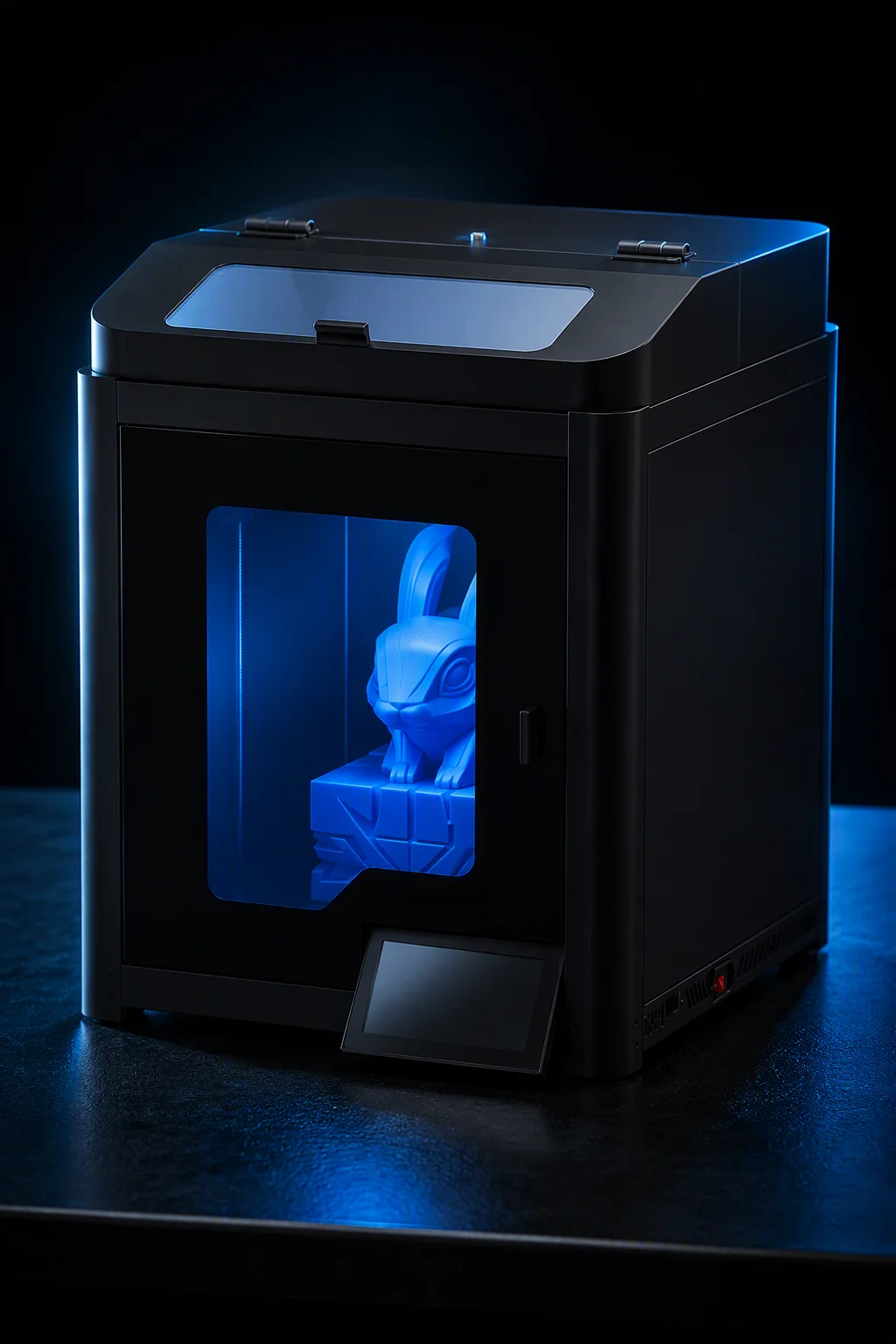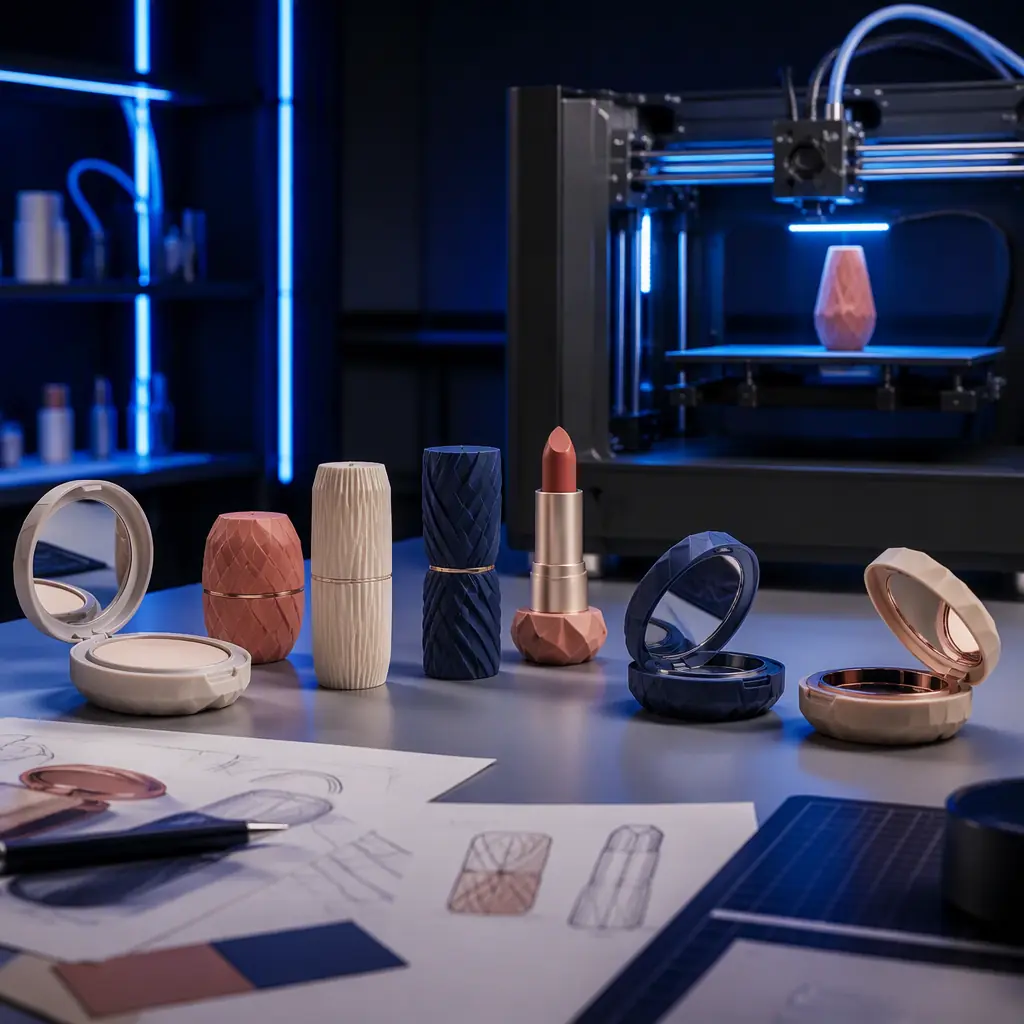
A packaging design studio in Los Angeles was asked by a clean-beauty startup to develop a refillable lipstick case with a magnetic closure. Traditional route: CNC-machined master, silicone mold, and injection samples, eight to twelve weeks and roughly $30,000 before a single consumer held the product. Instead, the studio printed 40 case halves in resin overnight, validated the magnetic snap on a 3D-printed hinge, and shipped functional prototypes to 25 testers within nine days. The startup's launch moved from Q4 to Q2. Cosmetics is a $600+ billion global market where packaging decides shelf presence, launch windows are dictated by seasonal trends, and the difference between a hit and a miss is often a two-week design iteration. A combination that makes beauty one of the fastest-adopting verticals for 3D printing outside engineering, and a disciplined repeat-order account type for distributors who understand its rhythm.
Why Cosmetics Is Buying 3D Printers
Four structural facts make cosmetics a durable buyer. First, packaging is the product: in beauty, the container is 40-60% of the perceived value, so brands iterate on caps, pumps, and compacts the way hardware teams iterate on PCBs. Second, launch speed: a trend born on TikTok gives a brand a 6-10 week window, and only digital fabrication can compress package development from months to days; the speed logic is the same one we map in our rapid prototyping & R&D guide. Third, customization: monogrammed compacts, personalized serum pumps, and limited-edition caps are unit-of-one products that no mold can serve economically. Fourth, regulatory churn: formula changes, EU/UK cosmetics regulation updates, and safety-testing revisions force package redesigns year-round, and printed tooling absorbs that churn at near-zero cost.
The Applications That Actually Buy
Six clusters generate the orders. The buyers are cosmetics brands (especially the indie tier), packaging design studios, contract fillers, private-label houses, display manufacturers, and beauty-tech startups.
1. Package prototyping. The flagship application: caps, pumps, compacts, jars, and tubes printed for form-fit-function validation before tooling. A printed cap costs $2-8 and ships same week; the injection tool for the same cap costs $15,000-60,000 and takes 8-16 weeks. The mold-versus-print decision framework is developed in our injection molding vs 3D printing guide.
2. Custom applicators. Mascara wands, lip gloss doe-foot applicators, dropper tips, and brush handles. These are small, high-detail, and constantly redesigned for the "first applicator experience" that drives beauty reviews, resin printing's detail ceiling is covered in our SLA vs DLP vs MSLA guide.
3. Display testers and retail fixtures. Tester stands, shade swatch holders, and branded counter displays. Retailers refresh merchandising quarterly, and printed fixtures let brands match the refresh cycle without a display manufacturer's minimum, the retail display logic transfers from our retail fixtures & displays guide.
4. Low-volume production tooling. Vacuum-cast master models, silicone mold masters, jigs for assembly, and fixture tooling for filling lines. Contract fillers use printed jigs to hold vials and bottles during automated filling, the tooling economics mirror our spare parts & tooling revenue guide.
5. Limited-edition and personalized packaging. Holiday caps, monogrammed compacts, collab packaging. These are short-run by definition, 500-5,000 units, and the small-batch production model is covered in our print farm operations guide.
6. Lab and QC fixtures. Sample holders, stability-test racks, and swatch organizers for R&D labs, steady, low-volume, high-loyalty demand that compounds across accounts.
Materials for Beauty Products
Beauty buyers split into two material worlds, packaging (rigid, cosmetic-grade) and applicators (soft, skin-contact):
Two realities dominate material conversations. First, skin contact: applicators that touch skin or product require biocompatible resins and documented material choice, the compliance framework is in our certification & compliance guide. Second, surface finish: beauty buyers judge packaging by touch, so post-processing is not optional; the finishing workflow (sanding, polishing, vapor smoothing) is fully covered in our post-processing & finishing guide.
From Brief to Counter Display: The Beauty Workflow
The workflow that wins beauty accounts has five stages. Brief and sketch . Packaging studios arrive with sketches and CAD, not specifications; sell them on a printer that turns sketches into parts overnight. Prototype and validate . Print functional prototypes, test the closure, the pump action, and the applicator feel; the iteration cadence that makes this practical is the core of our rapid prototyping guide. Match the finish . Sand, polish, and paint prototypes so they hold their own on a buyer's desk; nobody approves a matte layer-line prototype for a gloss product. Tool and pilot . Use printed masters for silicone molds and pilot runs of 50-500 units. Display and scale . Produce testers and fixtures, then move volume to a print farm; when a launch scales, the farm economics in our print farm economics guide take over.
Budget Reality: Printed vs Tooled
The comparison that closes beauty accounts:
The distributor math compounds because beauty prototyping is resin-hungry: a busy packaging studio can consume 15-40 liters of resin per month, plus build plates, FEP film, gloves, and finishing consumables, the recurring-revenue model is developed in our consumables & accessories bundling guide.
The Distributor Playbook: Entering Beauty
Five moves win beauty accounts:
1. Target the studios and the indies. Packaging design studios, indie beauty brands, contract fillers, and private-label houses are the buyers. Build a target list of 25-35 accounts, this vertical is dense with small, fast-moving companies.
2. Sell the launch-speed story. The pitch is "consumer-tested package in two weeks, tool-free." Show a finished, polished prototype with its material datasheet. Beauty buyers approve what they can touch and smell, not spec sheets.
3. Bundle the resin ecosystem. A resin printer is the anchor, but the margin is in standard and engineering resins, FEP film, build plates, wash-and-cure stations, and finishing supplies. The bundling mechanics are in our consumables bundling guide.
4. Offer prototype-to-tooling services. Many studios want printed masters they can hand to a mold maker. A distributor that pairs printer sales with master-model know-how captures the account before tooling spend starts, the after-sales stickiness logic is in our after-sales support strategy.
5. Work the seasonal calendar. Beauty launches cluster around Q1 (new-year reset), mid-year (summer color), and Q4 (holiday). Time your outreach to the 6-8 weeks before each launch window, and pair hardware with the seasonal inventory planning playbook from our seasonal inventory guide.
Common Pitfalls in Beauty Accounts
Five mistakes cost distributors beauty business: (1) selling FDM for applicators . Layer lines and low detail fail the "first applicator experience"; resin is the honest recommendation for anything skin-adjacent; (2) ignoring skin-contact safety . Applicators need biocompatible resins and documented hygiene, and a reaction incident ends the account (the compliance framework is in our certification & compliance guide); (3) skipping finish work . A raw prototype reads as "cheap," and beauty buyers will not approve it; sell post-processing from day one; (4) treating indies like hobbyists . A brand doing 10,000 units a month on Shopify is a commercial account with real resin and service demand; and (5) ignoring the chemical compatibility test . Formulas contain oils, alcohol, and solvents that attack printed parts; test material compatibility with the actual product before promising anything.
Getting Started: The First 90 Days
A 90-day entry plan: Month 1 . Identify 25-35 target accounts (packaging studios, indie brands, contract fillers, private-label houses) and stock the beauty material set: standard resin, one engineering resin, TPU, PETG, plus FEP film, build plates, and finishing consumables. Month 2 . Produce a finished demo package (a compact with a working closure) with its material datasheet, run two pilot jobs at cost-plus-10% (a cap-prototype batch and a tester-display set), and offer prototype-to-master services to one studio. Month 3 . Convert pilots to full accounts with resin subscriptions and a 48-hour prototype SLA, publish your first measured case study ("lipstick cap prototype: 8 weeks → 2 days, $180"), and open one contract-filler account. The printer investment model that justifies the distributor's own machines is in our TCO & ROI calculator guide. The sustainability angle also resonates with modern beauty brands. The recycled and low-waste filament playbook is in our sustainable & recycled filament guide.
Reviewed by the Precise3D engineering & OEM team. Compliance files that accompany the catalog are auditable at the certification register.
Enter the Beauty Market
Ready to Supply Cosmetics Brands & Packaging Studios?
Get wholesale pricing on resin printers, standard and engineering resin lines, wash-and-cure stations, FEP film, build plates, finishing supplies, and the beauty-market playbook that wins fast-moving consumer accounts.