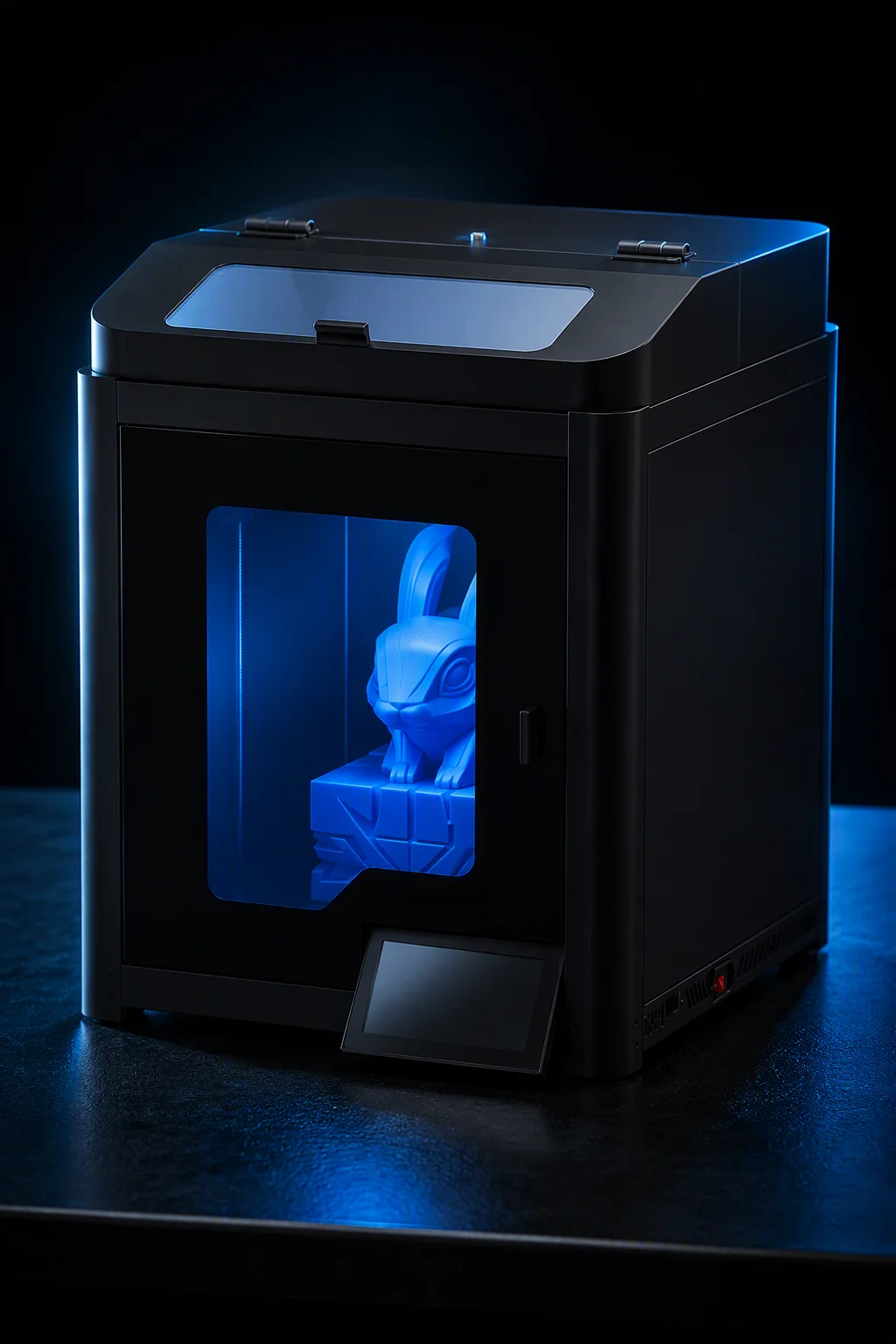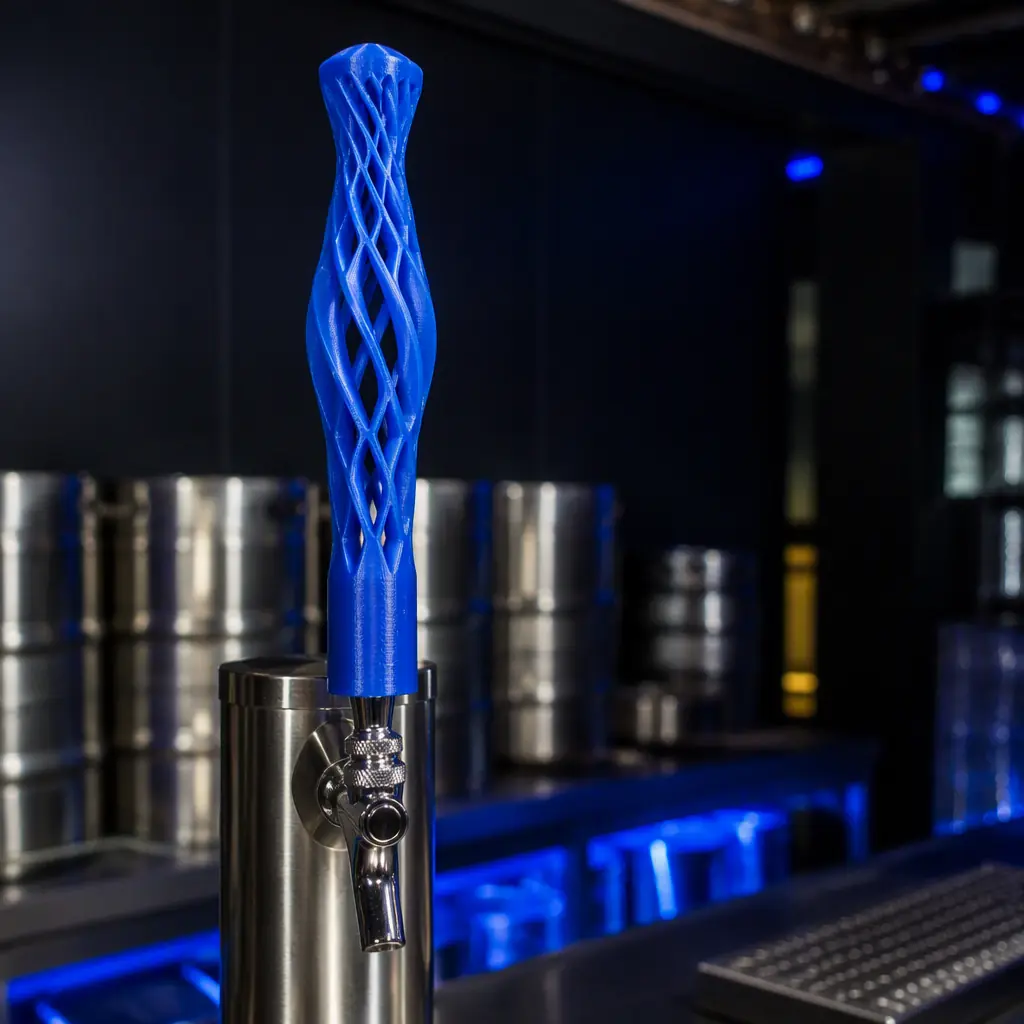
A 20-barrel craft brewery in Colorado was spending $38 per tap handle and waiting 6-8 weeks for machined prototypes of new release handles — and replacing 30-60 of them a year as seasonal brands rotated. It bought an enclosed FDM printer and a food-safe PP filament line: each handle now costs $4.20 in material, prints overnight, and the brewery launches a new branded handle for every seasonal release. The same machine now prints canning-line changeover parts, cellar gaskets, and yeast lab racks. Craft breweries — 10,000+ in the US alone, with similar density across Europe — are a surprisingly concentrated buyer of 3D printing, because they combine constant branding churn, aging legacy equipment, and a culture that celebrates custom fabrication.
Why Craft Breweries Are a Recurring 3D Printing Buyer
Four structural facts make breweries exceptional customers. First, branding velocity: a brewery launching 8-15 new beers per year needs new tap handles, signage, and merch fixtures for each release — a permanent design-to-part pipeline. Second, legacy equipment: brewhouses run 10-30 years, and suppliers discontinue parts (a $1,200 obsolete pump impeller gasket that a $3 printed PP part replaces). Third, downtime cost: a canning line down for a changeover part costs $300-800/hour in lost production, so same-day printed parts beat 2-week OEM orders. Fourth, food-contact awareness: brewery staff already think in sanitation and material compliance, so they are receptive to a distributor who speaks food-safe materials correctly. The broader food-and-beverage processing opportunity is mapped in our F&B processing equipment guide.
The Application Clusters That Buy
Five clusters generate orders. The buyers are brewmasters, production managers, and taproom managers.
1. Tap handles and branding parts. The foot-in-the-door application. Seasonal tap handles, growler-carrier inserts, chalkboard frames, and merch display fixtures. Every new release is a new order, and the brewery's brand manager is a repeat buyer. These are printed in anything from PETG to multi-color systems — the multi-material printing mechanics are covered in our multi-material printing guide.
2. Keg and cellar hardware. The reliability application: keg coupler spacers, sankey gasket holders, glycol line clamps, carb stone diffusers, and draft line cleaning fittings. Cellar environments are cold, wet, and chemical (caustic and peracetic acid washes), so chemical-resistant PP and nylon dominate — the material properties are detailed in our PP filament guide.
3. Canning and bottling line changeover. The downtime application: can changerails, star-wheel spacers, lid chute guides, and labeler vacuum-nozzle adapters. Canning lines switch formats constantly, and every changeover has parts that wear, crack, or simply never shipped with the machine. Printed parts turn 2-week OEM waits into overnight fixes — the same tooling-driven buying pattern as packaging plants, detailed in our packaging industry guide.
4. Yeast lab and QC equipment. The steady consumable application: sample tube racks, petri dish holders, stir plate housings, density meter stands, and ergonomic pipette rests. Labs buy racks in batches, break them constantly, and prefer autoclave-tolerant materials.
5. Maintenance jigs and utility parts. The trust-builder: pump impeller extraction tools, tank lid lift handles, sight-glass spacers, and custom wrenches for hard-to-reach valves. Small, cheap, and endlessly appreciated — they open the door to the higher-value clusters above.
Materials and Food-Contact Compliance
Brewery parts fall into three compliance tiers, and getting this right is the difference between a trusted supplier and a liability:
Three rules: (1) "food-safe" is a material property plus a surface property — printed layers trap bacteria, so food-contact parts must be sealed (epoxy, vapor smoothing) or designed for single-use/short service, and the brewery's sanitation cycle decides which; (2) PP is the workhorse wet-side material because it survives caustic washes and autoclave temperatures that warp ABS and nylon; (3) verify compliance claims against the brewery's jurisdiction — FDA 21 CFR for the US, EU 10/2011 for Europe — because a distributor who cites the wrong regulation loses credibility fast. The full regulatory landscape is in our food-safe printing regulatory guide.
Economics: The Brewery Order Book
What a typical brewery account actually spends:
A 15-barrel brewery can generate $4,000-9,000/year in parts, material, and design-service spend; a regional chain (5-10 locations) multiplies that 3-5x because every taproom needs its own handles and fixtures. The recurring-revenue mechanics of this kind of account are developed in our consumables subscription guide.
The Distributor Playbook: Entering Craft Beverage
The winning playbook has five moves:
1. Enter through tap handles, expand into production. Tap handles are low-risk, high-visibility, and repeat. Win the branding pipeline first; the production manager sees the taproom's machine and asks the question that opens the cellar and canning line.
2. Speak sanitation. Brewers trust suppliers who understand caustic wash cycles, autoclave temps, and HACCP thinking. Lead with a wet-side material map (PP for caustic, nylon for impact, sealed parts for food contact) and the brewery will treat you as an expert, not a vendor. The compliance framing that supports this is in our certification & compliance guide.
3. Offer an NLA-parts service. Breweries hoard obsolete equipment. A "send us the broken part, get a printable replacement in 48 hours" service converts the single highest-trust moment in the account. This is the reverse-engineering workflow we describe for end-use parts in our end-use functional parts guide.
4. Bundle a seasonal-branding retainer. Offer a monthly retainer covering N seasonal handles plus a fixed design hours pool. It smooths the brewery's cash flow and locks your consumables in — the same retainer logic as our annual service contract guide.
5. Sell the downtime story. Canning line changeover is where you win production managers: "OEM part in 2 weeks vs printed part tonight" is a pitch backed by their own P&L. Keep a changeover-parts starter kit (changerail spacers, star-wheel shims) on the shelf for immediate demos.
Common Pitfalls in Brewery Accounts
Five mistakes account for most failed brewery initiatives: (1) claiming "food-safe" without the layer-sealing conversation — a porous printed gasket in a beer path is a contamination incident waiting for a health inspection; (2) ignoring washdown chemistry — ABS and PLA parts dissolve or warp in caustic and peracetic acid cycles, so wet-side parts must be PP or nylon; (3) selling the printer as a toy — brewers are production people, pitch uptime and part cost, not "cool factor"; (4) skipping the design-service layer — most breweries have no CAD staff, and a distributor that designs from photos and calipers closes deals a hardware-only competitor cannot; and (5) treating tap handles as the whole account — handles open the door, but cellar, canning, and lab parts are where revenue compounds. For the surface-finish and sealing techniques that food-contact parts require, see our post-processing & finishing guide.
Getting Started: The First 90 Days
A 90-day entry plan: Month 1 — stock PP, PETG, and nylon filament with published chemical-resistance and washdown data, and map 10-15 target accounts (local craft breweries, regional chains, hard-seltzer and kombucha producers, cideries) within a 2-hour drive. Month 2 — run two pilot tap-handle and changeover-part projects at cost-plus-10% to build a photo library and a chemical-resistance test sheet; document a real downtime save. Month 3 — convert pilots to accounts with seasonal-branding retainers, publish one case study with measured numbers ("can changerail spacer: OEM 2 weeks → printed overnight, $240 → $14"), and exhibit at a regional craft brewing association event where production managers gather. If you already serve hospitality or retail accounts, our hospitality & retail fixtures guide shows how the same branding-driven buying pattern scales across bars, restaurants, and retail.
Reviewed by the Precise3D engineering & OEM team. Compliance files that accompany the catalog are auditable at the certification register.
Enter the Brewery Vertical
Ready to Supply Brewery Accounts?
Get wholesale pricing on enclosed FDM printers, PP and nylon filament lines with washdown and food-contact data, and the branding-retainer playbook that wins craft beverage customers.