
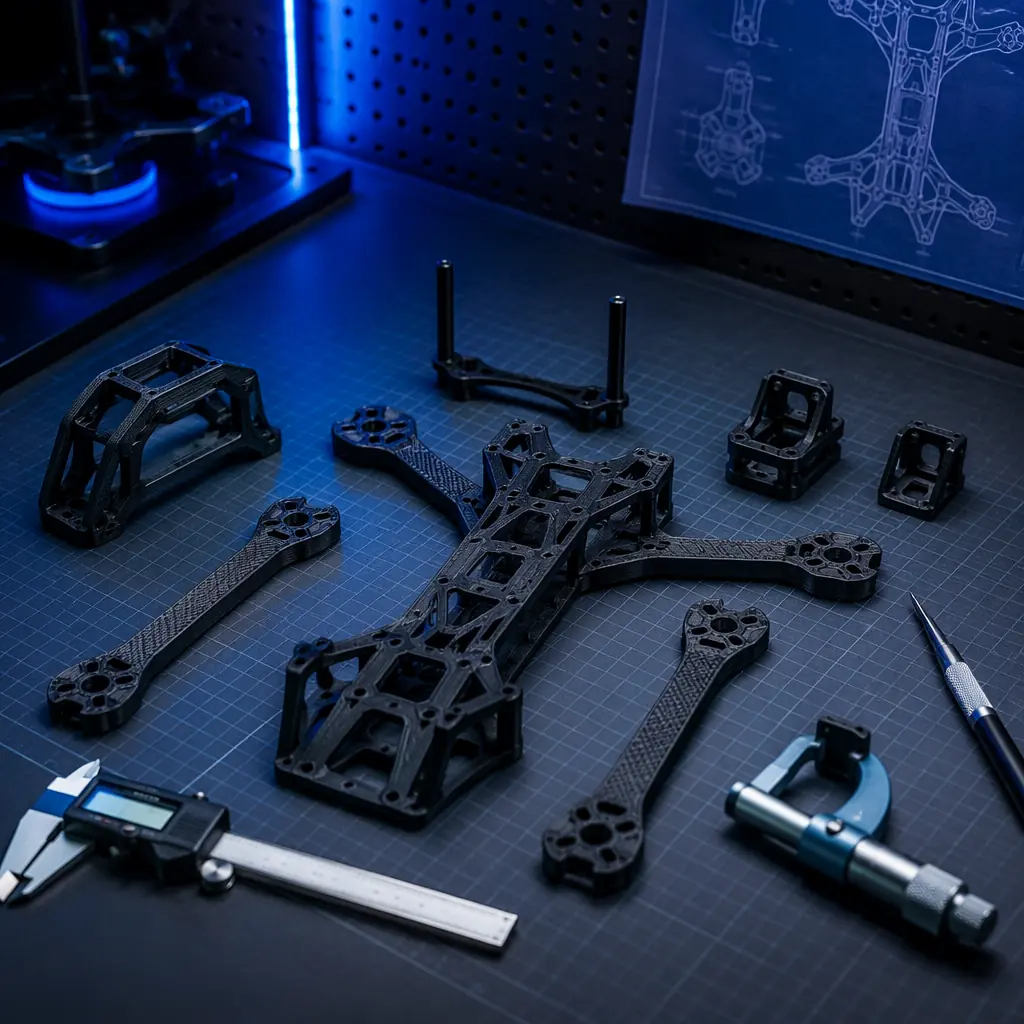
The intersection of 3D printing and drone manufacturing is not a future trend — it is the current reality. DJI, the world's largest drone manufacturer, operates over 200 in-house 3D printers for prototyping and production. Skydio uses additive manufacturing for custom sensor mounts. Anduril Industries 3D-prints airframe components for its Ghost and Lattice drone platforms. At the smaller end of the market, thousands of drone startups, UAV service providers, and defense subcontractors operate print farms of 5–20 machines for rapid iteration and short-run production. These are not customers who buy one printer and a few spools of PLA. They are customers who buy multiple machines, consume engineering-grade filament by the case, and return monthly for nozzles, build plates, and upgrades. For a distributor who knows how to sell into this vertical, a single drone manufacturer relationship is worth 3–5x the revenue of a typical hobbyist customer.
The Drone Manufacturing Landscape: Four Buyer Personas Distributors Should Target
Not all drone companies are created equal as 3D printer customers. The market segments into four distinct buyer personas, each with different printer requirements, material preferences, purchase volumes, and sales approaches.
1. Drone startup / R&D lab: These are the highest-volume segment by number of companies — hundreds of early-stage drone startups globally, plus university UAV research labs and corporate innovation teams. They typically operate 2–5 FDM printers for rapid prototyping of airframe designs, motor mounts, and sensor brackets. Their initial printer purchase is price-sensitive ($400–800 per machine), but they iterate constantly, which drives high consumables consumption. They are also the most likely to upgrade within 12–18 months as their prototypes mature into production, creating a natural upsell path from entry-level to professional-grade machines. The sales motion is technical and low-pressure: they respond to spec sheets, comparison data, and demo prints more than to relationship selling.
2. UAV service provider: Companies that operate drone fleets for agriculture surveying, infrastructure inspection, mining, or delivery services maintain in-house print capabilities for spare parts, custom payload mounts, and repair components. Their primary requirement is reliability and material versatility — they need printers that can produce functional parts in PETG, ABS, and flexible TPU for vibration-dampening mounts. They value uptime above all else because a downed drone waiting for a printed replacement part costs them revenue. This makes them strong candidates for service contracts, priority support packages, and bulk filament agreements. Our after-sales support guide and repair and service center guide provide the operational frameworks to support high-uptime customers.
3. Drone OEM / manufacturer: Companies that design and sell their own drone platforms — from consumer camera drones to industrial inspection UAVs — represent the highest-value customer segment for distributors. A mid-sized drone OEM with 20–50 employees typically operates 15–50 printers split between R&D prototyping and short-run production of end-use components. Their material consumption is dominated by engineering-grade filaments: nylon for impact-resistant structural parts, carbon-fiber-filled nylon for stiffness-critical airframe components, and polycarbonate for high-temperature applications near motors and ESCs. These customers buy printers strategically — they spec machines for specific material and dimensional requirements rather than price-shopping — and they stick with suppliers who provide consistent material availability and technical support. The relationship is built on reliability, not discounting.
4. Defense contractor / subsystem manufacturer: The defense UAV segment is the most demanding but also the highest-margin. These buyers require printers capable of processing high-temperature engineering materials (PEEK, PEI/Ultem, carbon-fiber-filled PEEK) for components that must meet military specifications for flame retardancy, chemical resistance, and mechanical performance at extreme temperatures. The printer price point is $5,000–50,000, and the sales cycle is 6–12 months involving technical evaluations, material certification documentation, and compliance with ITAR or equivalent export controls. This segment rewards distributors who invest in technical sales capability and maintain documentation on material certifications. For context on the broader aerospace and defense opportunity, see our aerospace and defense vertical guide.
Material Selection for Drone Applications: What to Stock and Why
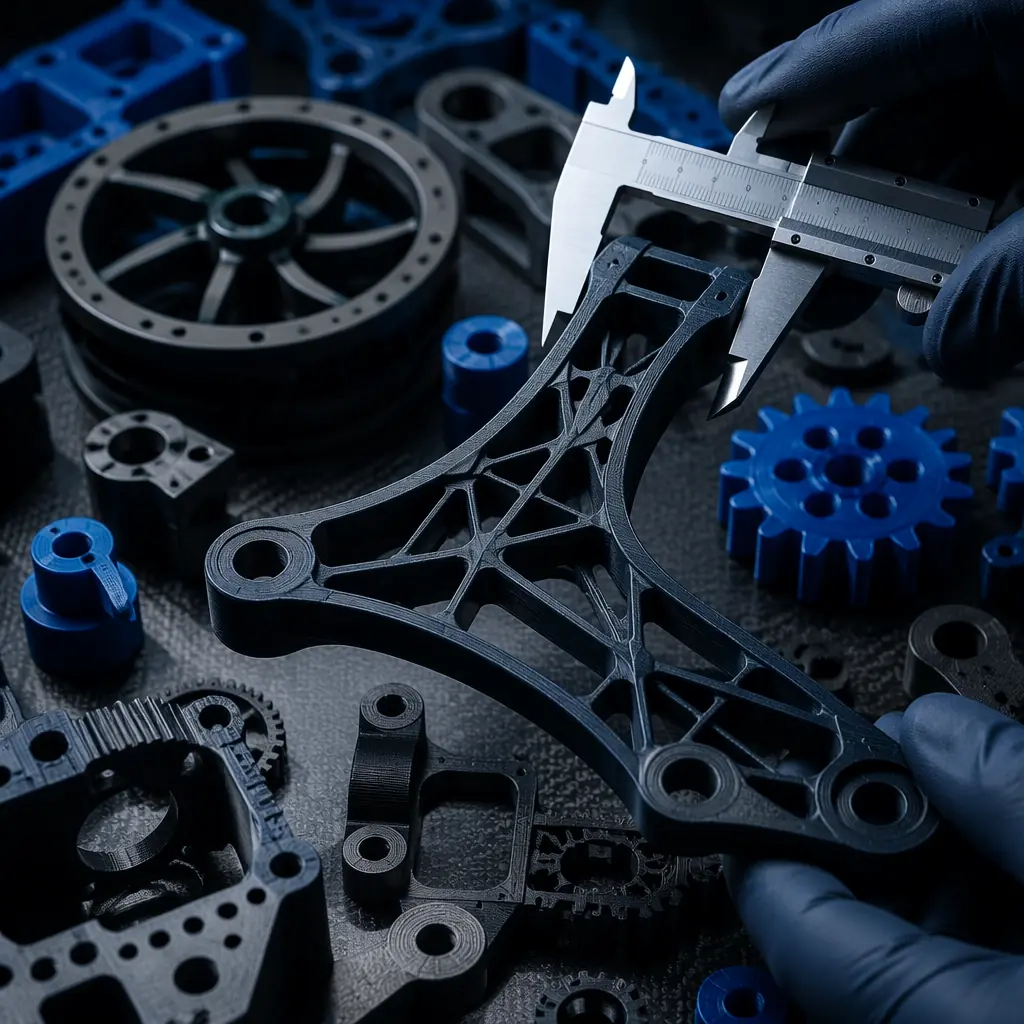
The material requirements for drone components are fundamentally different from general-purpose 3D printing. Drones demand a combination of properties — low weight, high stiffness, impact resistance, and in some cases, heat resistance near motors — that narrows the material palette to a specific set of engineering filaments. A distributor who stocks and understands these materials can capture the entire consumables spend of a drone customer rather than losing it to online filament retailers.
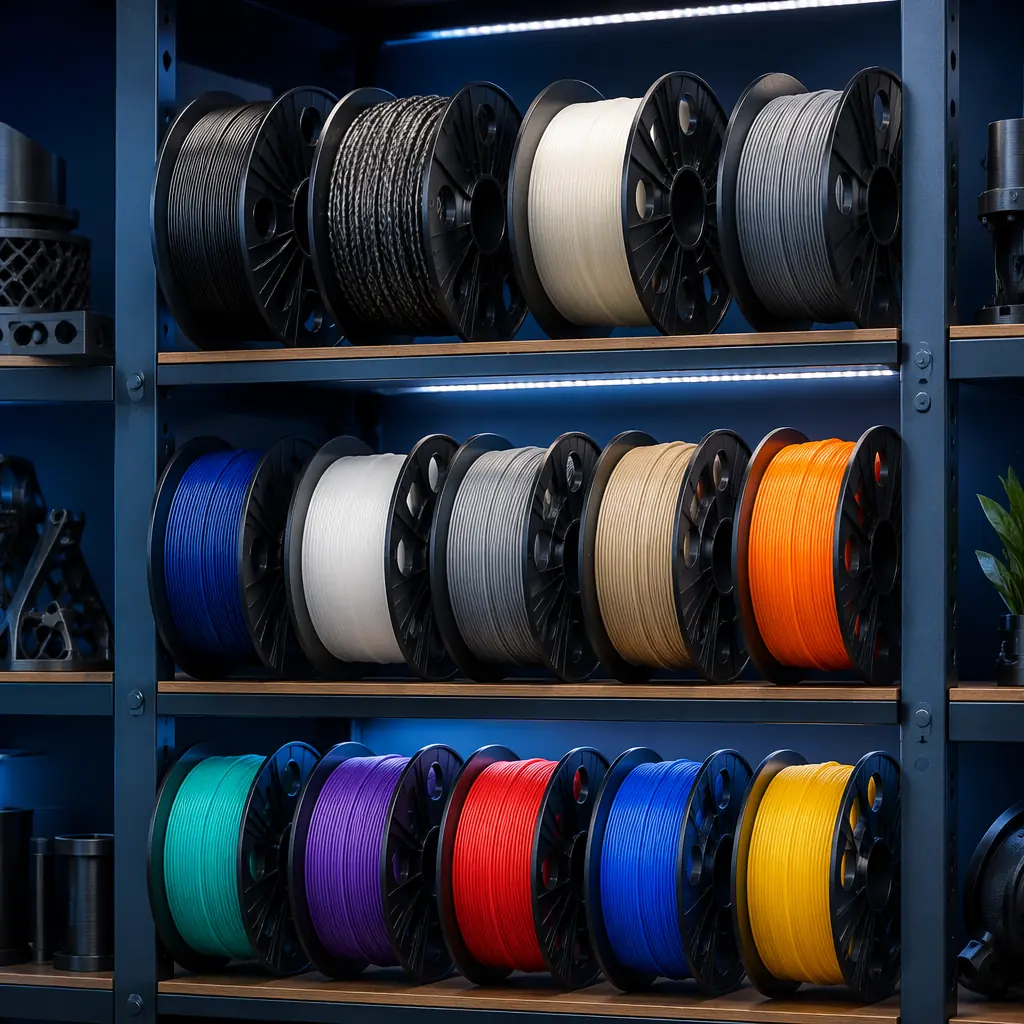
PLA and PETG for prototyping and production: PLA is the prototyping workhorse — cheap, easy to print, and dimensionally stable enough for fit-checking components before committing to production materials. PETG is the entry point for production drone parts: it offers better impact resistance than PLA, adequate stiffness for non-structural components, and prints on standard FDM machines without an enclosure. A drone startup typically buys PLA by the 10-pack for iteration and PETG by the 5-pack for functional prototypes. For a primer on filament quality evaluation, see our filament quality evaluation guide.
TPU for vibration isolation: Flexible TPU is one of the most underappreciated materials in the drone space — and one of the highest-margin. Every drone needs vibration-dampening mounts between the airframe and sensitive components (cameras, LiDAR sensors, flight controllers). TPU printed at 95A shore hardness provides exactly the right combination of flexibility and durability for these applications. A drone manufacturer operating 10 printers might only go through 2–3 spools of TPU per month, but at $35–45/kg retail with 45–60% margins, the profit per spool is nearly double that of PLA. TPU also creates stickiness: once a drone manufacturer has dialed in their TPU print profiles on a specific brand, they are reluctant to switch suppliers and re-tune. Our filament stocking guide covers the full economics of material portfolio management.
Nylon and CF-nylon for structural components: This is where the serious money sits. A drone OEM producing commercial UAVs at scale consumes nylon and carbon-fiber-filled nylon by the case — 20–50 kg per month for a mid-sized manufacturer. Nylon offers the impact resistance and fatigue life that drone airframes require; carbon-fiber-filled nylon adds the stiffness-to-weight ratio that makes longer flight times possible. These materials require printers with all-metal hotends (260–290°C nozzle temperatures), hardened nozzles (carbon fiber is abrasive), and preferably enclosed chambers for warpage control. The printer sale that comes with a nylon-capable machine is worth 10x in lifetime consumables revenue. For the technical guide to high-temperature materials, see our industrial materials guide and our carbon-fiber filament guide.
Printer Specifications: What a Drone Manufacturer Actually Needs
Drone manufacturers are specification-driven buyers — they evaluate printers against a checklist of technical requirements that map directly to the components they need to produce. A distributor who can match printer capabilities to drone application requirements wins the technical sale before price enters the conversation.
Build volume: The most common drone component — an airframe arm or a motor mount — fits comfortably within a 220×220×250mm build volume. For larger components like full airframe sections or landing gear assemblies, a 300×300×400mm build volume is valuable. Distributors should lead with a mid-size printer (220–256mm³) for the prototyping queue and offer a large-format machine (300mm³+) for production runs of larger components. Our build volume guide provides the full segmentation framework.
Hotend temperature range: This is the single most important specification for qualifying a drone customer's printer needs. A printer that maxes out at 260°C can handle PLA, PETG, and TPU — sufficient for prototyping and non-structural parts. A printer capable of 290–300°C opens the door to nylon and PC blends — the materials used for production airframe components. A printer capable of 350°C+ with an actively heated chamber (80–100°C) enables PEEK and PEI for defense applications. The hotend capability determines which customer segment the printer can serve, and the upsell from a 260°C machine to a 300°C machine is the highest-ROI upgrade conversation in the drone vertical. For a detailed technical comparison, see our nozzle and hotend guide.
Enclosure: Any printer positioned for drone production applications needs an enclosure — passive for PETG and ABS (to prevent warping from drafts), actively heated for nylon and polycarbonate (to maintain chamber temperatures of 45–60°C for interlayer adhesion). The enclosure conversation is a natural upsell: a drone manufacturer who buys an open-frame printer for PLA prototyping will be back in 6–12 months looking for an enclosed machine when they move to production materials. Our enclosed vs open-frame guide and heated chamber guide cover the full enclosure decision framework.
Direct-drive extruder: Flexible TPU filaments print reliably only with direct-drive extruders. Bowden setups struggle with the compression of flexible filament in the long PTFE tube. Since nearly every drone application requires TPU for vibration-dampening components, a direct-drive extruder is effectively a requirement for a drone-capable printer. The direct-drive vs Bowden comparison is covered in our extruder comparison guide.
Sales Strategy: How to Reach and Convert Drone Manufacturers
The drone manufacturing vertical has a concentrated geography and industry presence that makes targeted outreach more efficient than broad marketing. The approach varies by buyer persona.
For drone startups and UAV service providers: The most effective channel is local drone racing and FPV (first-person view) communities. Drone racing events, FPV meetups, and UAV maker fairs are dense concentrations of your target customers — people who build, modify, and repair drones as a core activity. Sponsor a local drone racing event: provide filament as prizes, set up a demo printer printing drone parts live, and distribute cards with a discount code for first-time filament buyers. The cost is $200–500 per event, and the conversion rate from event attendee to first purchase is 8–15% — exceptional for offline marketing. Equally effective: join local UAV Facebook groups and Discord servers, not to sell but to answer technical questions. A distributor who consistently provides useful print-setting advice in a drone-building community becomes the default supplier when members need filament or a new printer. Our digital marketing strategy guide covers the full digital outreach playbook.
For drone OEMs and defense contractors: These buyers require a consultative sales approach. Cold-calling a drone OEM's engineering manager with a printer brochure is ineffective. Instead: research the company's product line, identify a component that is clearly 3D-printable (a custom sensor bracket, an antenna mount, a prototype airframe section), print that exact component on your recommended machine with the correct material, and mail the physical part to the engineering manager with a note: "We printed this [component name] in [material] on a [printer model] at [layer height] — 4-hour print time, $3.20 in material cost. If you would like to discuss bringing this capability in-house, I am available." This approach converts at 25–35% to a first meeting because it demonstrates capability instead of claiming it. For the broader framework of selling to enterprise buyers, see our B2B sales demo playbook and our R&D prototyping sales guide.
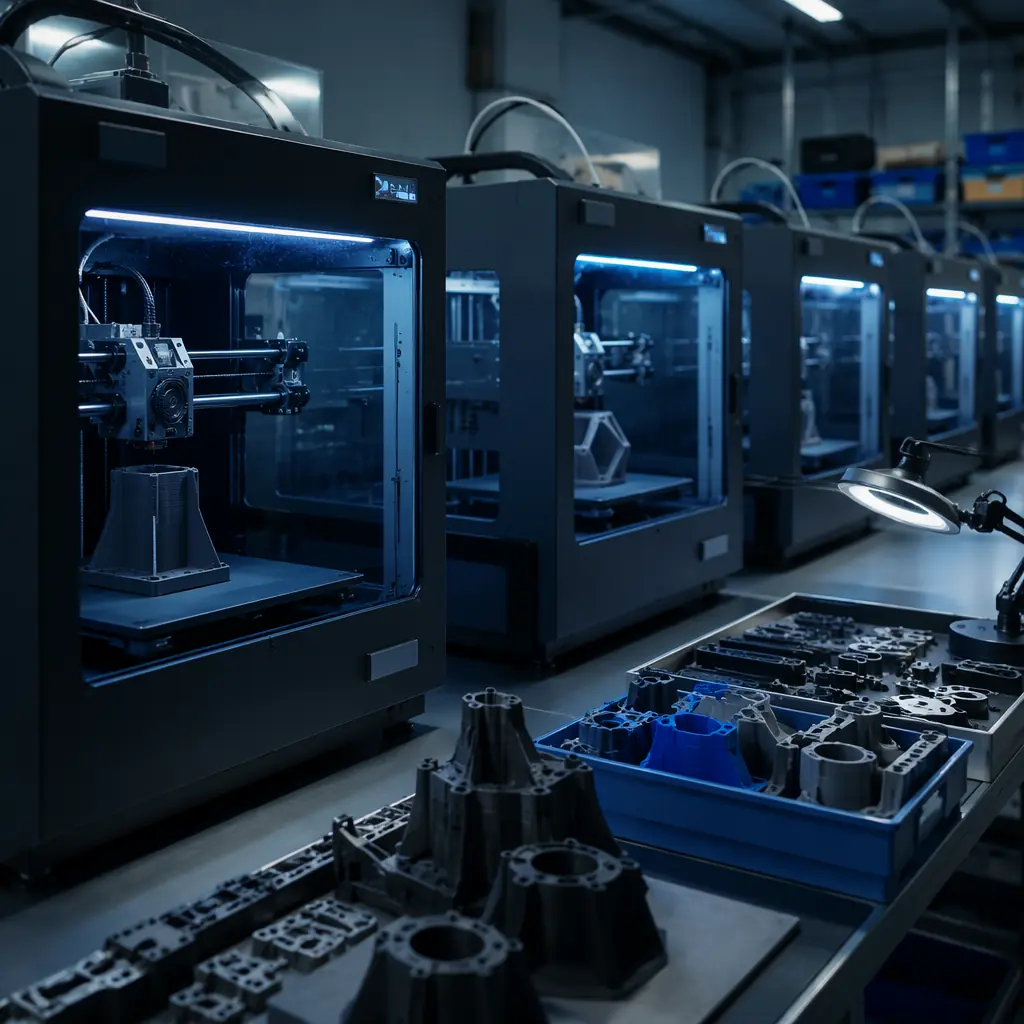
Trade show strategy: The two highest-ROI events for reaching drone manufacturers are Commercial UAV Expo (Las Vegas, September) and AUVSI Xponential (rotating US cities, April/May). A 10×10 booth at Commercial UAV Expo costs approximately $5,000–8,000 and generates 80–150 qualified leads over three days. The key to converting trade show leads in this vertical: bring a printer running live, printing actual drone components in engineering materials — not a Benchy, not a vase, but a real drone arm or motor mount. The live print is the proof point that closes the follow-up meeting. Our trade show ROI guide provides the complete booth strategy.
Bottom Line
The drone vertical is not the largest 3D printing market by unit volume — education and hobbyist segments move more printers. But it is arguably the highest-value vertical per customer: a single drone OEM relationship generates 3–5x the lifetime revenue of a typical hobbyist, consumes engineering-grade materials at 50–65% margins rather than commodity PLA at 35%, and creates natural upsell paths as the customer progresses from PLA prototyping to nylon production to high-temperature defense applications. A distributor who invests in understanding drone engineering requirements, stocks the material portfolio those engineers need (PETG, TPU, nylon, CF-nylon), and shows up at the industry events where drone builders congregate can build a book of drone-manufacturer accounts that delivers sustained, high-margin revenue with significantly lower churn than the general consumer market. The window to establish position in this vertical is open — drone manufacturing is growing at 25% annually and the distributor landscape is still fragmented. The distributors who build relationships with drone OEMs now will own those accounts when the market consolidates.
Start Your Partnership
Ready to Bring Precision Printing to Your Market?
Join our network of 200+ global distributors. Competitive pricing, dedicated support, and fast fulfillment.