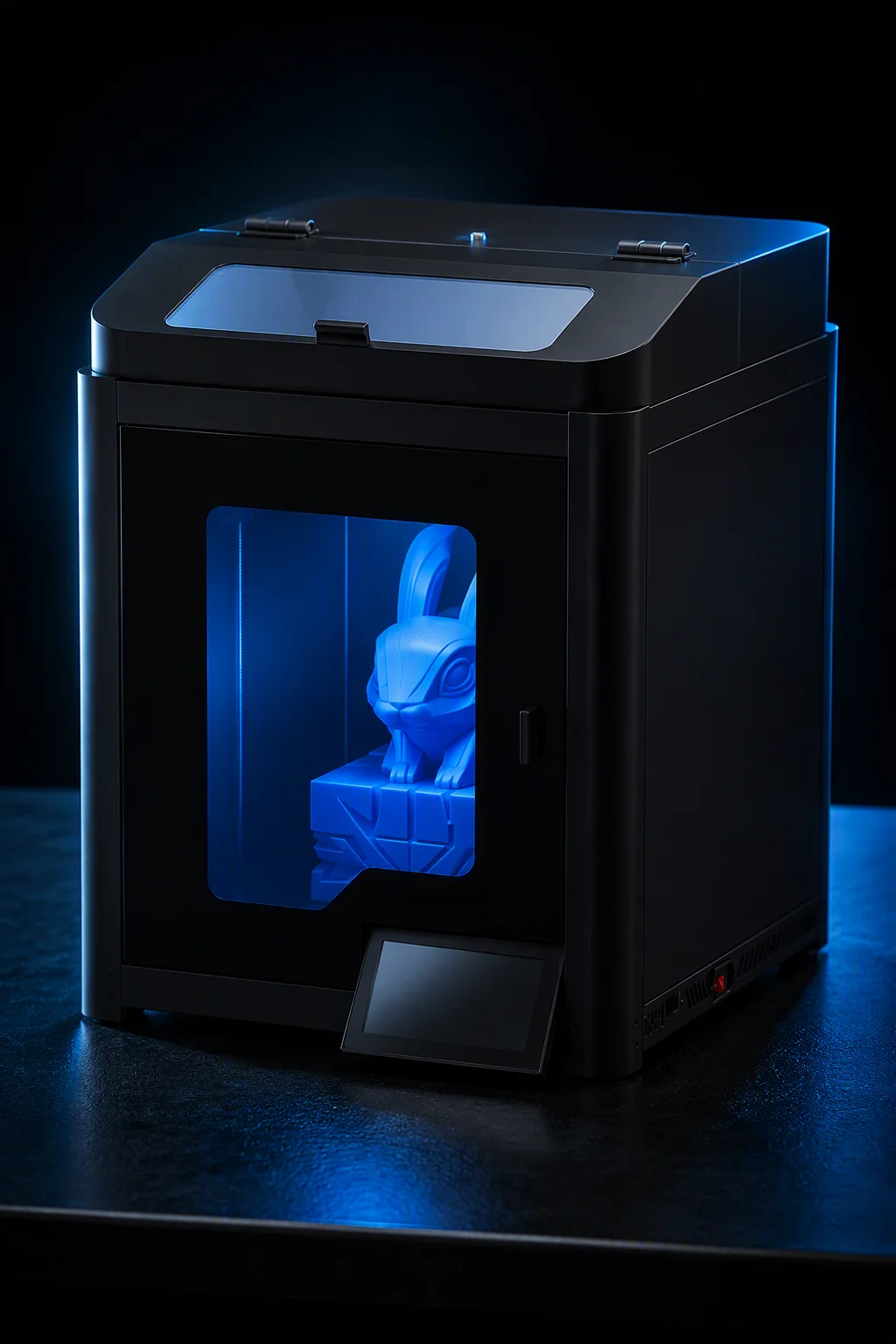
A workplace design firm in Austin was outfitting a 12,000-square-foot office for a fintech client. The spec called for branded desk nameplates, cable trays under every standing desk, and custom monitor risers for a non-standard dual-screen setup. Traditional sourcing meant three vendors, a $14,000 minimum order, and an 8-week lead time that blew past the move-in date. The firm printed 240 nameplates, 180 cable trays, and 90 monitor risers in 12 days at a total material cost under $900. The office and workplace vertical is unique among 3D printing markets: the buyers are everywhere, the parts are small and standardized, and the economics of printing a plastic clip versus ordering one from a supplier are so lopsided that the sales conversation is often about convincing a facilities manager they are allowed to print it. For distributors, it is a high-volume, low-drama account type that compounds across every region.
Why Office & Workplace Is Buying 3D Printers
Four structural facts make the office a durable buyer. First, obsolete parts everywhere: desks, chairs, monitors, and office machines age out of support in 3-5 years, and manufacturers stop stocking the small plastic parts that break, the replacement-part logic is developed in our spare parts & aftermarket revenue guide. Second, standardization: a 400-desk office has maybe 15 distinct desk and monitor configurations, so one good design serves the whole building, batch economics at tiny scale, exactly the model in our print farm operations guide. Third, branding and personalization: nameplates, wayfinding signs, and branded accessories turn a commodity print into a premium product, and the personalization workflow is the same one our rapid prototyping guide describes for product teams. Fourth, hybrid-work churn: offices reconfigure desks, meeting rooms, and booths every few months, generating a constant stream of small fixtures and signage jobs that no external supplier serves profitably.
The Applications That Actually Buy
Six clusters generate the orders. The buyers are facilities management teams, office product brands, workplace design firms, corporate procurement, IT departments, and office furniture dealers.
1. Cable management. The volume driver: cable clips, under-desk trays, grommet covers, and power-strip holders. Every office has hundreds of desks and every desk has cables; a single 200-desk account can consume 1,500-3,000 printed parts in the first year.
2. Desk accessories and ergonomic aids. Monitor risers, laptop stands, pen cups, phone docks, footrests, and keyboard wedges. These are the products office product brands want to private-label, and the private-label path is covered in our private-label & OEM sourcing guide.
3. Nameplates, wayfinding, and signage. Desk nameplates, door signs, room labels, and branded reception pieces. Low volume, high perceived value, and a natural recurring revenue stream as offices reconfigure, the branding and finish standards are in our post-processing & finishing guide.
4. Facility spares and replacement parts. Chair armrest caps, drawer slides, hinge pins, casters, toilet-paper dispenser parts, and HVAC vent covers. Facilities teams already own the "fix it cheap" budget; printed spares turn a $60 minimum-order problem into a $2 overnight fix.
5. Meeting room and collaboration tooling. Whiteboard accessory holders, marker trays, cable pass-throughs for conference tables, and A/V equipment mounts, steady, repeatable, and tied to the reconfiguration cycle.
6. IT and server room fixtures. Rack blanks, cable organizers, drive sleds, and equipment brackets. IT teams are comfortable with 3D printing and buy without the approval friction of other departments.
Materials for Office Products
Office buyers care about durability, color consistency with the office's design scheme, and fire-safety compliance for certain fixtures:
Two realities dominate material conversations. First, fire-safety compliance: certain office fixtures fall under building-code flammability requirements, and printed parts used in plenum spaces or near electrical equipment need documented material ratings, the compliance framework is in our certification & compliance guide. Second, durability under daily use: an office part gets handled 20-50 times a day, so the difference between PLA and PETG is the difference between a one-month part and a three-year part; the material selection map is in our engineering filaments guide.
From Request to Installed: The Office Workflow
The workflow that wins office accounts has five stages. Catalogue the office . A facilities walkthrough identifies the 15-30 recurring part types; a distributor who does this free earns the account. Design once, print many . One good cable-tray design serves every desk, and design-for-print discipline (layer orientation, no supports, snap-fit assembly) keeps unit costs at $0.50-3. Batch produce . Run the parts across a small farm or single printer in waves; the batch scheduling model is in our print farm operations guide. Finish and brand . Nameplates and signage get the finish treatment from our post-processing guide; functional parts ship as-is. Install and maintain . Offices value a supplier who installs and keeps a spares inventory, which locks in reorders; the service-model mechanics are in our after-sales support strategy.
Budget Reality: Printed vs Sourced
The comparison that closes office accounts:
The distributor math compounds because office production is steady and consumable-hungry: an active facilities account consumes 10-30 kg of filament per month, plus nozzles and build plates, the recurring-revenue model is developed in our consumables & accessories bundling guide.
The Distributor Playbook: Entering Office & Workplace
Five moves win office accounts:
1. Sell to facilities and procurement, not marketing. The decision-maker is the facilities manager or procurement lead who owns the repair budget, a smaller, faster, more rational buyer than the brand teams in other verticals. Build a target list of 40-60 offices, schools, hospitals, and coworking spaces in your region.
2. Lead with the free walkthrough. Offer a free "parts audit" of the building: 30 minutes, a list of every broken or obsolete plastic part, and a same-week quote. The audit converts because it quantifies the problem before the pitch, the same consultative-sales mechanics as our B2B sales demo playbook.
3. Bundle the spares catalog. Stock the 30 most common office spare parts (chair caps, drawer slides, caster inserts, clip types) so you can quote same-day. The inventory and SKU discipline is in our inventory & SKU planning guide.
4. Offer private-label desk accessories. Office product brands and furniture dealers want branded monitor risers, laptop stands, and organizers. The private-label manufacturing path is in our private-label & OEM sourcing guide.
5. Work the reconfiguration cycle. Offices re-fit on a 12-24 month cycle. Pair each reconfiguration with a recurring "spares on demand" agreement, and time outreach around lease renewals and office moves, the account-planning framework is in our territory & sales planning guide.
Common Pitfalls in Office Accounts
Five mistakes cost distributors office business: (1) selling PLA for load-bearing parts . A monitor riser or chair part in PLA fails in weeks; PETG or nylon is the honest recommendation; (2) ignoring fire-safety compliance . Printed parts near electrical equipment or in plenum spaces need documented material ratings, and a building inspector can halt the job (the compliance framework is in our certification & compliance guide); (3) treating each part as a custom job . The economics only work when a design is printed 50-500 times; catalogue the recurring parts and sell the batch, not the one-off; (4) skipping durability testing . Office parts get daily handling, and a part that fails in a month kills the account; test and document durability before the first sale; and (5) undervaluing installation service . Offices pay for installation and spares management, and a distributor who only ships parts leaves money and stickiness on the table (the service-revenue model is in our annual service contracts guide).
Getting Started: The First 90 Days
A 90-day entry plan: Month 1 . Identify 40-60 target accounts (offices, schools, coworking spaces, hospitals, property managers) and stock the office material set: PETG, PLA+ in common brand colors, TPU, ABS, plus build plates and finishing supplies. Month 2 . Produce a demo kit (a cable tray, a nameplate, a monitor riser clip), run two free parts audits, complete two pilot jobs at cost-plus-10% (a 60-piece spare batch and a 100-piece cable-management batch), and offer one private-label desk accessory to a local office product brand. Month 3 . Convert pilots to recurring accounts with a same-week spares SLA and a reconfiguration calendar, publish your first measured case study ("60 monitor riser clips: $1,800 → $4.20, overnight"), and open one facilities-management contract. The printer investment model that justifies the distributor's own machines is in our TCO & ROI calculator guide. The eco-angle also wins modern offices. The recycled and low-waste filament playbook is in our sustainable & recycled filament guide.
Reviewed by the Precise3D engineering & OEM team. Compliance files that accompany the catalog are auditable at the certification register.
Enter the Office Market
Ready to Supply Facilities Teams & Office Product Brands?
Get wholesale pricing on FDM printers, PETG and PLA+ filament lines, TPU, build plates, finishing supplies, and the office-workplace playbook that wins facilities and procurement accounts.