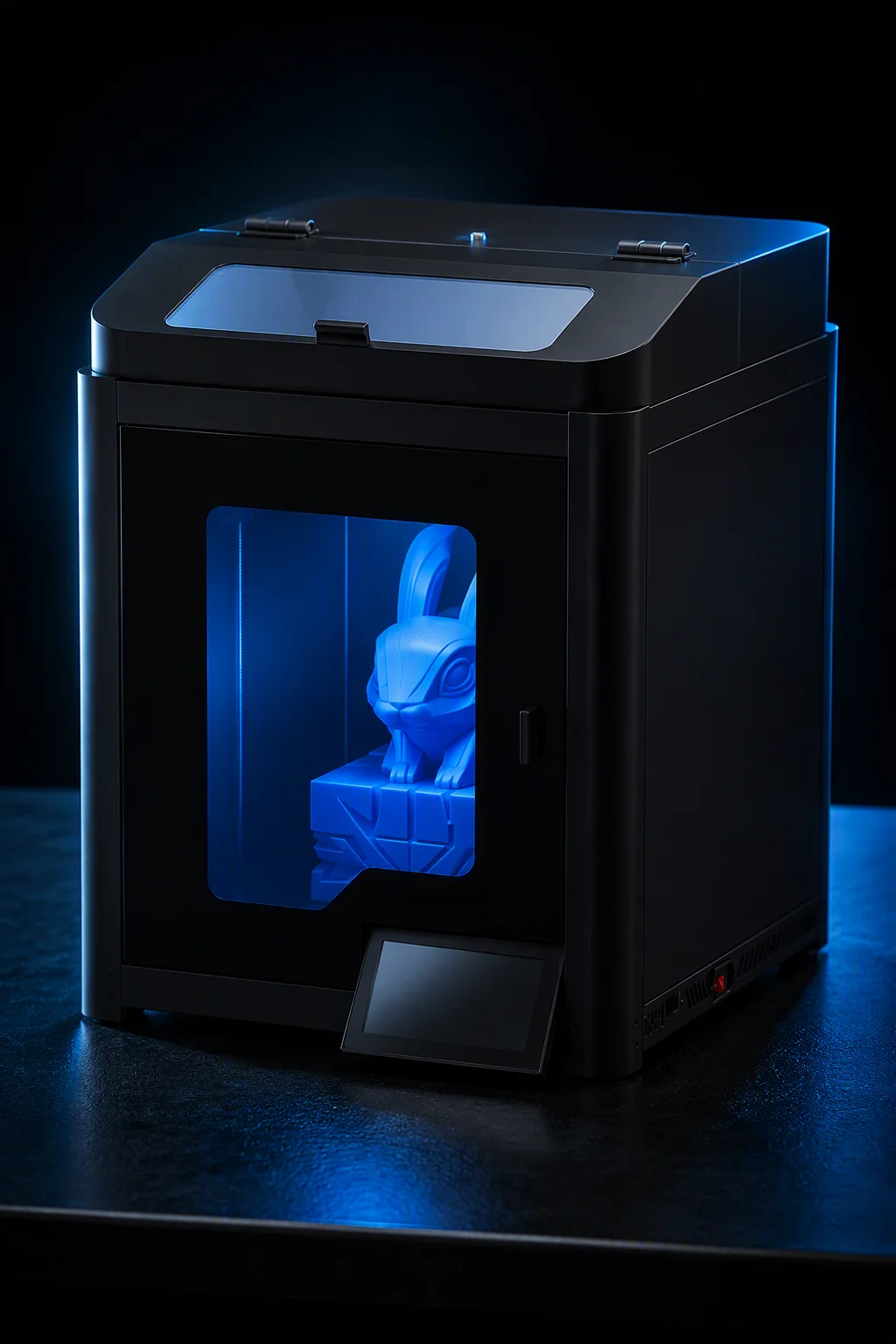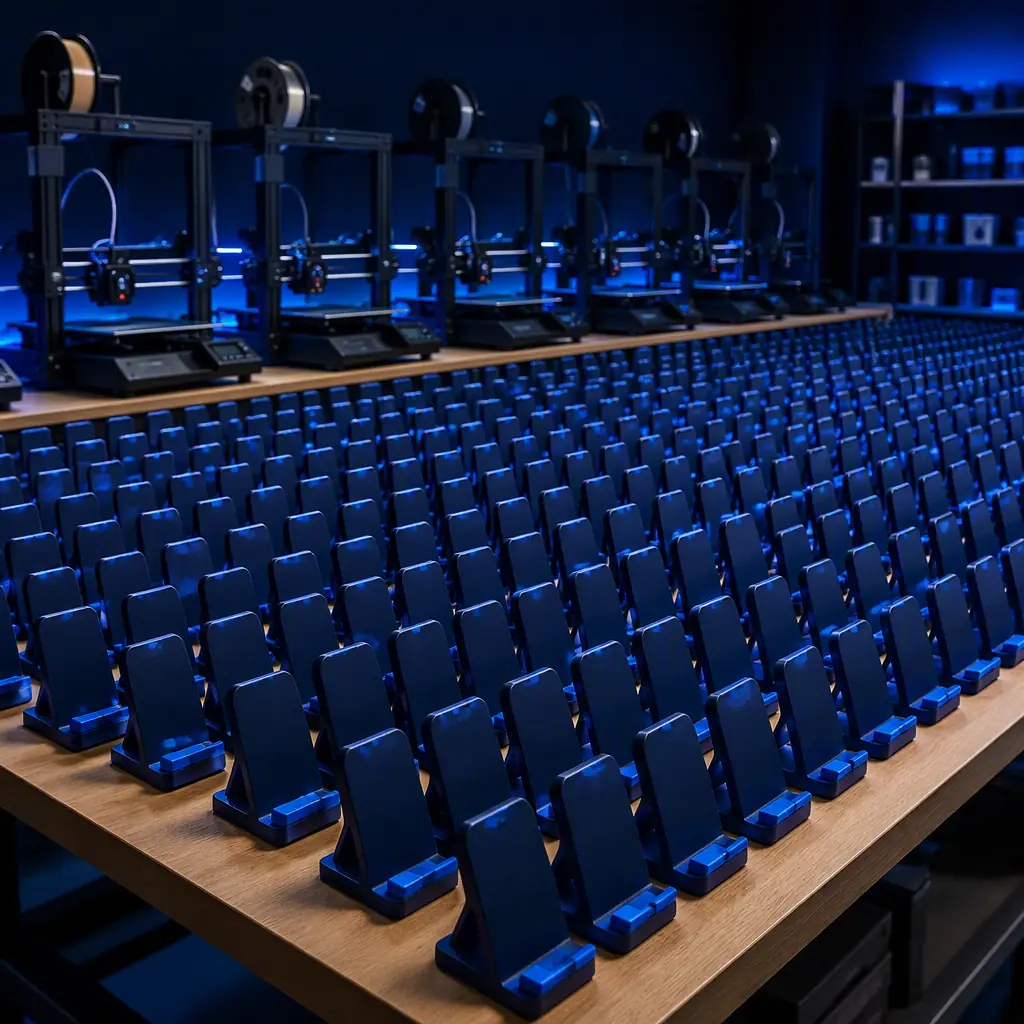
An agency in Chicago had a recurring nightmare client: a pharmaceutical brand that wanted 800 premium corporate gifts for a sales kickoff, each personalized with a different rep's name and territory. Traditional promo suppliers quoted 3-4 weeks and $18-35 per unit because everything was customized. The agency's distributor partner printed all 800 desk trophies in seven days at $6.50 per unit, inlaid with printed name plates, and the client rebooked for the next quarter before the first shipment was unpacked. The promotional products industry is a $25+ billion global market built on three brutal constraints, short lead times, awkward order quantities, and insatiable demand for personalization . And every one of those constraints is where 3D printing beats the traditional promo supply chain. For distributors, it is also one of the few verticals where a single order can consume more filament than a month of hardware sales.
Why Promotional Products Is Buying 3D Printers
Four structural facts make promotional products a durable buyer. First, deadline compression: a brand decides on a conference giveaway 2-3 weeks before the event, and the traditional overseas supply chain cannot move that fast, the same speed logic our rapid prototyping guide maps for product development applies here to marketing. Second, personalization at scale: names, logos, and messages on every unit; printed personalization costs pennies per unit versus dollars for engraving or embroidery. Third, short-run economics: 200-2,000 unit jobs sit in the dead zone between screen printing and injection molding, and only digital fabrication serves them profitably; the small-batch math is developed in our print farm operations guide. Fourth, event-driven reorder cycles: trade shows, product launches, and holiday gifting recur every year, giving distributors a predictable reorder calendar, the seasonal planning framework is in our seasonal inventory guide.
The Applications That Actually Buy
Six clusters generate the orders. The buyers are promotional products distributors, ad agencies, event organizers, corporate procurement teams, trade show exhibitors, and HR teams buying employee and client gifts.
1. Event and trade show giveaways. The flagship application: phone stands, badge holders, pen holders, luggage tags, and desk toys branded for conferences and expos. Deadlines are immovable, quantities are 500-10,000, and print farms produce them in days. The trade show demand side is covered in our trade show strategy guide.
2. Awards, trophies, and plaques. Sales awards, employee-of-the-month trophies, and sponsor plaques. These are low-volume (10-200 units), high-value, and often personalized, a category where printed parts with painted or plated finishes compete with $200 engraved crystal at a third of the price.
3. Corporate gifts and client appreciation. Desk clocks, custom puzzles, monogrammed accessories, and executive gifts. Volume is small but the willingness to pay is high, and the quality bar is the same as premium retail, the finishing standards in our post-processing & finishing guide are what close these orders.
4. Branded desk and office merch. Logo coasters, cable organizers, pen cups, and phone docks for internal company stores and onboarding kits, steady, repeatable, and a natural entry point for corporate accounts.
5. Product launch kits and unboxing. Brands ship press kits and influencer boxes with custom printed inserts, display stands, and miniatures of the product, the unboxing experience logic mirrors our packaging & unboxing design guide.
6. Personalized and one-off merch. Wedding favors, memorial items, fan merch, and micro-influencer collabs. These are unit-of-one to hundreds, and they are how a promo business builds a social media presence that pulls in bigger orders.
Materials for Promotional Products
Promo buyers care about color accuracy, surface finish, and durability in a bag or on a desk, not exotic engineering properties:
Two realities dominate material conversations. First, brand color fidelity: promo buyers reject off-color merch, and matching a Pantone brand color requires either multi-material printing or a paint workflow. The color and multi-material options are covered in our multi-color printing guide. Second, finish expectations: a giveaway that looks 3D-printed reads as "cheap" and hurts the brand; the sanding, priming, and painting workflow that gets promo parts to retail finish is in our post-processing guide.
From Order to Unboxing: The Promo Production Workflow
The workflow that wins promo accounts has five stages. Quote fast . Promo buyers compare quotes within hours; a distributor with a per-unit cost model (filament + machine time + labor + decoration) can quote in an afternoon, and the cost modeling discipline is in our pricing & margin guide. Design for print . Emboss logos instead of printing them, design for layer orientation, and add build-plate-safe geometry. Batch produce . Run farms 24/7 in waves; a 1,000-unit order is a production scheduling problem, not a printing problem, and the farm playbook is in our print farm economics guide. Decorate and finish . Apply brand colors, paint awards, and polish where the client expects premium. Pack and ship . Promo orders ship to a single event or office, which simplifies logistics; the crating and shipping standards for fragile finished goods are in our crating & shipping guide.
Budget Reality: Printed vs Traditional Promo
The comparison that closes promo accounts:
The distributor math compounds because promo production is consumable-hungry: a single 1,000-unit order can consume 30-80 kg of filament, plus nozzles, build plates, and finishing supplies, the recurring-revenue model is developed in our consumables & accessories bundling guide.
The Distributor Playbook: Entering Promotional Products
Five moves win promo accounts:
1. Partner with promo distributors and agencies. You do not need to be a promo company, you need to be the production partner that traditional distributors and agencies subcontract to when deadlines break. Build a target list of 20-30 promo distributors, agencies, and event companies in your region.
2. Sell the deadline, not the technology. The pitch is "10-day production, no minimums, fully personalized": every promo buyer has lost a deal to a missed deadline, and that pain is the hook. The sales-demo mechanics that convert this pitch are in our B2B sales demo playbook.
3. Publish a per-unit price list. Promo buyers need instant quotes. A transparent per-unit matrix (by material, quantity tier, and personalization level) turns you from "a printer guy" into "a supplier," and the quote discipline is in our RFQ & proposal playbook.
4. Own the reorder calendar. Trade show season (spring/fall), product launches, and Q4 gifting recur annually. Build the reorder pipeline and reminder system, and pair it with the territory and account planning framework from our territory & sales compensation guide.
5. Offer print-on-demand as a service. Many promo buyers want the capability without the machines. A print-on-demand service (files in, finished merch out) captures volume before they ever buy hardware, the service-business model mirrors our after-sales support strategy.
Common Pitfalls in Promo Accounts
Five mistakes cost distributors promo business: (1) underpricing rush jobs . A 10-day deadline is a premium product, not a discount; price machine time honestly or the farm loses money on every order; (2) ignoring brand color fidelity . An off-color giveaway gets rejected; document color matching and offer paint/multi-material options before quoting; (3) shipping raw-looking parts . A giveaway with visible layer lines and stringing reads as "cheap" and damages the client's brand; finish work is not optional; (4) treating every order like a hobby print . A 1,000-unit order needs farm scheduling, QC sampling, and batch tracking, and the quality control discipline is in our factory audit & QC guide; and (5) missing the reorder window . Promo buyers rebook on a calendar, and a distributor who does not follow up within 30 days loses the recurring order to whoever does.
Getting Started: The First 90 Days
A 90-day entry plan: Month 1 . Identify 20-30 target accounts (promo distributors, agencies, event companies, corporate procurement) and stock the promo material set: PLA+ in core brand colors, PETG, TPU, ABS, plus finishing supplies and build plates. Month 2 . Produce a demo kit (a branded phone stand, a personalized trophy, and a logo coaster), publish your per-unit price list, run two pilot jobs at cost-plus-10% (a 200-unit giveaway and a 50-unit award batch), and offer print-on-demand to one agency. Month 3 . Convert pilots to recurring accounts with a 10-day production SLA and a reorder calendar, publish your first measured case study ("800 personalized trophies: 3 weeks → 7 days, $6.50/unit"), and open one corporate account. The printer investment model that justifies the distributor's own machines is in our TCO & ROI calculator guide. The sustainability angle is also winning promo RFPs, the recycled and eco-filament playbook is in our sustainable & recycled filament guide.
Reviewed by the Precise3D engineering & OEM team. Compliance files that accompany the catalog are auditable at the certification register.
Enter the Promo Market
Ready to Supply Promo Distributors, Agencies & Corporate Buyers?
Get wholesale pricing on production FDM printers, PLA+ and PETG filament lines in brand colors, TPU, finishing supplies, build plates, and the promo-production playbook that wins deadline-driven accounts.