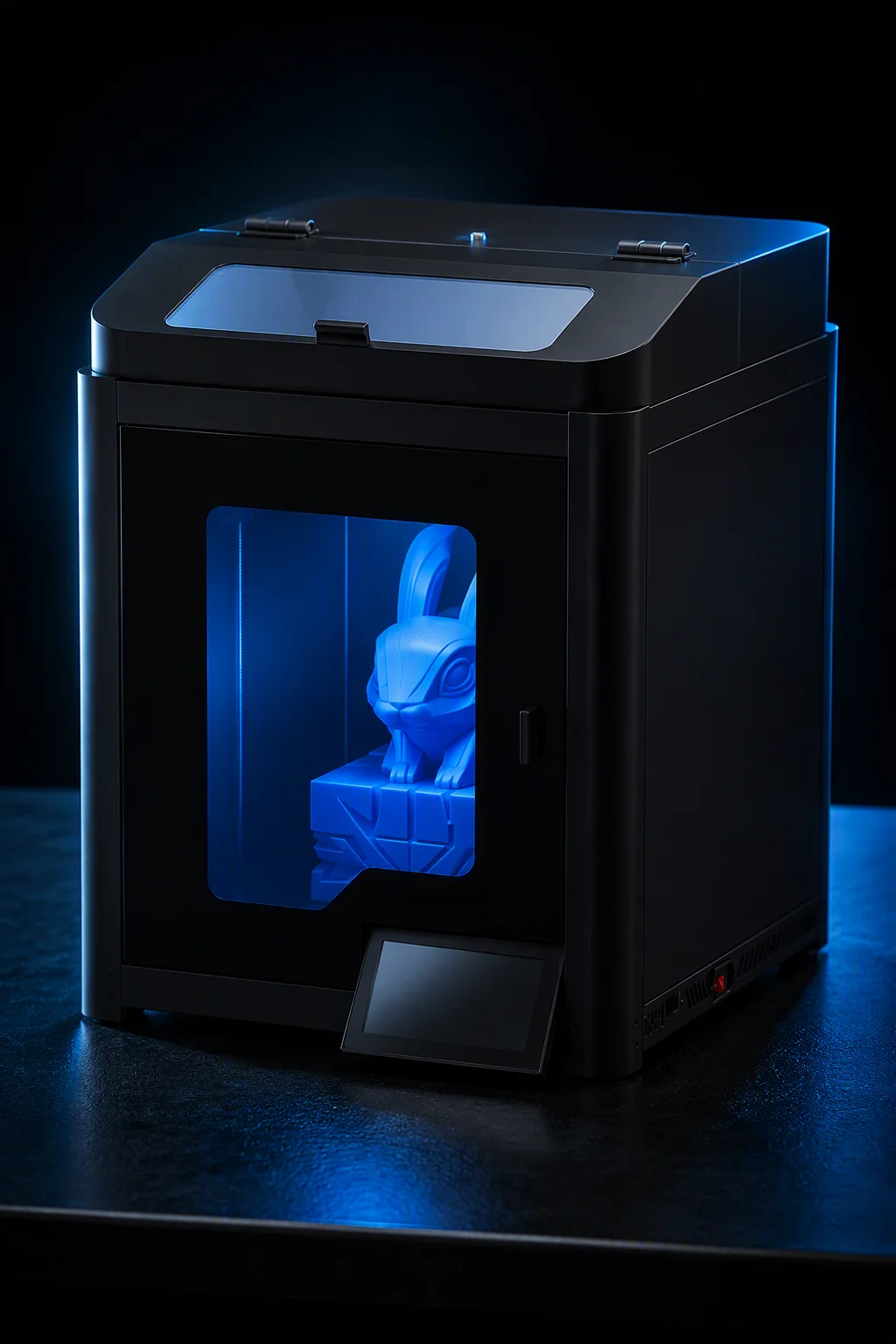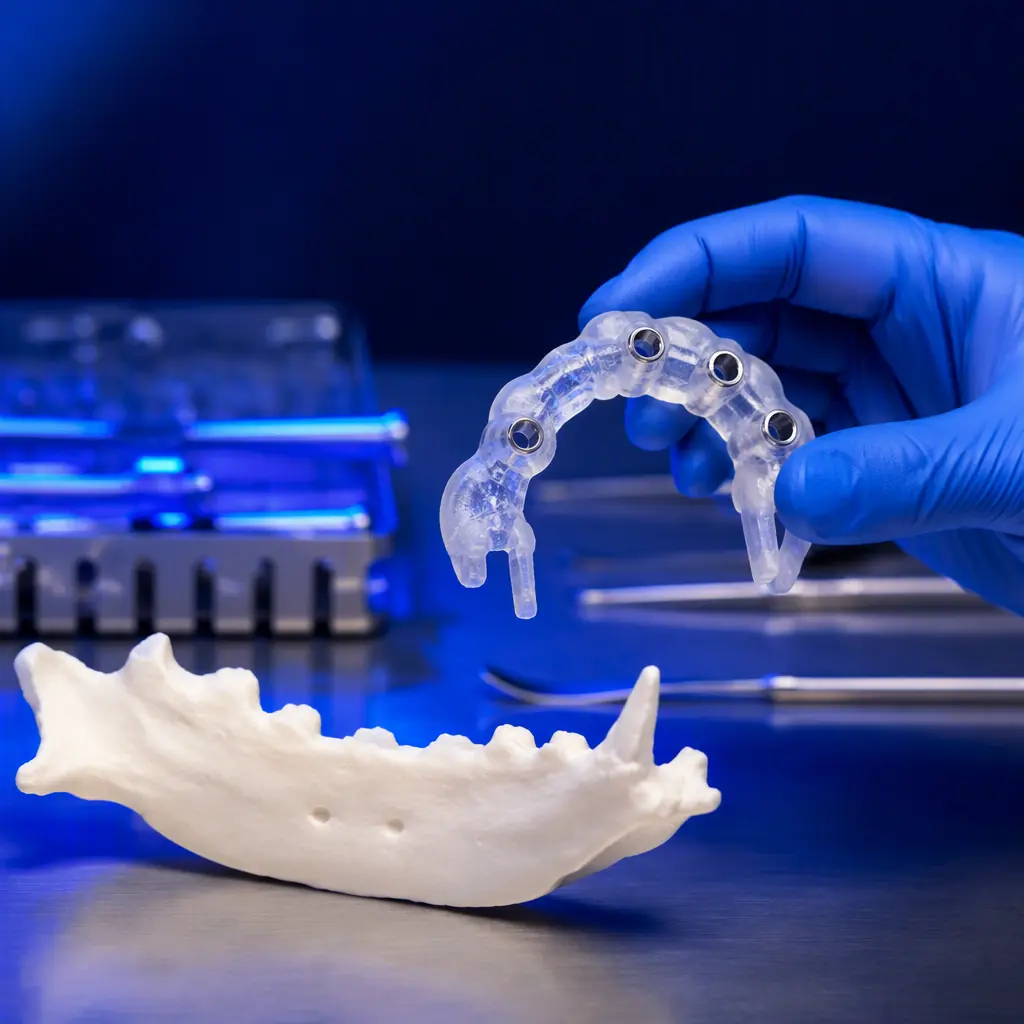
A specialty veterinary hospital in Texas was referring every TPLO (tibial plateau leveling osteotomy) case to a surgical center 90 minutes away because it could not afford $600-1,200 machined cutting guides per patient. It bought a resin printer and a CT-segmentation workstation: each printed TPLO guide now costs $18-35 in medical-grade resin, fits from CT data in 6-8 hours, and the practice keeps 100% of the surgical fee. Veterinary medicine — orthopedics, oncology, dentistry, and rehabilitation — is quietly becoming one of the most defensible verticals in 3D printing, because every patient is anatomically unique and every case generates a new custom part. For distributors, it is a referral-driven market where one validated practice recruits the next.
Why Veterinary Medicine Is a Structural 3D Printing Buyer
Three facts make animal hospitals exceptional customers. First, anatomical variability: a dog's femur, a horse's hoof capsule, and a parrot's beak are never identical between patients, so mass-produced implants and guides fit poorly — every case demands a custom geometry that only digital fabrication delivers. Second, price tolerance: owners routinely pay $3,000-8,000 for orthopedic surgery, and custom tooling is a small fraction of that bill, so practices accept part prices that would shock a hobbyist. Third, referral density: veterinary surgeons talk to each other constantly, at conferences and on specialty list-servs — one well-documented success (case photos, CT-to-print workflow, 12-week follow-up) recruits other clinics with near-zero marketing spend. The same trust mechanics that drive the human medical market, covered in our medical 3D printing guide, apply here with less regulatory friction.
The Applications That Actually Buy
Four clusters generate repeat orders. The buyers are veterinary surgeons, practice owners, and veterinary teaching hospitals.
1. Orthopedic surgical guides. TPLO guides, fracture-reduction guides, and osteotomy templates are the flagship application. Printed from CT or MRI segmentation, they transfer a surgical plan to the bone with sub-millimeter fidelity. A practice doing 4-8 TPLOs per month consumes 4-8 guides plus sterilization test coupons; guide resin is a permanent consumable stream. The accuracy requirements mirror precision work covered in our tolerances & dimensional accuracy guide.
2. Custom implants and patient-specific hardware. Fracture plates, cages, and spacers designed from imaging data. Veterinary implant companies (and an increasing number of specialty hospitals) use printed titanium via DMLS partners or printed polymer drill guides for standard plate placement. Even when the implant itself is machined, the printed drill guide that positions it is the distributor's entry point. For the industrial material context behind implant-grade work, see our PEEK/PEI/PPSU industrial materials guide.
3. Prosthetics and orthotics. The visible, media-friendly application: prosthetic limbs for dogs and cats, wheeled-cart saddles, beak prostheses for birds, and hoof support devices for horses. These are high-touch, high-story cases that practices post to social media — free marketing for the distributor whose name is on the material supply. TPU and nylon filaments dominate this cluster, both of which are covered in our flexible filaments guide.
4. Dental and client-communication models. Dental disease is the most common diagnosis in small-animal practice; printed jaw models let dentists plan extractions and show owners exactly what they are paying for. Anatomy models, tumor models for surgical consent, and teaching specimens for vet schools round out a steady, low-complexity revenue line. The resin selection logic for dental-adjacent work is documented in our resin types selection guide.
Materials That Survive Sterilization and Animal Use
Veterinary parts sit between human medical and industrial: they must tolerate clinic-grade sterilization but face fewer regulatory gates. The map distributors should stock:
Two traps: (1) "biocompatible" claims must be backed by the resin manufacturer's ISO 10993 documentation — a spool label is not a certification, and veterinary boards increasingly ask for it; (2) sterilization method matters: autoclave (121°C, 20 min) destroys standard resins, so guide material must be selected for the clinic's actual sterilizer, not the marketing sheet. The documentation expectations of regulated buyers are covered in our certification & compliance guide.
Economics: Machined Guides vs Printed Guides
The comparison that closes veterinary accounts:
The distributor math is attractive because the purchase is systemic: once a practice validates a CT-to-print guide workflow, every future case flows through the same resin, printer, and service supply. A 4-veterinarian hospital can consume $3,000-9,000/year in guide resin, models, and replacement consumables — before counting the printer itself. For building this ROI case, use our TCO/ROI calculator guide.
The Distributor Playbook: Entering Veterinary Medicine
The winning playbook has five moves:
1. Anchor on surgical guides, not prosthetics. Prosthetics make headlines, but guides generate recurring, protocol-driven demand. Win the TPLO/fracture guide workflow first; prosthetics become the high-visibility upsell.
2. Partner with a segmentation service. Most practices do not want to run CT-segmentation software. A distributor that offers plan-to-print (clinic sends DICOM, distributor returns a validated guide in 24-48 hours) turns a $600 printer sale into a $200-500 per-case service line. The service economics are developed in our after-sales support strategy.
3. Stock sterilization-validated resin with data. Carry Class I biocompatible resin with published ISO 10993 documentation and autoclave-cycle data. The surgeon's first question is "can this survive my autoclave?" — answer it on the spec sheet, not on a phone call.
4. Sell the referral flywheel. Every successful case is a case study: photographs, CT-to-print screenshots, and a 12-week follow-up. Offer practices a co-branded case-study template and publish one per quarter. Veterinary conferences (NAVC, ACVS) are where surgeons decide which suppliers to trust.
5. Bundle training and a starter workflow. A "veterinary starter bundle" — resin printer, 10 L biocompatible resin, segmentation-partner onboarding, and a validated TPLO guide profile — justifies a 2-3x hardware margin and locks the account to your consumables. For the finishing and inspection side of producing clinic-ready parts, see our post-processing & finishing guide.
Common Pitfalls in Veterinary Accounts
Five mistakes account for most failed veterinary initiatives: (1) treating vet clinics like hobbyists — surgeons expect clinical-grade documentation, not spool marketing; (2) skipping sterilization validation — a guide that melts in the autoclave destroys trust and the account; (3) ignoring the segmentation bottleneck — selling printers without a DICOM-to-print path leaves the surgeon with a machine and no workflow; (4) underselling the consumable model — the printer is the foot in the door, but resin, models, and service retainers are where the margin compounds; and (5) neglecting case documentation — a veterinary account without published outcomes cannot recruit the next one. The discipline of documenting measurable results mirrors what we teach for end-use parts in our end-use functional parts guide.
Getting Started: The First 90 Days
A 90-day entry plan: Month 1 — stock Class I biocompatible resin with ISO 10993 and autoclave documentation, and identify 10-15 target accounts (specialty surgical hospitals, multi-doctor general practices with orthopedic volume, veterinary teaching hospitals) within a 3-hour drive. Month 2 — run two pilot guide projects at cost-plus-10% with a segmentation partner to build sterilization evidence and a photo library; document case time from CT to printed guide. Month 3 — convert pilots to full accounts with consumable contracts, publish your first co-branded case study with measured numbers ("TPLO guide: $1,200 machined → $28 printed, 48-hour turnaround"), and exhibit at a regional veterinary conference. If you already serve dental or human medical accounts, our dental lab guide shows how the same CT-to-print workflow and referral mechanics transfer directly to veterinary practice.
Reviewed by the Precise3D engineering & OEM team. Compliance files that accompany the catalog are auditable at the certification register.
Enter the Veterinary Market
Ready to Supply Veterinary Practices?
Get wholesale pricing on resin printers, ISO 10993-documented biocompatible resin lines with autoclave data, and the CT-to-print service playbook that wins animal hospital accounts.