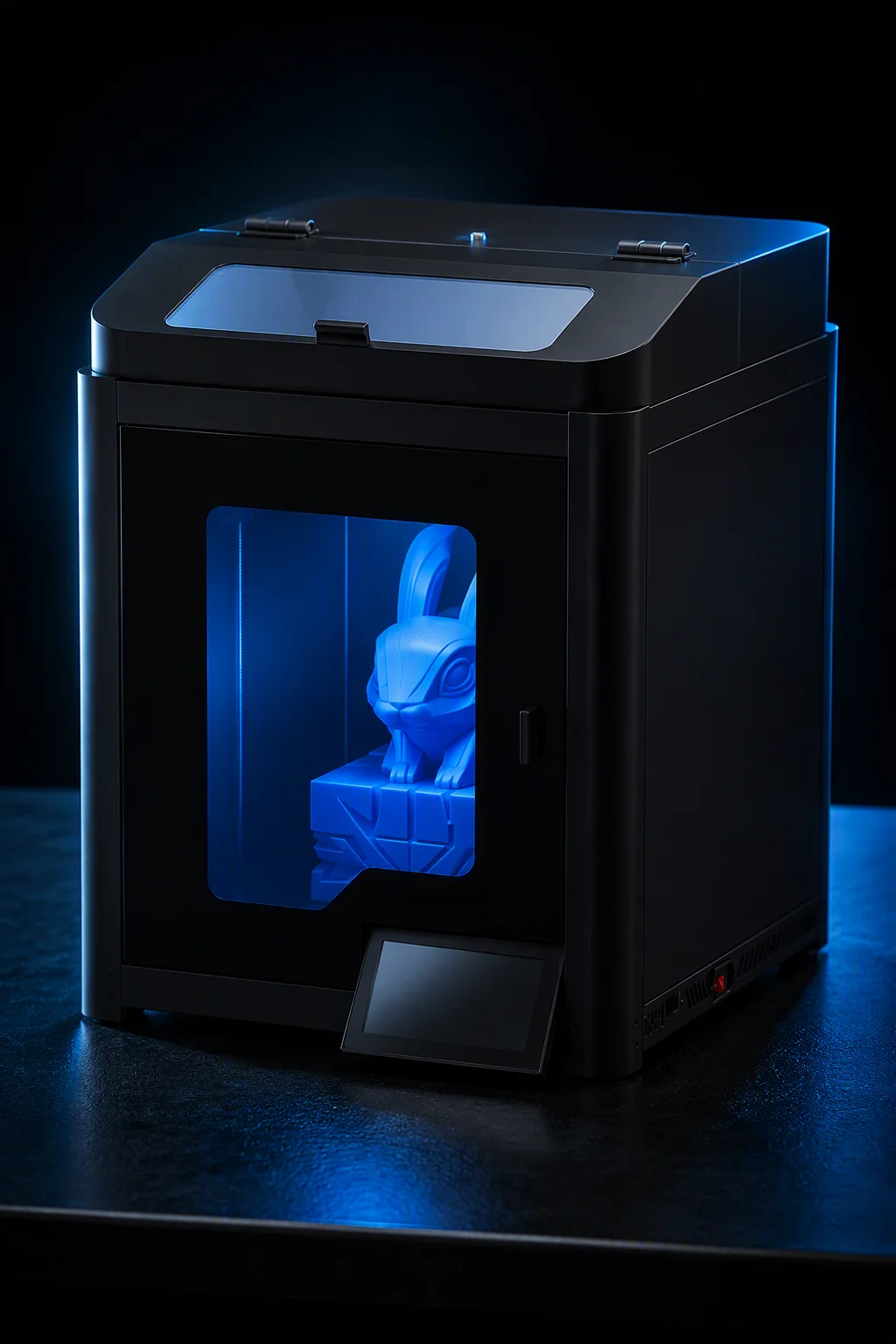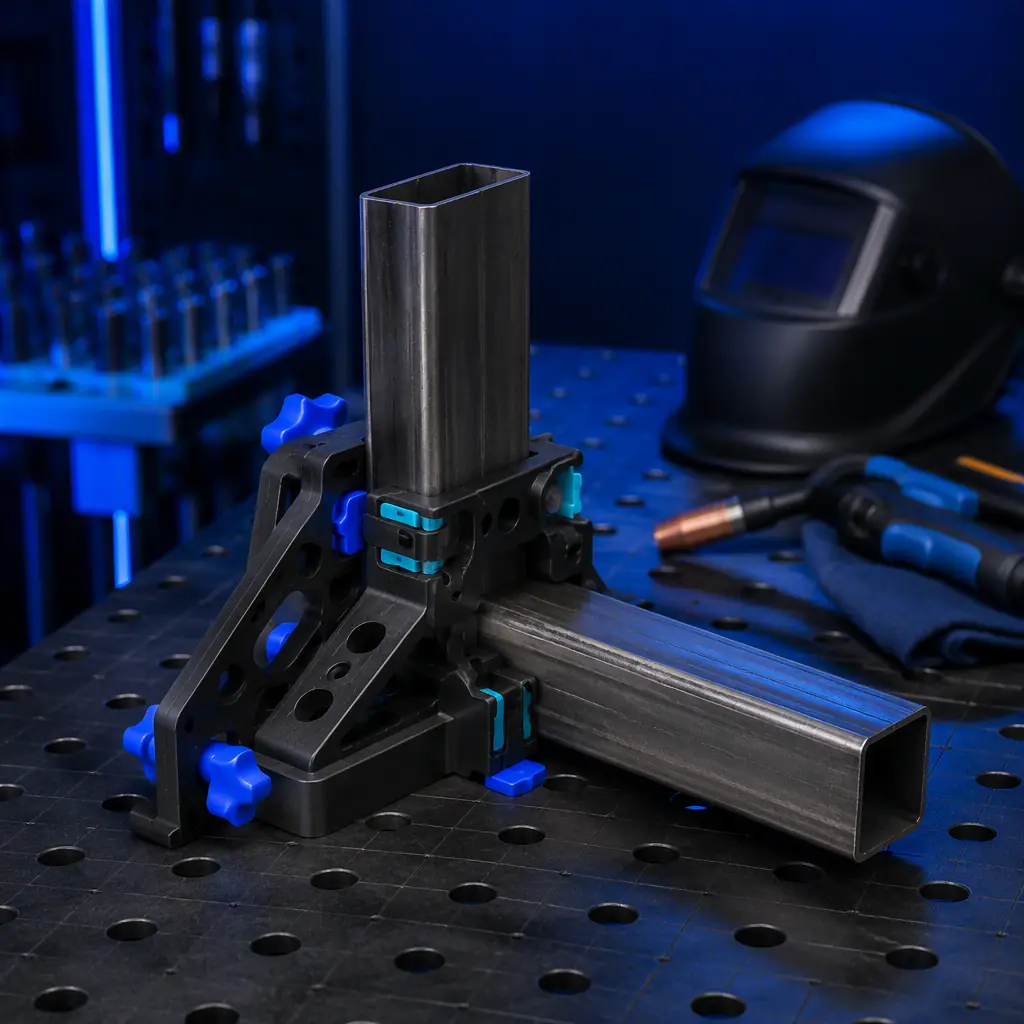
The welding and metal fabrication vertical spans custom fabrication shops, welding job shops, pipe and structural steel fabricators, sheet metal shops, metal product manufacturers, and maintenance and repair shops. One structural fact drives the opportunity: every fabrication job is a one-off geometry, fixtures are job-specific, and traditional fixtures cost $500-5,000 and take 1-4 weeks to machine. A printed fixture costs a few dollars in material, prints overnight, and is disposable when the run ends. Welders and fabricators are among the most fixture-dependent trades in manufacturing, and the least served by conventional suppliers. The same make-versus-buy economics are mapped in our CNC machining vs 3D printing guide.
Why Fabrication Shops Are Buying 3D Printers
Four structural facts make fabrication shops durable buyers. First, one-off job geometry: every weldment, assembly and product run has its own fixtures, templates and gauges, and printing beats machining at quantities below a few dozen; the tooling logic is in our manufacturing tooling guide. Second, fixture cost asymmetry: a $1,800 machined fixture used for 40 pieces is $45 per piece in tooling; a $22 printed fixture is $0.55, the cost model is developed in our TCO & ROI calculator guide. Third, heat and abrasion reality: weld spatter, grinding grit and hot metal near the weld zone drive the material conversation toward PA-CF, PETG and ASA; the material-selection framework is in our engineering filaments guide. Fourth, speed to first part: a quote that needs a fixture tomorrow cannot wait three weeks for machining; overnight prints win the job; the prototyping economics are in our buyer's guide & price tiers.
The Applications That Actually Buy
Six clusters generate the orders. The buyers are shop owners, weld supervisors, project managers and maintenance leads.
1. Weld jigs and locating fixtures. The highest-frequency application: locating pins, corner jigs, saddle fixtures, tube and pipe alignment blocks, and assembly nests for weldments and fabrications. Printed in PA-CF or PETG, the material rules are in our filament stocking guide.
2. Drill and cutting templates. Drill guides, hole-locating templates, cut-line templates, bend-line markers and punch-locating fixtures for sheet metal and plate work. Printed in PA-CF or PETG, the durable options are in our engineering filaments guide.
3. Pipe and tube fit-up guides. Fit-up blocks, alignment clamps, bevel gauges, saddle templates and flange-centering aids for pipe and structural welding. Printed in PA-CF or ASA, the QC framework is in our incoming QC & inspection guide.
4. Nozzle and torch accessories. MIG nozzle guards, TIG torch rests, gas lens holders, contact tip spares and cable management clips for welding equipment. Printed in PA-CF or PETG, the accessory logic is in our accessories revenue guide.
5. Gauges and inspection aids. Weld size gauges, fit-up gap gauges, angle and bevel gauges, and weld inspection templates for QC and welder qualification. Printed in PA-CF or PETG, the tooling logic is in our manufacturing tooling guide.
6. Obsolete shop tooling and safety components. Knobs, brackets, guard covers, switch housings, helmet parts and maintenance fixtures for shop equipment whose OEM parts are discontinued. Printed in PETG or ASA, the durable options are in our filament stocking guide.
Materials & Processing Reality
Fabrication shops select materials by heat, spatter, abrasion and impact exposure. Four families dominate:
Two realities dominate material conversations. First, spatter and impact are the dominant specs: anything near the weld zone gets PA-CF or PC; anything near grinding gets PA-CF; anything that sees shop air gets PETG, the engineering material options are in our engineering filaments guide. Second, shop heat and dust drive enclosure choice: fab shops are hot, dusty and drafty, and an enclosed printer with a heated chamber keeps PA-CF and PC parts warp-free; the enclosure and chamber logic is in our heated chamber guide.
From Fixture Quote to Printed Jig: The Workflow
The workflow that wins fabrication accounts has five stages. Identify the fixture bottleneck . The jig, template or gauge that delays the run or inflates the quote; the failure-analysis framework is in our print troubleshooting guide. Model or scan the geometry . Model the fixture from the part model or scan the mating surfaces; the scanning path is in our scanner & printer bundle guide. Select the material by exposure . Weld-adjacent parts get PA-CF or PC; template parts get PA-CF; guards get PETG, using the framework in our filament stocking guide. Print, test and verify fit . Print, test on the actual weldment or sheet through a full run, and iterate; the verification checklist is in our incoming QC guide. Build the fixture library . Every qualified fixture becomes a digital tool the shop can reprint for repeat jobs; the recurring-demand model is developed in our consumables subscription guide.
Budget Reality: Printed vs Machined vs Purchased
The comparison that closes fabrication accounts:
The distributor math compounds because every shop quotes dozens of jobs per month, and every printed fixture saves a machining purchase that would have eaten the margin. The printer investment model that justifies the shop's own machines, and your demo fleet, is in our TCO & ROI calculator guide.
The Distributor Playbook: Entering Welding & Metal Fabrication
Five moves win fabrication accounts:
1. Target shops quoting one-off runs. Custom fabrication shops, welding job shops and pipe/structural fabricators (5-200 employees) are the highest-intent buyers. Build a target list of 40-80 accounts in your territory.
2. Lead with a fixture rescue pilot. Offer to print one fixture or template for free. The shop sees a $1,800 machined fixture replaced by a $22 overnight print, the demo playbook is in our B2B sales demo guide.
3. Bundle the fab-shop material set. An enclosed printer plus PA-CF, PETG, ASA and PC lines is the anchor combination, and the margin is in materials, build plates and hardened nozzles. The bundling mechanics are in our consumables bundling guide.
4. Offer a fixture-on-demand service. Shops need fixtures faster than machining can deliver. A distributor that prints and ships fixtures for a per-job fee captures the account before hardware discussion starts; the service-revenue logic is in our repair service center guide.
5. Work the quoting cycle. Every new quote is a fixture opportunity; sell printers, materials and fixture services to shops that quote custom work weekly, using the framework in our trade show strategy guide.
Common Pitfalls in Fabrication Accounts
Five mistakes cost distributors fabrication business: (1) selling hobby-grade materials for weld-adjacent parts . A PLA jig near the weld zone warps or melts; qualify PA-CF for jigs and PC for high-heat spots; (2) ignoring spatter and grinding exposure . Parts near the weld zone need PA-CF or PC, not PLA; the material rules are in our filament stocking guide; (3) treating fabricators like general manufacturing . The buyer is a shop owner or weld supervisor, and the pitch is quote speed and fixture cost, not throughput; (4) skipping the full-run test . A fixture that fails mid-run burns the account; test through a real production run before handover; and (5) forgetting adjacent metal verticals . Sheet metal and HVAC shops buy the same templates and fixtures, covered in our HVAC & refrigeration guide, and construction machinery follows the same pattern, covered in our construction machinery guide.
Getting Started: The First 90 Days
A 90-day entry plan: Month 1 . Identify 40-80 target accounts, and stock the fab-shop material set: PA-CF, PETG, ASA, PC, plus build plates, hardened nozzles and a drying system. Month 2 . Run two fixture rescue pilots (one custom fab shop, one pipe/structural shop), produce a fixture-on-demand service template, and add a weld supervisor to your advisory loop. Month 3 . Convert pilots to paid accounts with fixture-service agreements, publish your first measured case study ("Fab shop: $1,800 machined weld fixture replaced by $22 overnight PA-CF print, 40-piece run finished on time"), and open one sheet metal or job shop account. The printer investment model that justifies the distributor's own machines is in our TCO & ROI calculator guide.
Reviewed by the Precise3D engineering & OEM team. Compliance files that accompany the catalog are auditable at the certification register.
Enter the Welding & Fabrication Market
Ready to Supply Fabrication Shops?
Get wholesale pricing on enclosed printers, PA-CF/PETG/ASA/PC material lines, build plates, hardened nozzles, dryers, and the fixture-on-demand playbook that wins fabrication accounts.