What ISO 13485 Actually Is
ISO 13485 is the international quality management standard written specifically for medical devices. It takes the general quality-management ideas that ISO 9001 covers and makes them mandatory, auditable, and grounded in patient safety. Where a general manufacturer might treat a documented process as a nice-to-have, a medical device maker must prove that every step — design, purchasing, production, storage, distribution — is controlled and traceable. The standard does not certify a product; it certifies a system. A company holds an ISO 13485 certificate for its quality management system, and that system is what makes the products that come out of it defensible in a regulated market.
For a distributor the implication is direct: if you are selling 3D printers or printed parts into medical, dental or surgical work, the certificate on the supplier’s wall matters far more than the spec sheet. A spec sheet tells you what a machine can do; an ISO 13485 QMS tells you that someone can prove it does it consistently, batch after batch. For the machinery and tolerances that feed medical work, our certification & compliance guide and our tolerances & dimensional accuracy guide are the references behind that spec sheet.
ISO 13485 vs ISO 9001: The Difference That Matters
ISO 9001 is the general quality-management framework used across nearly every industry. ISO 13485 is medical-specific, and the difference is substantial — not a softer version of 9001, but a stricter one. It replaces the concept of "customer satisfaction" as the centre with "safety and efficacy," and it makes a long list of practices mandatory rather than optional.
The practical reading: a supplier can hold ISO 9001 and still be unqualified for medical work, because 9001 does not force the risk-management and validation discipline that 13485 does. When a customer tells you they need medical-grade parts, ask for the 13485 certificate specifically. For the materials that medical devices are commonly printed from, our PEEK / PEI / PPSU industrial materials guide is the reference.
The Standards That Ride Alongside 13485
ISO 13485 never stands alone. It explicitly pulls in two partner standards that are just as important, and a distributor who can name them will immediately gain credibility with a medical buyer.
- ISO 14971 — risk management for medical devices. This is the framework that forces the manufacturer to identify hazards, estimate and evaluate risk, and reduce it until it is acceptable. It is the reason a supplier has a risk file, not just a process document.
- ISO 10993 — biological evaluation of medical devices. This is the series that governs biocompatibility, testing how a material and a finished part interact with human tissue. For a printed part that touches skin or a wound, 10993 is where the certification actually is.
These three standards together define whether a printed surgical guide, a dental model or an implant prototype is fit to be called medical. For the specific device categories a distributor tends to sell into, our surgical guides & prosthetics guide and our biomedical device prototyping guide cover the applications.
What a Distributor Must Verify Before Selling Into Medical
If you are about to sell a printer or a printed part into a medical workflow, there are five things to verify before you quote — and each one is a documented, auditable item rather than a reassurance.
- A genuine ISO 13485 certificate — issued by an accredited body, with a valid scope that covers the relevant manufacturing process, not a look-alike certificate on a letterhead.
- Material traceability — for every printed part, the supplier must be able to trace back which batch of material, which machine, and which operator produced it.
- Process validation — evidence that the printing and post-processing steps were validated, not assumed. This is where printed parts in particular invite scrutiny, because additive processes are parametrically sensitive.
- ISO 10993 biocompatibility data — for any part with patient contact, the relevant biological evaluation report.
- A documented risk file — the ISO 14971 risk management output that shows hazards were identified and mitigated.
A distributor who asks for these five up front is protecting the end customer, the clinician and itself. For how to audit a supplier on the quality side, our factory audit & QC checklist is the inspection framework, and our 10 questions for an OEM partner is the vendor interview.
Where 3D Printing Creates Unique Medical Compliance Risk
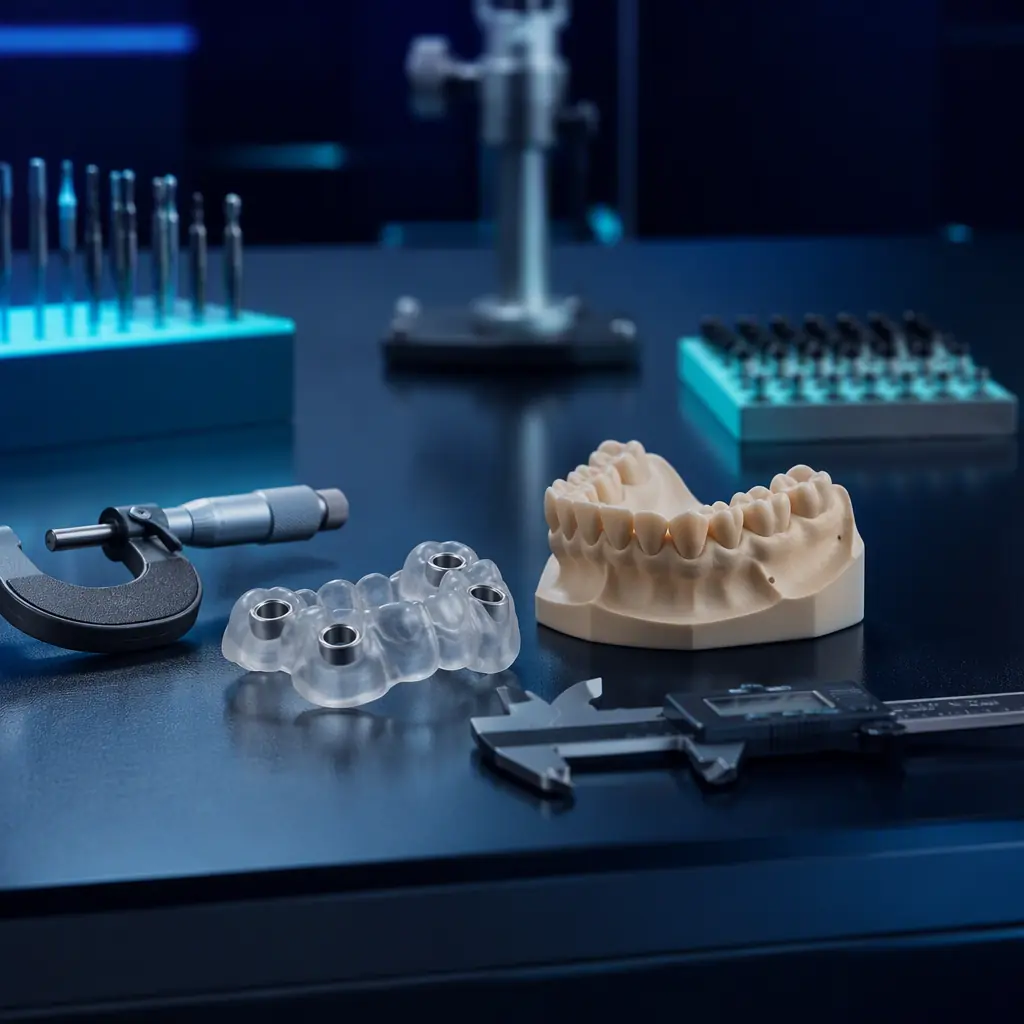
Additive manufacturing adds a compliance dimension that traditional machining does not have, because the process itself is the variable. Layer height, nozzle temperature, chamber conditions and even how a part sits on the build plate all change the final part’s mechanical and surface properties. That makes process validation and material traceability the two weak points most often flagged in a medical design review.
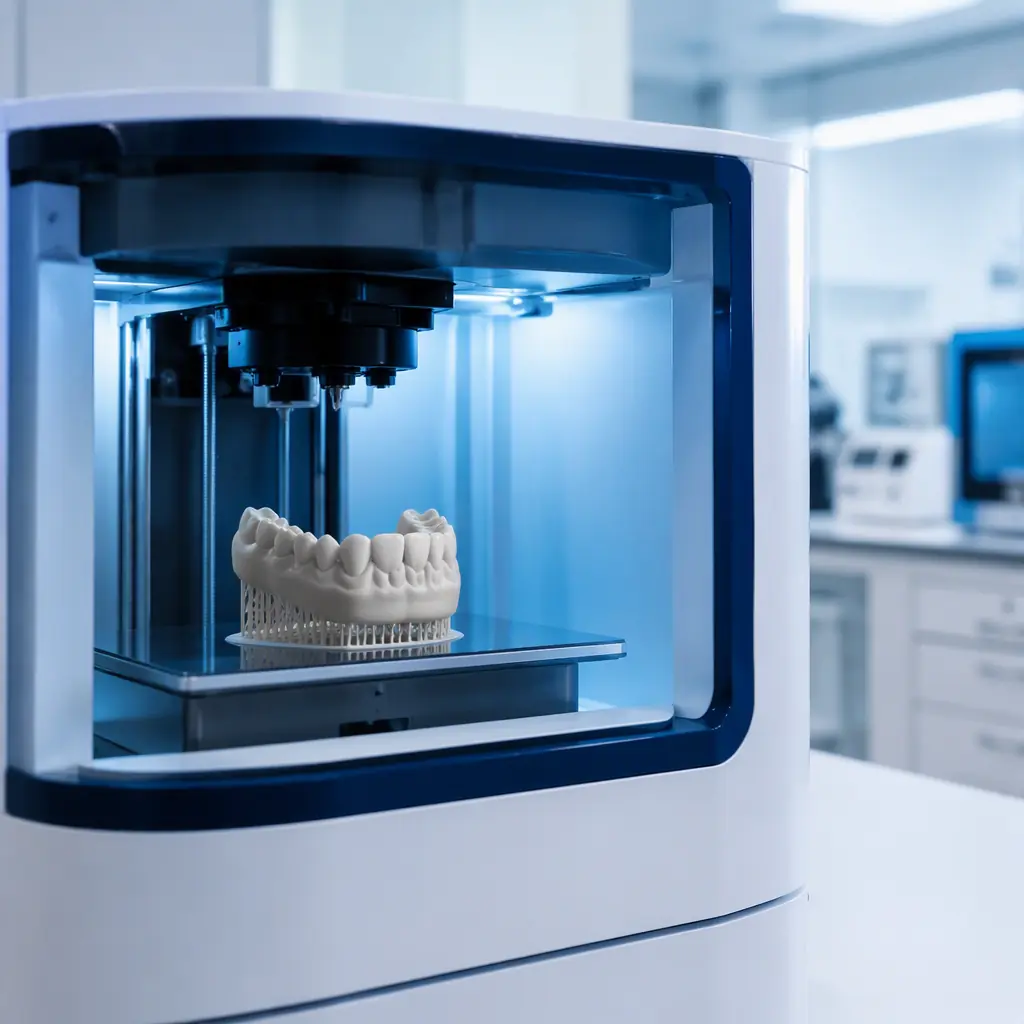
For a distributor, the honest conversation to have with a medical customer is that the printer is a tool, the material and the process are the medical device, and the paperwork that proves it is not optional. A machine that prints a beautiful dental model is not the same as a machine that can prove it printed every identical model the same way. For the design side of tight-tolerance medical parts, our FDM design rules (DFM) guide and our post-processing & finishing guide are the references to pair with a validation conversation.
End-Use vs Prototype: The Risk Tier Question
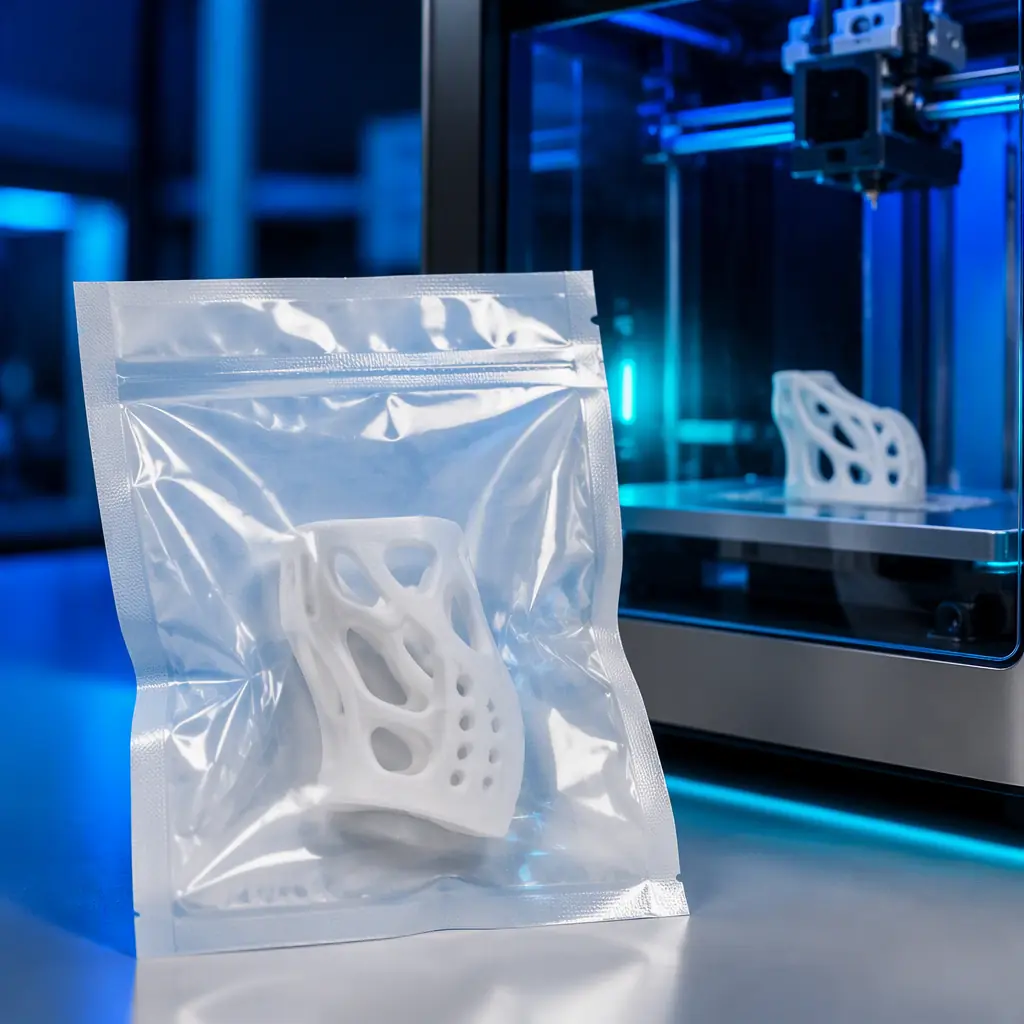
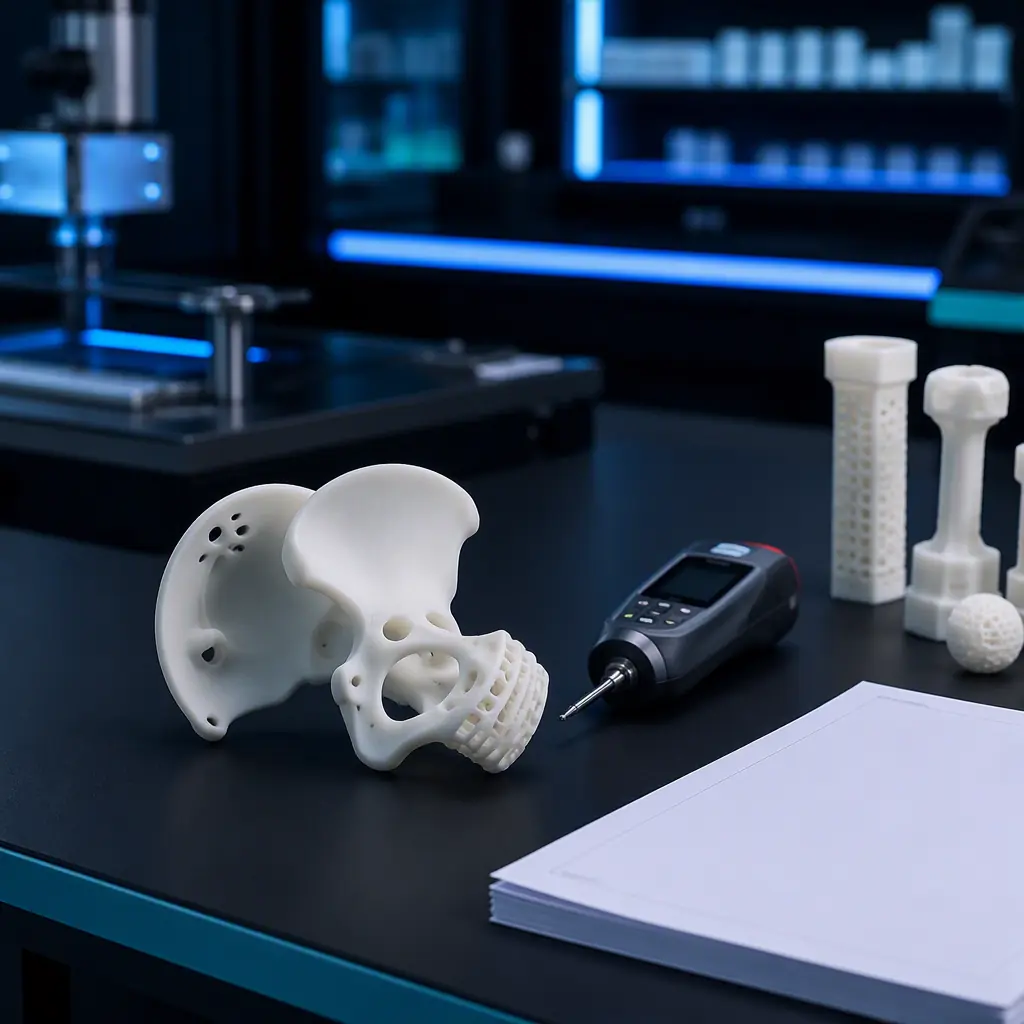
Not every printed part is a regulated medical device, and a distributor who overstates compliance loses credibility as fast as one who understates it. A rough prototype used purely for a doctor’s design discussion sits in a low-risk tier. A surgical guide that goes into an operating theatre, or a printed component that supports a patient in a brace, sits in a far higher one. The tier is what drives how much documentation is genuinely required.
The disciplined position is to ask the customer what the part is for, then recommend the right level of process control and documentation — rather than pitching every print as "medical-grade" to close a sale. That is the consultative framing that wins repeat medical accounts. For the general quality and functional guidance, our end-use functional parts guide and our dimensional accuracy guide round out the technical side.
What you're looking for: If it is patient-contact or supports patient care, the customer needs a documented ISO 13485 supply chain, ISO 14971 risk evidence and ISO 10993 biocompatibility data. If it is a design prototype only, you can ship on material and tolerance data alone — but say which tier you are selling so nobody assumes a higher claim.
What Precise3D Does and Does Not Claim
Honesty matters more than a marketing badge. We produce precision 3D printers for global markets, and our quality benches include thermal observation, mechanical checks and a test-print reference set. Every printer passes incoming checks, in-process checkpoints and a burn-in and print test on our dedicated line before it leaves the 3,500 sqm floor in Shenzhen. On credentials, we hold CE Low Voltage Directive conformity (LVD 2014/35/EU, EN 62368-1:2014+A11:2017) and RoHS compliance (EU 2015/863), both verified by third-party laboratory reports with report numbers you can look up online.
We do not claim ISO 13485 as a blanket product mark, and our quality page says so plainly. What we do is scope testing per project: if your order targets a medical, dental or other regulated market, we work through an accredited laboratory for the specific validation and material data your market requires, and state in the specification exactly what we hold and what we will test. For the regulatory side of food and consumer contact, our food-safe regulations guide is the analog. If you are evaluating us as a partner, the honest first step is a sample order: one to five units at wholesale pricing, tested in your own market before you commit.
Reviewed by the Precise3D engineering & OEM team. ISO 13485, ISO 14971 and ISO 10993 are international standards; the specific requirements described here reflect their published intent and should be confirmed against the current edition and your destination market's medical device regulation. Auditable compliance backing is held in the certification register.
Build the Medical Line
Ready to Supply Medical & Dental Customers With Confidence?
Join our network of global distributors. Precision printers that hold tolerance, scoped accredited testing for regulated markets, and a compliance file you can actually point to — everything you need to serve the medical channel responsibly.