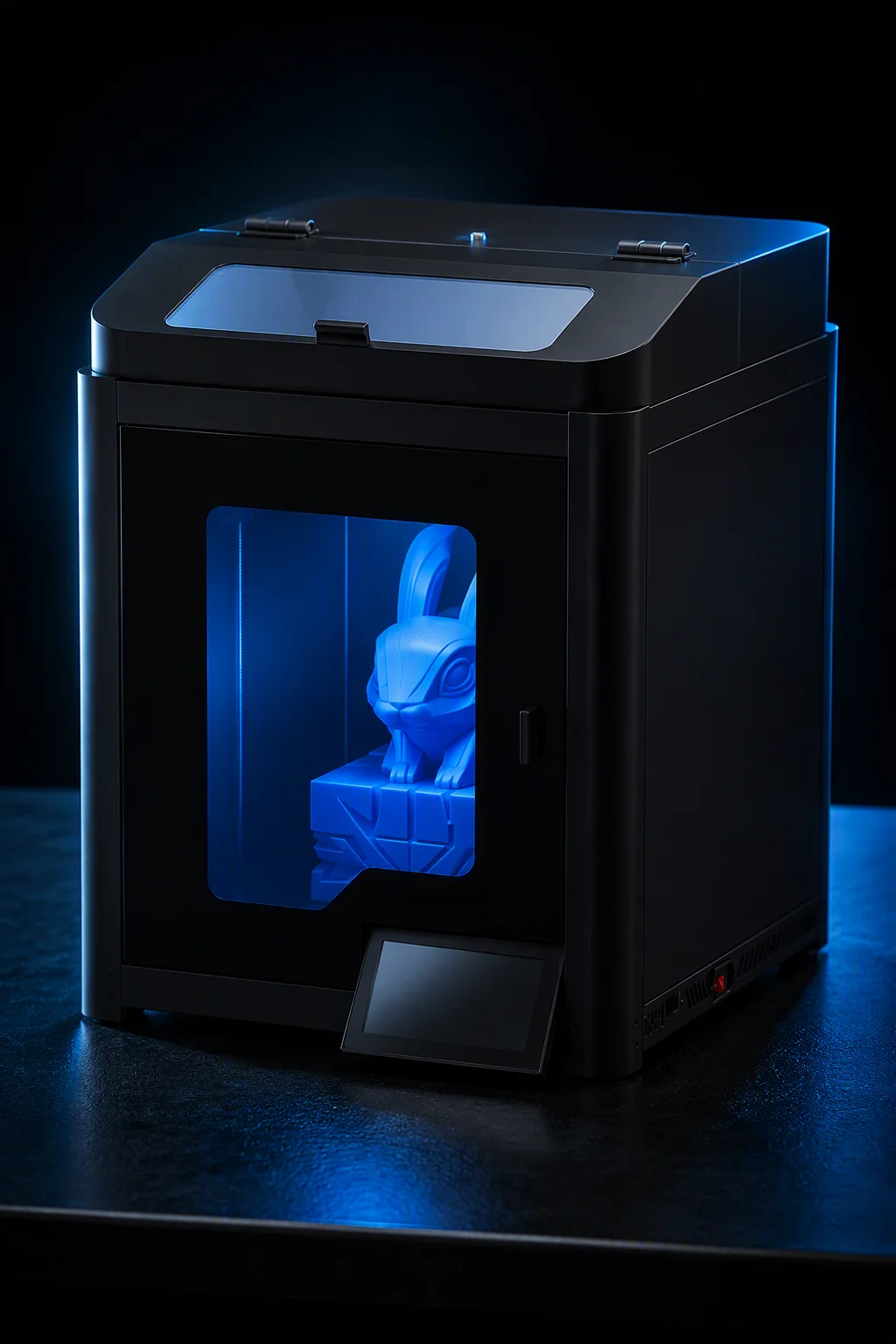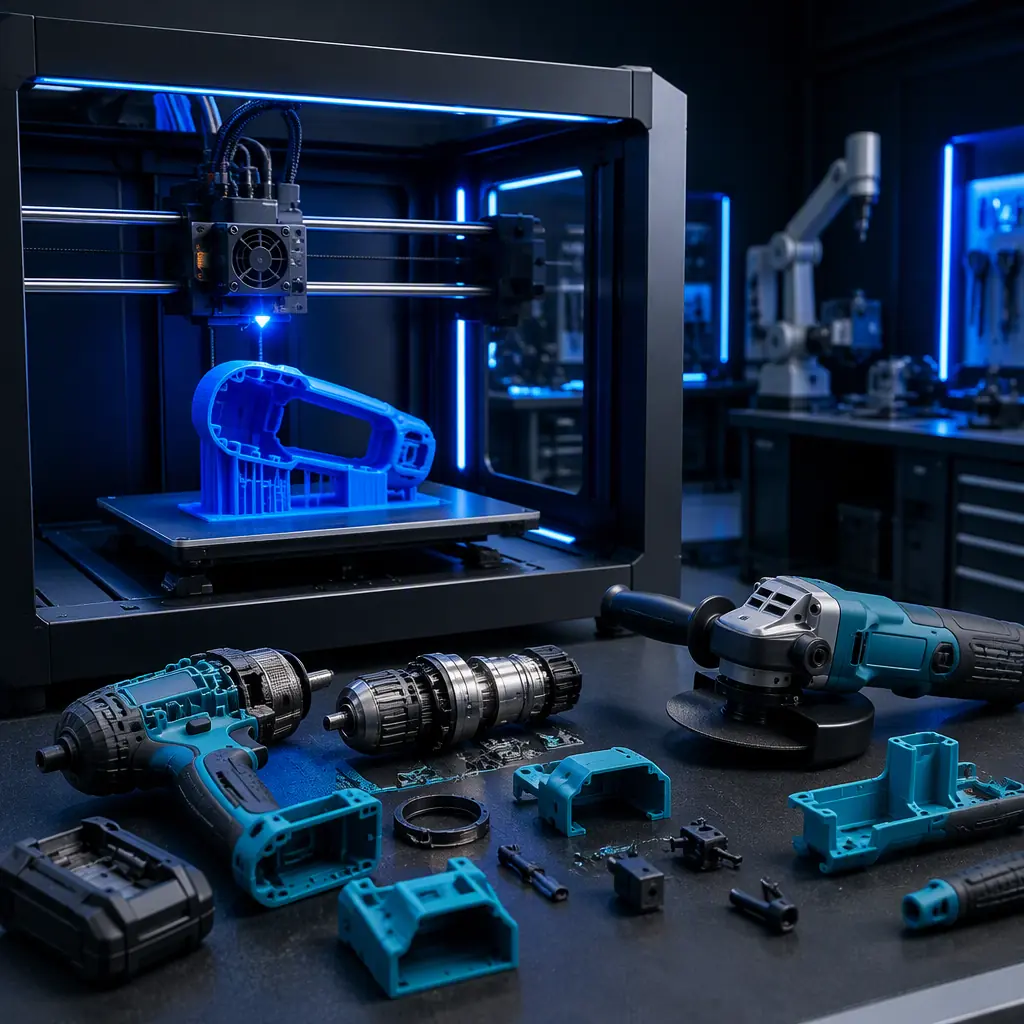
A power tool service center in Shenzhen serving three major drill and saw brands was scrapping 8-12 tools per week because OEM spare housings were back-ordered 4-8 weeks or discontinued entirely. After adopting a large-format FDM workflow, the center now prints replacement housings, battery-door latches, and gear-housing covers in 1-2 days for $6-45 in material, and its tool turnaround dropped from 3-5 weeks to under a week, which raised service revenue by 22% in one quarter. Power tools and outdoor power equipment are a service-parts market with manufacturing-tooling demand layered on top: every brand in the category runs thousands of SKUs through a handful of factories, and every factory needs jigs, fixtures, and prototypes that change weekly.
Why Power Tools & Outdoor Equipment Are Structural 3D Printing Buyers
Three structural facts make this vertical exceptional. First, massive SKU counts with long service lives: a single tool brand can carry 2,000-5,000 active SKUs, and professional users expect 7-10 years of parts availability for every model. Second, plastic-heavy construction: a typical drill or mower is 40-60% molded plastic by part count, housings, handles, guards, and battery interfaces, which means geometry changes are constant and tooling is expensive. Third, two-sided demand: the same brand needs printed parts on the factory floor (jigs, fixtures, end-of-arm tooling, prototype housings) and in the service channel (replacement parts, discontinued parts, low-volume accessories). The tooling discipline for the factory side is covered in our manufacturing tooling guide.
The Applications That Actually Buy
Five clusters generate repeat orders. The buyers are tool brands, contract manufacturers, service centers, outdoor-power-equipment dealers, and accessory makers.
1. Replacement housings and body parts. The flagship application. Drill housings, angle-grinder bodies, saw guards, and mower decks printed for service and warranty repairs when OEM parts are unavailable. A housing that would take 6 weeks from the OEM can be printed in 2 days, and the impact resistance of PC-ABS or PA6-CF is sufficient for most non-structural tool bodies. The material strength landscape for these parts is covered in our engineering filaments guide.
2. Gear housings and drive components. Gear-housing covers, transmission cases, and bearing retainers for drills, impact wrenches, and trimmers. These parts see real torque and heat, so the printed version must use glass- or carbon-filled nylon with proper wall thickness, and the tolerance control is covered in our tolerances & dimensional accuracy guide.
3. Service parts and consumable interfaces. Battery-door latches, chuck keys, dust-port adapters, blade guards, and attachment collars. These are small, high-turnover parts that wear or break first, perfect for print-on-demand. Threaded interfaces for metal inserts are covered in our heat-set inserts guide.
4. Manufacturing jigs and fixtures. Assembly fixtures, torque-test stands, press-fit tools, and inspection gauges used in tool factories and repair centers. A fixture printed overnight for $15 replaces a machined aluminum part that cost $400-1,200 and took 2-3 weeks. The broader factory-automation opportunity is detailed in our robotics & automation guide.
5. Prototype housings for new models. Tool brands iterate housing designs aggressively. A new drill model can go through 20-40 housing revisions before tooling. Printed prototypes let design teams validate ergonomics, button placement, and battery fit in days instead of the 4-6 weeks a CNC or mold trial takes. The prototyping workflow for consumer products is covered in our consumer electronics guide.
Materials and Finish for Tool Production
Tool parts face impact, abrasion, heat, and chemical exposure (oil, fuel, solvents). The map distributors should stock:
Two traps: (1) impact zones need ductile materials, a housing printed in brittle PLA will shatter on the first drop, while PC-ABS or PA6-CF survives; (2) gear housings need dimensional stability under heat, a glass-filled nylon gear cover holds its bore alignment where unfilled nylon creeps. The post-processing that makes printed tool parts feel production-grade is covered in our post-processing & finishing guide.
Economics: Molded/CNC vs Printed
The comparison that closes tool accounts:
The distributor math is attractive because the purchase is systemic: once a service center or factory validates printed parts, every housing, latch, and fixture flows through the same printer, filament, and finishing supply. A mid-size service center can consume $8,000-20,000/year in filament, finishing consumables, and printed parts, before counting the printer itself. For building this ROI case, use our TCO/ROI calculator guide.
The Distributor Playbook: Entering Power Tools & Outdoor Equipment
The winning playbook has five moves:
1. Lead with service-parts availability. The pitch is "discontinued housing in 2 days, no mold, no minimum order", the printer is the tool behind the service. Start with a list of 20-30 common discontinued parts for popular drill, saw, and mower models and print samples to show at service centers.
2. Offer print-to-parts service. Most service centers do not want to run a printer in the back office. A distributor offering print-to-parts service (customer brings a broken part or part number, distributor reverse-engineers, prints, and finishes in 3-5 days) turns a printer sale into a recurring service line. The service economics are developed in our after-sales support strategy.
3. Speak the warranty and compliance language. Service centers quote against warranty policy and liability, not just geometry. Provide material data sheets, impact-test results, and electrical-safety notes (for mains-adjacent parts) with every printed replacement. The certification landscape that applies across export markets is covered in our certification & compliance guide.
4. Stock the tool material set. PC-ABS, PA6, PA6-GF, PA6-CF, PETG, and TPU are the true margin engine, plus finishing consumables (primers, matte clear coats, and vapor-smoothing fluids for nylon). A service center producing 40-100 printed parts per month consumes 10-25 kg of filament monthly; a filament-plus-finishing subscription locks the account.
5. Build the fitment flywheel. Every successfully fitted part becomes a reference: photograph it installed on the tool, log the brand and model, and build a searchable library of print-tested replacements. One validated service center recruits the next, tool and outdoor-equipment professionals talk constantly at IFA, EIBTM, and regional trade events.
Common Pitfalls in Power Tool Accounts
Five mistakes account for most failed initiatives: (1) selling brittle materials into impact applications, a housing printed in PLA shatters on the first drop, so impact zones need PC-ABS or PA6-CF; (2) ignoring heat and torque, a gear cover that passes room-temperature testing can deform under motor heat, so validate at operating temperature and load; (3) underselling the dimensional question, a battery-door latch that needs 0.2 mm fit must be printed with proper shrinkage compensation, not guessed; (4) underselling the consumable model, the printer is the foot in the door, but filament contracts and finishing-supply retainers are where margin compounds; and (5) neglecting the manufacturing side, service parts are not the whole market, so a distributor must also serve tool factories and contract manufacturers with jigs, fixtures, and prototype housings, not just repair parts. The discipline of documenting measurable outcomes mirrors what we teach for end-use parts in our end-use functional parts guide.
Getting Started: The First 90 Days
A 90-day entry plan: Month 1 . Stock PC-ABS, PA6, PA6-GF, PA6-CF, PETG, and TPU with full data sheets, plus primers and matte clear coats, and identify 10-15 target accounts (tool brands, contract manufacturers, service centers, outdoor-power-equipment dealers, accessory makers) within a 3-hour drive. Month 2 . Reverse-engineer and print 20-30 common discontinued parts for popular drill, saw, and mower models; run two pilot fitment jobs at cost-plus-10% to build documentation evidence and a fitment-sample library. Month 3 . Convert pilots to full accounts with filament-and-finishing subscriptions and print-to-parts retainers, publish your first co-branded case study with measured numbers ("discontinued drill housing: $12,000 mold → $28 printed, 2-day turnaround, impact-tested"), and exhibit at a regional tool or outdoor-power-equipment trade event. If you already serve consumer-electronics or appliance accounts, our consumer electronics guide and home appliances guide show how the same housing-and-parts logic transfers directly to power tools.
Reviewed by the Precise3D engineering & OEM team. Compliance files that accompany the catalog are auditable at the certification register.
Enter the Power Tool Market
Ready to Supply Power Tool & Outdoor Equipment Parts?
Get wholesale pricing on large-format FDM printers, PC-ABS and nylon engineering filament lines, and the print-to-parts service playbook that wins tool service and manufacturing accounts.