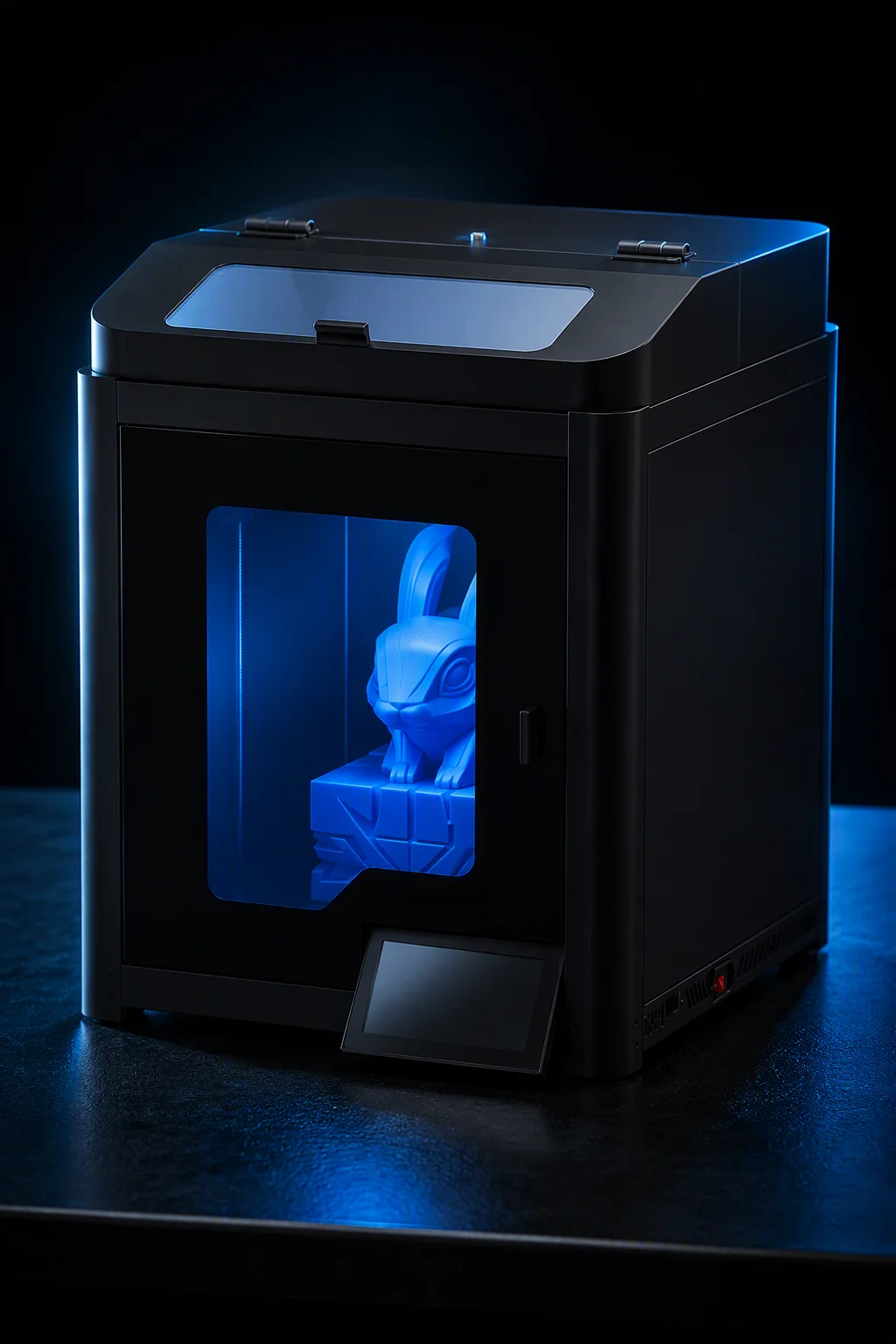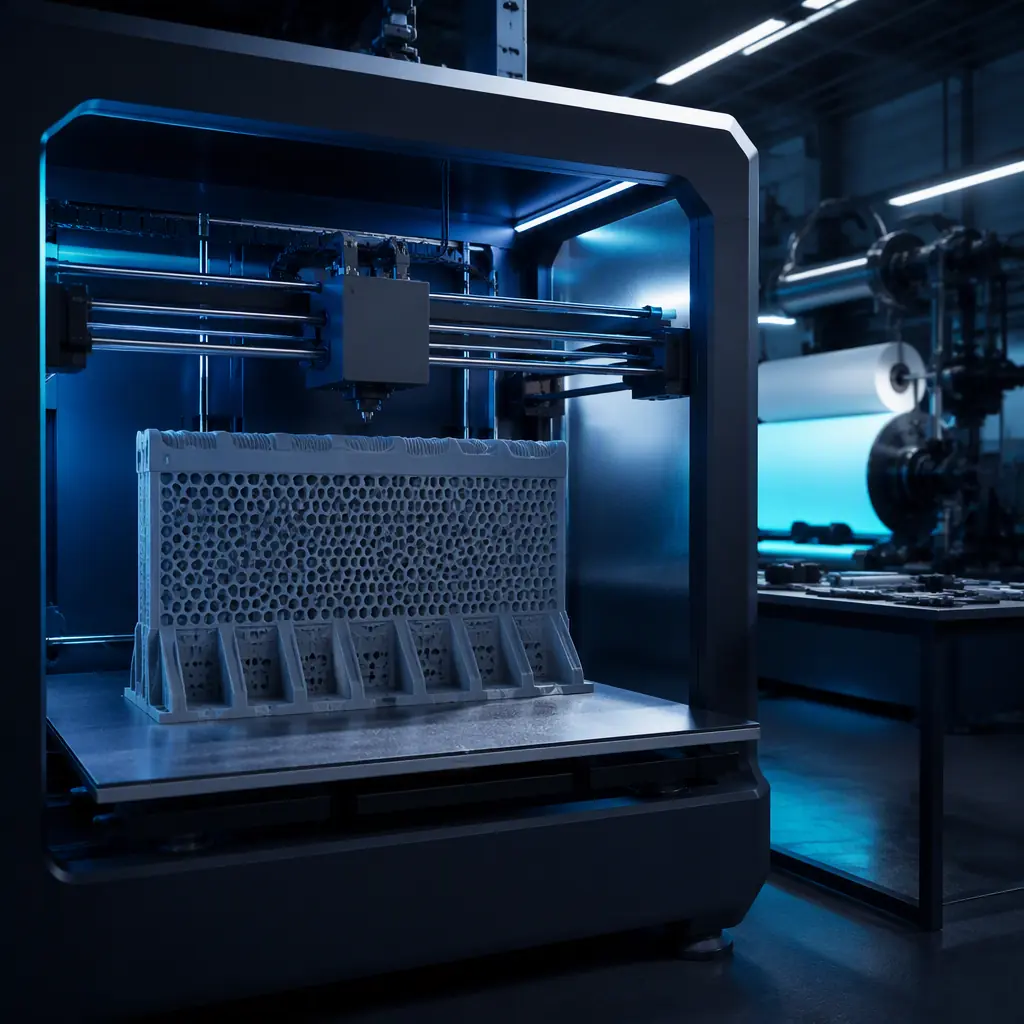
The pulp & paper vertical spans paper mills (tissue, packaging, printing and specialty grades), pulp plants (kraft, mechanical and recycled fiber), and converting facilities that slit, coat and pack finished rolls. Three structural facts drive the opportunity. First, abrasion and corrosion: stock slurry, white water and chlorine chemistry wear out dewatering elements, blade holders and pump parts on a schedule measured in months, not years. Second, machine age: the average paper machine in North America is over 40 years old, and OEMs for its custom components have long since stopped production, the exact economics we map in our spare parts & aftermarket revenue guide. Third, downtime cost: an hour of lost production on a mid-size paper machine is worth $5,000-20,000, so a 24-hour printed part beats a 6-week OEM quote every time.
Why Pulp & Paper Is Buying 3D Printers
Four structural facts make mills durable buyers. First, wear-part economics: a suction box cover or dewatering foil is a high-wear consumable that mills replace several times a year; printed versions cost 5-10% of the machined original. Second, legacy machines: most mills run machines built in the 1980s-1990s with orphaned components, and the scan-print-validate workflow for those parts is documented in our repair service center guide. Third, corrosive environment: mill chemistry attacks metals and even some plastics, so materials selection is a real engineering conversation, the framework is in our engineering filaments guide. Fourth, continuous operation: a paper machine runs 24/7/365 with planned shutdowns only every 6-12 weeks, so every part must be ready before the shutdown window, printed spares stocked in the maintenance crib fit that schedule perfectly.
The Applications That Actually Buy
Six clusters generate the orders. The buyers are paper mills, pulp plants, converting facilities, and the mill-maintenance contractors who serve them.
1. Dewatering elements. Suction box covers, foils, and dewatering blades on the forming section, the highest-frequency wear parts in the mill. They wear from fiber abrasion and are traditionally machined from ceramic or polyethylene at $1,500-6,000 each; printed PA-CF and UHMWPE-style parts deliver 60-80% of the life at 5-10% of the cost.
2. Doctor blade holders and wear parts. The assemblies that hold the blades cleaning press and dryer rolls. Blade holders, holder segments, and wear strips are printed overnight. The material and surface-finish logic is covered in our post-processing & finishing guide.
3. Felt roll end caps and guide blocks. Felt and fabric rolls need end caps, guide blocks, and spreader components that see constant abrasion. These are classic unit-of-one parts that no machine shop wants to quote; printed nylon versions ship in 24 hours.
4. Inspection gauges and setup tooling. Caliper gauges, nip-width check tools, and doctor-blade angle templates for the quality lab and the maintenance crew. Every shutdown needs a new gauge or two, the QC workflow mirrors our incoming QC & receiving inspection guide.
5. Legacy spare parts for pumps, reels and winders. Impeller wear rings, reel spool adapters, winder core chucks, and sensor brackets on the machines that move the paper. The aftermarket model for these orphaned parts is fully developed in our spare parts & aftermarket revenue guide.
6. Safety guards and ergonomic tooling. Roll-handling guards, nip-point shields, and ergonomic pullers for the finishing floor. Mills are safety-audited constantly, and printed guards with documented material ratings are an easy sell.
Materials for Pulp & Paper
Mill buyers work in three material worlds, abrasive, chemical, and wet:
Two realities dominate material conversations. First, abrasion life: mills will test a printed part against the ceramic original, and you must be honest about the trade-off, the material-selection framework is in our engineering filaments guide. Second, chemical exposure: white-water chemistry and bleaching agents attack some plastics; PP and PETG handle most mill chemistry, but verification testing is non-negotiable, the qualification workflow is in our factory audit & QC checklist guide.
From Broken Part to Installed Replacement: The Mill Workflow
The workflow that wins mill accounts has five stages. Capture . Maintenance crews arrive with a worn sample or a hand sketch; pair printer sales with a 3D scanner bundle using the playbook in our scanner + printer bundle guide. Reverse-engineer and model . Model the part with correct mounting geometry and clearances; the dimensional framework is in our tolerances & dimensional accuracy guide. Print the replacement, PA-CF for wear parts, PP for chemical service, PC for gauges; iterate fit overnight. Validate in the machine . Test the part in the actual section during a shutdown window, checking wear, fit and chemistry; the qualification workflow is in our incoming QC guide. Stock and reorder . Once validated, the part becomes a crib item and the recurring-revenue model is developed in our consumables & accessories bundling guide.
Budget Reality: Printed vs Machined
The comparison that closes mill accounts:
The distributor math compounds because a single mill can consume 200-500 printed parts per year across forming, press, dryer and finishing sections. The printer investment model that justifies the mill's own machines, and your demo fleet, is in our TCO & ROI calculator guide.
The Distributor Playbook: Entering Pulp & Paper
Five moves win mill accounts:
1. Target maintenance superintendents and mill engineers. The maintenance department owns the crib and the uptime numbers, that is who buys. Build a target list of 10-20 mills within your region; the vertical is dense in the US Southeast, the Nordics, Germany, and Brazil.
2. Lead with the shutdown-window pitch. The pitch is "have the part in the crib before the next shutdown, at 10% of the quote." Bring a printed suction-box-cover segment and a doctor-blade holder to every meeting. Maintenance approves what they can drop into a section.
3. Bundle the mill material set. An enclosed FDM printer is the anchor, but the margin is in PA-CF, PP, and PC filaments, build plates, and a crib starter kit. The bundling mechanics are in our consumables bundling guide.
4. Offer a digitization service for legacy machines. Mills have decades of orphaned parts with no CAD. A distributor that scans, models, and validates parts for a fixed fee owns the maintenance account before hardware discussion starts, the service-revenue logic is in our repair service center guide.
5. Work the wear cycle. Mill parts fail on a predictable schedule tied to production tonnage; sell annual crib-stocking contracts alongside printers, using the framework in our annual service contracts guide.
Common Pitfalls in Mill Accounts
Five mistakes cost distributors mill business: (1) selling open-frame printers for a mill floor . Paper mills are dusty, humid and high-traffic; enclosed machines are the honest recommendation (the difference is mapped in our enclosed vs open-frame guide); (2) overselling wear life . A printed dewatering foil will not outlast ceramic; sell 60-80% life at 10% cost and you build trust; (3) ignoring chemistry . A part that dissolves in white water ends the account; verify chemical resistance with mill engineers; (4) printing gauges without dimensional report . Maintenance trusts parts with a printed measurement sheet; and (5) skipping the shutdown calendar . Parts delivered after the shutdown window are worthless; align your SLA to their schedule with the framework in our SLA guide.
Getting Started: The First 90 Days
A 90-day entry plan: Month 1 . Identify 10-20 target mills and stock the mill material set: PA-CF, nylon PA12, PP, PC, PETG, TPU, plus build plates and a crib starter kit. Month 2 . Produce a finished demo piece (a printed suction-box-cover segment with its abrasion test photos), run two pilot jobs at cost-plus-10% (a doctor-blade holder batch and a legacy pump wear ring), and offer digitization services to one maintenance department. Month 3 . Convert pilots to full accounts with crib-stocking contracts and a shutdown-aligned SLA, publish your first measured case study ("tissue mill: $2,800 cover → $180, 6 weeks → 3 days"), and open one converting facility account. The printer investment model that justifies the distributor's own machines is in our TCO & ROI calculator guide.
Reviewed by the Precise3D engineering & OEM team. Compliance files that accompany the catalog are auditable at the certification register.
Enter the Pulp & Paper Market
Ready to Supply Paper Mills & Pulp Plants?
Get wholesale pricing on enclosed FDM printers, PA-CF and PP filament lines, build plates, crib starter kits, and the mill playbook that wins maintenance departments.