
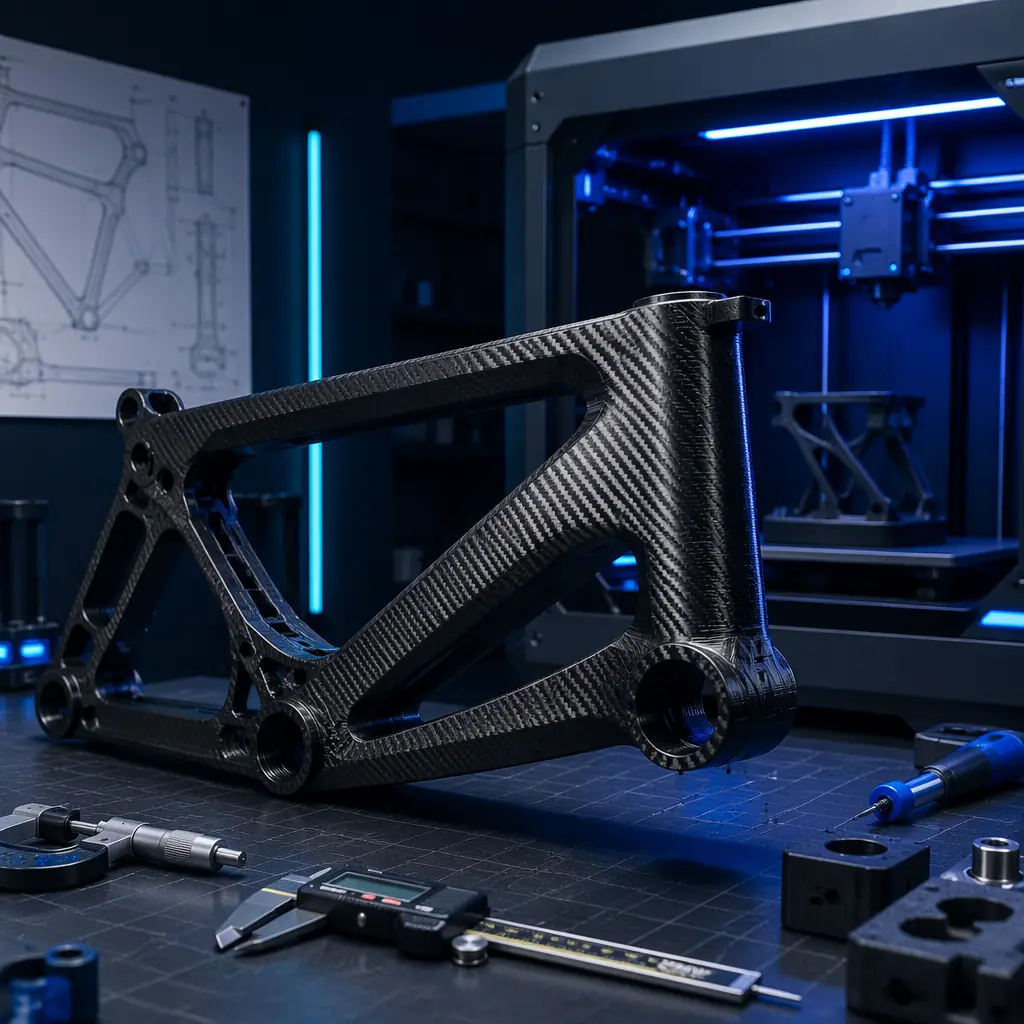
The global sports equipment market hit $170 billion in 2025 and is projected to grow at 5.8% CAGR through 2032. Within that total, the share of equipment manufactured using additive manufacturing — 3D printing, in production, not prototyping — has reached $5.2 billion and is tracking toward $15 billion by 2030. That's not a projection from an over-eager analyst report; it's a straight-line extrapolation from current adoption rates at Nike, Adidas, Specialized, Bauer, TaylorMade, Wilson, and dozens of smaller manufacturers that have moved additive from their R&D labs to their production floors in the last 24 months. This guide maps the entire sports equipment additive manufacturing landscape: which applications are production-ready today, which materials make it possible, who the buyers are, and the go-to-market playbook that positions you as the distributor who actually understands this vertical.
The Market: Why Sports Equipment Is a Tipping-Point Vertical for 3D Printing
Three structural dynamics make sports equipment uniquely suited to additive manufacturing — more so than most of the verticals distributors already target.
Dynamic 1 — Athlete-specific fit commands a 3–5× price premium: A mass-production hockey skate costs $200–400. A custom-fit Bauer skate produced with 3D-scanned foot geometry and additive-manufactured components sells for $1,100+. The consumer pays the premium because fit directly affects performance and injury prevention — it's not a cosmetic upgrade, it's a functional necessity. Every sport where equipment interfaces with the human body — helmets, footwear, protective gear, grips — is a candidate for additive manufacturing's geometric freedom. The same dynamic we explored in our end-use parts guide applies here, but with a consumer-willingness-to-pay multiplier that industrial applications don't have.
Dynamic 2 — Performance advantage is measurable and marketable: When Specialized introduced the S-Works Aethos with 3D-printed titanium lugs, the frame dropped 120 grams compared to the previous generation. That's not marketing — it's grams on a scale, quantified in wind-tunnel and power-meter data that cycling publications reproduce in every review. When TaylorMade's Stealth 2 driver used a 3D-printed titanium face insert, the coefficient of restitution (trampoline effect) improved by 0.002 — a number that sounds small but translates to 2–3 yards of carry distance, which sells $600 drivers. In aerospace, weight reduction is about fuel efficiency and cost; in sports, it's about winning. The performance case writes itself, and it gives manufacturing engineers the internal budget justification they need to invest in additive equipment.
Dynamic 3 — Short production runs are the norm, not the exception: A professional cycling team needs 12 frames. A Formula 1 team needs 8 steering wheels. A ski racing team needs 40 custom boot shells. These are batch sizes where injection-mold tooling ($15,000–$50,000 per mold) makes no economic sense at all. Additive manufacturing produces these batch sizes at cost parity or below, with zero tooling amortization. Even at the consumer scale — a limited-edition 1,000-pair golf shoe launch — 3D printing eliminates the $80,000+ in mold costs and 12-week tooling lead time that would otherwise be required. This is the same production-volume logic covered in our small manufacturer sales guide, applied to an industry where limited runs are the standard operating model, not a special case.
Application Map: Where 3D Printing Is Winning in Sports
Not every sports equipment category is a good fit for additive manufacturing. The applications that work share three characteristics: geometric complexity that injection molding can't achieve, batch sizes under 10,000 units, and a consumer willingness to pay for performance. Here's the application-by-application breakdown with real adoption data:
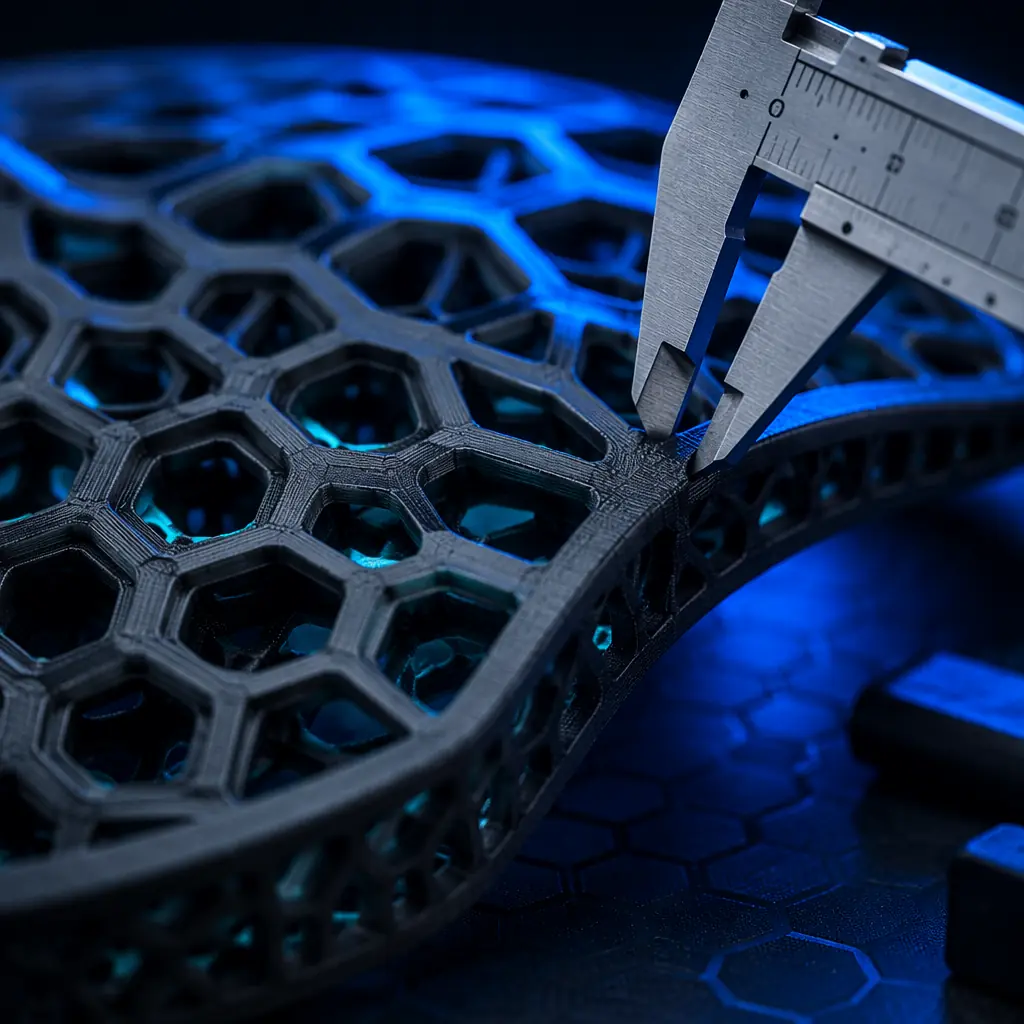
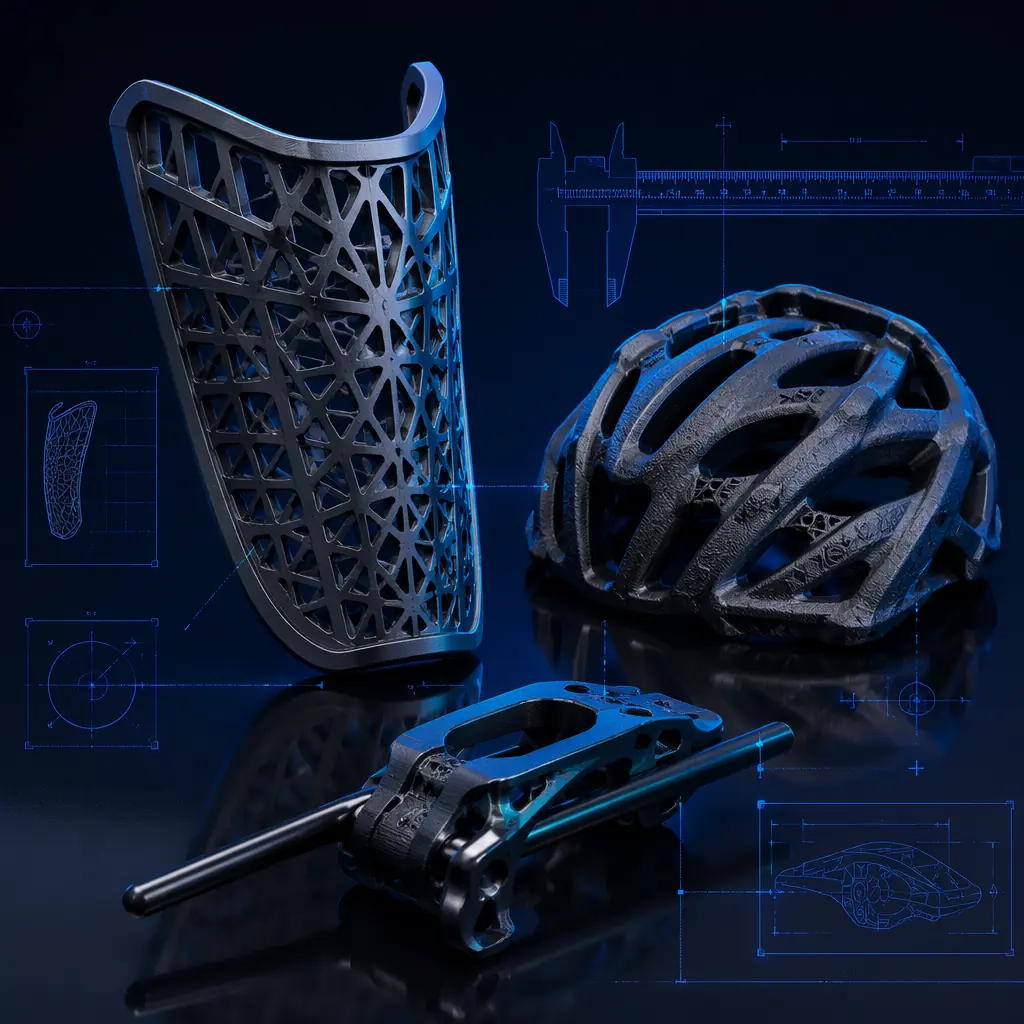
Protective gear — the highest-volume application: Bauer Hockey's REAKT helmet line uses 3D-printed lattice inserts that are custom-contoured to individual player head scans. The lattice structures — impossible to injection-mold — provide variable impact absorption: denser in high-impact zones (temples, crown), more open in low-risk areas. The result is a helmet that passes NHL impact standards while weighing 15% less than a foam-only equivalent. This isn't a lab project: Bauer has shipped tens of thousands of units, and the technology is spreading to football (Riddell's Axiom line incorporates additive-manufactured components), lacrosse, and skiing helmets. For distributors, the material play here is carbon-fiber-filled nylon powder for SLS and Multi Jet Fusion systems — materials that deliver the stiffness-to-weight ratio required for impact protection. Our carbon fiber filaments guide covers the material science in depth.
Custom footwear — the highest-visibility application: Nike's Vaporfly and Alphafly series — the shoes that broke the 2-hour marathon barrier — use 3D-printed components in their production lines. While the full midsole isn't printed (yet), the cleat plates, heel counters, and custom orthotic inserts are produced additively. Adidas, through its Futurecraft program, has shipped over 2 million pairs with 3D-printed midsoles using Carbon DLS technology and proprietary TPU formulations. The Adidas 4DFWD midsole contains 20,000 individually tuned lattice struts that provide zone-specific compression characteristics: firmer under the heel for stability, softer under the forefoot for propulsion. For distributors, this application maps to the fashion and footwear guide we've already published — the technology stack is identical, but the customer priorities shift from aesthetics to biomechanics and performance data.
Bicycle components — the highest-precision application: Specialized, Trek, and Canyon have all integrated 3D-printed titanium components into production bike frames. Specialized's S-Works Aethos uses DMLS (Direct Metal Laser Sintering) to produce titanium bottom-bracket lugs and dropouts that weigh 30% less than forged equivalents while matching or exceeding their fatigue life. The geometry is topology-optimized — material exists only where FEA analysis shows it's needed, producing organic, bone-like structures that are both lighter and stronger than the parts they replace. A single S-Works frameset retails for $5,000, and the 3D-printed components are central to its market positioning. For distributors serving bike manufacturers, the play is in two tiers: DMLS systems ($250,000+) for the production titanium work, and FDM with engineering-grade carbon-fiber nylon filament for prototyping, jigs, and tooling fixtures. The jigs and fixtures guide covers the manufacturing-aide workflow that bike factories need for assembly-line tooling, and our large-format industrial printer guide addresses the build-volume requirements for full-frame components.
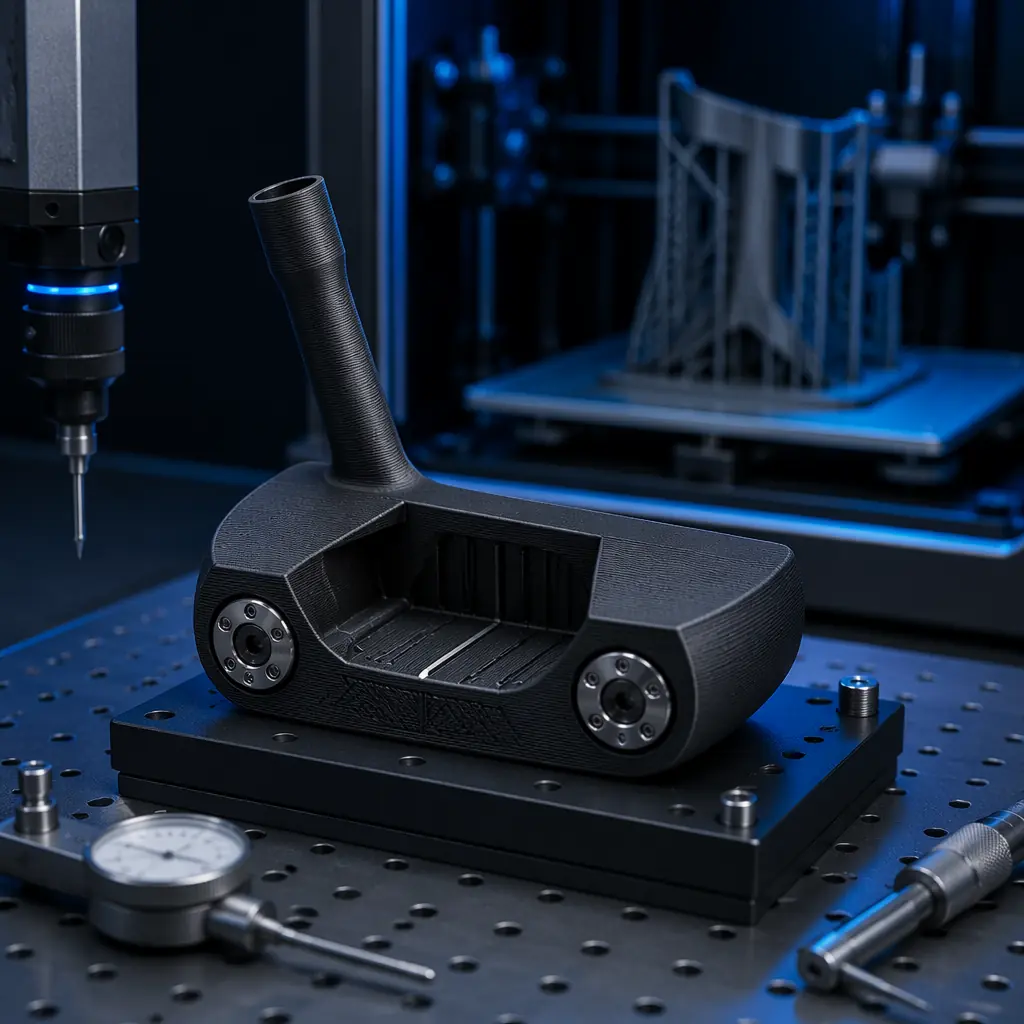
Golf equipment — the highest-margin application: TaylorMade's Stealth 2 Plus driver features a 3D-printed titanium face insert produced via DMLS. The face geometry — variable thickness across 60+ zones, each precisely tuned to a target COR (coefficient of restitution) — cannot be produced by forging or casting. The manufacturing process produces a face that's exactly at the USGA's legal COR limit across a wider sweet spot than any forged competitor. Each driver retails for $629, and the 3D-printed face is the primary performance narrative in every review and product page. Cobra Golf, Callaway, and PXG have all introduced additive-manufactured components in their 2024–2026 product lines. For distributors, golf represents a DMLS consumable play: titanium powder at $300–500/kg, with the same metal powder expertise that serves the aerospace and defense vertical but with B2C consumer brand customers who have faster procurement cycles and lower certification overhead.
Sports prosthetics — the most mission-driven application: The intersection of sports and prosthetics is one of additive manufacturing's most compelling stories. Össur, the global leader in prosthetic limbs, uses SLS and MJF to produce running blades, swimming prostheses, and sport-specific limb sockets that are custom-fit to individual residual limbs. A traditional prosthetic socket requires 3–5 weeks of hand-layup labor; a 3D-scanned and additive-manufactured equivalent is produced in 48 hours at 40% lower cost. For distributors serving prosthetics clinics and orthopedic practices, the equipment play is an SLS benchtop system ($15,000–$30,000) paired with carbon-fiber-reinforced nylon powder — the same material stack used in protective gear, creating cross-selling opportunities between the sports and medical verticals. This application also connects directly to the engineering filaments guide, which covers the mechanical-property requirements for load-bearing applications.
Materials: The Performance Polymer Portfolio for Sports
Sports equipment applications demand materials that combine mechanical performance with end-user comfort, durability under dynamic loading, and — for wearable applications — skin-contact safety. Here's the material portfolio that covers the sports vertical:
TPU — the sports equipment workhorse: TPU (thermoplastic polyurethane) is the most versatile material in the sports vertical. At Shore 85A, it produces flexible protective pad inserts with impact-absorbing lattice geometries. At Shore 95A, it produces semi-rigid structural components — helmet shells, cleat plates, and boot chassis components. The material's combination of flexibility, durability, and layer adhesion (TPU layers fuse nearly as strongly as the bulk material) makes it the default recommendation for any sports application involving impact or repeated flex cycling. For the full TPU/TPE/TPC comparison, our flexible filaments guide covers every variant and application.
PEBA — the elite performance material: PEBA (polyether block amide) is what Nike uses in its ZoomX foam and what Adidas and On Running use in their 3D-printed midsole programs. It delivers 20–30% higher energy return than TPU — meaning more of the impact energy is returned as propulsion — along with lower density (lighter shoes) and better cold-weather flexibility. The trade-off is cost: PEBA powder for SLS runs $120–200/kg compared to $80–150/kg for TPU. But in a sport where equipment weight and energy return translate directly to race times, that premium is absorbed without friction. For distributors, PEBA is a high-value consumable: a single footwear R&D lab goes through 30–50kg per month, representing $3,600–$10,000 in monthly recurring consumable revenue at 35–45% margin.
Carbon-fiber nylon — the structural backbone: PA12 (nylon 12) loaded with 15–35% carbon fiber delivers tensile strength above 60 MPa with 3× the stiffness of unreinforced nylon — mechanical properties comparable to die-cast aluminum at one-third the weight. This is the material for protective gear lattice inserts, bicycle component prototypes, and sports equipment jigs and fixtures. The carbon fiber fill also dramatically reduces warping during printing, making it easier to print large, flat parts like helmet components. For sports equipment manufacturers evaluating FDM for structural applications, carbon-fiber nylon is almost always the starting recommendation. Our carbon fiber filaments guide covers the grade-by-grade comparison across manufacturers.
Customer Profiles: The Four Sports Equipment Buyer Types
Sports equipment customers break into four distinct profiles, each with different budgets, decision processes, and recurring consumable value:
Major Brand R&D Center ($50K–500K): Nike's Sport Research Lab, Adidas Futurecraft, Specialized's Morgan Hill facility, TaylorMade's Carlsbad R&D center — these are the accounts that justify dedicated sales support. They buy SLS or DMLS production systems, consume 50–200kg of powder per month, and demand material certification documentation, on-site application engineering support, and SLA-backed service contracts. The sales cycle is 4–9 months and involves procurement, engineering, and legal. The prize: a $15,000–$40,000/month consumable account with zero churn risk once the material is qualified into a production process.
Mid-Market Equipment Manufacturer ($15K–80K): This is the sweet spot for distributors. Companies like CCM (hockey), Wilson (tennis/baseball), Burton (snowboarding), and hundreds of smaller specialty brands that produce 10,000–500,000 units annually. They need 2–4 FDM printers for prototyping, 1 SLS or MJF system for production lattice components, and a managed consumable supply chain. The initial hardware sale is $15,000–$80,000 with 28–35% margin; the monthly consumable reorder is $1,500–$5,000. These customers value application guidance — help them identify which components to convert to additive, and you lock in a 3–5 year relationship. The approach mirrors the framework in our small manufacturer sales guide, adjusted for consumer-goods production volumes.
Pro Team / Performance Lab ($5K–30K): Professional cycling teams, F1 teams, Olympic training centers, and university sports science departments. These are small but influential accounts. A pro cycling team buys 1–2 FDM printers for prototyping and custom grip/tooling fabrication, spends $500–$1,500/month on engineering-grade filament, and generates enormous social proof when their mechanics post photos of custom-printed components. The deal size is modest, but pro teams serve as reference accounts that de-risk the purchasing decision for mid-market manufacturers who follow pro equipment trends. For the drone and high-performance parallel, see our drone and UAV guide — the pro-team-to-manufacturer influence pattern is structurally identical.
Orthotics & Prosthetics Clinic ($8K–40K): This is a cross-over customer profile that spans medical and sports. Clinics producing sport-specific prosthetics — running blades, swimming limbs, climbing prostheses — need SLS systems and carbon-fiber nylon powder. The clinical sales cycle is different (medical procurement, insurance reimbursement considerations), but the technology stack and consumable profile are identical to sports equipment manufacturers. Position yourself as the partner who understands both the clinical and performance requirements, and you capture an account that literally nobody else in the 3D printing distribution channel is targeting.
Go-to-Market: Reaching Sports Manufacturers Before Your Competition
Sports equipment buyers don't attend the same trade shows or read the same publications as your industrial manufacturing customers. The go-to-market playbook has to follow where the customer already is.
The trade show circuit that matters: The major 3D printing shows — Formnext, RAPID+TCT, AMUG — reach general additive manufacturing buyers but miss sports equipment decision-makers. The shows that reach your target customers are ISPO Munich (sports equipment, 70,000+ attendees), The Running Event (running specialty retail and manufacturing), Interbike (cycling industry), and the PGA Merchandise Show (golf equipment). A 10×10 booth at ISPO Munich runs approximately €4,000–€8,000 with basic furnishings, and every attendee is pre-qualified as a sports industry professional. Bring 2–3 printers running live — a TPU midsole printing on FDM, a carbon-fiber nylon protective insert on an industrial machine — and you'll generate 50–80 qualified leads over a 3-day show at a cost per lead that's 60–70% lower than a general 3D printing event. One closed mid-market manufacturer from an ISPO lead pays for the booth 3–5× over in the first 12 months of consumable reorders.
Performance data as marketing content: Sports equipment buyers are engineers and product managers who respond to data, not marketing copy. Publish measured comparisons: a 3D-printed TPU helmet insert vs. an injection-molded EVA foam equivalent, with impact-force attenuation data at 3 impact velocities. A 3D-printed titanium bike lug vs. a forged aluminum equivalent, with weight, stiffness, and fatigue-cycle data. Post these on your blog, distribute them as one-page PDFs to your email list, and use them as leave-behinds at trade shows. A product manager at a mid-market equipment brand who sees quantified performance improvement in a format that mirrors their own internal testing reports is 5× more likely to request a quote than one who sees a generic "3D printing improves performance" claim. This is the content-marketing approach we apply across verticals, but in sports, the performance narrative is uniquely compelling because it's quantifiable in ways that matter to both the manufacturer and the end consumer.
YouTube and Strava over LinkedIn: Sports industry professionals — from R&D engineers to product managers to pro team mechanics — consume content on YouTube (product reviews, manufacturing documentaries, "how it's made" content) and niche platforms, not B2B social networks. A 6-minute video titled "How Bauer Prints a Custom Hockey Helmet" that shows the scan-to-print-to-test workflow, with commentary from an application engineer, will outperform 6 months of LinkedIn posts. The production cost is minimal: a single camera setup, a product demo, and a clear narrative. Post it on YouTube with SEO-optimized title and description, and it generates qualified inbound leads for 18–24 months after publication with zero ongoing ad spend. The sports vertical — more than any other 3D printing vertical — rewards visual, narrative-driven content because the products themselves are visually compelling and the end use cases (athletes performing) have built-in emotional appeal.
Partner with sports engineering programs: Universities with sports engineering programs — Loughborough University (UK), University of Colorado Boulder, MIT Sports Lab, TU Delft — are producing the next generation of sports equipment engineers. Donate 1–2 FDM printers to their labs. Guest-lecture on additive manufacturing for sports applications. Sponsor a student capstone project on 3D-printed protective gear. The ROI isn't in the direct equipment sale — it's in the graduates who, 3–5 years later, become the R&D engineers and product managers at Nike, Specialized, and Bauer. When they need to spec a 3D printing system and consumable supply chain, they call the distributor whose equipment they learned on. This is a 3–5 year pipeline play that compounds, and it costs less annually than a single trade show booth.
The Sports Equipment Distributor's Bundle Strategy
Here's the three-tier product portfolio that covers every sports equipment customer profile with minimal SKU complexity:
Performance Lab Bundle ($4,990, 36% blended margin): One direct-drive FDM printer, 2 spools TPU (85A + 95A), 1 spool carbon-fiber nylon PA12-CF, hardened steel nozzle, filament dryer, textured PEI build plate, post-processing toolkit. Target: pro team performance labs, university sports engineering programs, prosthetics clinics.
Manufacturer Production Bundle ($22,500, 32% blended margin): One benchtop SLS system, 10kg TPU powder, 5kg PA12 powder, powder handling station, post-processing station with media blaster, application engineering onboarding (2 days on-site). Target: mid-market equipment manufacturers transitioning from prototyping to production.
Elite R&D Suite ($89,000, 28% blended margin): One production SLS or entry DMLS system, 25kg material starter pack (TPU + PA12-CF + PEBA or titanium), full powder management system, extended 3-year warranty with 24-hour SLA support, quarterly application engineering review. Target: major brand R&D centers, top-tier pro team facilities.
The sports equipment vertical is approaching its inflection point. Major brands have proven the production economics. Mid-market manufacturers are actively evaluating additive manufacturing for their 2027 product lines. The pro teams and performance labs are already printing, buying consumables from whoever ships fastest, and looking for a partner who can provide application guidance, not just a box with a printer in it. The distributor who builds sports-specific expertise — who can discuss Shore hardness ranges for hockey helmet liners, who knows the fatigue-cycle requirements for cycling components, who stocks the PEBA powder that running shoe R&D labs need tomorrow — owns a $15 billion vertical market where the competition consists of generalist resellers who can't answer a single application question. That distributor can name their price. And the window to establish that position is right now.
Start Your Partnership
Ready to Bring Precision Printing to Your Market?
Join our network of 200+ global distributors. Competitive pricing, dedicated support, and fast fulfillment.