The Thermoforming & Vacuum Forming Tooling Market
Thermoforming is a flexible, low-cost way to produce rigid and semi-rigid parts from thin sheet. Packaging, appliance panels and trays, medical trays, signage, automotive interior trim, display components and POS. The process needs an accurate male or female tool to form the sheet, and the economics change with volume. At high volume, a machined aluminium or cast tool amortises well. At low and mid volume, or when the design is still being iterated, that same tool is a liability: expensive, slow, and hard to revise. This is the gap a 3D printing distributor fills. Because a printed tool is cheap to re-run, a thermoformer can test a tray design, form a trial batch, revise the geometry and re-form, all within a working week.
The buyer is a tooling or process engineer who understands draught angles, sheet temperature, forming depth and cooling. For the broader tooling opportunity that these same customers tap into, see our manufacturing tooling distributor guide . Printed tooling is a natural add-on to a thermoformer’s existing machine shop.
Form Moulds & Vacuum Plugs
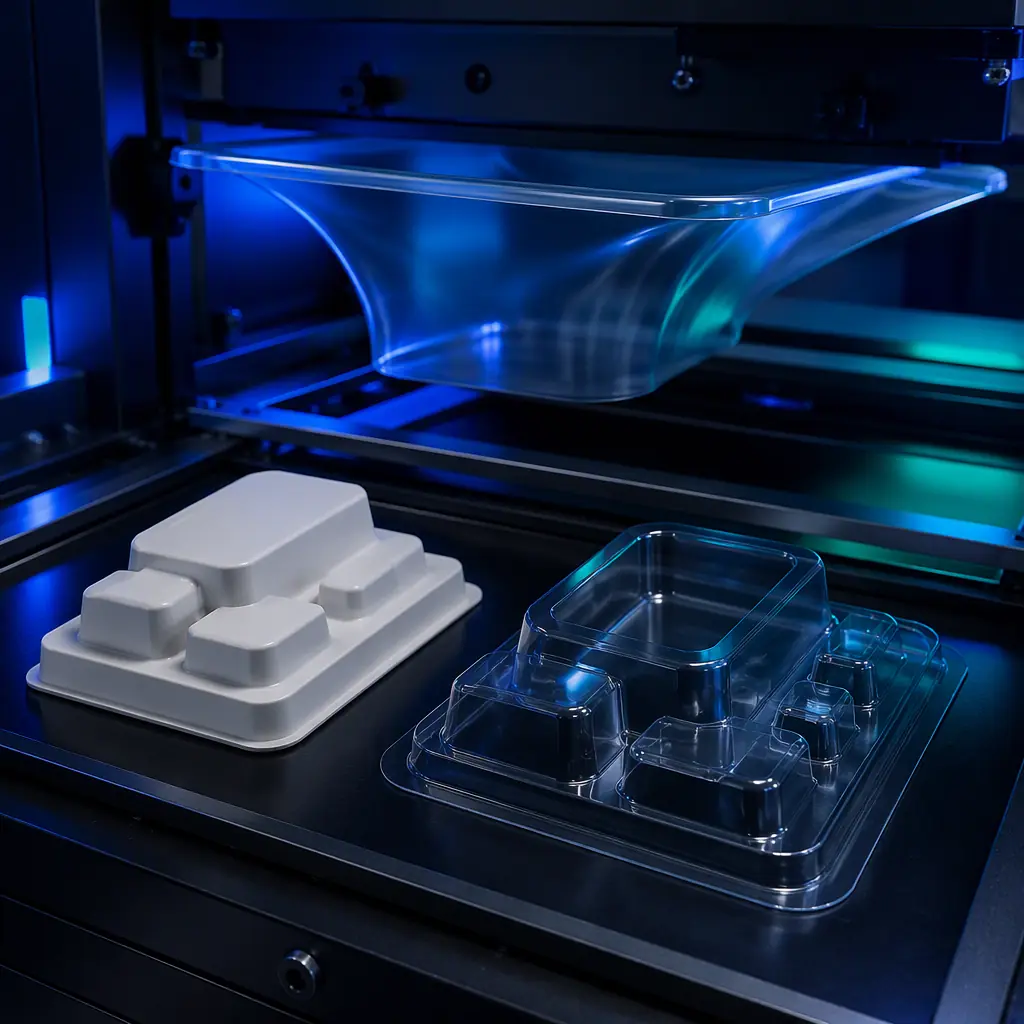
The core parts are vacuum-form plugs, form moulds, pressure-form tools, and male/female vacuum tools. A vacuum plug is pressed into the heated sheet to create the cavity; a form mould is the cavity or the tool over which the sheet is drawn. Both need to hold their shape under repeated forming cycles and to release the formed part cleanly. Printed in a stiff, heat-stable material, a plug or form tool can run a trial batch and often a low-to-mid production run of 50-500 parts, then be re-printed cheaply for the next revision. Because the tooling cost is low and the turnaround is measured in days, thermoformers increasingly print the tool for the prototype and the short run, then transition to aluminium only once volume justifies it. For the FDM design rules that make a tool draught-correct and dimensionally stable, our design-for-AM rules guide and our engineering-grade printer selection guide are essential reading.
Blister, Tray & Packaging Tooling
For packaging thermoformers the volume driver is blister tooling and tray-forming tooling. The recurring parts are blister-forming tools, tray formers, cooling fixtures, and short-run packaging tools for small-batch or new-product launches. These run in continuous cycles and need a tool that withstands repeated heating-and-cooling without distorting. A printed blister tool lets a packaging house quote a small-batch launch without committing to a hard tool, which is a powerful selling point for a distributor selling into a competitive packaging market. For the wider packaging and consumer-goods context, our packaging industry guide is the relevant deep-dive, and for the material science that survives the heat cycling see our polycarbonate filament guide.
Trim, Nest & Helper Tools
After forming comes trimming and secondary tooling, and this is where the jig-and-fixture market is largest. The recurring targets are trim-nest jigs, trim fixtures, CNC hold-down and zero-point pallets, drilling guides, forming helpers, and vacuum-break slots. A trim-nest jig locates the formed part precisely against a router or die trim so the edge is clean and repeatable; a forming helper supports a deep-draw or undercut region that would otherwise thin or webbing. These are short-run tooling parts that shave labour from every formed unit, and they pay for themselves quickly. For the fixtures playbook, see our rapid prototyping & R&D guide and our manufacturing tooling guide.
Materials for Forming Tools
Forming tooling demands a material that holds dimensional stability across repeated heat cycles and resists abrasion from the forming sheet. The right choices: PC for excellent heat stability and toughness, the default for a form tool or vacuum plug that runs repeatedly; PA-CF or PA-GF for a stiffer, more dimensionally stable tool where deflection under forming pressure matters; ASA for UV-stable exterior or signage tooling; PETG for a low-cost first-round tool where the geometry is still changing. Avoid low-Tg pla-based materials on anything that touches a hot sheet, since they will sag or creep. Add the correct draught angle and a vacuum-connection path so the tool releases cleanly and holds the sheet. For the full stiffness and heat-stability picture, our carbon-fibre filled filament guide, our engineering filaments guide and our post-processing & finishing guide cover the choices.
What you're looking for: Trial / geometry-changing → PC or PETG at low cost; sustained run with repeated heat cycles → PC or PA-CF for heat stability and creep resistance; deep draw / undercut → PA-CF for stiffness plus a forming helper; high-detail cosmetic → PC with a vapour-smooth or polished finish; and always add proper draught and a vacuum path so the part releases cleanly.
Distributor Economics: Tooling IT Cost & Speed
Thermoforming tooling is a price-and-leadtime-sensitive aftermarket where the value is in replacing an expensive, slow tool with a cheap, fast one. A typical thermoformer or packaging house can generate $12,000–30,000/year in printed form tools, plugs and trim jigs once you are the trusted quick-turn source. Because each new tray, each packaging launch and each design revision needs fresh tooling, and the alternative is a machined aluminium or cast tool that costs four figures and takes weeks. The cadence is project- and launch-driven, and the margin is excellent: you set the tool price, typically at 40–70% under the equivalent machined or cast tool, and your material cost is a small fraction of it. That puts distributor gross margins at roughly 55–75% on printed tooling.
The entry plan:
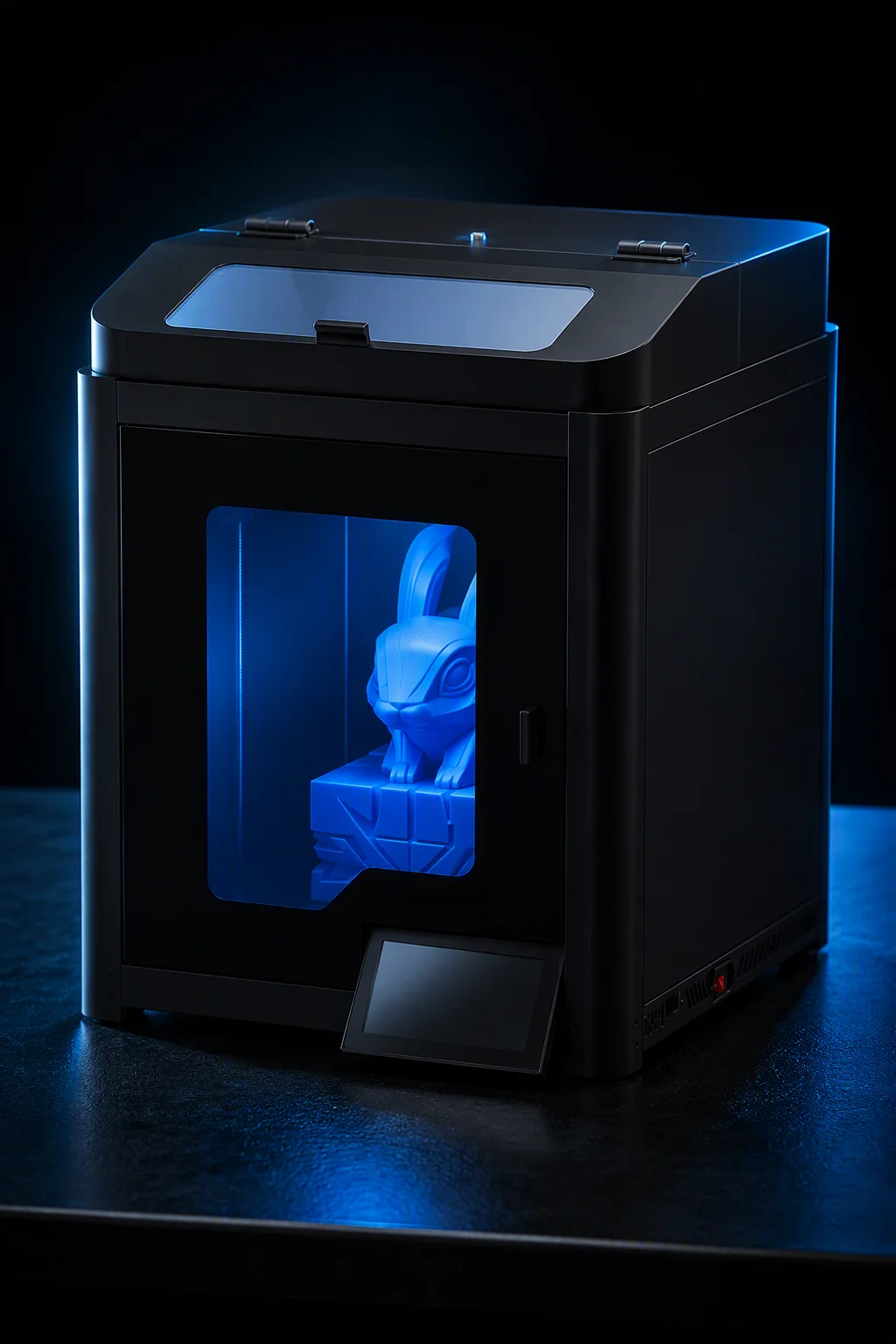
(1) Run a chamber-heated printer with a hardened nozzle for filled materials and a heat-stable PC plus a stiff PA-CF material set. (2) Print a demo kit of the fastest-moving tooling, a vacuum plug, a form mould, a trim-nest jig, a drilling guide. (3) Approach local thermoformers, packaging houses, display and POS fabricators and their contract tooling suppliers. (4) Lead with days-not-weeks turnaround and the ability to revise geometry without reworking a hard tool. For positioning the distributor business around tooling-led demand, our portfolio & market-segment strategy guide and our consumables & accessories bundling guide are the relevant reads.
Thermoforming tooling is a repeat-and-revise niche. Once a form shape proves out to the target spec in days and a revision costs a re-print, the printed tool becomes the default for every short run and every packaging launch. At Precise3D, our chamber-heated, hardened-nozzle FDM platform with heat-stable PC and stiff PA-CF capability is built for exactly this: dimensionally stable, draught-correct forming tools and trim jigs, delivered on a rapid turnaround.
Reviewed by the Precise3D engineering & OEM team. Compliance files that accompany the catalog are auditable at the certification register.
Enter This Vertical
Ready to Supply Quick-Turn Form Tools to Thermoformers & Vacuum Formers?
Join our network of global distributor network. Chamber-heated, hardened-nozzle printers with heat-stable PC and stiff PA-CF capability, plus a demo kit of the fastest-moving form mould, vacuum plug and trim-nest tooling, everything you need to open the tooling-led thermoforming aftermarket.