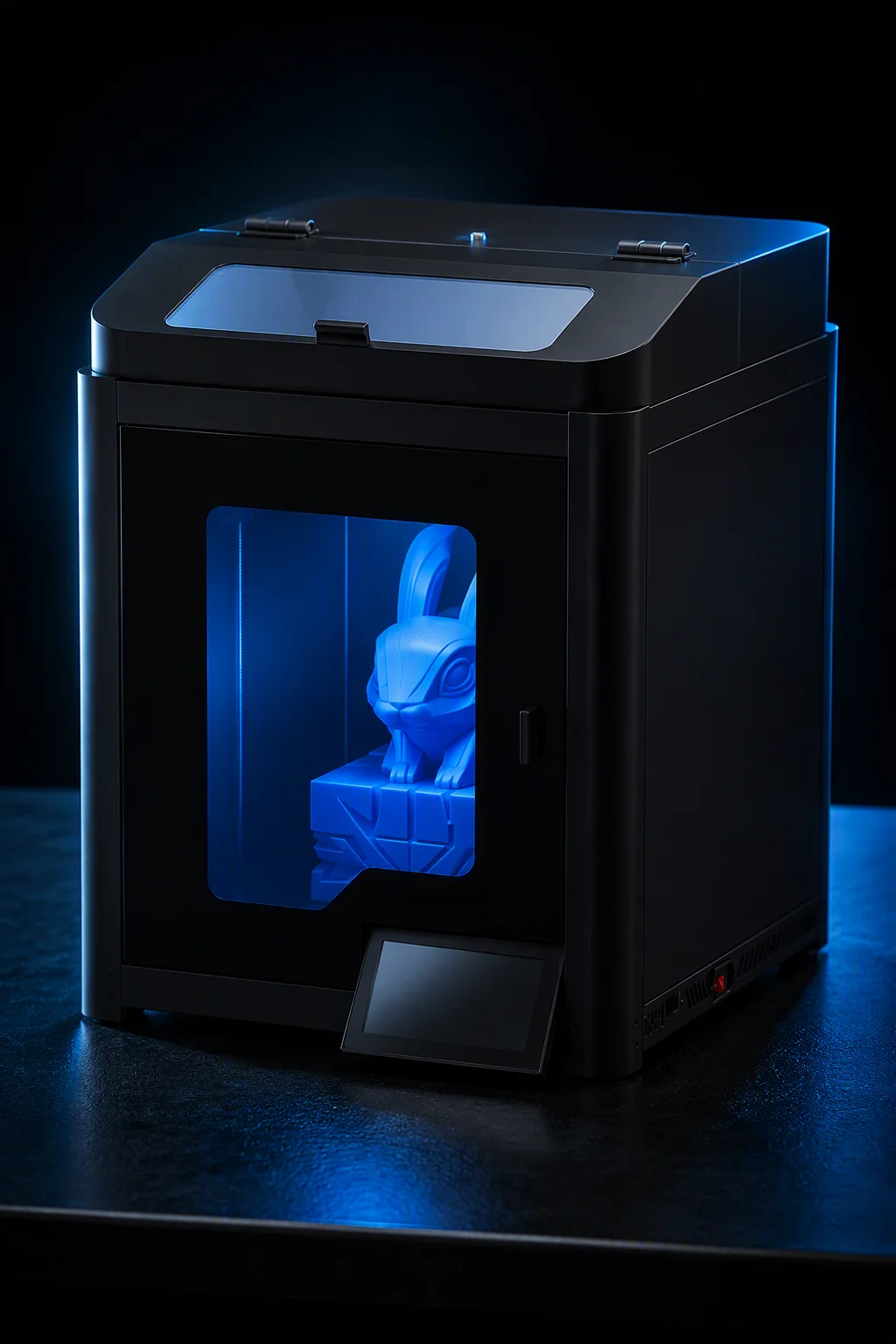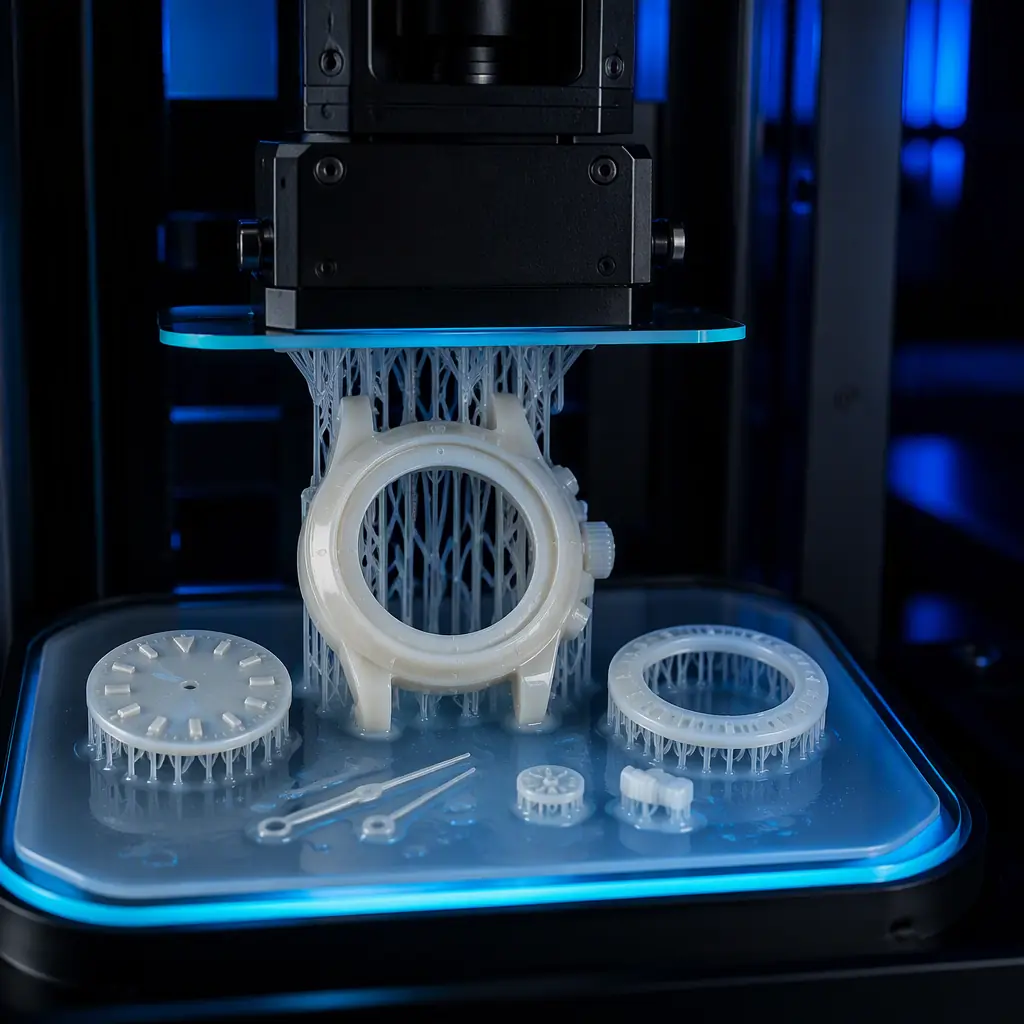
A Swiss movement manufacturer needed to validate a new chronograph bridge design before committing to a CHF 60,000 injection mold. Machining a test batch would have taken six weeks and required a dedicated CNC program; instead, the design team printed twelve bridges in castable resin in two days, assembled them into prototype movements, and discovered a clearance issue that no CAD simulation had caught. The fix cost an afternoon of rework rather than a re-cut mold. Watchmaking runs on micro-precision, tiny batches, and zero tolerance for delay, the exact conditions where 3D printing replaces tooling. The industry exports roughly 16 million Swiss watches a year worth about CHF 27 billion, and every one of those watches passed through a prototyping or tooling stage that can now be printed.
Why Horology Is Buying 3D Printers
Four structural facts make watchmaking a durable buyer. First, micro-batch economics: a limited series of 50 cases or a one-off restoration part cannot justify injection tooling, but a printer costs nothing per design change. Second, iteration under precision pressure: watch components live at tolerances of ±0.02-0.05 mm, and 3D printing lets designers hold physical parts in hand weeks before hard tooling is cut. Third, legacy parts: movements from the 1950s and 1960s are restored daily, and their parts exist only as worn originals, printing is the only economical reproduction path. Fourth, tooling consolidation: the jigs, fixtures, and assembly aids used across a watch factory are custom, low-volume, and constantly revised, which is precisely what FDM printers produce best. The prototyping discipline these shops share with engineering teams is covered in our rapid prototyping & R&D guide.
The Applications That Actually Buy
Five clusters generate the orders. The buyers are watch brand R&D departments, movement manufacturers, component suppliers (cases, dials, hands), restoration specialists, and independent watchmakers serving collectors.
1. Case and bracelet prototypes. The flagship application: case bodies, lugs, bezels, and bracelet links printed in resin or metal-filled material for design review, fit testing, and customer approvals before CNC or casting. A case prototype that once cost $800-2,000 and took three weeks now costs $40-120 and takes a day.
2. Movement bridges, plates, and decorative parts. Structural components of the caliber itself, bridges, main plates, rotor decorations, and skeletonized parts. Resin printing with castable material feeds the lost-wax casting workflow that jewelry makers perfected; the mold-master and casting logic is in our jewelry casting guide.
3. Dial and hand tooling. Dials are stamped, painted, and printed in tiny runs; every dial variant needs registration fixtures, pad-printing blocks, and paint masks. These consumable tools are replaced constantly and are perfect FDM parts.
4. Restoration and legacy reproduction. The quiet growth driver: replacement wheels, click springs, stem adapters, and case parts for vintage movements. Restorers quote "impossible" jobs by printing the part, casting it in brass, and finishing it to original spec. The same logic drives our museums & cultural heritage guide.
5. Assembly fixtures and QC gauges. Watch factories run thousands of assembly and inspection steps, each needing custom nests, holders, and go/no-go gauges. Printing them in-house collapses weeks of fixture procurement into overnight production.
Materials for Micro-Precision Parts
Horology buyers purchase a tighter material set than most verticals, and they repurchase it on a rhythm:
Two realities drive material choice more than any spec sheet. First, surface finish is the product: a case prototype judged by hand needs the smooth, sandable surface of resin, which is why resin outsells FDM in this vertical at roughly 3:1, the resin selection map is in our resin types guide. Second, dimensional accuracy is non-negotiable: the tolerance-achievement strategies for printed micro-parts are detailed in our tolerances & dimensional accuracy guide.
From CAD to Casing: The Watchmaking Workflow
The workflow that wins horology accounts has six stages. Scan or model . Legacy parts are digitized with a 3D scanner (the scanning selection logic is in our scanner & printer bundle strategy); new designs are modeled in CAD at full micro detail. Print . Resin for anything visible or cast, FDM for fixtures; the FDM-versus-resin decision framework is in our FDM vs resin guide. Clean and cure . Wash, support removal, UV cure; support strategy matters more here than in any other vertical because supports touch cosmetic surfaces. Finish . Sand, polish, and plate; the surface-quality discipline is in our post-processing & finishing guide. Cast (for metal parts) . Burn out and cast in gold, brass, or steel. Assemble and verify . Fit the part into the movement or case and confirm tolerances with a gauge. Shops that master this flow quote jobs their competitors refuse.
Budget Reality: Printed vs Traditional
The comparison that closes horology accounts:
The distributor math compounds because horology is consumable-hungry: a busy restoration shop can consume 5-15 liters of resin per month, plus build plates, wash solution, and finishing supplies, the recurring-revenue model is developed in our consumables & accessories bundling guide.
The Distributor Playbook: Entering Horology
Five moves win watchmaking accounts:
1. Target the suppliers, not just the brands. The buyers are movement manufacturers, case and dial suppliers, restoration houses, and independent watchmakers. Build a target list of 25-40 accounts in your region, prioritizing the component suppliers that serve multiple brands, they print continuously, while brands prototype in bursts.
2. Sell the micro-precision story with a demo part. Bring a printed and finished case or bridge with a visible surface finish. A watchmaker instantly judges layer quality, edge sharpness, and detail fidelity, a raw print loses the account, a finished one closes it. The fine-detail printing capability behind the demo is covered in our hotend & nozzle technology guide.
3. Bundle the resin ecosystem. The printer is table stakes; the margin is in castable resin, engineering resins, build plates, wash stations, and cure stations. Watchmaking is the vertical where the resin subscription model works best because consumption is predictable.
4. Offer scan-to-print restoration service. Many independent watchmakers will not own a scanner. A distributor offering scan-to-print service for legacy parts captures the work before they buy hardware, the service economics mirror our after-sales support strategy.
5. Work the jewelry crossover. The same castable workflow that serves watch cases serves the jewelry trade, so a horology account often grows into a jewelry account, and vice versa. The adjacent precision-industry playbook is in our eyewear & optics industry guide.
Common Pitfalls in Horology Accounts
Five mistakes cost distributors watchmaking business: (1) overselling FDM for cosmetic parts . Visible watch components demand resin; selling a bedslinger for dial work sets the account up for disappointment (the machine-selection logic is in our buyer's guide by price tier); (2) ignoring support-mark removal . Supports that scar cosmetic surfaces are the #1 complaint in this vertical, so teach support placement and finishing before the first sale; (3) underestimating material certification needs . Castable resin must burn out cleanly and consistently, so stock proven lines and share the datasheets (the certification logic is in our certification & compliance guide); (4) treating restorers as hobbyists . A restorer printing 10 parts a week for $300 per part is a commercial account with recurring resin demand; and (5) skipping the demo finish . Sending a raw, un-polished demo part to a watchmaker reads as "this technology isn't ready for us."
Getting Started: The First 90 Days
A 90-day entry plan: Month 1 . Identify 25-40 target accounts (movement manufacturers, case/dial suppliers, restoration houses, independent watchmakers, jewelry crossover accounts) and stock the horology material set: castable resin, standard resin, tough resin, PETG, plus wash/cure stations and finishing supplies. Month 2 . Produce a finished demo case and bridge, run two pilot jobs at cost-plus-10% (a case prototype and a legacy-part reproduction) to build documented evidence, and offer scan-to-print service to two restoration shops. Month 3 . Convert pilots to full accounts with resin subscriptions and a 48-hour reprint SLA, publish your first measured case study ("legacy chronograph bridge: unavailable → 3 days, $180"), and open one component-supplier account. The TCO model that justifies the distributor's own printer investment is in our TCO & ROI calculator guide.
Reviewed by the Precise3D engineering & OEM team. Compliance files that accompany the catalog are auditable at the certification register.
Enter the Horology Market
Ready to Supply Watchmakers & Restoration Shops?
Get wholesale pricing on resin and FDM printers, castable and engineering resin lines, wash-and-cure stations, finishing consumables, and the horology playbook that wins micro-precision accounts.