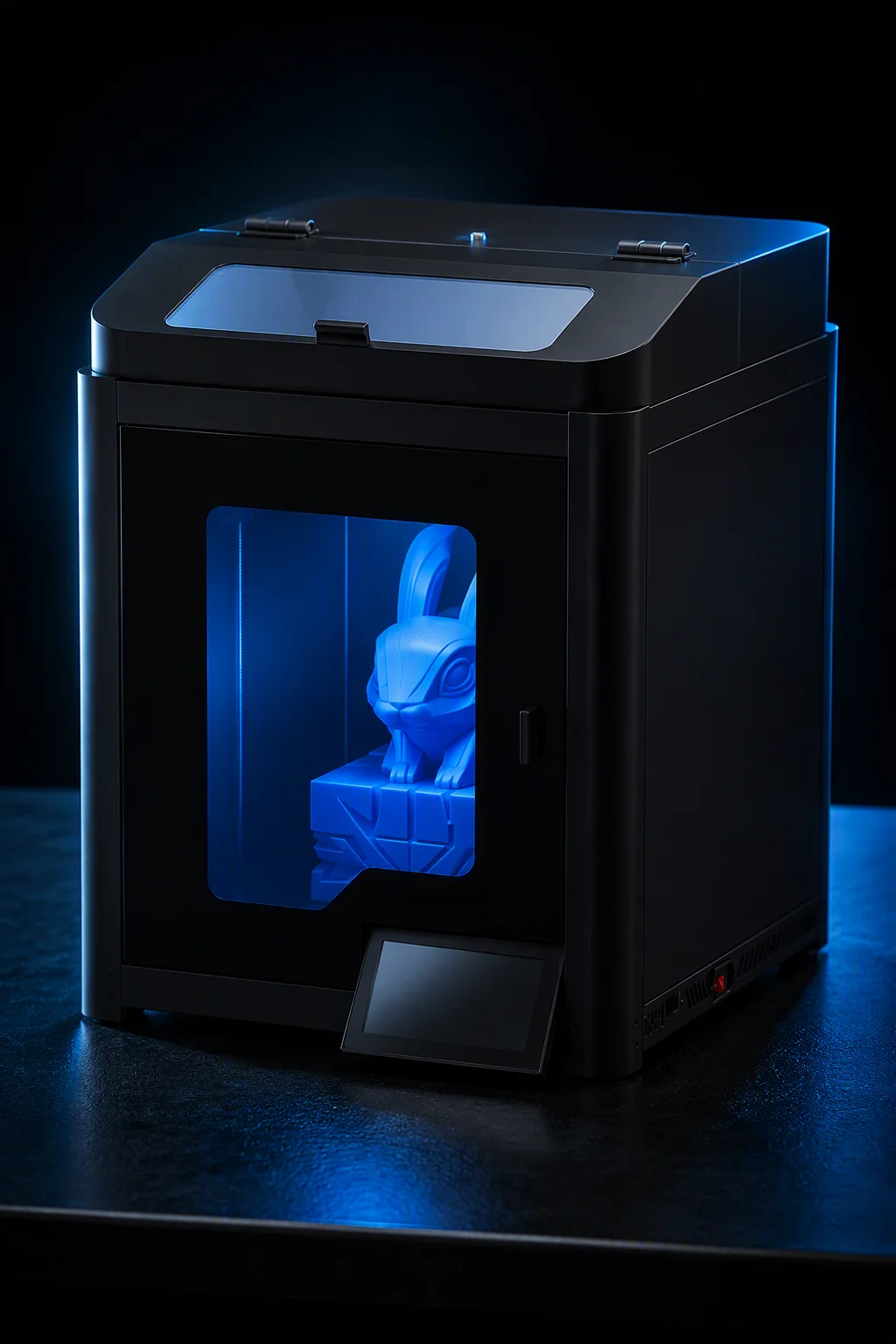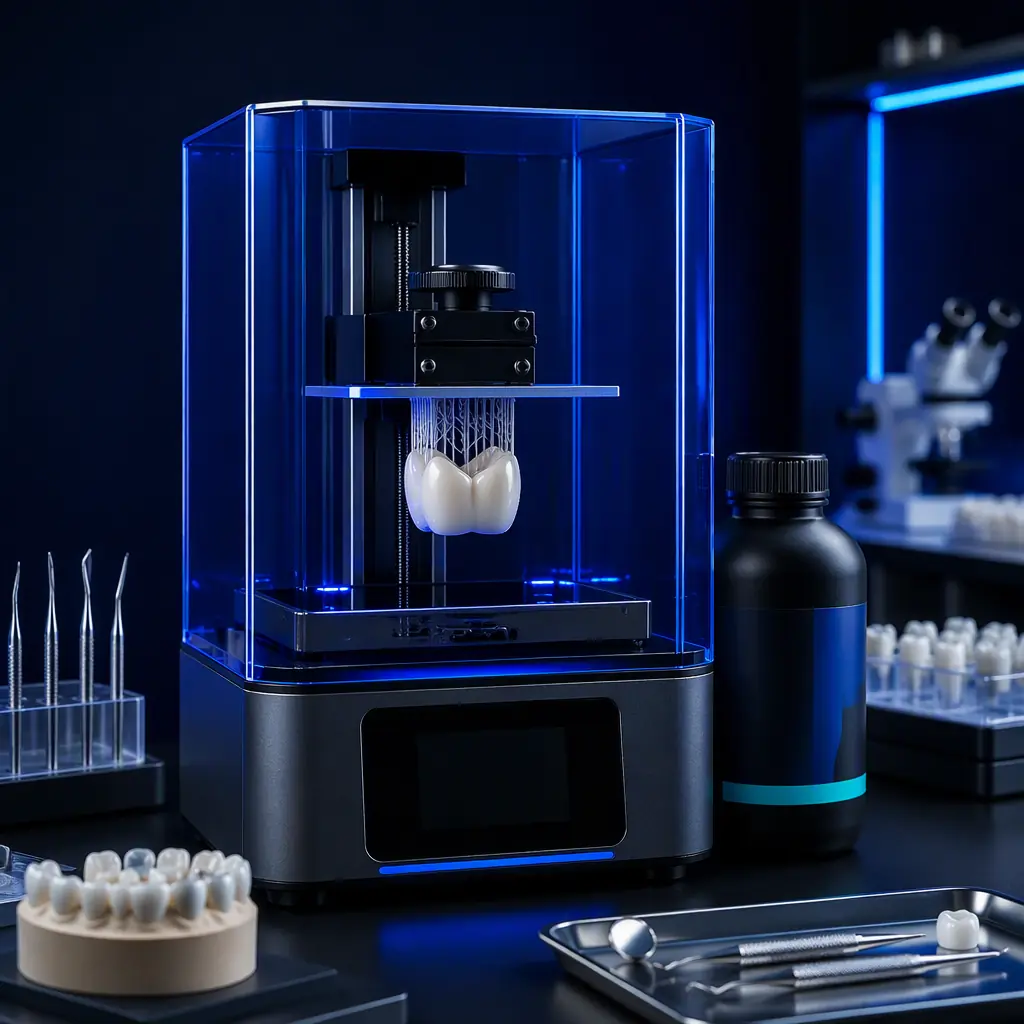
Ceramic 3D printing splits into two technology routes that serve different buyers. Ceramic resin (SLA/DLP) prints high-density, high-resolution parts — the route for dental, jewelry-casting, and precision components. Ceramic filament (FDM) prints larger, structural parts with lower density — the route for foundry cores, wear parts, and prototypes. Both routes produce a "green" part that must go through debinding and sintering to become dense ceramic, and that post-process requirement is the single biggest education point in the sale. For how ceramic fits into a broader material portfolio, see our portfolio strategy guide.
The Two Routes: Ceramic Resin vs Ceramic Filament
Ceramic resin is a photopolymer loaded with ceramic powder (typically 40-60% by volume), printed on SLA or DLP machines and then debound and sintered. It delivers the highest density (up to 99% of theoretical) and best surface finish — the route for dental restorations, casting patterns, and components where mechanical integrity matters. Ceramic filament is a thermoplastic (usually PLA or a specialty binder) loaded with ceramic powder, printed on FDM machines with a hardened nozzle, then debound and sintered. It prints faster and larger with lower equipment cost, but final density lands lower (typically 90-96%), which is fine for foundry cores, kiln furniture, and wear prototypes. The two routes rarely compete for the same part, which means a distributor can sell both to the same account. For the resin machine landscape, see our resin printer distribution guide.
Ceramic resin wins on precision and density; ceramic filament wins on size and cost. A dental lab printing copings and crowns uses resin; a foundry printing cores for investment casting uses filament. The account rarely needs both, but the distributor serving a territory with both dental labs and foundries can cover two revenue streams from one material line. For the margin comparison framework, see our resin margin comparison guide.
The Sintering Process: What Every Buyer Must Understand
No ceramic 3D printer produces a finished ceramic part alone — every route ends in a furnace. After printing, the green part contains binder that must be removed (debinding, typically 300-600°C) and then the ceramic body must be densified (sintering, typically 1,400-1,650°C for alumina and zirconia). Shrinkage is substantial and predictable: 15-25% linear, which means the printed green part must be oversized and the design software must compensate. This is why ceramic printing is a system sale: printer, material, furnace, and post-processing workflow must be sold together, and the distributor who bundles the furnace earns the margin on all four. For the post-processing economics, see our post-processing guide.
What you're listening for: The lead-time answer is the ROI script. The second question is process maturity: does the prospect already run a furnace (dental labs, foundries, ceramics shops) or would the furnace be a new capability? Accounts with an existing furnace buy printers and material fast; accounts without one need the full system sale, which is where the margin lives.
Material Grades That Matter: Alumina, Zirconia, and Beyond
Three ceramic grades cover most commercial demand. Alumina (Al₂O₃) is the workhorse: hard, electrically insulating, chemically resistant, and the lowest-cost ceramic grade — used for insulators, wear pads, pump parts, and foundry cores. Zirconia (ZrO₂) brings fracture toughness and biocompatibility — the grade for dental restorations, medical components, and precision tooling where strength matters. Silicon carbide and silicon nitride serve niche high-temperature and wear applications at the top of the price curve. For buyers, the practical rule is simple: alumina for insulation and wear, zirconia for strength and biocompatibility, specialty grades for extreme duty. For the industrial material stack that surrounds ceramics, see our PEEK/PEI/PPSU industrial materials guide.
Applications That Pay: Dental, Electrical, Casting, Chemical
Ceramic printing revenue clusters in four application groups. Dental is the most mature: zirconia copings, crowns, and bridges printed on resin machines and sintered in dental furnaces — a $5-15 billion global market where digital workflows already exist. Electrical insulation is the fastest-growing industrial segment: high-voltage insulators, bushing components, and discharge components where ceramics' dielectric strength beats any polymer. Investment casting is the foundry play: ceramic cores and shells printed directly, eliminating the tooling cost of wax-pattern dies. Chemical processing buys impellers, valve parts, and thermocouple protection tubes that survive acids and temperatures that destroy polymers. For the adjacent vertical plays, see our dental lab guide and the jewelry casting guide.
Printer Requirements for Ceramic Materials
Ceramic resin needs an open-parameter SLA/DLP machine (not a locked consumer resin printer), because ceramic resins cure at different energies and layer thicknesses than standard photopolymers — typically 25-50 µm layers with longer exposure times. Look for a heated resin vat, a robust z-axis, and a build platform sized to the dental/industrial parts the buyer prints. Ceramic filament needs a hardened steel nozzle (ceramic powder is abrasive and destroys brass within one roll), an all-metal hotend for the 220-260°C binder temperatures, and ideally a direct-drive extruder for consistent flow. Both routes need a furnace partner — either sold alongside or referenced — and a post-processing station. For the machine selection criteria, see our build volume guide and the SLA vs DLP vs MSLA technology guide.
The Distributor Playbook for Ceramic Margins
Ceramic printing is a system sale with four revenue streams: printer, material, furnace/accessories, and training. (1) Lead with the application, not the machine: the dental lab, foundry, or electrical OEM has a part problem, and the ceramic workflow is the solution — the printer is the least interesting part of the conversation. (2) Bundle the system: printer + starter material kit + furnace reference + sintering service = a $8,000-25,000 first order with 40-55% margins, versus a $800 printer-only sale. (3) Sell the material consumable: ceramic resin and filament reorder at $200-800/kg, and a busy dental lab or foundry consumes 5-15 kg per month — a $1,000-8,000 monthly reorder stream per account. (4) Build the qualification library: every validated material-profile pairing (resin grade × layer height × sintering curve) is a lock-in asset that makes switching suppliers a re-qualification project. For the recurring revenue model, see our consumables subscription guide and the bundling strategy guide.
Bottom Line
Ceramic 3D printing is the material segment where distributor margins are highest and competition is thinnest. Alumina and zirconia parts — dental restorations, electrical insulators, casting cores, chemical components — cannot be made in polymer, and ceramic injection molding only makes sense at volumes above 10,000 parts, which leaves the 1-500 part range to printing. The resin route wins on precision and density; the filament route wins on size and cost; both end in a furnace, and the distributor who bundles the system earns the margin on all of it. A distributor with 8 ceramic accounts averaging 10 kg of material per month builds $100,000-200,000 in annual material revenue at 50-65% margins, plus the system-sale hardware. The distributor who learns to sell the sintering story will own the ceramic segment before the polymer market gets crowded.
Reviewed by the Precise3D engineering & OEM team. Compliance files that accompany the catalog are auditable at the certification register.
Start Your Partnership
Ready to Bring ceramic materials to Your Market?
Distributors selling ceramic materials build margins with OEM & white-label hardware - request the program sheet and volume pricing.