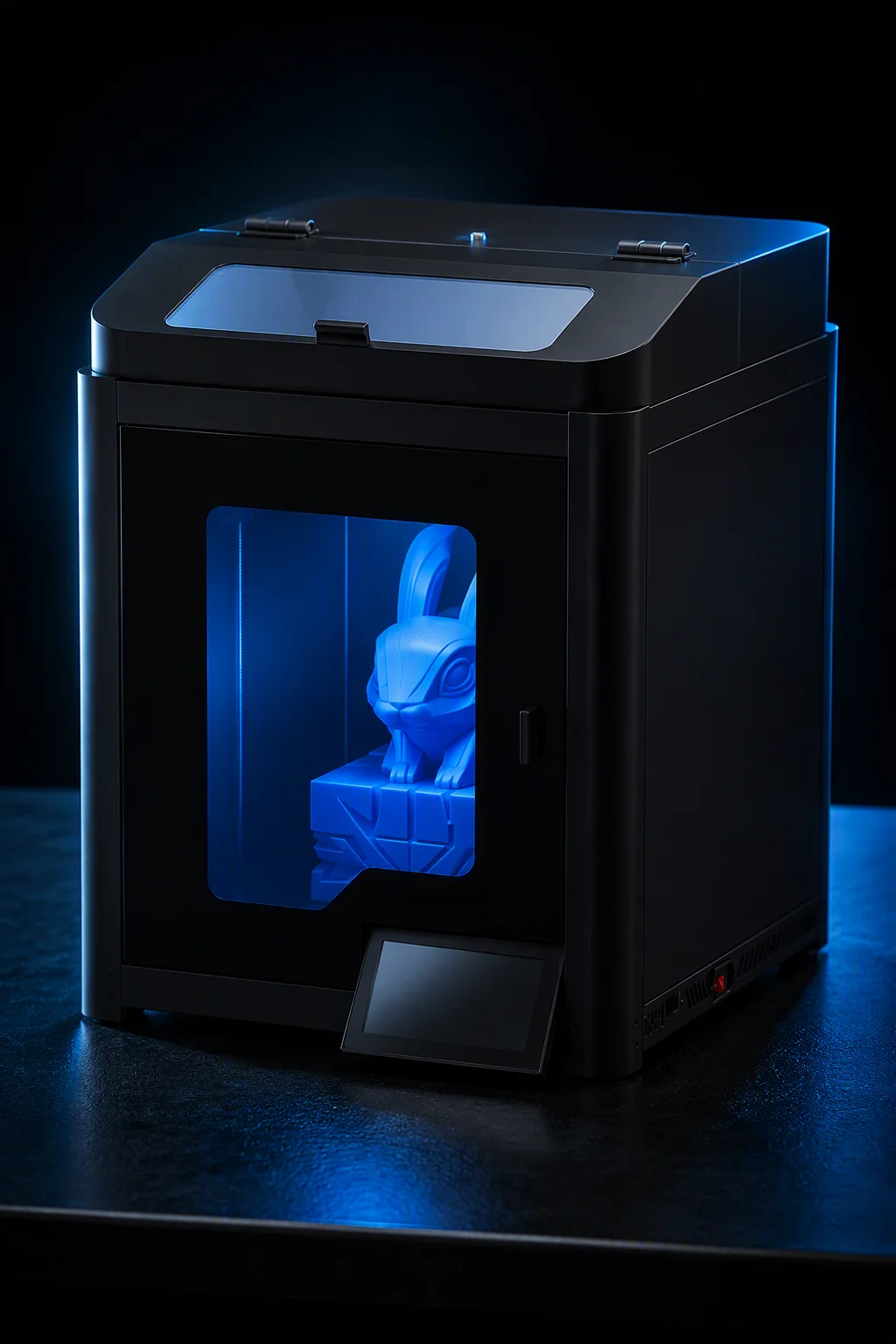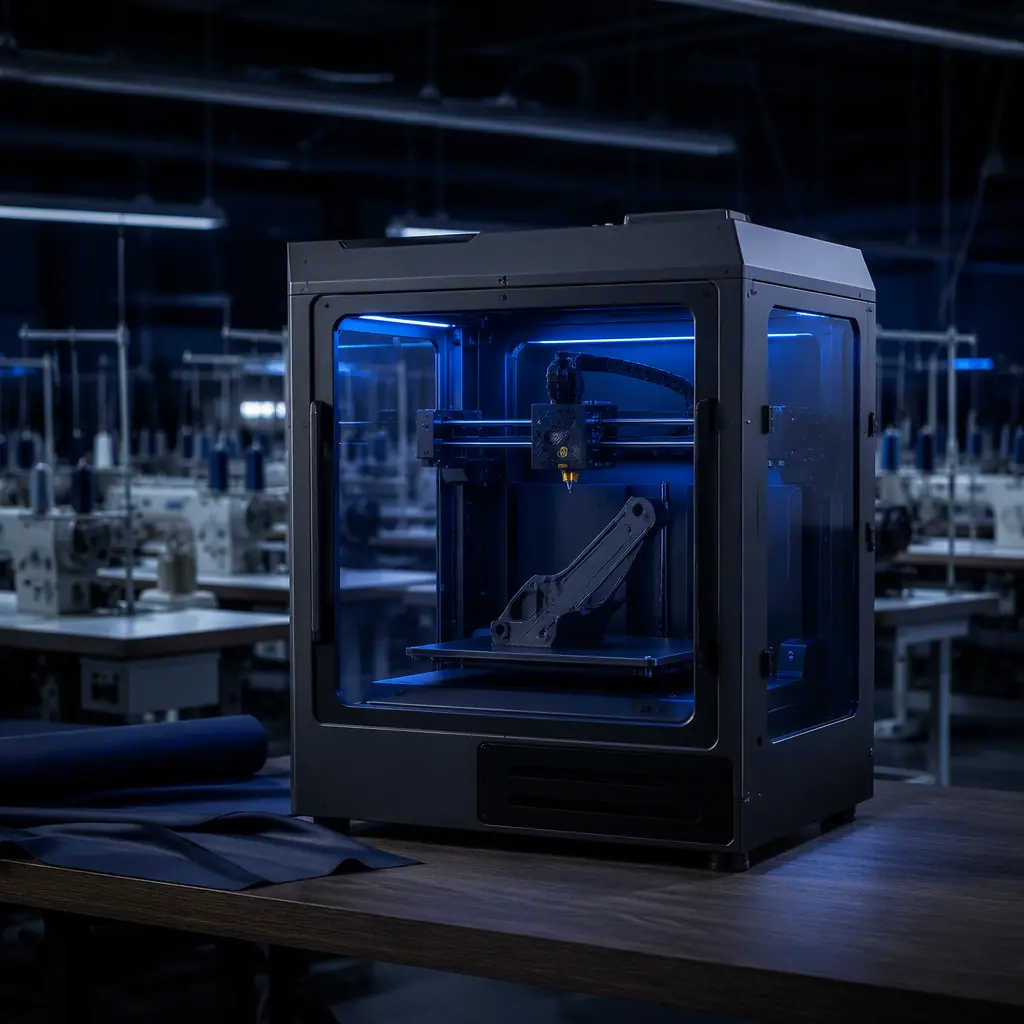
The apparel and garment manufacturing vertical spans cut-and-sew garment factories, sewing machine dealers and service houses, embroidery and monogramming shops, knitwear and hosiery plants, garment accessory and trim manufacturers, shoe and leather goods factories, and garment machinery OEMs and their parts networks. Three structural facts drive the opportunity. First, production machines are old and long-lived: industrial sewing machines run 15-30 years, and OEM spare parts for discontinued models simply disappear from catalogs. Second, downtime is measured in hours: a garment plant running two shifts has no slack, a broken feed dog, tensioner or thread guide stops a line, not a machine. Third, every plant already has maintenance staff with calipers: the skill to measure and model a worn part is present, which means the only missing piece is the printer and the filament. The economics that make these replacements rational are laid out in our TCO & ROI calculator guide.
Why Apparel & Garment Manufacturing Is Buying 3D Printing
Four forces are converting garment plants into printer buyers. First, the obsolescence gap: sewing, embroidery and cutting machine OEMs support current models for 5-10 years, then move on. A plant running twenty-year-old machines is already in the aftermarket, and printed replacements are often the only option besides custom machining at $200-600 per part. Second, shift economics: garment plants run 16-22 hours a day in peak season, so a $15 printed feed dog that arrives in 3 hours beats a $120 OEM part that arrives in 10 days even when the OEM part exists, the production-value math is covered in our spare parts & aftermarket revenue guide. Third, tooling refresh cycles: cutting rooms replace templates, dies and guides seasonally as styles change, and printed tooling collapses that cycle from weeks to overnight. Fourth, customization pressure: mass-customization, monogrammed goods, made-to-measure, small-batch private label, keeps growing, and factories need flexible production aids (mannequins, last adjustments, jigs) that adapt per order. A mid-size garment factory running 300-500 machines replaces or repairs hundreds of small plastic and nylon parts per year; a service house covering 20 plants can sell 200-400 printed parts a month at $8-45 each.
The Applications That Actually Buy
Six clusters generate the orders. The buyers are garment factory maintenance departments, sewing machine dealers, embroidery shop owners, and independent service houses that support multiple plants.
1. Sewing machine spare parts. The highest-frequency application: feed dogs, tensioner assemblies, thread guides, bobbin case components, needle plate spacers, and presser foot parts for industrial single-needle, overlock and coverstitch machines. Printed in PA-CF or PA12, these replace OEM and discontinued parts at 5-15% of the price, the material selection is in our engineering filaments guide. A feed dog that wears out every 3-6 months on a heavy-duty machine is a recurring order, not a one-off.
2. Embroidery machine components. Thread tension discs, needle bar bushings, hook timing markers, hoop clamps and cap driver parts for multi-head embroidery machines. These machines run 2,000+ stitches per minute and vibrate constantly; printed PA-CF and TPU dampers survive where brittle OEM plastics fail. The maintenance pattern mirrors what our printer maintenance guide describes. Except here the parts are for the customer's production machines, which makes every replacement a revenue event.
3. Cutting room tooling. Pattern templates, cutting table vacuum grids, blade guides, marker paper clamps and fabric spreader components. Printed PETG and PP replace plywood, foam and machined aluminum at a fraction of the cost, the tooling logic is in our manufacturing tooling guide. A cutting room with four spreaders and two cutting tables consumes dozens of guide and clamp parts a year, and every style change is an excuse to refresh templates.
4. Fusing, ironing & finishing equipment parts. Fusing press platens are sealed units, but their peripherals, suction plate covers, steam iron handles, vacuum table grates, buck parts for shirt presses, are printed daily. PETG and PA-CF handle the steam, heat and moisture. This segment connects naturally to the recurring-supply logic in our accessories & revenue multiplier guide.
5. Thermoforming molds, mannequins & display forms. Garment factories and display suppliers print thermoforming molds for bra cups, shoulder pads and molded trims, plus custom mannequins, dress forms and shoe display lasts. Printed molds in high-temp resin or PA-CF survive hundreds of thermoforming cycles, the castable and mold workflow is in our jewelry casting guide (same burn-out and investment principles, larger scale). A mannequin that costs $80-250 from a display vendor prints in segments for $15-40 in material.
6. Shoe lasts & production aids. Shoe and leather goods factories print custom lasts, last adjustments, lasting machine fingers, edge guides and clicker press dies. Lasts printed in PA-CF with a sanded finish hold up through dozens of shoe cycles; clicker die blanks replace $300-800 steel rule dies for short production runs. The leather goods workflow shares finishing discipline with our post-processing & finishing guide . A raw print reads as a prototype, a sanded and sealed last reads as tooling.
Materials & Processing Reality
Garment factory parts live in an environment of vibration, thread dust, heat, steam and occasional chemical exposure. Five material families dominate:
Moisture is the silent killer in this vertical. Garment plants are humid, and PA and PP absorb water aggressively. A PA-CF feed dog printed from wet filament has voids and fails in days. Every demo kit must include a filament dryer, and the drying discipline is in our filament drying & storage guide. Thread dust is the second enemy: fine lint clogs cooling fans and creeps into electronics, so enclosed printers with filtered intake are the right demo machines for factory floors, the enclosure logic is in our enclosure & ventilation guide.
From Worn Part to Working Spare: The Replacement Workflow
The workflow that wins garment accounts has five stages. Identify . The maintenance team pulls the worn part; most garment machine parts are small (20-150 mm) and simple enough to model from caliper measurements. Model . Recreate the geometry in CAD; for complex shapes like feed dogs, a $300-800 handheld scanner captures the worn original in 15-30 minutes and the scan is mirrored or corrected digitally, the scanner path is in our scanner & printer bundle guide. Print . Orient for strength (feed dogs and tensioners load along one axis, so layer lines must run perpendicular to the load), print in PA-CF with a heated chamber for warp-free nylon. Verify . Check critical dimensions with calipers against the original and run the part in a test stitch before production use; the zero-defect checklist is in our incoming QC & inspection guide. Document and repeat . Log part, machine model, material and settings; the second plant with the same machine model becomes a one-hour job instead of a four-hour one. The full cycle, worn part to installed spare, runs 4-24 hours depending on part size, versus 1-3 weeks for OEM or machined replacements.
Budget Reality: Printed vs OEM vs Machined
The comparison that opens garment accounts:
The distributor math compounds because each category repeats: feed dogs wear on a schedule, templates refresh per style season, and embroidery machines burn through tension parts continuously. That recurring order stream is the same margin engine developed in our accessories revenue guide, and the printer investment model that justifies the customer's own machines, and your demo fleet, is in our TCO & ROI calculator guide.
The Distributor Playbook: Entering Garment Factory Accounts
Five moves win garment accounts:
1. Target the right segments. Sewing machine dealers and service houses are the fastest entry, they already hold service contracts on hundreds of machines and buy parts weekly. Garment factories with in-house maintenance are the second tier, and embroidery shops are the third. Build a list of 40-80 accounts in your territory, starting with the three sewing machine dealers that serve the largest plants.
2. Lead with the parts catalog, not the printer. Walk in with a printed sample board of the 15 most-worn parts (feed dogs, tensioners, thread guides, needle plates) and a price list showing printed vs OEM. The consultative selling framework is in our B2B sales demo playbook.
3. Sell the service-house model. A sewing machine dealer that adds a printer becomes a same-day parts house for its entire installed base. A differentiator no competitor can match without the same machine. The service-revenue model is in our repair service center guide.
4. Demo with a real worn part. Ask the prospect for their three most-replaced parts, print them from their own worn samples during the demo, and deliver functional spares at the end of the visit. The pilot structure is in our B2B sales demo playbook.
5. Bundle the vertical material set. PA-CF, PA12, PETG, TPU and PP lines, plus a filament dryer, an enclosed demo printer and a scanning bundle, with margin in materials and consumables. The bundling mechanics are in our accessories revenue guide. The unifying rule: garment plants buy uptime, and the distributor who can prove a part will be installed today, not shipped next week, owns the account.
Common Pitfalls in Garment Accounts
Five mistakes cost distributors garment business: (1) ignoring humidity . Printing PA or PP without drying produces brittle, void-filled parts that fail on the machine and kill the account's trust; dry every nylon spool and the discipline is in our filament drying guide; (2) under-speccing wear parts . A feed dog printed in PETG wears out in days; the material must match the load, and the selection logic is in our engineering filaments guide; (3) ignoring orientation . Parts loaded along the layer direction fail at the layer line; orient every functional part so load runs perpendicular to layers; (4) treating this like a fashion novelty . The apparel design world (printed garments, runway pieces) is a different market covered in our fashion & footwear guide; garment manufacturing buys machine uptime and tooling economics, and mixing the two pitches confuses both buyers; and (5) skipping dimensional QC . A tensioner that is 0.3 mm off changes thread tension and ruins seams; verify every critical dimension against the worn original before delivery, using the checklist in our incoming QC guide. Two quieter mistakes compound these: under-pricing (a $9 part that saves a two-shift line is worth $30, not $9, price to value, not to material) and ignoring the trim and accessory manufacturers who buy molds and display forms in volume.
Getting Started: The First 90 Days
A 90-day entry plan: Month 1 . Identify 40-80 target accounts across sewing machine dealers, service houses and garment factories; stock the vertical material set (PA-CF, PA12, PETG, TPU, PP) plus a filament dryer, build plates and finishing consumables; and print a sample board of the 15 most-worn sewing machine parts for demos. Stock one enclosed demo printer with a heated chamber, nylon parts warp without it, and the heated-chamber case is in our heated chamber guide. Month 2 . Run two pilots: one sewing machine dealer (print 20-30 real parts from their parts bin across two weeks, measure the value delivered) and one garment factory (replace three worn parts in production and document the downtime saved); document both in a service template. Month 3 . Convert the pilots into a monthly parts-supply agreement (minimum order, weekly delivery, printed-to-order service), publish your first measured case study ("Factory: $180 OEM feed dog replaced by a $9 PA-CF print, installed same day"), and open one embroidery shop account. Throughout the quarter, log every part with machine model, material, cost and survival time, that data becomes your case-study library, your spare-parts catalog, and your proof for the next 40 accounts. The printer economics that justify the distributor's own fleet are in our TCO & ROI calculator guide.
Reviewed by the Precise3D engineering & OEM team. Compliance files that accompany the catalog are auditable at the certification register.
Enter the Apparel & Garment Market
Ready to Supply Garment & Sewing Professionals?
Get wholesale pricing on enclosed printers with heated chambers, PA-CF, PA12, PETG, TPU and PP material lines, filament dryers, 3D scanners, and the parts-playbook that wins garment factory accounts.