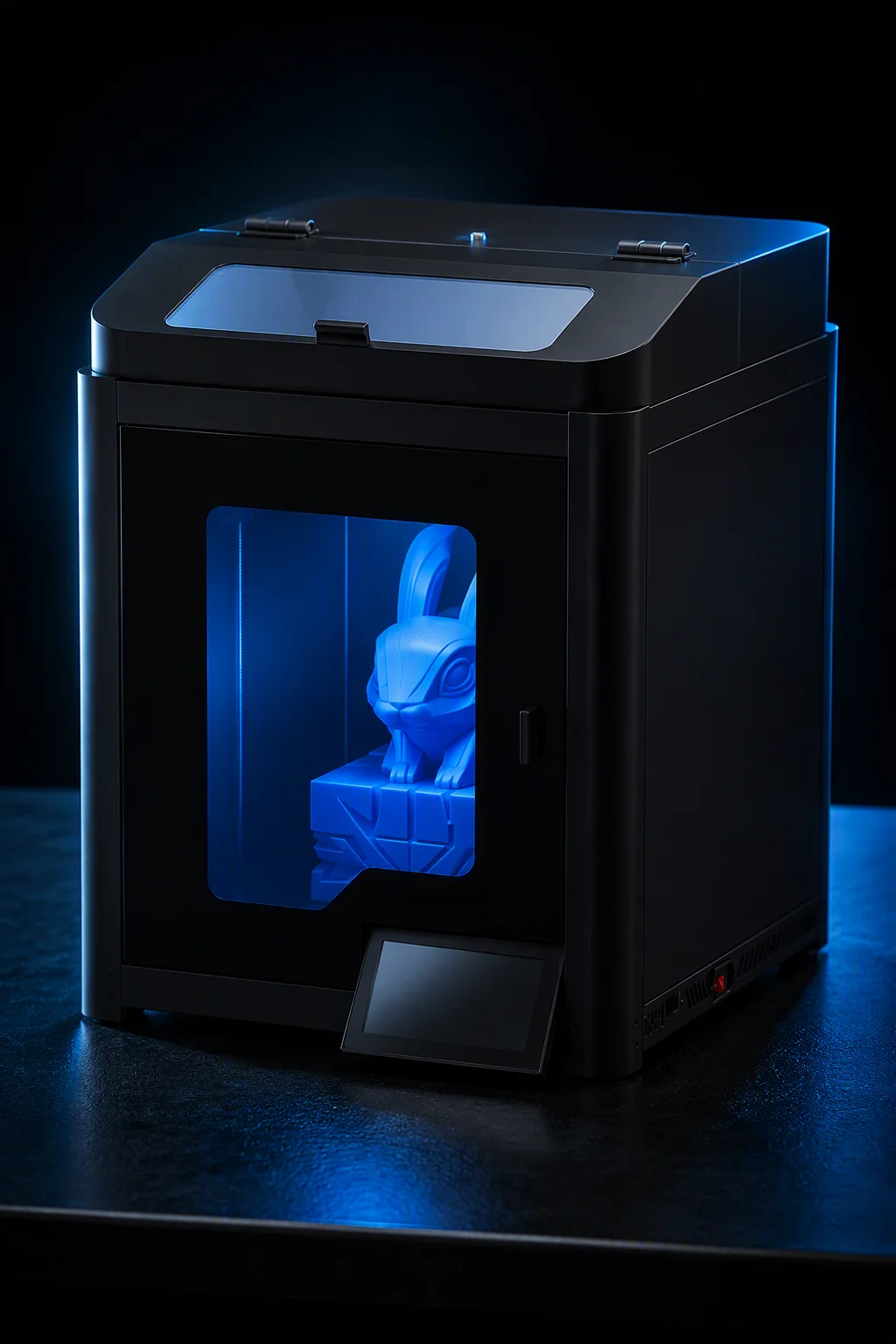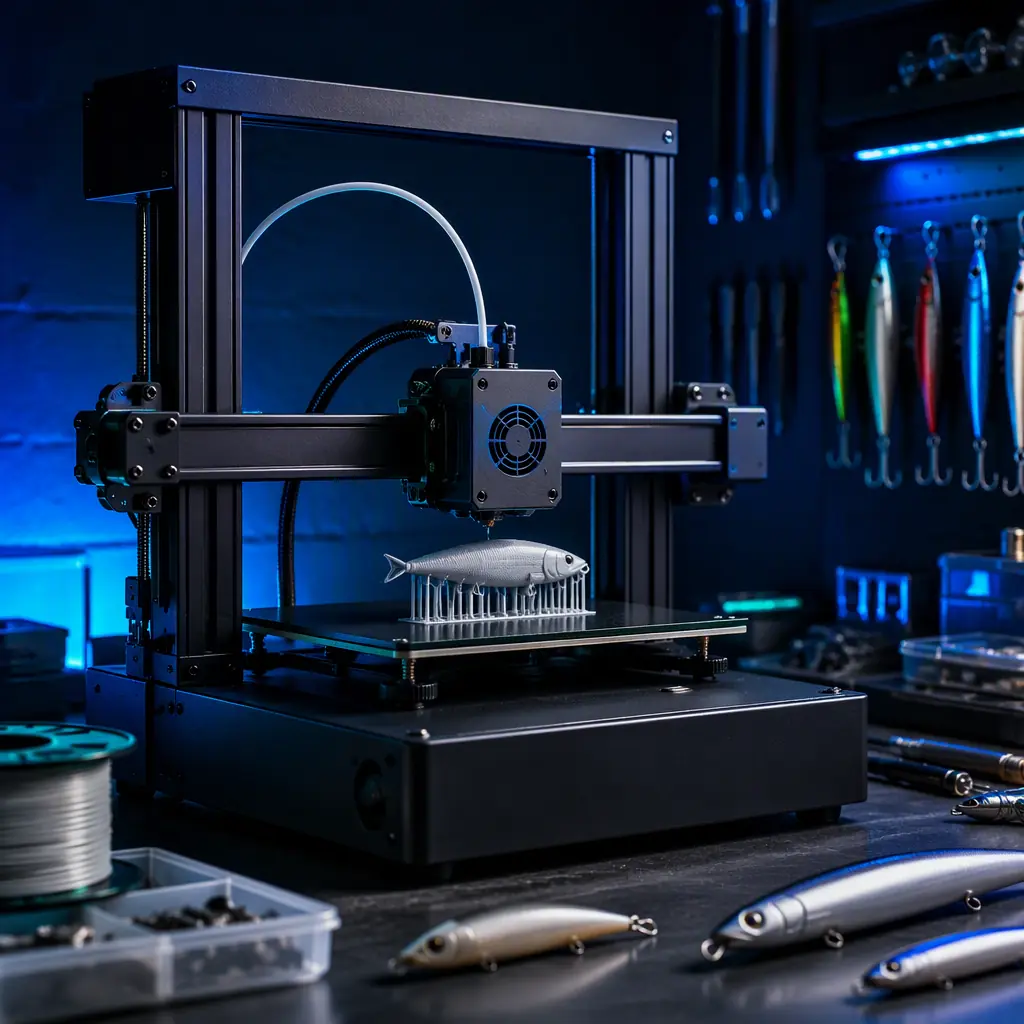
The fishing tackle vertical spans lure manufacturers (crankbaits, swimbaits, jerkbaits, spinnerbaits), soft-plastic molders (worms, craws, and creature baits), custom tackle shops that build or modify gear for serious anglers, and accessory brands (rod holders, tackle boxes, line-management tools). One structural fact drives the opportunity: lure design is a physical, iterative process, action, buoyancy and sound are tested by casting prototypes, not by simulation, and a manufacturer may iterate 10-30 versions of a single lure before it fishes correctly. Traditional prototyping means a machined or molded part at $200-2,000 and 2-6 weeks per iteration; printing collapses that to a day. The same economics apply to soft-bait mold masters, where a printed master is the direct path to a production silicone mold, the prototype-to-production transition is mapped in our injection molding vs 3D printing guide.
Why Fishing Tackle Is Buying 3D Printers
Four structural facts make tackle buyers durable. First, iteration cost: lure action is validated by casting, and each prototype version traditionally costs $200-2,000 in machining or molding; printed versions cost $1-15, so designers iterate freely. Second, seasonal launch pressure: tackle brands launch new SKUs at fishing expos every winter and spring, and 3D printing lets a small team develop 10-20 new designs per season, the portfolio logic is in our portfolio strategy guide. Third, soft-bait mold masters: every soft-plastic bait starts as a master pattern; resin printing produces masters with detail that hand-carving cannot match, at a fraction of the cost. Fourth, customization demand: anglers want custom colors, sizes and actions; short-run printing serves niche demand that no mold can justify, the same small-batch economics as our consumables & accessories bundling guide.
The Applications That Actually Buy
Six clusters generate the orders. The buyers are lure manufacturers, soft-bait molders, custom tackle shops, accessory brands, and the distributors who serve the outdoor retail channel.
1. Lure body prototypes. The highest-frequency application: crankbaits, swimbaits, and topwater bodies printed for action testing. A printed body costs $1-15 versus $200-2,000 for machined or molded prototypes; the material and finish choices that affect swimming action are covered in our post-processing & finishing guide.
2. Soft-plastic mold masters. Resin-printed master patterns for silicone molds used to cast soft worms and creature baits. A master that captures scale detail and ribbing prints overnight on a resin machine; the resin workflow is in our resin printer distribution guide.
3. Jig heads, weights and hardware components. Custom jig heads (printed or as patterns for casting), lipless crankbait weights, and rattle chambers. These small parts print in minutes and ship in volume, the batch economics are in our print farm operations guide.
4. Short-run production of niche lures. Regional and custom lures that never justify a mold, printed in ABS, PETG or nylon at 50-500 units. The low-volume production path is developed in our MOQ & OEM negotiation guide.
5. Accessories and tackle organization. Rod holders, tackle box dividers, line spoolers, hook keepers, and lure storage racks. A strong print-farm product line for the outdoor channel, the accessory revenue model is in our accessories revenue multiplier guide.
6. Custom tackle-shop tools. Vise jaws, tying tools, and fixture jigs for the fly-tying and rod-building benches in custom tackle shops. Unit-of-one tools that shops are happy to print themselves.
Materials for Fishing Tackle
Tackle buyers work in three material worlds, floating, sinking, and flexible:
Two realities dominate material conversations. First, buoyancy tuning: the float-sink profile of a lure is designed, and material density is part of the design, the material-selection framework is in our filament stocking guide. Second, finish and paint: production lures are painted and clear-coated, so printed bodies need a paintable surface; the finishing workflow is fully covered in our post-processing & finishing guide.
From Design to Fishing Lure: The Product Workflow
The workflow that wins tackle accounts has five stages. Design the body. CAD the lure with correct lip angle, cavity and line-tie placement; the dimensional framework is in our tolerances & dimensional accuracy guide. Print and test the action . Print in ABS or PETG, add the lip and hardware, and cast it; action testing drives iteration, and each iteration is a day instead of a month. Validate buoyancy and durability . Check float-sink profile, paint adhesion and hook-hang strength; the qualification workflow is in our incoming QC guide. Go to short-run production . Print the approved design in batches, or use the body as the master for a silicone mold and cast production copies; the transition logic is in our injection molding vs 3D printing guide. Stock and reorder . The recurring filament, resin, and accessory demand is developed in our consumables & accessories bundling guide.
Budget Reality: Printed vs Molded
The comparison that closes tackle accounts:
The distributor math compounds because tackle brands iterate constantly and hobbyists consume filament continuously. The printer investment model that justifies the maker's own machines, and your demo fleet, is in our TCO & ROI calculator guide.
The Distributor Playbook: Entering Fishing Tackle
Five moves win tackle accounts:
1. Target lure manufacturers and custom shops. Mid-size lure brands (10-200 employees) and custom tackle shops are the highest-intent buyers, they live on iteration speed. Build a target list of 30-50 accounts across the US, Japan, Scandinavia, and Australia.
2. Lead with the season-launch pitch. The pitch is "develop 10 new designs this season at $15 per iteration." Bring a printed crankbait and a resin-printed mold master to every meeting. Designers approve what they can cast and test on the spot.
3. Bundle the tackle material set. An FDM printer for bodies plus a resin printer for masters is the anchor combination, and the margin is in ABS, PETG, nylon, and resin lines, build plates, and a finishing kit. The bundling mechanics are in our consumables bundling guide.
4. Offer a design-to-production service. Many small brands have sketches, not CAD. A distributor that offers modeling, printing, and short-run production for a fixed fee captures the account before hardware discussion starts, the service-revenue logic is in our repair service center guide.
5. Work the expo cycle. Tackle launches cluster around fishing expos in winter and spring; sell printers, resins, and finishing supplies ahead of each launch season, using the framework in our trade show strategy guide.
Common Pitfalls in Tackle Accounts
Five mistakes cost distributors tackle business: (1) selling one printer for two workflows . Lure bodies need FDM, mold masters need resin; pushing only one leaves half the account on the table (the comparison is in our FDM vs resin guide); (2) ignoring buoyancy . A lure that sinks when it should float is a failed product; sell material guidance, not just machines; (3) skipping paintability . Printed bodies need a paintable, sealed surface; untreated layer lines ruin a paint job; (4) treating hobbyists like manufacturers . Hobbyists buy for fun and need training, brands buy for production and need throughput; the two segments need different pitches, and the education angle is in our customer training guide; and (5) forgetting chemical resistance . Soft-bait molds and lure finishes involve chemicals that attack some plastics; verify material compatibility with the framework in our factory audit & QC checklist guide.
Getting Started: The First 90 Days
A 90-day entry plan: Month 1 . Identify 30-50 target accounts (lure brands, custom shops, tackle accessory brands) and stock the tackle material set: ABS, PETG, nylon, TPU, standard and water-washable resin, plus build plates and a finishing kit. Month 2 . Produce a finished demo piece (a painted, clear-coated crankbait and a resin-printed mold master), run two pilot jobs at cost-plus-10% (a prototype iteration batch and a short-run of a niche lure), and offer design-to-production services to one custom shop. Month 3 . Convert pilots to full accounts with expo-season supply agreements, publish your first measured case study ("crankbait maker: $18,000 mold → $1.50 printed body, 12 weeks → overnight"), and open one accessory brand account. The printer investment model that justifies the distributor's own machines is in our TCO & ROI calculator guide.
Reviewed by the Precise3D engineering & OEM team. Compliance files that accompany the catalog are auditable at the certification register.
Enter the Fishing Tackle Market
Ready to Supply Lure Makers & Tackle Brands?
Get wholesale pricing on FDM and resin printers, ABS/PETG/nylon/resin lines, build plates, finishing kits, and the tackle playbook that wins lure manufacturers and custom shops.