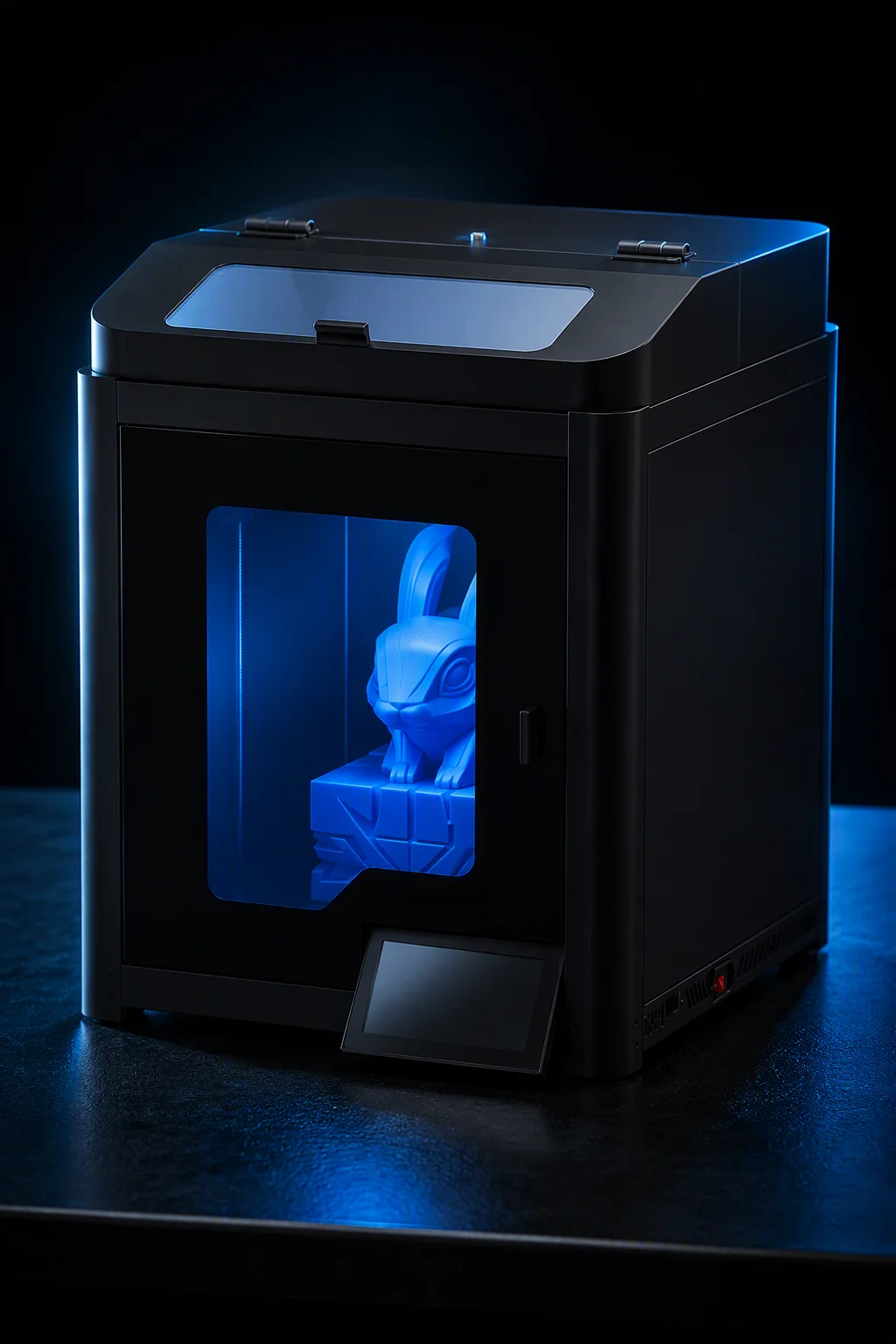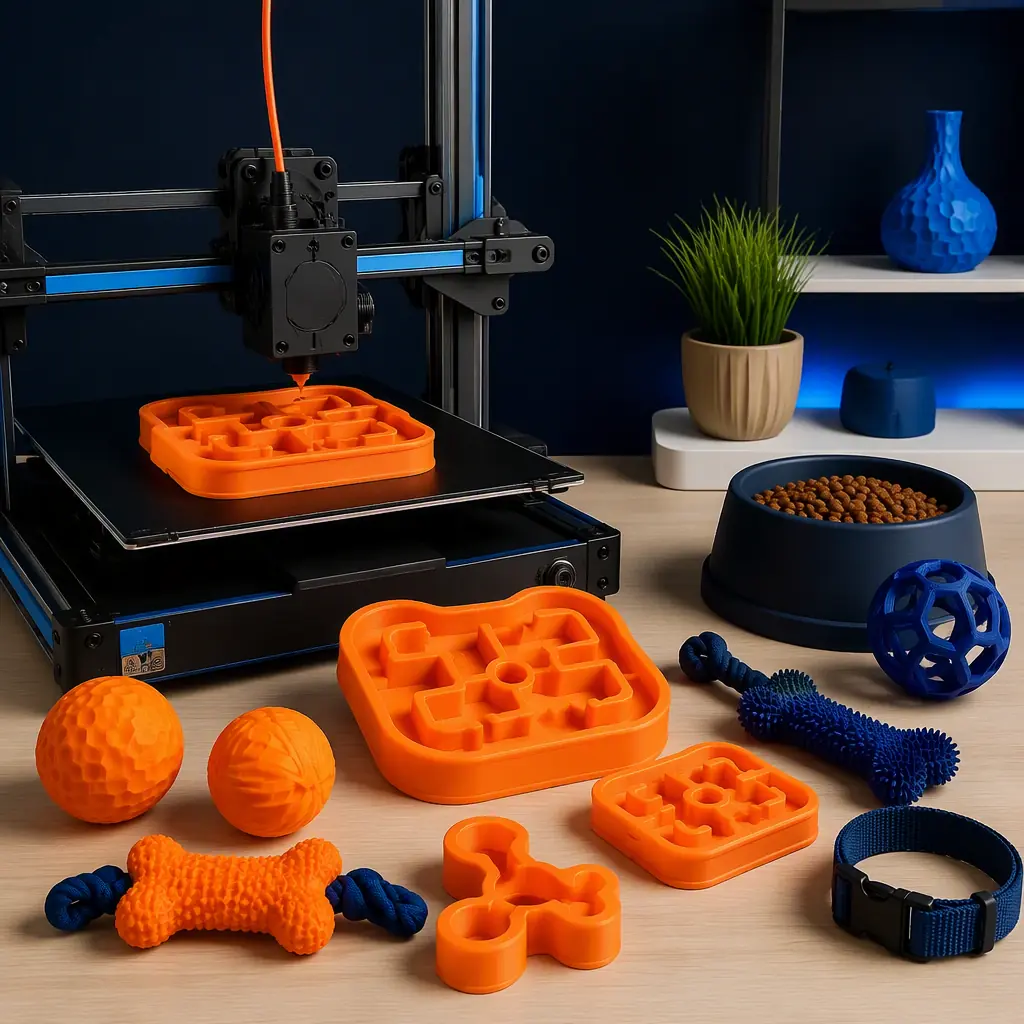
A two-person startup in Portland wanted to launch an automatic feeder for slow-eating dogs. Injection molding the first design would have meant a $25,000 mold and a 3,000-unit minimum, a bet they could not justify before a single pre-order. Instead, they printed 200 feeder bodies in food-safe PETG on two desktop printers, tested them with 40 dogs, redesigned the auger twice, and launched on Kickstarter with a working product and $180,000 in pre-orders. The pet products industry is a $150+ billion global market where buyers reward novelty, batches are small, and speed to market decides who owns a trend. That combination makes it one of the most active verticals for 3D printing outside engineering, and a surprisingly sticky account type for distributors who understand it.
Why Pet Products Is Buying 3D Printers
Four structural facts make pet products a durable buyer. First, trend speed: pet owners chase novelty. A puzzle toy that goes viral on social media sells out in days, and only digital fabrication can go from trend to product that fast. Second, low-volume economics: a niche product selling 500-2,000 units a year can never amortize a mold; the mold-versus-print decision logic is developed in our injection molding vs 3D printing guide. Third, customization demand: pet owners want their dog's name on the bowl, their cat's weight in the feeder program, their breed in the toy design, personalization at unit-of-one volume. Fourth, rapid iteration on safety feedback: pet products get chewed, dropped, and washed, and real-world feedback forces design revisions that are trivial to absorb on a printer. The consumer-goods iteration pattern is covered in our fashion & footwear guide, where the same small-batch logic applies.
The Applications That Actually Buy
Six clusters generate the orders. The buyers are pet product brands, startups, custom pet shops, veterinary retail suppliers, ecommerce sellers, and print-on-demand businesses.
1. Enrichment and puzzle toys. The flagship application: treat-dispensing puzzles, snuffle mats frames, lick mats, and interactive toys. These need food-contact-safe materials and rounded, chew-tolerant geometry. And they sell in waves, so production must flex fast.
2. Feeder and waterer components. Augers, hoppers, slow-feed inserts, fountain parts, and portion-control mechanisms. The components are mechanical, food-safe, and constantly revised for a market obsessed with pet health. The food-contact material requirements are covered in our food-safe 3D printing guide.
3. ID tags, collars, and accessories. The volume driver: custom ID tags, collar charms, harness adapters, leash handles, and travel bowls. Every order is personalized, which makes this the category where a print farm replaces a warehouse.
4. Custom-fit gear. Muzzle guards for brachycephalic breeds, harness buckles for odd-sized dogs, wheelchair supports for disabled pets, and boot protectors. These are unit-of-one medical-adjacent products with no off-the-shelf equivalent, the same logic that drives our veterinary & animal health guide at the clinical tier.
5. Replacement and spare parts. Feeder gears, pump impellers for fountains, filter housings, and toy repair parts. Brands extend product life and reduce returns by offering printed spares, the aftermarket revenue logic is in our spare parts & aftermarket revenue guide.
6. Retail displays and store tooling. Pet retailers buy printed shelf organizers, tester displays, and point-of-sale fixtures, the display logic transfers from our retail fixtures & displays guide.
Materials for Pet-Safe Products
Pet buyers are safety-sensitive and brand-sensitive; the material set is narrower than most verticals:
Two realities dominate material conversations. First, food contact: anything that touches food or mouths needs food-safe filament, proper nozzle hygiene, and documented material choice, the full regulatory picture is in our food-safe printing guide. Second, durability under chewing: flexible filaments outlast rigid ones in toys by a wide margin, and the TPU/TPE selection map is in our flexible filaments guide.
From Concept to Chew Toy: The Pet Product Workflow
The workflow that wins pet product accounts has five stages. Design . Model the product with rounded edges and chew-tolerant geometry; pet products fail on sharp corners and thin walls. Prototype and test . Print, then test with real animals; the iteration speed that makes this practical is the core of our rapid prototyping & R&D guide. Validate safety . Confirm food-contact materials and washability before any production run. Batch print . Run small production batches; when a product takes off, the print-farm scaling playbook in our print farm operations guide takes over. Finish and ship . Clean, inspect, and package; pet products ship direct to consumers, so the ecommerce fulfillment logic in our ecommerce marketplace guide applies directly.
Budget Reality: Printed vs Molded
The comparison that closes pet product accounts:
The distributor math compounds because pet production is consumable-hungry: a busy custom shop printing toys and feeders can consume 20-60 kg of filament per month, plus nozzles, build plates, and finishing supplies, the recurring-revenue model is developed in our consumables & accessories bundling guide.
The Distributor Playbook: Entering Pet Products
Five moves win pet product accounts:
1. Target the brands and the custom shops. Pet product brands (especially the startup tier), custom pet shops, ecommerce sellers, and veterinary retail suppliers are the buyers. Build a target list of 30-40 accounts in your region. This vertical has more small buyers than any other.
2. Sell the speed-to-market story. The pitch is "Kickstarter-ready product in a month, mold-free." Show a finished, food-safe demo product with its material datasheet. Pet brands respond to products they can hold, not spec sheets.
3. Bundle the pet-safe material ecosystem. Food-safe PETG and TPU are the anchors, but the margin is in spare nozzles (food-safe printing demands dedicated nozzles), build plates, and finishing supplies. The bundling mechanics are in our consumables bundling guide.
4. Offer print-on-demand production. Many small brands want the product without the printer. A distributor offering print-on-demand production (customer sends files, distributor prints and ships) captures the volume before they buy hardware, the economics mirror our after-sales support strategy.
5. Work the ecommerce angle. Pet products sell overwhelmingly online, so pair printer sales with the marketplace playbook from our ecommerce strategy guide . A brand that can print-to-order avoids the inventory risk that kills most pet startups.
Common Pitfalls in Pet Product Accounts
Five mistakes cost distributors pet product business: (1) ignoring food-contact hygiene . Printing food-safe parts on a nozzle that previously extruded glow-in-the-dark PLA contaminates the product; sell dedicated nozzles and teach the hygiene protocol (the regulatory detail is in our food-safe guide); (2) overselling PLA for chew toys . A dog will destroy a PLA toy in minutes; flexible filaments are the honest recommendation; (3) underestimating safety scrutiny . Pet products get inspected for sharp edges, small parts, and toxic materials, and a choking incident ends the account (the compliance framework is in our certification & compliance guide); (4) treating pet brands like hobbyists . A brand selling 2,000 units a month on Amazon is a commercial account with real material demand; and (5) skipping the washability test . Pet products are washed constantly, and a part that warps in the dishwasher kills reorders; test and document washability before the first sale.
Getting Started: The First 90 Days
A 90-day entry plan: Month 1 . Identify 30-40 target accounts (pet product brands, custom shops, ecommerce sellers, veterinary retail suppliers) and stock the pet-safe material set: food-safe PETG, TPU in three shore hardnesses, PLA+, PA12, plus dedicated food-safe nozzles and build plates. Month 2 . Produce a finished demo product with material datasheet, run two pilot jobs at cost-plus-10% (a custom tag batch and a feeder-component batch) to build documented evidence, and offer print-on-demand production to two small brands. Month 3 . Convert pilots to full accounts with filament subscriptions and a 48-hour reprint SLA, publish your first measured case study ("feeder auger spare: 3 weeks → same day, $3"), and open one ecommerce-seller account. The printer investment model that justifies the distributor's own machines is in our TCO & ROI calculator guide. The eco-angle also closes deals with modern pet brands, the recycled filament playbook is in our sustainable & recycled filament guide.
Reviewed by the Precise3D engineering & OEM team. Compliance files that accompany the catalog are auditable at the certification register.
Enter the Pet Products Market
Ready to Supply Pet Product Brands & Custom Shops?
Get wholesale pricing on FDM printers, food-safe PETG and TPU filament lines, dedicated food-safe nozzles, build plates, and the pet-products playbook that wins fast-moving consumer accounts.