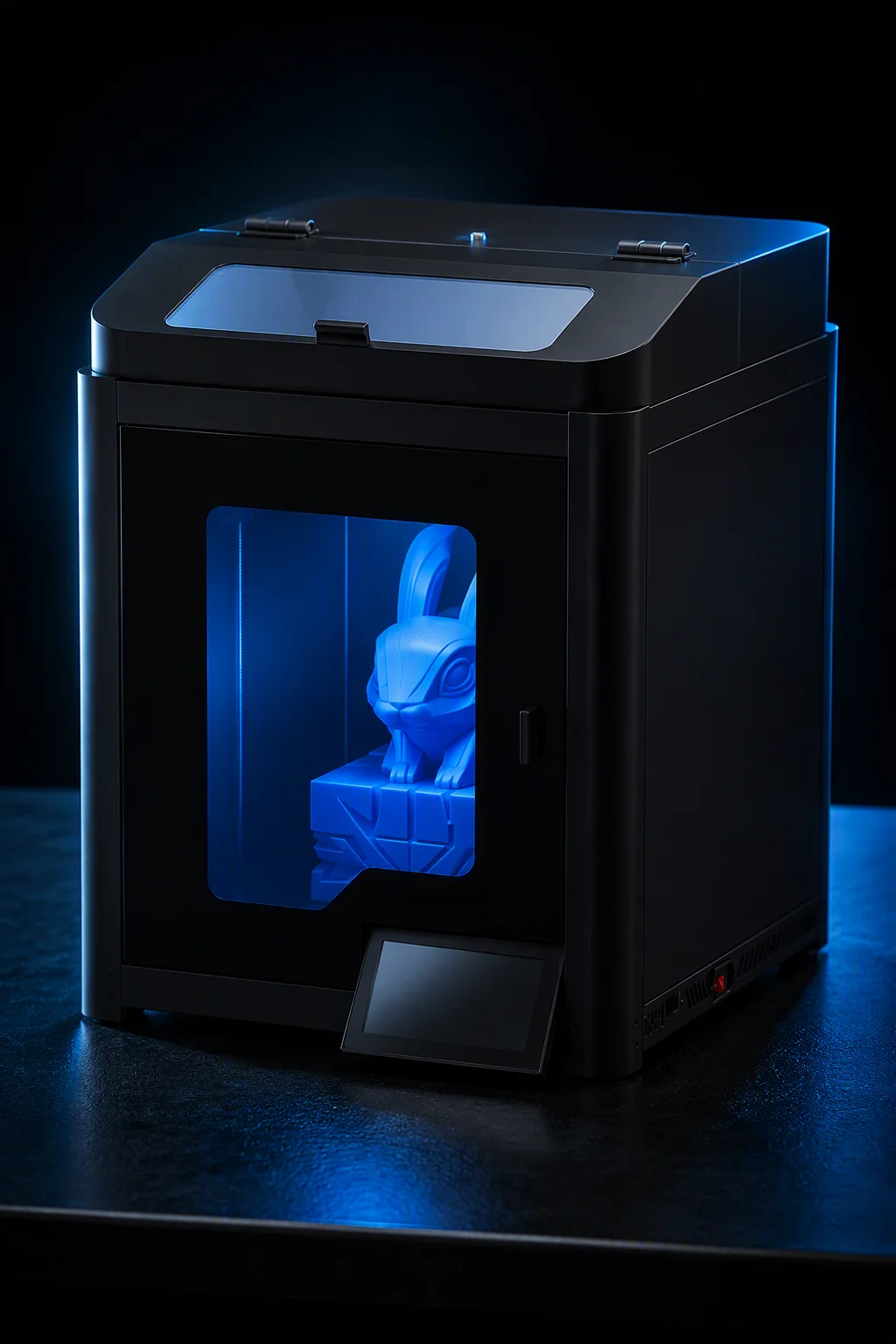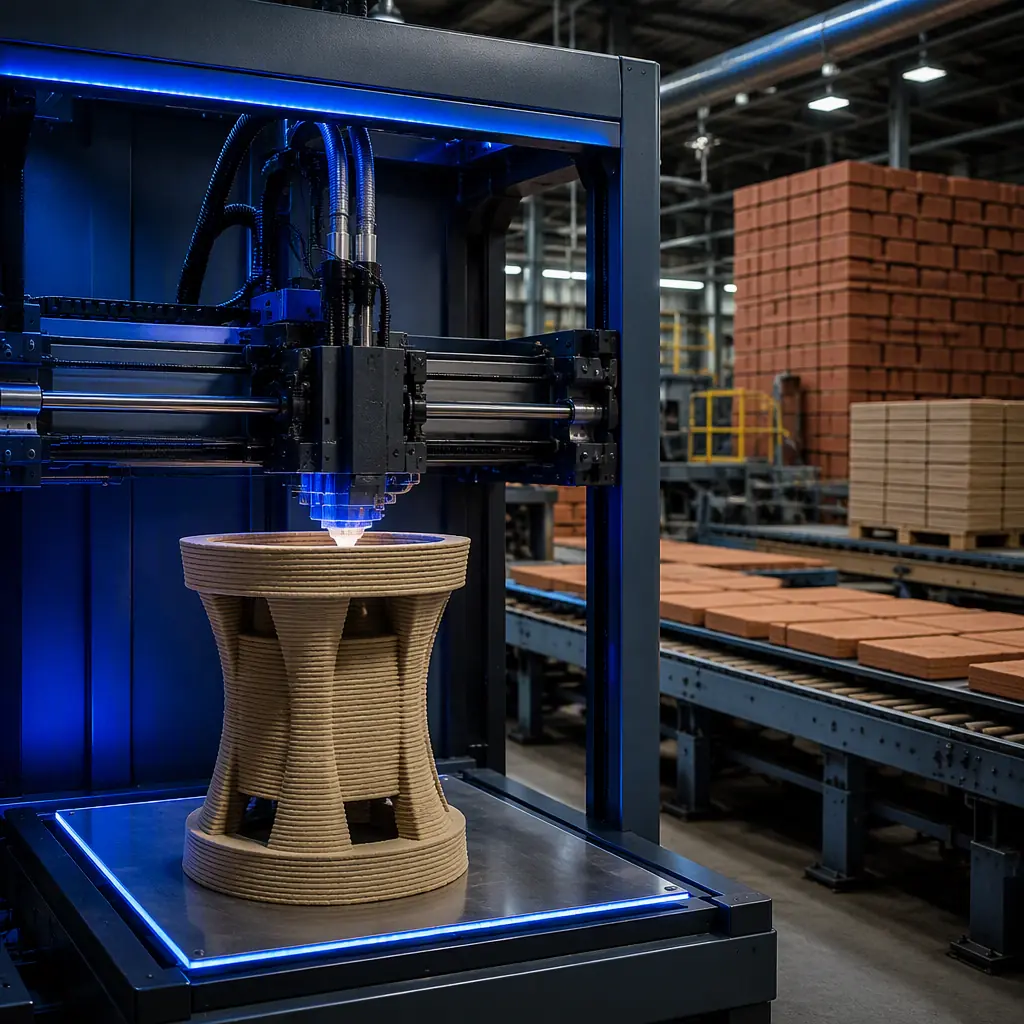
The brick and tile manufacturing vertical spans clay brick plants, ceramic tile manufacturers, roof tile and pavers producers, refractory makers, and plant machinery OEMs and service shops. One structural fact drives the opportunity: a production line stops for tooling it cannot buy off the shelf. Kiln furniture supports, extrusion die inserts, press platens, spacer gauges and machine guards are either vendor-made parts with 4-8 week lead times or legacy components nobody stocks anymore. A printed support cap costs a few dollars and prints overnight; a die wear insert that shuts down an extrusion line prints in an afternoon. Every plant has a drawer of obsolete fixtures and a maintenance log of downtime hours. And every one of those is a print job. The same make-versus-buy economics are mapped in our CNC machining vs 3D printing guide.
Why Brick & Tile Plants Are Buying 3D Printers
Four structural facts make brick and tile buyers durable. First, kiln furniture economics: a tunnel kiln cart carries 800-2,000 setters, supports and caps, and replacing a worn set from a refractory vendor costs thousands with weeks of lead time, the recurring-demand model is developed in our consumables & accessories bundling guide. Second, die and tooling wear: clay extrusion dies and tile press tooling wear continuously, and a printed insert or shim that restores alignment runs at a fraction of machined cost, the tooling logic is in our manufacturing tooling guide. Third, legacy spare parts: plants running 10-30 year old equipment can't source fixtures from the original vendor, and unit-of-one prints keep lines running, the spare-parts economics are in our spare parts revenue guide. Fourth, QC and testing pressure: tile plants measure dimensional consistency on every batch, and printed gauges, calipers and sample holders standardize inspection, the inspection framework is in our incoming QC & inspection guide.
The Applications That Actually Buy
Six clusters generate the orders. The buyers are plant maintenance teams, production engineers, kiln managers, and plant machinery service shops.
1. Kiln furniture support tooling. The highest-value application: setters, support caps, edge props and spacer blocks that hold brick and tile through the kiln. Printed in PA-CF or high-temp composites, these replace refractory vendor parts at a fraction of the cost, the material-selection framework is in our engineering filaments guide. (Note: printed polymers sit outside the hottest zone, supporting jigs and fixtures that carry ware to the kiln, not direct flame-contact parts.)
2. Extrusion die components and shims. Clay auger and extrusion dies wear at the mouth, and printed wear inserts, shims and alignment keys restore profile accuracy between full die rebuilds. Printed in PA-CF or PPSU for abrasion resistance, the material logic is in our PEEK/PEI/PPSU industrial materials guide.
3. Tile press fixtures and platens. Press platens, backfill boxes, edge guides and ejector pins for ceramic tile presses. Printed in PA-CF or PETG to survive daily cycling, the tooling logic is in our manufacturing tooling guide.
4. QC gauges and inspection fixtures. Dimensional gauges, tile thickness calipers, squareness fixtures, sample trays and color-check holders for the QC lab. Printed in PETG or ABS for repeatable, low-cost inspection, the QC framework is in our incoming QC & inspection guide.
5. Machine guards, brackets and line fixtures. Sensor mounts, conveyor guides, guard brackets, cable trays and hopper adapters that keep the line running. Unit-of-one prints that adapt to any machine, the accessory logic is in our accessories revenue guide.
6. Packaging and handling tooling. Brick and tile packing heads, pallet guides, banding fixtures and spacer templates for the packaging line. Printed in PETG or PP for durability, the bundling mechanics are in our consumables bundling guide.
Materials & Heat Rules
Brick and tile buyers select materials by heat proximity, abrasion and load, not by cost. Four families dominate:
Two realities dominate material conversations. First, heat proximity is a spec, not a suggestion: nothing printed in polymer goes into direct flame or the 1,000°C+ firing zone, but kiln-adjacent support tooling, cart fixtures and pre-kiln handling parts run safely in PA-CF and high-temp polymers, the engineering material options are in our engineering filaments guide. Second, abrasion drives selection: anything touching wet clay or ceramic powder gets PA-CF or PPSU; anything touching finished tile gets PETG or PP, the flexible and durable families are in our TPU/TPE filament guide.
From Downtime Event to Printed Fixture: The Workflow
The workflow that wins plant accounts has five stages. Identify the failure point . The worn die insert, the broken kiln support, the gauge that disappeared; the failure-analysis framework is in our print troubleshooting guide. Model or scan it . Model the part from dimensions or scan the worn original; the scanning path is in our scanner & printer bundle guide. Select the material by heat and abrasion . Kiln-adjacent parts get PA-CF; gauges get PETG; hot fixtures get PPSU, using the framework in our industrial materials guide. Print and validate . Print, test through a real production cycle, and iterate; the verification checklist is in our incoming QC guide. Build the plant library . Every qualified fixture becomes a digital asset the plant can reprint for the next kiln cycle; the recurring-demand model is developed in our consumables subscription guide.
Budget Reality: Printed vs Vendor vs Machined Tooling
The comparison that closes plant accounts:
The distributor math compounds because a plant's tooling demand is continuous, and every successful print creates demand for the next. The printer investment model that justifies the plant's own machines, and your demo fleet, is in our TCO & ROI calculator guide.
The Distributor Playbook: Entering Brick & Tile Manufacturing
Five moves win plant accounts:
1. Target plants with continuous tooling demand. Clay brick plants, ceramic tile manufacturers and roof tile producers (50-500 employees) with active maintenance shops are the highest-intent buyers. Build a target list of 20-40 plants in your territory or region.
2. Lead with a downtime rescue pilot. Offer to print one worn die insert or kiln support set for free during a scheduled maintenance window. The plant sees a $180-450 vendor part delivered overnight at $8-25, the demo playbook is in our B2B sales demo guide.
3. Bundle the plant material set. An enclosed printer plus PA-CF, PETG, PP, ABS, ASA and a high-temp line is the anchor combination, and the margin is in materials, hardened nozzles and build plates. The bundling mechanics are in our consumables bundling guide.
4. Offer a fixture-replacement service. Plants need legacy fixtures reproduced and QC gauges refreshed on demand. A distributor that prints and validates fixtures for a per-part fee captures the account before hardware discussion starts, the service-revenue logic is in our repair service center guide.
5. Work the kiln maintenance cycle. Kiln shutdowns happen on a schedule, and each one is a window for printed support tooling, cart fixtures and pre-kiln handling parts. Sell printers, materials and print-on-demand services ahead of each shutdown, using the framework in our trade show strategy guide.
Common Pitfalls in Plant Accounts
Five mistakes cost distributors brick and tile business: (1) selling printed parts into the firing zone . Polymers cannot survive direct flame or 1,000°C+ kiln interiors; sell kiln-adjacent support tooling and cart fixtures, not fire-contact parts; (2) ignoring abrasion . Anything touching wet clay or ceramic powder needs PA-CF or PPSU, not PLA; the material rules are in our filament stocking guide; (3) treating plants like general manufacturing . The buyer is a maintenance manager or production engineer, and the pitch is uptime and cost per fixture, not throughput; (4) skipping the validation step . A fixture that fails mid-cycle stops the line; test through a real production cycle before handover; and (5) forgetting adjacent ceramics verticals . The same plants make sanitary ware, refractories and pavers, covered in our glass industry guide and construction machinery industry guide.
Getting Started: The First 90 Days
A 90-day entry plan: Month 1 . Identify 20-40 target plants, and stock the plant material set: PA-CF, PETG, PP, ABS, ASA, a high-temp line, plus hardened nozzles, build plates and a drying system. Month 2 . Run two downtime-rescue pilots (one brick plant, one tile manufacturer), produce a fixture-replacement service template, and add a maintenance manager to your advisory loop. Month 3 . Convert pilots to paid accounts with fixture-service agreements, publish your first measured case study ("Tile plant: $260 kiln support sets → $14 printed PA-CF, fitted before the next kiln cycle"), and open one plant machinery service shop account. The printer investment model that justifies the distributor's own machines is in our TCO & ROI calculator guide.
Reviewed by the Precise3D engineering & OEM team. Compliance files that accompany the catalog are auditable at the certification register.
Enter the Brick & Tile Market
Ready to Supply Brick & Tile Manufacturers?
Get wholesale pricing on enclosed printers, PA-CF/PETG/PP/ABS/ASA/high-temp material lines, hardened nozzles, dryers, and the plant-floor playbook that wins kiln and production-line accounts.