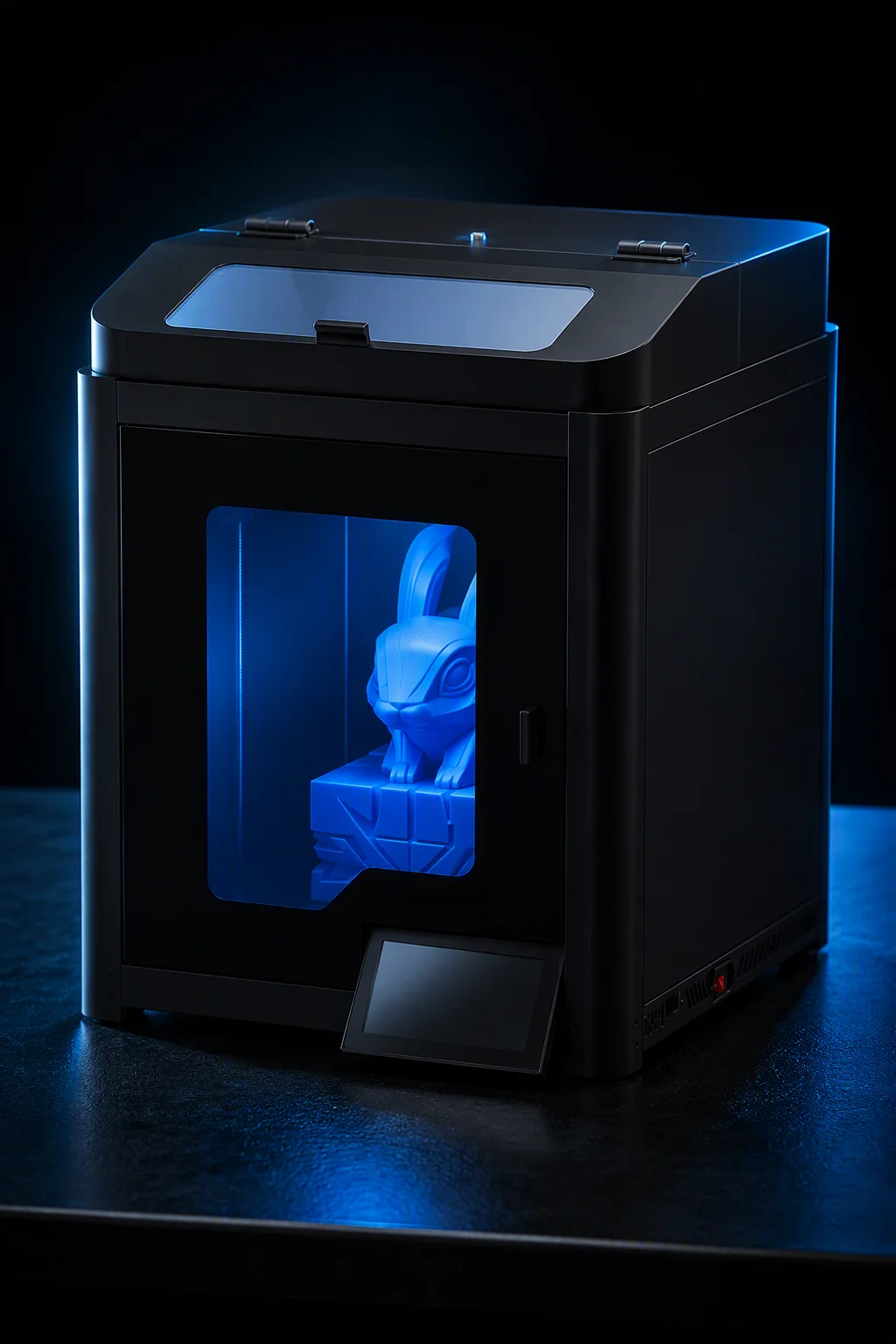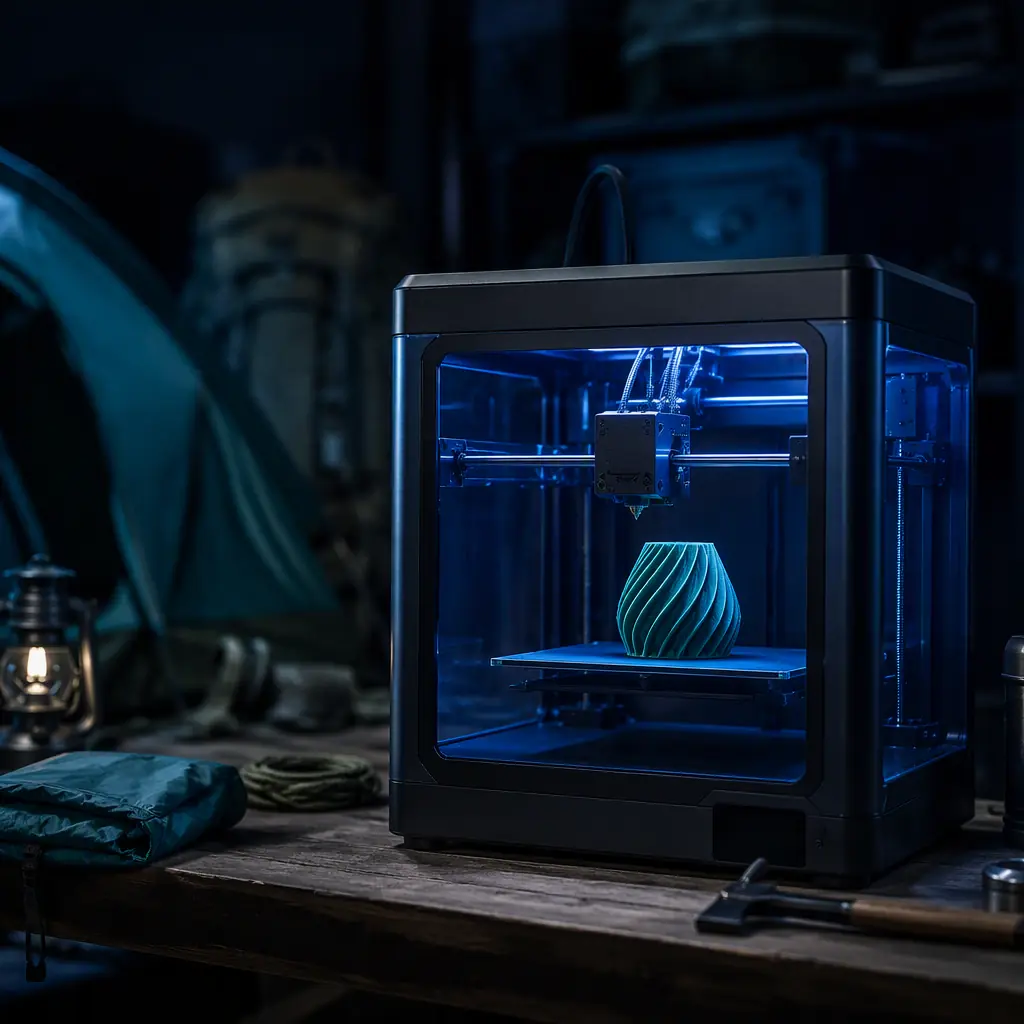
The camping and outdoor-recreation vertical spans camping equipment brands (tents, stoves, lanterns, cookware), backpack and gear manufacturers, outfitters and rental companies, specialty retailers, and the large DIY enthusiast market. One structural fact drives the opportunity: outdoor gear is personal, wearable, and failure-prone in the field. A broken buckle, a snapped tent pole ferrule, or a lost stake can end a trip. Traditional replacement means waiting for a dealer part, and custom gear simply does not exist at any price because molds are uneconomical below tens of thousands of units. Printing collapses the economics: a custom accessory or repair part costs $1-25 in materials and prints overnight. The same small-batch logic applies across outdoor gear, and the transition path is mapped in our injection molding vs 3D printing guide.
Why Outdoor Recreation Is Buying 3D Printers
Four structural facts make outdoor buyers durable. First, customization demand: campers want gear that fits their exact setup, tent-specific adapters, stove windshields for their stove model, mounts for their lantern brand, and no mold justifies these niches; the same unit-of-one economics as our consumables & accessories bundling guide. Second, field-repair culture: outdoor enthusiasts repair rather than replace. Broken buckles, zipper pulls, pole tips, and stake caps are all print jobs, and the repair workflow is in our repair service center guide. Third, seasonal launch pressure: camping brands launch new accessories every spring and summer, and printing lets a small team ship 10-20 new designs per season, the portfolio logic is in our portfolio strategy guide. Fourth, the enthusiast printer market: millions of campers already own or want a 3D printer for gear, and the maker community buys printers, filaments and accessories continuously, the community angle is in our makerspace & community workshop guide.
The Applications That Actually Buy
Six clusters generate the orders. The buyers are camping brands, backpack and tent makers, outfitters, specialty retailers, and the enthusiast market.
1. Custom gear and accessories. The highest-frequency application: tent stake pullers, lantern and headlamp mounts, stove windshields, pot grips, cup hooks, and pack organizers. These print in $2-25 of PETG or ASA and ship within days of the design. The material and finish choices are covered in our filament stocking guide.
2. Repair and replacement parts. Buckles, zipper pulls, tent pole ferrules and tips, stake caps, and strap adjusters. Field-repairable parts that save a trip and keep gear out of landfills, the repair economics are in our warranty & returns guide.
3. Camp kitchen and cookware accessories. Pot lids, windshields, spice holders, utensil organizers, and camp-stove adapters. Heat-resistant materials matter here, the material-selection framework is in our engineering filaments guide.
4. Organization and storage. Tent organizers, gear loft clips, car-camping storage bins, and trailer organizers. A strong print-farm product line for the outdoor channel, the print-farm economics are in our print farm operations guide.
5. Short-run production for brands. Accessories and niche gear that never justify a mold, printed in PETG, ASA or nylon at 100-2,000 units per season. The low-volume production path is developed in our MOQ & OEM negotiation guide.
6. Enthusiast custom builds. The maker community printing its own gear, custom bike mounts, drone landing pads, fishing accessories, and gear modifications. The enthusiast segment is developed in our sports equipment manufacturing guide.
Materials for Outdoor Gear
Outdoor buyers select materials by field conditions, UV, cold, moisture and impact:
Two realities dominate material conversations. First, cold and UV exposure: gear lives in sun, rain, snow and sub-zero nights, so ASA, PETG and nylon replace PLA in almost every outdoor application; the weather-durability guidance is in our outdoor & weather-resistant printing guide. Second, weight matters: backpackers count grams, so infill and wall settings are part of the design conversation, the lightweight-printing framework is in our infill patterns & strength guide.
From Idea to Trail Gear: The Product Workflow
The workflow that wins outdoor accounts has five stages. Design for the field. CAD the part with weather, cold and impact in mind; the design-for-environment framework is in our tolerances & dimensional accuracy guide. Select the material . Match UV, cold, moisture and load to PETG, ASA, nylon or TPU; the selection framework is in our filament stocking guide. Print and field-test . Print, test in real conditions, and iterate; the qualification workflow is in our incoming QC guide. Produce in short runs . Print the approved design in batches of 100-2,000, or publish the design for enthusiasts to print at home; the batch economics are in our print farm operations guide. Stock and reorder . The recurring filament and accessory demand is developed in our consumables & accessories bundling guide.
Budget Reality: Printed vs Molded
The comparison that closes outdoor accounts:
The distributor math compounds because outdoor brands iterate constantly and enthusiasts consume filament continuously. The printer investment model that justifies the maker's own machines, and your demo fleet, is in our TCO & ROI calculator guide.
The Distributor Playbook: Entering Outdoor Recreation
Five moves win outdoor accounts:
1. Target camping brands and outfitters. Small camping brands (5-100 employees), outfitters and rental companies, and specialty retailers are the highest-intent buyers, they live on new products and field repairs. Build a target list of 30-50 accounts across the US, Canada, Europe, and Australia.
2. Lead with the season-launch pitch. The pitch is "ship 10 new accessories this season with zero tooling." Bring a printed accessory and a repaired buckle to every meeting. Brands approve what they can hold and field-test on the spot.
3. Bundle the outdoor material set. An enclosed printer for ASA plus a second unit for nylon/TPU is the anchor combination, and the margin is in PETG, ASA, nylon and TPU lines, build plates, and a drying system. The bundling mechanics are in our consumables bundling guide.
4. Offer a design-to-shelf service. Many small brands have ideas, not CAD. A distributor that offers modeling, printing, and short-run production for a fixed fee captures the account before hardware discussion starts, the service-revenue logic is in our repair service center guide.
5. Work the enthusiast channel. Outdoor maker communities, gear forums and YouTube audiences are a fast-growing printer market; sell printers, filaments and accessory kits through the community framework in our customer community & loyalty guide.
Common Pitfalls in Outdoor Accounts
Five mistakes cost distributors outdoor business: (1) selling PLA for outdoor gear. PLA degrades in UV and embrittles in cold; the weather-resistant guidance is in our weather-resistant printing guide; (2) ignoring heat sources . Stove and cookware parts see 80-120°C; recommend ASA or PC where heat is a factor; (3) treating enthusiasts like brands . Enthusiasts buy for fun and need training, brands buy for production and need throughput; the two segments need different pitches, and the training angle is in our customer training guide; (4) skipping field testing . A part that fails at the campsite kills the reorder; the quality framework is in our factory audit & QC checklist guide; and (5) forgetting food-contact rules . Cookware and utensil parts may need food-safe materials and finishing, and the regulatory framework is in our food-safe printing guide.
Getting Started: The First 90 Days
A 90-day entry plan: Month 1 . Identify 30-50 target accounts (camping brands, outfitters, retailers) and stock the outdoor material set: PETG, ASA, nylon, TPU, PC, plus build plates, hardened nozzles and a drying system. Month 2 . Produce a finished demo kit (a printed accessory, a repaired buckle, and a stove windshield), run two pilot jobs at cost-plus-10% (an accessory short run and a repair-parts order), and offer design-to-shelf service to one brand. Month 3 . Convert pilots to full accounts with season supply agreements, publish your first measured case study ("Colorado brand: $8,000 mold → $0 tooling, 14 weeks → 1 week to ship"), and open one enthusiast community account. The printer investment model that justifies the distributor's own machines is in our TCO & ROI calculator guide.
Reviewed by the Precise3D engineering & OEM team. Compliance files that accompany the catalog are auditable at the certification register.
Enter the Outdoor Recreation Market
Ready to Supply Camping Brands & Outfitters?
Get wholesale pricing on enclosed printers, PETG/ASA/nylon/TPU/PC material lines, build plates, drying systems, and the outdoor playbook that wins camping brands, outfitters and the enthusiast market.