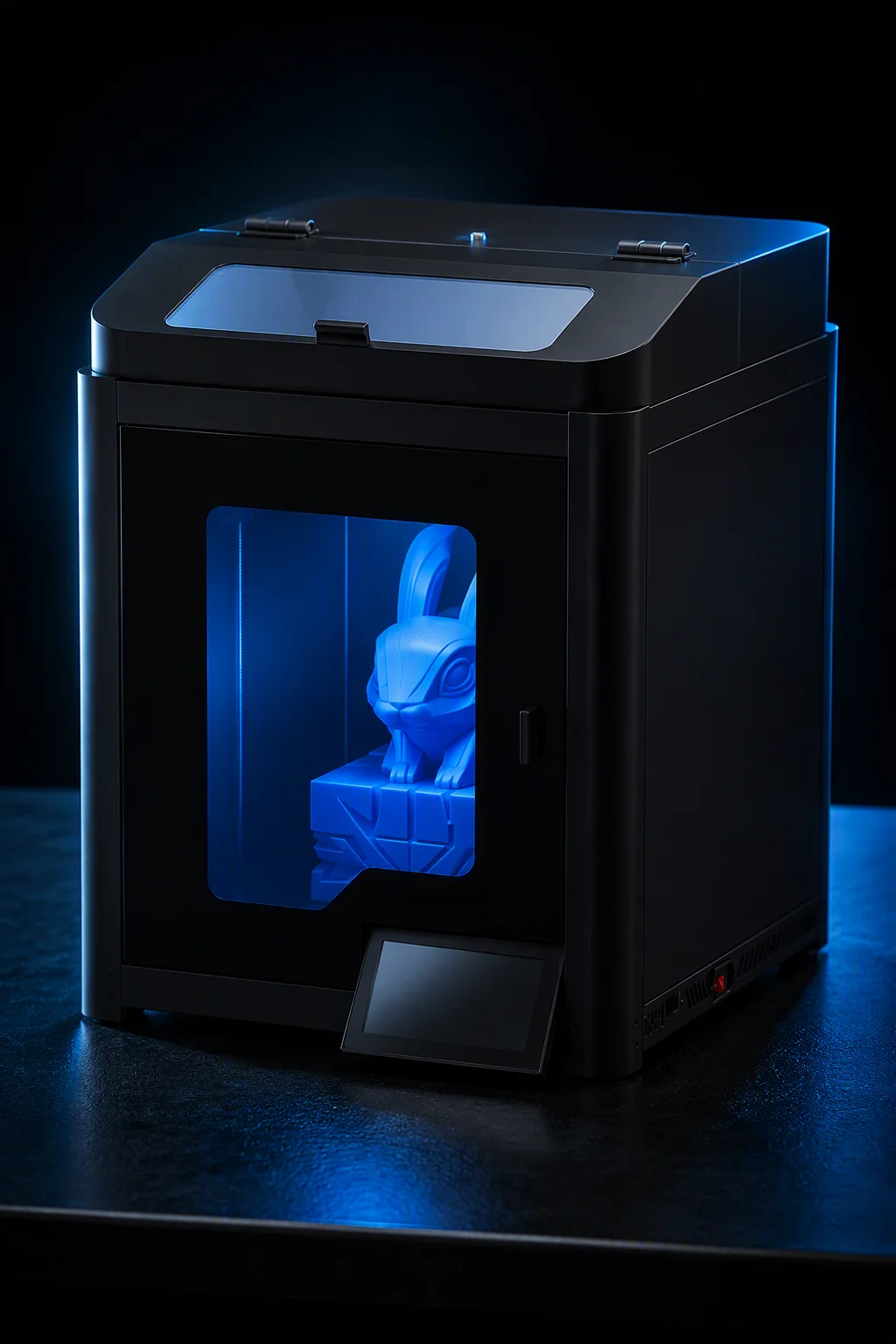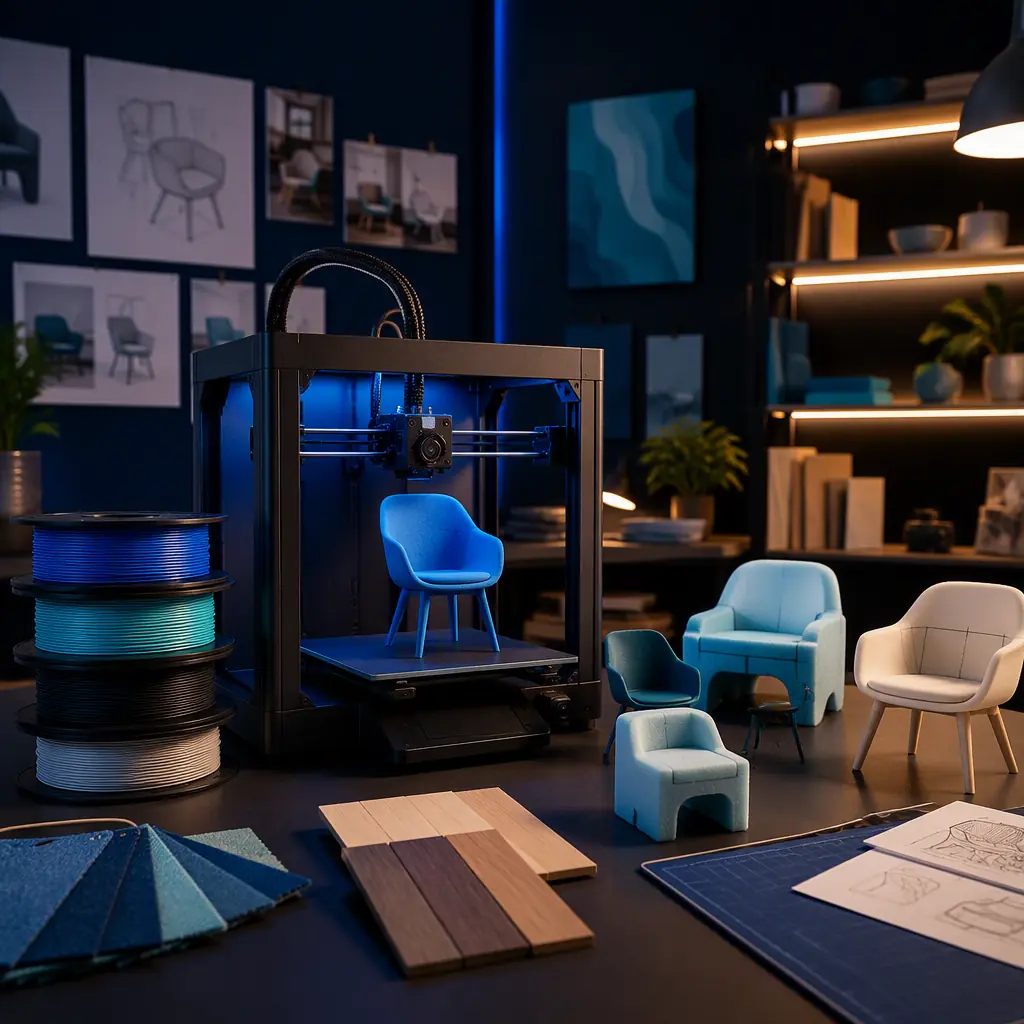
Furniture and interior design procurement splits into four segments with different buying patterns. Furniture manufacturers (case goods, upholstery, and office furniture makers) buy for design iteration, production jigs, and custom hardware. Industrial designers and studios buy for scale models, presentation pieces, and client-approval prototypes. Custom furniture makers buy for one-off components and client-specific hardware. Interior fit-out contractors buy for scale models, on-site fixtures, and replacement parts. Each segment is a repeatable account with a different entry application. For how these fit into a balanced distributor portfolio, see our portfolio strategy guide.
The Furniture Customer Segments and Their Entry Applications
Industrial design studios are the highest-urgency segment: a studio iterating a chair or lighting design for a trade show deadline prints 5-15 scale models per design cycle, and every model is a client-facing artifact that drives approvals. Furniture manufacturers are the highest-volume segment: their prototyping groups print component prototypes and production jigs continuously, and every jig saved is direct labor cost. Custom furniture makers buy on uniqueness: a custom table base, a bespoke drawer pull, or a one-off lighting shade cannot be sourced from a catalog, and 3D printing is the only economical way to make a single piece. Interior fit-out contractors buy scale models for client presentations and print replacement parts and fixtures on site. For the sales methodology that opens these accounts, see our B2B sales demo playbook.
Industrial design studios and furniture manufacturers are the priority segments: studios buy on deadline urgency and manufacturer prototyping groups buy on iteration volume. A studio that prints a scale model for $5 instead of paying $800 for a foam model recovers the printer cost in the first 20 models. For the consumables bundling model that maximizes per-account revenue, see our consumables bundling guide.
Materials for Furniture Prototyping and Production
The material conversation in furniture is about finish, strength, and cost. PLA is the default prototyping material: cheap, easy to print, and available in a wide color range that matches Pantone references for client presentations — ideal for scale models and form studies. PETG adds toughness and slight flexibility for functional prototypes of brackets, connectors, and hardware. ABS brings impact resistance and sandability for parts that will be painted or finished. ASA covers outdoor and high-UV applications — patio furniture components, exterior fittings — where sun exposure would degrade PLA. PA-CF (nylon with carbon fiber) handles load-bearing functional parts: jig bodies, clamping fixtures, and structural prototypes that see real force. For the full material lineup, see our engineering filaments guide and the stocking guide.
What you're listening for: The iteration cost is the ROI script. A studio producing 50+ physical models per year at $500-2,000 each is paying $25,000-100,000 annually for prototyping — a printer-and-material kit pays for itself in the first quarter. The second question is finish requirements: presentation models (PLA in brand colors), painted samples (ABS, sandable), or functional hardware (PETG, PA-CF)?
Real Applications: From Scale Models to Production Hardware
Furniture printing revenue clusters in four application groups. Scale models are the entry application: 1:5 and 1:10 models of chairs, tables, sofas, and lighting print overnight in PLA and are the fastest path to a sale — every studio and manufacturer needs them, and the material cost is a few dollars. Production jigs are the factory application: drilling guides, sanding blocks, assembly fixtures, and glue-up aids that save minutes per operation and pay for the printer in labor savings alone. Custom hardware is the margin application: bespoke drawer pulls, cabinet knobs, hinges, brackets, and connector pieces that sell at 10-50x material cost because they are one-offs. Replacement parts are the recurring application: discontinued knobs, feet, clips, and spacers for existing furniture lines, printed on demand instead of stocked. For the adjacent vertical plays, see our architecture & construction models guide and the hospitality & retail fixtures guide.
Printer Requirements for Furniture Studios and Factories
Furniture printing splits between the studio and the factory floor, and the requirements differ. For studios: a reliable 256 mm-class printer with a large color range — multi-color capability is a genuine selling point for presentation models that show material combinations — plus a resin printer for high-detail small components like knobs and decorative details. For factory floors: larger build volumes (300×350 mm or bigger) for full-size component prototypes, enclosed frames for ABS and ASA, hardened nozzles for PA-CF, and the unattended reliability suite — thermal runaway protection, filament runout detection, power-loss recovery — because production jigs are often printed overnight between shifts. A multi-color printer that handles two or four filaments is a differentiator for studios that present material-combination models to clients. For the complete selection criteria, see our build volume guide, the multi-color printing guide, and the enclosure temperature control guide.
Build volume in furniture splits into two tiers. Scale models, hardware, and jigs fit a 256 mm cube. Full-size component prototypes — a chair arm, a table leg, a cabinet door frame — need 300×350 mm or bigger, and a 300 mm-class printer handles both the largest prototypes and batches of small parts per overnight run. The pilot application that opens a furniture account is almost always a scale model or a jig for the studio's or factory's own workflow: zero risk, printable in PLA overnight, and demonstrably cheaper than the outsourced model or fixture it replaces. For the operational scaling picture, see our print farm operations guide.
The Distributor Go-to-Market Playbook for Furniture
Furniture procurement is design-led and deadline-driven, and the distributor playbook matches that rhythm. (1) Enter through the design studio: the studio controls the prototyping budget and the deadline pressure, and the scale-model pilot is a low-risk entry that demonstrates value in a week. (2) Sell the iteration math: "this $800 foam model is a $5 print that updates overnight; iterate on the file, not on the model shop." (3) Move to the factory with jigs: once the studio is printing, the manufacturing side needs production aids, and every jig digitized is a lock-in asset. (4) Build the custom hardware catalog: bespoke pulls, knobs, and connectors at 10-50x material cost are the margin layer that makes furniture accounts profitable. Sales cycles are 1-4 months, faster than most industrial verticals because the design calendar forces decisions. For the recurring revenue models that lock in furniture accounts, see our spare parts aftermarket guide and the trade show strategy guide.
Recurring Revenue: Design Cycles Consume on a Schedule
Furniture consumable revenue is driven by the design calendar. Studios burn PLA and PETG continuously during collection development — a studio with 3 printers runs 10-30 kg per month in peak season. Manufacturers consume PETG, ABS, and PA-CF on jigs and functional prototypes at 15-40 kg per month. Add spare nozzles (PA-CF wears brass), PEI build sheets, and multi-color filament sets, and a furniture account becomes a $1,000-4,000 monthly revenue stream at 45-60% gross margins. The switching cost is structural: once a studio's team has qualified print profiles and a library of approved model files, changing suppliers means re-qualifying every profile and re-testing every material. For the market sizing and trend context, see our 2026 market trends report and the cosplay & entertainment vertical guide.
Bottom Line
Furniture is the vertical where iteration cost makes 3D printing an obvious purchase. The artifacts that drive furniture sales — scale models, component prototypes, jigs, custom hardware, replacement parts — are small, plastic, and needed faster than any outsourced model shop can deliver, and none of them justify a mold or a CNC run. Industrial design studios buy on deadline urgency and are the fastest entry; manufacturers buy on iteration volume and jig savings and are the deepest accounts; both consume PLA, PETG, and ABS on a schedule a distributor can forecast. A distributor with 10 furniture accounts averaging 3 printers each builds $50,000-100,000 in annual recurring consumable revenue at 45-60% margins — plus the hardware margin on multi-color and large-format machines. The distributor who puts a printer in the design studio and a filament subscription behind it will own the furniture prototyping pipeline before the model shop quotes the job.
Reviewed by the Precise3D engineering & OEM team. Compliance files that accompany the catalog are auditable at the certification register.
Start Your Partnership
Ready to Bring furniture industry to Your Market?
Distributors selling furniture industry build margins with OEM & white-label hardware - request the program sheet and volume pricing.