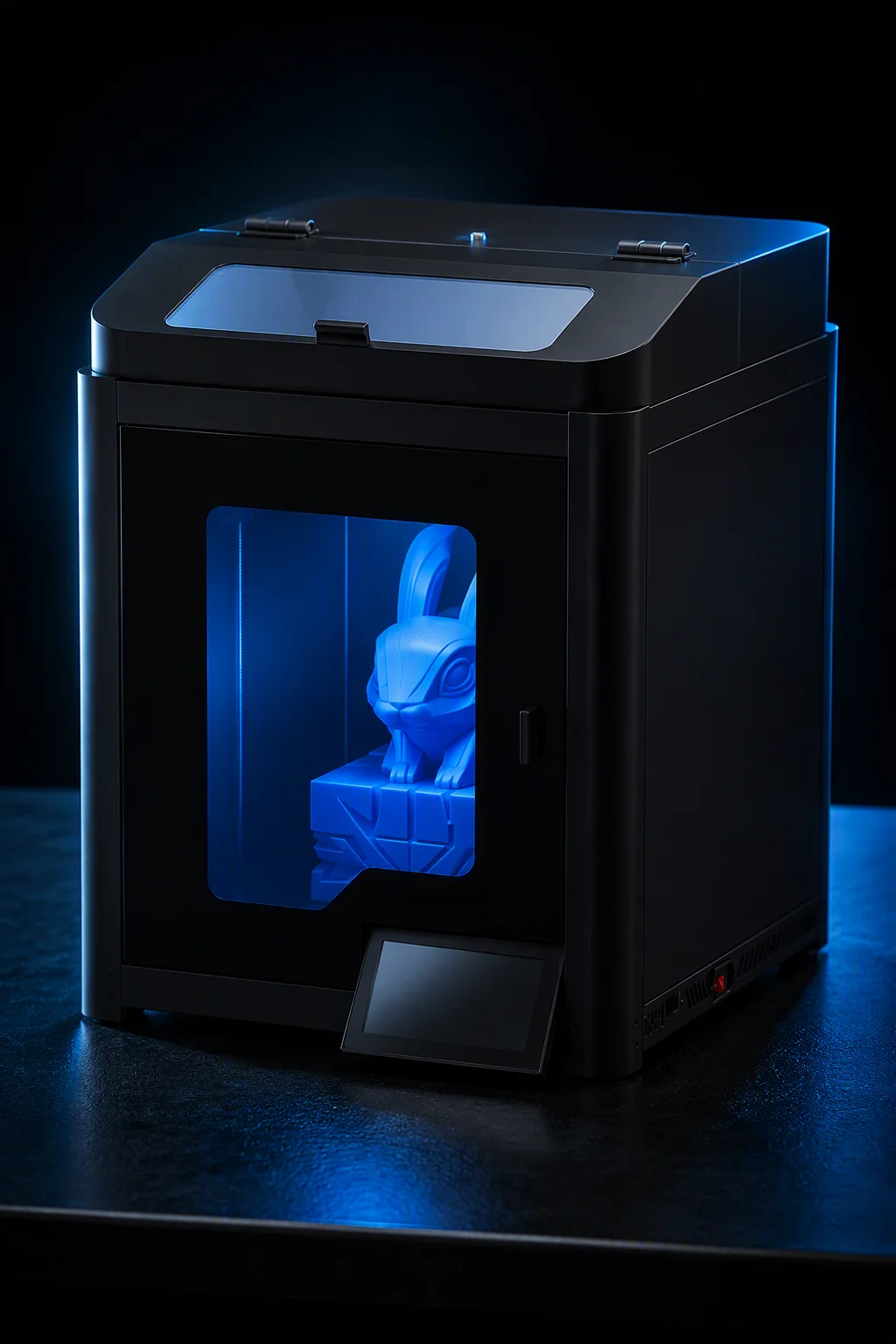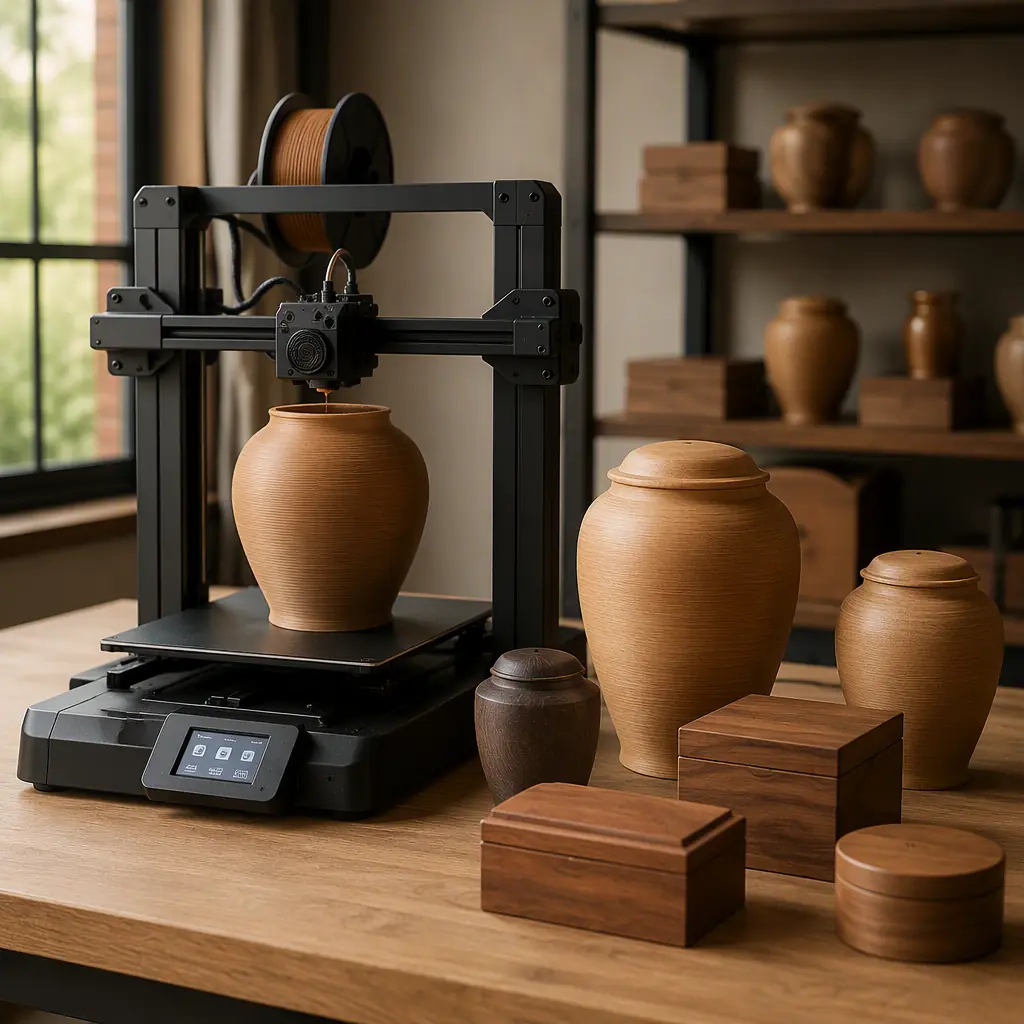
The funeral and memorial vertical spans funeral homes, crematoriums and cremation equipment operators, monument and headstone fabricators, memorial product manufacturers, memorial supply distributors, and pet memorial providers. Three structural facts drive the opportunity. First, personalization demand is rising: families increasingly ask for memorials that reflect a life, a hobby, a place, a profession, and catalogs cannot serve that at scale. Second, cremation rates are growing in most Western markets, which shifts spend from burial hardware toward urns, keepsakes and scattering products. Third, cremation equipment OEM spares are slow and expensive, while monument shops pay heavily for custom stencils and tooling. Every one of these gaps is a print job, and the economics are laid out in our TCO & ROI calculator guide.
Why the Funeral & Memorial Industry Is Buying 3D Printing
Four forces are converting funeral-adjacent businesses into printer buyers. First, the personalization gap: a standard catalog urn sells for $40-120, but a custom urn tied to the deceased's life sells for $150-600 with a 1-3 day turnaround instead of a 3-6 week custom order. Second, cremation's share of dispositions is climbing . In the United States it has risen from roughly 50% in 2020 toward an industry-projected 60%+ by 2030, and in parts of Europe and Asia it is already above 70%, which concentrates spend on urns, keepsakes and scattering vessels, exactly the products that print well. Third, equipment MRO cost: a crematorium's OEM heat shield or tray guide costs $150-500 with a 3-8 week lead time, versus a flame-retardant PA-CF print at $10-40 in 1-3 days. Fourth, monument shop tooling: custom sandblasting masks and lettering templates cost $40-120 from specialty vendors with 1-2 week lead times, versus $5-15 printed in-house overnight. The equipment-owner economics that make these purchases rational are detailed in our TCO & ROI calculator guide. Add the demographic reality: deaths per year in mature markets are rising with aging populations, so funeral service volume grows even as cremation shifts the product mix. A funeral home serving 150-300 families per year generates 150-300 urn and keepsake opportunities annually, and every one is a candidate for personalization. A memorial product maker running three printers and one finishing bench can produce 15-25 keepsakes per week at $25-45 average margin each, a $40,000-60,000 annual line from a single printer investment.
The Applications That Actually Buy
Six clusters generate the orders. The buyers are funeral supply distributors, crematorium operations managers, monument shop owners and memorial product manufacturers, plus, increasingly, independent personalization bureaus that serve funeral homes as subcontractors.
1. Custom urns. The highest-frequency application: biodegradable scattering urns, wood-fill composite urns and pet urns, personalized with names, dates and design elements. Printed in PLA or wood-fill PLA, the material rules are in our filament stocking guide. A biodegradable scattering urn prints at $8-20 in material versus $40-120 retail. Names, dates, boat hulls, mountain profiles, guitar shapes, any silhouette the family asks for becomes a watertight vessel with a threaded lid, printed and finished in 1-3 days.
2. Memorial keepsakes. Photo-based relief keepsakes, fingerprint keepsakes, handprint casts and jewelry-style pendants. Relief keepsakes print in PLA or brass-look composite; heirloom pendants go through lost-PLA bronze casting, where a printed wax-equivalent pattern is burned out of a casting flask and replaced with bronze, the full process economics are in our jewelry casting guide, and the fine-detail precision work follows the same discipline as our watchmaking & horology guide. A fingerprint taken at the service, or a relief of a wedding photo, becomes a physical object the family holds at the memorial; the emotional value is unrelated to material cost, which is exactly why finish quality decides the sale.
3. Cremation equipment spare parts. Heat shields, gaskets, tray guides and air-flow covers that sit near combustion heat. Printed in PEEK, PEI or PA-CF with flame-retardant grades, they replace OEM parts at 5-15% of the price with a fraction of the lead time, the heat-resistant material selection is covered in our engineering filaments guide. Crematoriums typically operate 2-5 units, each cycling through multiple cremations per day, so a worn gasket or cracked tray guide is an availability problem measured in days, a broken spare idles revenue the moment the unit stops.
4. Monument & headstone fabrication tooling. Lettering templates, stencil guides, sandblasting masks and polishing fixtures for granite and bronze work. Printed in PETG or TPU, these replace hand-cut vinyl and outsourced stencils, the tooling logic is in our manufacturing tooling guide, and engraving-adjacent shops benefit from the portfolio thinking in our laser engraver portfolio strategy guide. A monument shop cutting 20-40 headstones per month uses a stencil set per job; printing masks in-house removes the vendor's 1-2 week lead time from every job and cuts per-job stencil cost by 70-85%.
5. Funeral home & chapel fixtures. Candle holders, display stands, floral arrangement holders and registry stands for services and viewing rooms. Printed in PETG or PLA, they give funeral homes a low-cost way to refresh chapel interiors, the recurring-supply logic is in our accessories revenue guide. Funeral homes refresh chapel displays seasonally and for individual services, so printed fixtures behave like consumables rather than capital purchases.
6. Pet memorial products. Pet urns, paw-print keepsakes and grave markers for veterinary clinics, pet crematoriums and direct-to-owner sales. Printed in PLA or wood-fill PLA, this segment follows its own buying behavior, our veterinary & animal health guide covers the clinics and pet crematoriums that anchor these accounts. Pet cremation volume is growing faster than human cremation in most territories, and owners routinely spend $100-300 on a pet urn: often more than they budgeted for the service itself.
Materials & Processing Reality
Memorial products are selected by dignity of finish, longevity and environment of use. Five material families dominate:
Post-processing is where memorial products earn their price. A raw FDM print reads as "plastic"; a sanded, sealed and painted urn reads as "heirloom". The standard sequence runs from 120-grit through 400-grit sanding, a primer coat, two coats of sealer and an optional hand-rubbed wax, the full workflow is in our post-processing & finishing guide. For lost-PLA casting, the printed pattern must burn out cleanly from the flask, which means thin walls and sparse internal structure, with the investment parameters from our jewelry casting guide.
Two realities dominate the material conversation. First, finish is the product: an urn or keepsake is touched and held, so sanding, sealing and painting are part of the deliverable, not an afterthought. The complete finishing workflow (sanding, vapor smoothing, sealing, painting) is in our post-processing & finishing guide. Second, heat proximity is non-negotiable: anything that goes near cremation equipment must carry flame-retardant ratings, which rules out PLA and PETG entirely and forces PA-CF or PEEK with the material data sheets from our engineering filaments guide. Flame-retardant is a verified rating, not a marketing label: confirm the UL 94 class on the supplier's data sheet before quoting any part that sits near combustion. The stocking quantities for all five families are worked out in our filament stocking guide.
From Photo to Keepsake: The Personalization Workflow
The workflow that wins memorial accounts has five stages. Capture . A family photo, a fingerprint, a paw print, or a scan of a treasured object; for 3D captures the scanner path is in our scanner & printer bundle guide; a $300-800 handheld scanner captures object geometry in 15-30 minutes, and the bundle economics are in the same guide. Model . Convert the photo into a relief (a lithophane-style height map or an embossed panel) or the scan into a watertight model, with the memorial's dimensions defined at the start (a standard 250 mm urn holds roughly 2.5 L, adequate for most adult cremated remains). Print . Print the urn, relief or pendant pattern in the material selected for its environment. Finish . Sand, seal, paint or cast; pendants go through the lost-PLA casting process described in our jewelry casting guide. Verify and deliver . Inspect for layer defects, verify the name and dates against the order, and package for handover. Because these are sentimental items, QC is not a formality: a misspelled name or a cracked keepsake cannot be exchanged like a bracket, the zero-defect verification checklist is in our incoming QC & inspection guide. The full cycle, capture to delivered keepsake, runs 3-7 days including finish and QC, versus 2-6 weeks for a traditional custom order, and one operator with one printer sustains 6-10 personalization jobs per week.
Budget Reality: Printed vs Traditional
The comparison that opens memorial accounts:
The distributor math compounds because each category repeats: every service produces a new keepsake order, every crematorium maintains a spares cycle, and every monument job needs fresh stencils. The printer investment model that justifies the customer's own machines, and your demo fleet, is in our TCO & ROI calculator guide.
The repeat-purchase math matters more than any single line item: a crematorium replaces spares on a scheduled cycle, a monument shop consumes stencils per job, and a personalization bureau reorders blanks weekly. That is recurring revenue attached to one printer sale, the same margin engine developed in our accessories revenue guide.
The Distributor Playbook: Entering Funeral & Memorial Accounts
Five moves win funeral and memorial accounts:
1. Target the right segments. Funeral supply distributors, crematoriums (40-200 cremations per year each in many territories), monument and headstone fabricators, and memorial product makers, build a list of 40-80 accounts in your territory. Crematoriums in many territories process 1,000-3,000 cremations per year and hold standing spares budgets; one converted account can reorder spares quarterly.
2. Sell with professional respect, not novelty. This market buys on trust, taste and reliability. Skip gimmicky pitches; lead with quality of finish, material integrity and on-time delivery. The respectful, consultative selling framework is in our B2B sales demo playbook.
3. Offer personalization as a service. A distributor that prints and finishes custom urns and keepsakes for local funeral homes captures revenue before hardware discussion starts, the service-revenue model is in our repair service center guide.
4. Demo with memorial product makers. Run a pilot with one urn personalization bureau: print a wood-fill urn and a relief keepsake from a supplied photo, deliver both finished, and let the finish do the talking. The pilot structure is in our B2B sales demo playbook.
5. Bundle the material set that matches the vertical. Biodegradable PLA, wood-fill PLA, brass-look composite and PA-CF lines, plus a PEEK/PA-CF demo unit for crematoriums, with the margin in materials and consumables, the bundling mechanics are in our accessories revenue guide. The unifying rule of this playbook: the market buys certainty, in finish, in material integrity, in delivery dates, and the distributor who guarantees all three keeps the account.
Common Pitfalls in Funeral Accounts
Five mistakes cost distributors funeral business: (1) treating the market as macabre or gimmicky . Buyers respond to professionalism and quietly exit when a supplier makes light of the work; lead with respect and technical competence; (2) using non-durable materials for keepsakes . A keepsake expected to last decades cannot be printed in basic PLA without sealing; the durable options are in our engineering filaments guide; (3) ignoring heat exposure near cremation equipment . A part that softens near combustion is a safety issue, not a warranty issue; qualify flame-retardant PA-CF or PEEK before quoting any spare; (4) skipping QC on sentimental items . A misspelled name or a cracked urn is not returnable in any practical sense; run the zero-defect checklist from our incoming QC guide; and (5) missing the pet-memorial segment . Pet urns and paw-print keepsakes are a fast-growing, less price-sensitive market served by veterinary clinics and pet crematoriums, covered in our veterinary & animal health guide. Two quieter mistakes compound these: underestimating the sales cycle (funeral decision-makers buy slowly and carefully, and the account that closes in month five is still a win), and racing to the bottom on price (a $30 keepsake that arrives flawless outsells a $15 one that arrives with visible layer lines).
Getting Started: The First 90 Days
A 90-day entry plan: Month 1 . Identify 40-80 target accounts across funeral supply wholesalers, crematoriums and monument fabricators, and stock the vertical material set: biodegradable PLA, wood-fill PLA, brass-look composite and PA-CF, plus build plates, a drying system and finishing consumables (sanding pads, sealers, paints). Stock two demo machines per fleet, one enclosed unit for wood-fill and composite materials, one open unit for PLA runs, and keep a filament dryer in the demo kit, because wood-fill and PA-CF absorb moisture and print poorly when wet. Month 2 . Run two pilots: one urn personalization bureau (wood-fill urn plus photo-relief keepsake, finished and delivered) and one crematorium (a heat-shield spare printed in flame-retardant PA-CF and tested in service), and document both in a service template. Month 3 . Convert the pilots to paid personalization service agreements, publish your first measured case study ("Crematorium: $180 OEM heat shield replaced by a $28 flame-retardant PA-CF print, delivered in 2 days"), and open one monument fabricator account. The printer investment model that justifies the distributor's own machines is in our TCO & ROI calculator guide. Throughout the quarter, log every pilot with part, material, cost and lead time; that data becomes your case-study library and your proof for the next 40 accounts.
Reviewed by the Precise3D engineering & OEM team. Compliance files that accompany the catalog are auditable at the certification register.
Enter the Funeral & Memorial Market
Ready to Supply Funeral & Memorial Professionals?
Get wholesale pricing on enclosed printers, biodegradable PLA, wood-fill and brass-look composite material lines, flame-retardant PA-CF, finishing consumables, and the personalization service playbook that wins memorial accounts.