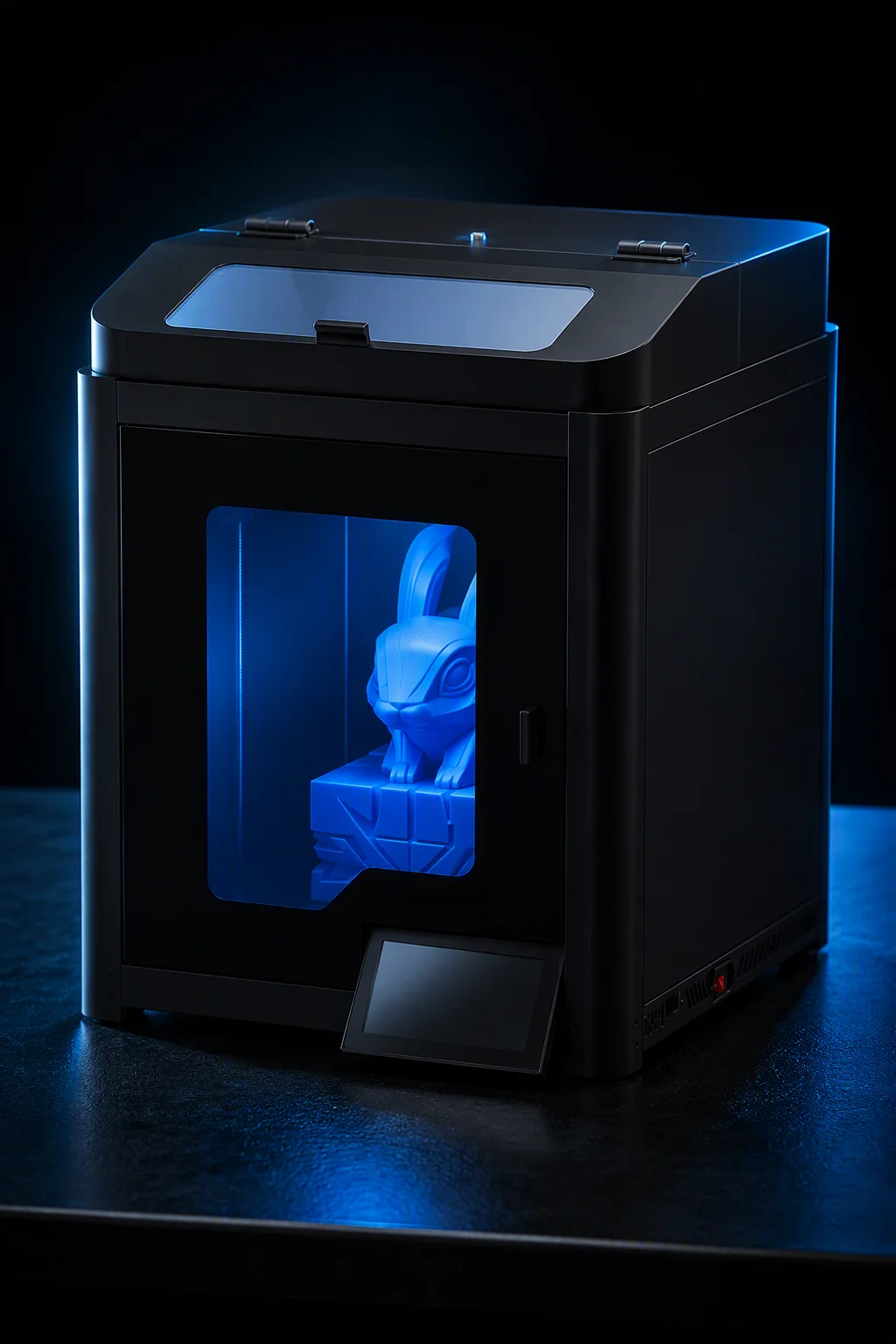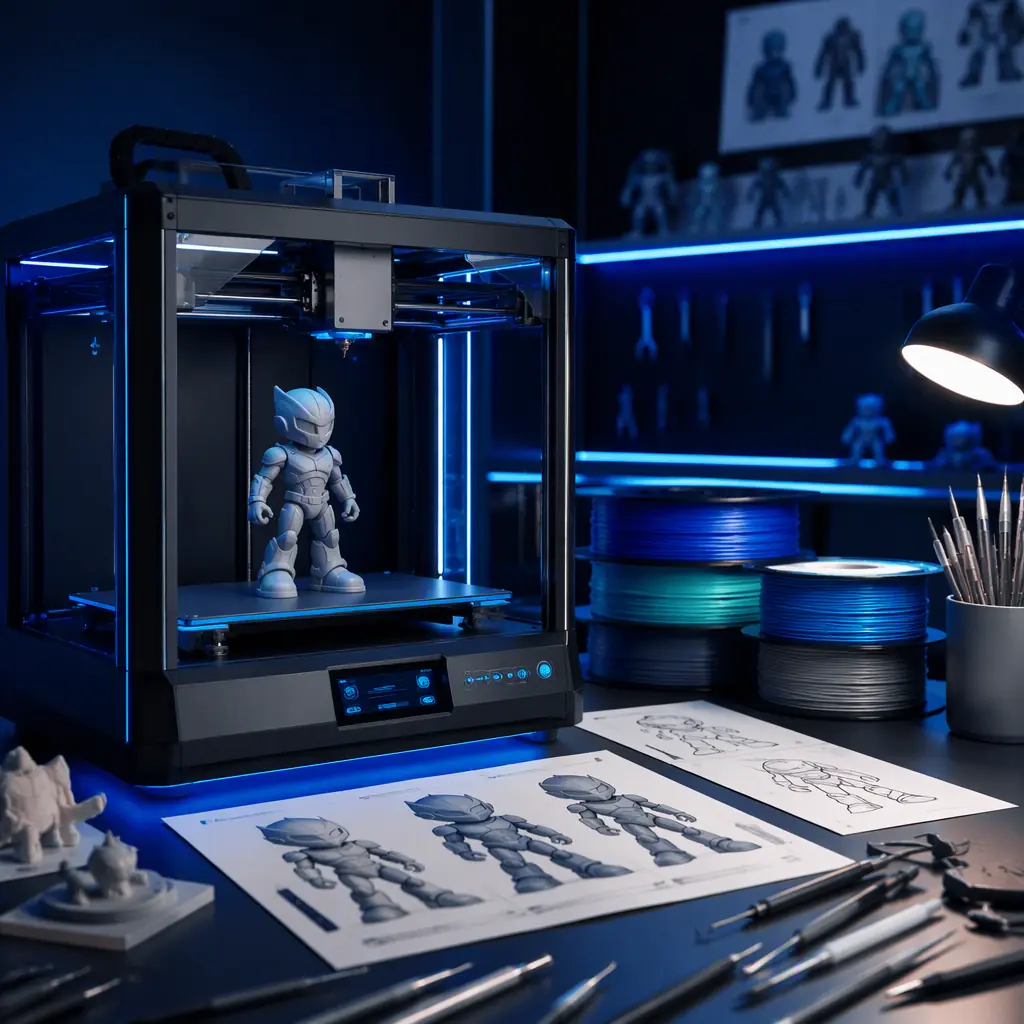
Toy industry procurement splits into four segments with different buying patterns. Toy manufacturers and OEMs (action figures, plush, RC vehicles, board games, STEM kits) buy for design iteration, mold masters, and factory jigs. Design studios and licensors buy for client-approval models and presentation pieces — a licensor approves a character design from a printed model, not a CAD screenshot. Mold makers buy for master patterns, silicone mold templates, and tooling aids. Small-batch producers and independent brands buy for short-run production parts that never justify an injection mold. Each segment is a repeatable account with a different entry application. For how these fit into a balanced portfolio, see our portfolio strategy guide.
The Toy Customer Segments and Their Entry Applications
Design studios and licensors are the highest-urgency segment: an approval cycle that takes 2-4 weeks with sculptors takes 2-3 days when the design is a printed model, and every approval milestone is a client-facing artifact. Toy manufacturers are the highest-volume segment: their prototyping groups print character iterations and mechanism test parts continuously, and every mold master printed in-house saves the $1,000-8,000 cost of an outsourced CNC master. Mold makers buy on precision: a printed master pattern with the right surface finish becomes the silicone mold template, and the mold shop's entire workflow depends on that master. Small-batch producers buy on MOQ math: injection molding requires 5,000-50,000 unit minimums, while a print farm produces 50-500 units economically. For the sales methodology that opens these accounts, see our B2B sales demo playbook.
Design studios and toy manufacturers are the priority segments: studios buy on approval urgency and manufacturers buy on iteration volume. A manufacturer that prints a character prototype for $3 instead of paying $1,500 for an outsourced master recovers the printer cost in the first 20 iterations. For the consumables bundling model that maximizes per-account revenue, see our consumables bundling guide.
The Toy Application Stack: From Concept to Short Run
Toy printing revenue clusters in four application groups. Design prototypes are the entry application: character iterations, vehicle body studies, and mechanism test prints that compress the design cycle from weeks to days. Mold masters are the manufacturing application: printed master patterns become silicone mold templates, and the quality of the master determines the quality of every molded part that follows — this is where resin printers earn their place in the toy factory. Short-run production is the margin application: custom figures, limited editions, and replacement pieces printed in batches of 50-500 that never justify injection tooling. Factory jigs and fixtures are the quiet application: assembly aids, painting fixtures, and QC gauges that save minutes per operation across a production line. For the tooling angle, see our manufacturing tooling guide; for the molding hybrid angle, see the injection molding vs 3D printing guide.
What you're listening for: The iteration cost and the mold master cost are the ROI script. A manufacturer that ran 30+ prototype iterations at $500-2,000 each is paying $15,000-60,000 annually for iteration alone — a printer-and-material kit pays for itself in the first quarter. The second question is surface finish: masters that need silicone mold quality are resin jobs (0.05 mm layers), while character studies and mechanism tests are PLA/ABS jobs.
Materials for Toy Prototyping and Production
The material conversation in toys is about detail, durability, and safety compliance. PLA is the default prototyping material: cheap, easy to print, and available in the saturated color range that matches Pantone references for character presentation — ideal for concept models and mechanism tests. PETG adds toughness for functional prototypes: articulated joints, snap-fit mechanisms, and parts that get handled repeatedly. ABS brings impact resistance and sandability for painted masters and display pieces. Resin (SLA/DLP/MSLA) is the detail material: 0.05 mm layer heights capture facial features, fine textures, and intricate geometries that FDM cannot resolve, making it the standard for mold masters and high-detail figures. TPU covers soft components: flexible wheels, soft appendages, and gaskets. For the full material lineup, see our engineering filaments guide, the resin printing distribution guide, and the flexible filaments guide.
Safety compliance shapes the consumables story. Toy-grade parts for children under 3 require non-toxic, BPA-free materials, and finished goods need EN 71 / ASTM F963 certification — which is why most toy printing stays in prototyping and tooling rather than final production. That is not a problem for the distributor: prototypes, masters, jigs, and short-run adult-collectible lines consume the same filament and resin on a predictable schedule. For the regulatory context, see our regulatory compliance guide.
Printer Requirements for Toy Studios and Factories
Toy printing splits between the studio and the factory floor. For studios: a reliable 256 mm-class printer for character prototypes plus a resin printer for high-detail masters — the two-machine combo covers the full application stack. For factory floors: larger build volumes (300×350 mm or bigger) for full-size vehicle bodies and large display pieces, enclosed frames for ABS, and the unattended reliability suite — thermal runaway protection, filament runout detection, power-loss recovery — because overnight prints are the norm between shifts. Resin printers need a wash-and-cure station and ventilation, which makes them a dedicated workcell rather than a desk machine. For the complete selection criteria, see our build volume guide, the enclosed vs open-frame guide, and the fume extraction & filtration guide.
Build volume in toys splits into two tiers. Character prototypes, masters, and mechanism parts fit a 256 mm cube. Full-size vehicle bodies, RC chassis, and large display pieces need 300×350 mm or bigger — and a 300 mm-class printer handles both the largest parts and batches of small figures per overnight run. The pilot application that opens a toy account is almost always a design prototype or a mold master for the studio's own workflow: zero risk, printable overnight, and demonstrably cheaper than the outsourced master it replaces. For the operational scaling picture, see our print farm operations guide.
The Distributor Go-to-Market Playbook for Toys
Toy procurement is design-led and deadline-driven, and the distributor playbook matches that rhythm. (1) Enter through the design studio: the studio controls the approval calendar, and the character-prototype pilot is a low-risk entry that demonstrates value in a week. (2) Sell the iteration math: "this $1,500 outsourced master is a $3 print that updates overnight; iterate on the file, not on the sculptor." (3) Move to the factory with mold masters: once the studio is printing, the manufacturing side needs master patterns and jigs, and every master digitized is a lock-in asset. (4) Build the short-run capability: small-batch producers and limited-edition lines are the margin layer that makes toy accounts profitable. Sales cycles run 1-3 months, among the fastest of any vertical, because the selling season forces decisions. For the recurring revenue models that lock in toy accounts, see our spare parts aftermarket guide and the trade show strategy guide.
Recurring Revenue: Design Cycles and Launch Seasons
Toy consumable revenue follows the launch calendar. Studios and manufacturers burn PLA, ABS, and resin continuously during collection development — a manufacturer with 4 printers runs 20-60 kg of filament per month in peak season. Add resin for masters (a mold master uses 300-800 ml of resin per master at $30-80/liter), spare nozzles, and PEI build sheets, and a toy account becomes a $1,500-6,000 monthly revenue stream at 45-60% gross margins. The switching cost is structural: once a studio's team has qualified print profiles and an approved model library, changing suppliers means re-qualifying every profile and re-testing every material. For the market sizing and trend context, see our 2026 market trends report and the cosplay & entertainment vertical guide.
Bottom Line
The toy industry is a deadline machine, and 3D printing is the tool that fits its rhythm. The artifacts that drive toy sales — design prototypes, approval models, mold masters, short-run parts — are small, plastic, and needed faster than any outsourced model shop can deliver, and none of them justify a mold or a CNC run at the prototype stage. Design studios buy on approval urgency and are the fastest entry; manufacturers buy on iteration volume and master savings and are the deepest accounts; both consume PLA, ABS, and resin on a schedule a distributor can forecast. A distributor with 10 toy accounts averaging 3 printers each builds $50,000-120,000 in annual recurring consumable revenue at 45-60% margins — plus the hardware margin on resin and large-format machines. The distributor who puts a printer in the design studio and a filament subscription behind it will own the toy prototyping pipeline before the mold shop quotes the job.
Reviewed by the Precise3D engineering & OEM team. Compliance files that accompany the catalog are auditable at the certification register.
Start Your Partnership
Ready to Bring toys industry to Your Market?
Distributors selling toys industry build margins with OEM & white-label hardware - request the program sheet and volume pricing.