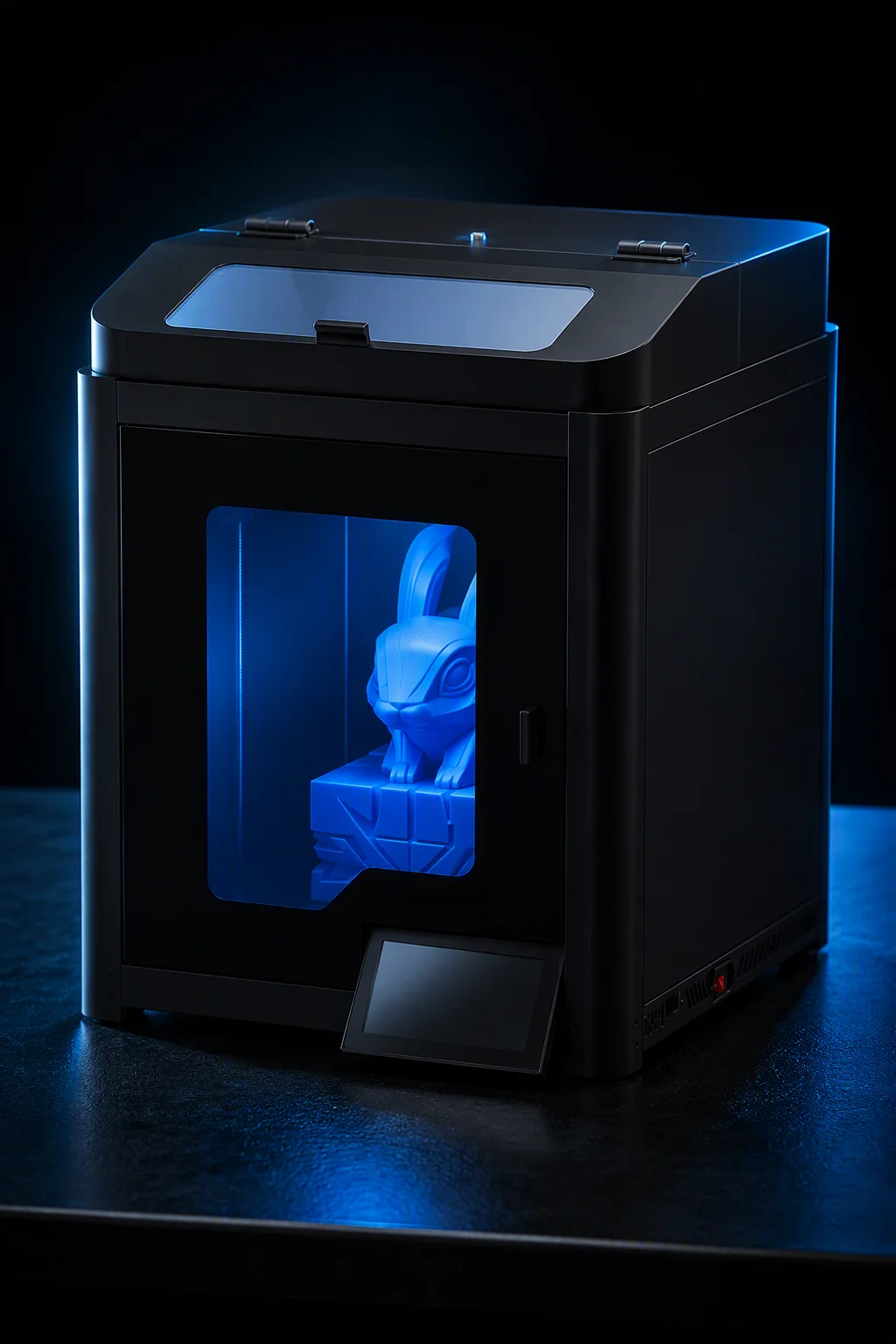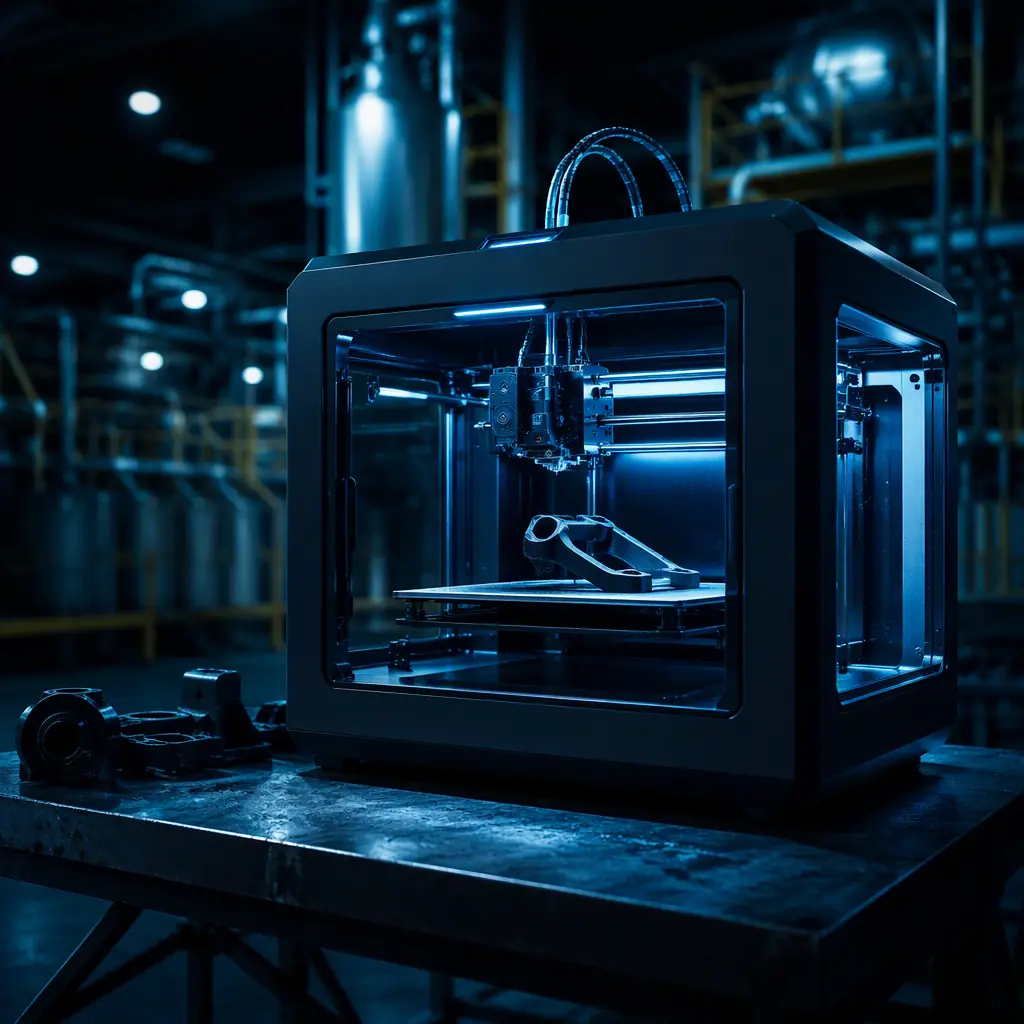
The chemical processing vertical spans petrochemical and refining plants, specialty chemical manufacturers, water and wastewater treatment facilities, process equipment OEMs (pumps, valves, mixers, heat exchangers), and the MRO contractors who maintain them. One structural fact drives the opportunity: process equipment is designed to run for 20-40 years, but component supply stops after 5-10. A 30-year-old dosing pump, a legacy valve actuator, a discontinued mixer blade. None of these have catalog spares, and every one of them is a print job. Traditional replacement means machining at $1,500-8,000 with 6-16 week lead times, or buying a whole new assembly for $20,000-60,000. Printing collapses the cost to $20-400 in materials and the lead time to 1-3 days. The same make-versus-buy economics apply across process plants, and the transition logic is mapped in our CNC machining vs 3D printing guide.
Why Chemical Plants Are Buying 3D Printers
Four structural facts make chemical buyers durable. First, obsolescence: process plants run legacy equipment for decades, and OEMs stop stocking parts, the plant either machines, redesigns, or shuts down. Second, corrosion economics: exotic alloy spares (Hastelloy, Inconel, titanium) cost $3,000-15,000 and take 10-20 weeks; printed polymer and composite parts cost $30-500 and arrive in days, with chemical resistance matched by material selection. Third, maintenance-driven demand: MRO teams are measured on uptime, and a printed part that keeps a pump running today beats a machined part that arrives next quarter, the same urgency logic as our maintenance guide. Fourth, safety and compliance pressure: plants document part materials and traceability, and printing gives them a controlled, documented replacement path, the documentation framework is in our factory audit & QC checklist guide.
The Applications That Actually Buy
Six clusters generate the orders. The buyers are plant maintenance teams, process OEMs, MRO contractors, and engineering service firms that support the process industry.
1. Corrosion-resistant spare parts. The highest-frequency application: pump impellers, valve stems, agitator blades, pipe fittings and flanges that have corroded or gone obsolete. Printed in PP, PVDF-like blends, nylon or PPS, these parts carry material data sheets and replace $3,000-15,000 alloy spares at 1-3% of the cost, the material-selection framework is in our engineering filaments guide.
2. Gaskets, seals and wear components. Flexibles like TPU and TPE produce custom gaskets, O-rings, wiper seals and pump diaphragms in hours instead of the 4-8 week wait for a die-cut or molded version. The flexible material options are in our TPU/TPE filament guide.
3. Valve and actuator components. Handwheels, position indicators, stem adapters, and linkage parts for legacy valves, small, safety-relevant parts where a $40 print avoids a $25,000 valve replacement. The dimensional discipline for these fits is in our tolerances & dimensional accuracy guide.
4. Custom tooling and fixtures. Flange alignment jigs, pipe-weld spacers, torque-reaction arms, inspection gauges, and lifting points for process equipment. Unit-of-one tools that plants print on demand, the tooling playbook is in our large-format industrial printer guide.
5. Reverse-engineered legacy parts. Scan, model, and print replacements for parts whose drawings no longer exist. This is the wedge that opens plant accounts: every plant has a drawer of obsolete parts, the scanning workflow is in our 3D scanner & printer bundle guide.
6. Lab and sampling hardware. Custom sample holders, bottle racks, probe mounts, and lab fixtures for plant quality labs. High-volume, low-risk, and a natural consumables driver.
Materials for Chemical Environments
Chemical buyers select materials by exposure, not by cost. Four families dominate:
Two realities dominate material conversations. First, chemical compatibility is the spec: a part that dissolves in the process fluid is worse than no part at all. Plants want material data sheets and test coupons, and the qualification workflow is in our incoming QC guide. Second, temperature derating: printed parts hold less strength at process temperatures than molded equivalents, so engineering review matters; the load-and-temperature guidance is in our PEEK/PEI/PPSU industrial materials guide.
From Obsolete Part to Installed Part: The Workflow
The workflow that wins plant accounts has five stages. Identify and scan the failed part. 3D-scan the worn component or model it from dimensions; the reverse-engineering path is in our scanner & printer bundle guide. Select the material by exposure . Match the process fluid, temperature and pressure to a material family, using the framework in our filament stocking guide. Print and qualify . Print the part, verify dimensions and fit, and document material and process for the plant's quality file; the verification checklist is in our incoming QC guide. Install and monitor . Install the part and track service life; the reliability data builds the case for the next 20 parts. Build the part library . Every qualified part becomes a digital spare the plant can reprint on demand; the recurring-demand model is developed in our consumables & accessories bundling guide.
Budget Reality: Printed vs Traditional
The comparison that closes plant accounts:
The distributor math compounds because one plant has hundreds of obsolete parts and every successful print creates demand for the next. The printer investment model that justifies the plant's own machines, and your demo fleet, is in our TCO & ROI calculator guide.
The Distributor Playbook: Entering Chemical Processing
Five moves win chemical accounts:
1. Target plants with legacy equipment. Petrochemical, refining, water treatment and specialty chemical facilities (500-5,000 employees) that run 20-40-year-old process lines are the highest-intent buyers. Build a target list of 20-40 plants and MRO contractors in your territory.
2. Lead with a reverse-engineering pilot. Offer to scan, print and install one obsolete part free of charge. The plant sees a $3,000-15,000 problem solved for $150 and a weekend, the demo playbook is in our B2B sales demo guide.
3. Bundle the chemical material set. An enclosed high-temp printer plus PP, nylon, PPS, TPU and PETG lines is the anchor combination, and the margin is in materials, build plates and nozzles. The bundling mechanics are in our consumables bundling guide.
4. Offer a part-qualification service. Plants need documented material data and fit verification before they trust a printed safety part. A distributor that offers scanning, printing, and a basic qualification report for a fixed fee captures the account before hardware discussion starts, the service-revenue logic is in our repair service center guide.
5. Work the outage and turnaround cycle. Plant turnarounds (TARs) are scheduled shutdowns where every day of downtime costs $50,000-500,000; sell printers, materials and print-on-demand services ahead of each TAR season, using the framework in our trade show strategy guide.
Common Pitfalls in Chemical Accounts
Five mistakes cost distributors chemical business: (1) overselling material performance . A printed part that fails in service destroys trust and can create a safety incident; qualify materials against the actual fluid and temperature before promising anything; (2) ignoring traceability . Plants log every part that touches process fluid; sell material data sheets, print logs and batch records, not just machines; (3) treating chemical like general manufacturing . The buyer is a reliability engineer or maintenance superintendent, not a production manager, and the pitch is uptime, not throughput; (4) skipping the safety review . Pressure-containing and safety-critical parts need engineering sign-off, and the compliance framework is in our certification & compliance guide; and (5) forgetting fume and enclosure requirements . High-temp materials need enclosed printers and ventilation, and the setup guidance is in our fume extraction & filtration guide.
Getting Started: The First 90 Days
A 90-day entry plan: Month 1 . Identify 20-40 target plants and MRO contractors, and stock the chemical material set: PP, nylon PA12/PA-CF, PPS, TPU, PETG, plus build plates, hardened nozzles and a drying system. Month 2 . Run two free reverse-engineering pilots (one legacy pump part, one valve component), produce a qualification report template, and add a plant maintenance manager to your advisory loop. Month 3 . Convert pilots to paid accounts with TAR-season supply agreements, publish your first measured case study ("chlor-alkali plant: $4,800 alloy impeller → $37 printed impeller, 14 weeks → 22 hours"), and open one process OEM account. The printer investment model that justifies the distributor's own machines is in our TCO & ROI calculator guide.
Reviewed by the Precise3D engineering & OEM team. Compliance files that accompany the catalog are auditable at the certification register.
Enter the Chemical Processing Market
Ready to Supply Plants & MRO Teams?
Get wholesale pricing on enclosed high-temp printers, PP/nylon/PPS/TPU material lines, build plates, hardened nozzles, dryers, and the chemical-industry playbook that wins plant maintenance and MRO accounts.